


{
“@type”: “Article”,
“image”: {
“url”: “https://csuxjmfbwmkxiegfpljm.supabase.co/storage/v1/object/public/blog-images/organization-8865/1776474477478_Business-owner-negotiating-lease-with-landlord.jpeg”,
“@type”: “ImageObject”,
“caption”: “Business owner negotiating lease with landlord”
},
“author”: {
“url”: “https://kefihub.co.uk”,
“name”: “Co”,
“@type”: “Organization”
},
“@context”: “http://schema.org”,
“headline”: “Navigate property lease negotiations: practical guide for UK SMEs”,
“publisher”: {
“url”: “https://kefihub.co.uk”,
“name”: “Co”,
“@type”: “Organization”
},
“inLanguage”: “en-US”,
“articleBody”: “Learn how UK small businesses can negotiate property leases with confidence. Practical steps, legal tips, and key pitfalls to avoid for the best deal.”,
“description”: “Learn how UK small businesses can negotiate property leases with confidence. Practical steps, legal tips, and key pitfalls to avoid for the best deal.”,
“datePublished”: “2026-04-18T01:08:49.992Z”
}
TL;DR:
- Fully understanding lease terms, especially break clauses and repairs, prevents costly liabilities.
- Negotiating rent, lease length, and protections early leads to more favorable lease agreements.
- Using a solicitor reduces legal risks and helps unlock better lease conditions for small businesses.
Signing a commercial property lease without fully understanding its terms is one of the costliest mistakes a UK small business can make. A single overlooked clause, whether it concerns repairs, break options, or rent reviews, can lock you into thousands of pounds of unexpected liability. Yet many business owners rush through negotiations, eager to secure premises and move on. This guide gives you the preparation, step-by-step process, and legal checks you need to negotiate confidently, protect your finances, and secure terms that genuinely support your business’s growth.
Table of Contents
- What you need to know before negotiating a lease
- Step-by-step: How to negotiate a favourable property lease
- Common pitfalls in lease negotiations and how to avoid them
- Why legal advice matters in lease negotiations
- Our perspective: What most guides miss about UK lease negotiations
- Take control of your business property success
- Frequently asked questions
Key Takeaways
| Point | Details |
|---|---|
| Preparation is key | Understanding your needs and researching lease terms prevents costly mistakes. |
| Negotiate flexibly | Securing break clauses and manageable obligations gives your business future-proof options. |
| Beware hidden risks | Watch for hidden costs, restrictive clauses, and always document everything. |
| Get legal advice | A solicitor can save you from expensive legal issues and improve your negotiating position. |
| Use a step-by-step process | Following a proven negotiation roadmap helps secure the best deal with confidence. |
What you need to know before negotiating a lease
Now that you see the stakes, let’s ensure you’re prepared with the right groundwork. Before you sit down with a landlord or their agent, you need a clear understanding of the lease landscape in the UK.
Common lease types explained
The type of lease you sign will shape your obligations for years. Here are the most common structures:
- Full repairing and insuring (FRI): You take responsibility for all repairs and building insurance. This is standard for longer leases and can be expensive.
- Internal repairing lease: You maintain only the interior. The landlord handles the structure and exterior.
- Short-term lease: Typically under three years. Offers flexibility but less security.
- Long-term lease: Often five to twenty-five years. Provides stability but reduces your ability to exit.
Understanding essential business contracts before entering negotiations is crucial, as lease agreements are legally binding documents with long-term financial consequences.
Key documents to review
Before any negotiation begins, you should obtain and review:
- Heads of terms: A summary document outlining the proposed main terms. It is not legally binding, but it sets the tone for everything that follows.
- Break clauses: These allow either party to end the lease early under specified conditions. Negotiating a favourable break clause is often the most valuable thing you can do.
- Repairing obligations: Understand exactly what you are responsible for maintaining and to what standard.
The government lease guidance provides a solid overview of what commercial tenants should expect and their rights under UK law.
Research before you negotiate
Know the market rate for comparable properties in your target area. Research the landlord’s history, including how they handle disputes and maintenance. Identify your dealbreakers early: maximum affordable rent, minimum lease length, and non-negotiable location requirements.

| Factor | Why it matters |
|---|---|
| Market rent | Avoids overpaying; gives negotiation leverage |
| Property condition | Reveals future repair costs |
| Landlord reputation | Predicts responsiveness and fairness |
| Break clause options | Protects your exit strategy |
Pro Tip: Visit the property at different times of day to assess footfall, parking, and neighbouring businesses before committing.
Step-by-step: How to negotiate a favourable property lease
Once you’re prepared, you can confidently move through each step of the negotiation process. A structured approach, as outlined in a property investment checklist, consistently helps UK SMEs improve their lease terms.
-
Submit your initial proposal. Begin with a written offer that reflects your research. Propose a rent figure slightly below your target, giving you room to move. State your preferred lease length and any conditions upfront.
-
Clarify lease length and break clauses. Negotiate a break clause at year three or five if you are signing a longer lease. Ensure the conditions for exercising the break are realistic, such as no arrears and written notice of six months.
-
Negotiate rent, rent-free periods, and repair obligations. Landlords often offer rent-free periods to attract tenants, particularly in slower markets. Push for at least three to six months on longer leases. Seek to limit your repairing obligations to the internal condition only, rather than accepting a full FRI lease where possible.
-
Secure tenant protections. Negotiate rights to assign the lease (transfer it to another business), sublet part of the premises, and make internal alterations. These rights protect your flexibility as your business evolves.
-
Document everything and get it reviewed. Never rely on verbal agreements. Ensure all negotiated terms appear in the final lease. Always ask important questions for your solicitor before signing.
| Negotiation point | Tenant-friendly outcome | Landlord-preferred outcome |
|---|---|---|
| Rent-free period | 3 to 6 months | None |
| Break clause | Year 3 or 5, simple conditions | None or restrictive conditions |
| Repair obligations | Internal only | Full repairing and insuring |
| Rent review | Open market, upward/downward | Upward only |
For detailed negotiation tips for commercial leases, LexisNexis provides authoritative guidance on UK tenant rights and tactics.
Pro Tip: Always negotiate the heads of terms before instructing solicitors. Changes at the drafting stage cost more time and legal fees.
Common pitfalls in lease negotiations and how to avoid them
While following the process is essential, it’s equally important to steer clear of common traps. Many UK SMEs regret not seeking specialist advice or missing hidden clauses that later prove costly.
Hidden costs that catch tenants off guard
- Service charges: In multi-occupancy buildings, you may be liable for a share of the building’s maintenance costs. Always request a schedule of past service charges.
- Business rates: Confirm who is responsible and whether any relief applies to your business.
- Dilapidations: At the end of a lease, landlords can claim costs to restore the property to its original condition. Negotiate a schedule of condition at the start to limit your liability.
- Insurance contributions: Some leases require tenants to contribute to the landlord’s building insurance premium.
“The small print in a commercial lease is where the real financial risk lives. Most disputes between landlords and tenants arise not from headline rent but from obligations buried in schedules and annexures.”
Understanding contract law basics helps you recognise which clauses carry the most legal weight and where you have room to push back.
Other common mistakes to avoid
- Overlooking break clause conditions that are practically impossible to meet.
- Failing to get verbal promises written into the lease.
- Rushing to sign without a full professional review.
- Ignoring rent review mechanisms that could increase your rent significantly.
The Law Society on renting premises outlines tenant rights and the importance of professional guidance before committing to any commercial property agreement.
Pro Tip: Commission a formal schedule of condition, with photographs, before you sign. This single document can save you thousands in dilapidations claims when the lease ends.
Why legal advice matters in lease negotiations
After identifying pitfalls, the solution is often to involve knowledgeable legal professionals. A solicitor who specialises in commercial property is not an optional extra. They are a practical necessity for most SMEs.
The solicitor role in property deals is well established: solicitor involvement measurably reduces lease disputes and legal risk for small businesses. Here is what a good commercial property solicitor will do for you:
- Review and explain every clause in plain English, highlighting obligations you may not have noticed.
- Negotiate directly with the landlord’s solicitor to achieve more favourable terms, often recovering their fee many times over.
- Identify hidden risks, such as restrictive user clauses that limit what you can do on the premises, or onerous alienation restrictions that prevent you from subletting.
- Support future flexibility, ensuring break options, assignment rights, and alteration permissions are properly drafted so you can act on them when needed.
Knowing what to ask your solicitor before your first meeting helps you get maximum value from every consultation.
The cost of not using a solicitor
Consider this: a five-year FRI lease at £30,000 per year represents a £150,000 commitment. Legal fees for a commercial lease review typically range from £800 to £2,500. The cost of not reviewing the lease properly could be far greater. Unexpected repair bills, dilapidations claims, or an inability to exit a failing premises can run into tens of thousands of pounds.
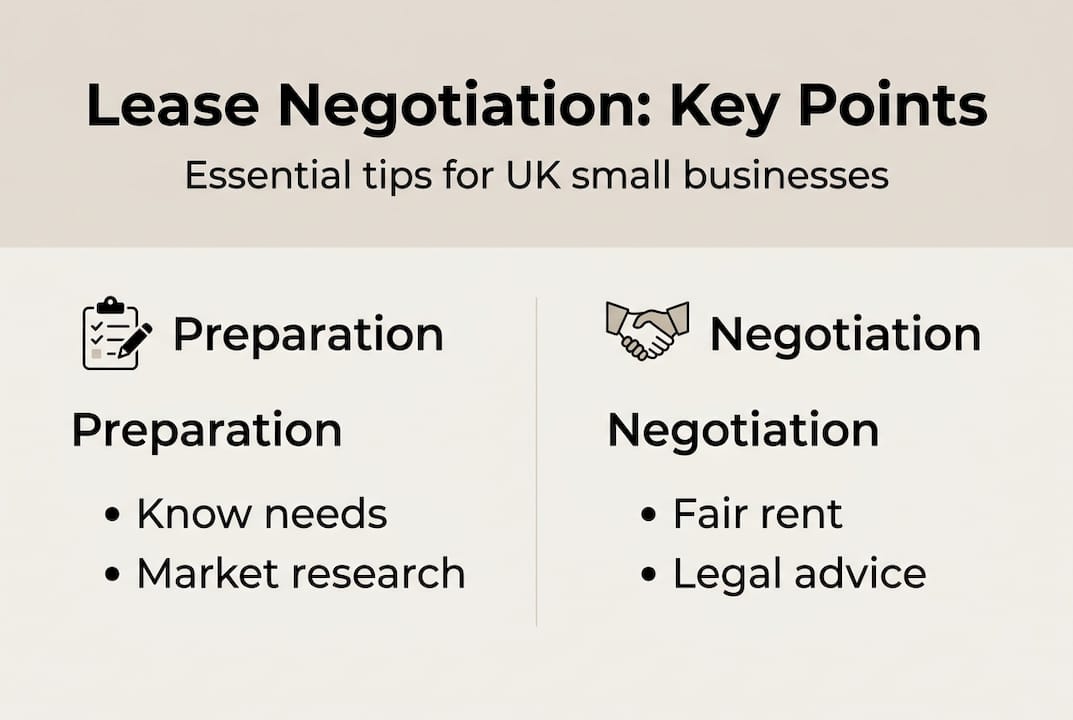
The SRA guidance on business legal services explains how to find and instruct a regulated solicitor, and what protections you have as a client.
Our perspective: What most guides miss about UK lease negotiations
Most guides treat lease negotiations as a checklist exercise. Review the heads of terms, negotiate the rent, instruct a solicitor. Tick. Done. But in practice, the deals that truly serve small businesses are built on something less tangible: strategic patience and a willingness to walk away.
The clauses that cause the most long-term pain are rarely the ones you argue hardest about. Repair obligations, user clauses, and alienation restrictions are often accepted without question because tenants are focused on rent. Yet these are precisely the terms that constrain your business five years down the line.
The best negotiators we have seen understand that contracts in business protection are not just legal formalities. They are tools for managing future risk. Real leverage in a negotiation comes from having alternatives. If you have identified two or three viable premises, you negotiate from strength. If this is the only property you are considering, you negotiate from need.
Do not let urgency or excitement drive your decisions. The landlord needs a tenant as much as you need premises.
Take control of your business property success
Securing a favourable property lease is one of the most impactful financial decisions you will make as a small business owner. The strategies in this guide give you a strong foundation, but the right support makes all the difference.
At KefiHub, we provide practical resources to help you move forward with confidence. Learn how to ask your solicitor the right questions before any property commitment, follow our business growth roadmap to align your property decisions with your wider strategy, and compare top legal advice platforms to find the right professional support for your needs. Your next lease negotiation does not have to be a source of stress.
Frequently asked questions
What is the most important clause in a commercial lease negotiation?
Break clauses and repair obligations are often the most critical, as they directly affect your ability to exit costly arrangements or avoid hidden costs. Break clauses and obligations are central to lease flexibility under UK commercial property law.
Should I use a solicitor when negotiating a business lease?
Yes, using a solicitor can help spot unfair clauses, improve your terms, and reduce long-term legal risks. Solicitor involvement measurably reduces lease disputes and risks for SMEs.
What documents are needed before starting lease negotiation?
You will need to review the heads of terms, any prior contracts, and relevant business plans outlining your needs and limits. Key documents include heads of terms and existing contracts that define your obligations.
How long do property lease negotiations typically take for UK SMEs?
In the UK, lease negotiations for SMEs usually last between 2 to 12 weeks, depending on complexity and required legal checks. Lease negotiation timescales depend on the level of due diligence required by both parties.
Recommended
- Leasehold vs freehold: make smarter UK property choices – Kefihub
- 7 Key Examples of Business Contracts Every UK SME Needs – Kefihub
- Business Growth Roadmap: Step-by-Step Path for UK SMEs – Kefihub
- Property Investment Step by Step for UK Beginners – Kefihub
- Professional weed surveys: protect your property in 2026