


TL;DR:
- Conveyancers are specialized legal professionals focused solely on property transfer law.
- They manage key stages like title checks, searches, contract review, and registration to ensure a smooth deal.
- Choosing a qualified conveyancer or solicitor depends on transaction complexity and safeguards your financial interests.
Many people assume that buying or selling a home is simply a matter of agreeing a price and signing some paperwork. In reality, legal missteps in property transactions can cost thousands of pounds and cause deals to collapse entirely. The confusion between what a conveyancer and a solicitor actually do makes it harder still to know who to turn to. This guide cuts through that uncertainty. By the end, you will have a clear, confident understanding of what a conveyancer does, when to use one, and how to choose the right professional for your property journey.
Table of Contents
- What is a conveyancer and who do they help?
- Step-by-step: What does a conveyancer do?
- Conveyancer versus solicitor: What’s the difference?
- Why a skilled conveyancer matters: Risks and critical safeguards
- What to consider when choosing a conveyancer
- A fresh perspective: Why most people underestimate what a conveyancer does
- Next steps: Find trusted conveyancing and property support
- Frequently asked questions
Key Takeaways
| Point | Details |
|---|---|
| Specialist legal support | Conveyancers help buyers and sellers manage all legal aspects of UK property transactions. |
| Step-by-step guidance | A conveyancer guides you from initial offer through completion, handling paperwork and checks. |
| Choosing the right expert | Consider complexity, credentials and your needs before selecting a conveyancer or solicitor. |
| Preventing costly mistakes | A skilled conveyancer identifies risks and protects your interests throughout the process. |
What is a conveyancer and who do they help?
Now that you know why it is crucial to understand conveyancing, let’s clarify what a conveyancer is and who relies on their expertise.
Conveyancers are licensed legal professionals specialising in property law. Their sole focus is the legal transfer of property ownership from one party to another. This specialisation means they develop deep, practical expertise in exactly the type of work you need when buying or selling a home.
A common source of confusion is whether a conveyancer and a solicitor are the same thing. They are not, although both can carry out conveyancing work. A solicitor is a fully qualified lawyer who can practise across multiple areas of law, from family matters to criminal defence. A licensed conveyancer, by contrast, qualifies specifically in property law and is regulated by the Council for Licensed Conveyancers (CLC). Solicitors who carry out conveyancing are regulated by the Solicitors Regulation Authority (SRA). Understanding this distinction helps you ask the right questions before you instruct anyone.
Who typically uses a conveyancer?
- First-time buyers navigating the process for the first time
- Home movers buying and selling simultaneously
- Property investors purchasing buy-to-let properties
- Sellers needing a legal representative to draft and negotiate contracts
- Those remortgaging and requiring a title transfer
Conveyancers handle a broad range of responsibilities. They review and draft contracts, carry out property searches, liaise with the other party’s solicitor, manage the transfer of funds, and register the new ownership with HM Land Registry. You can learn more about the key stages of conveyancing to see exactly how this process unfolds.
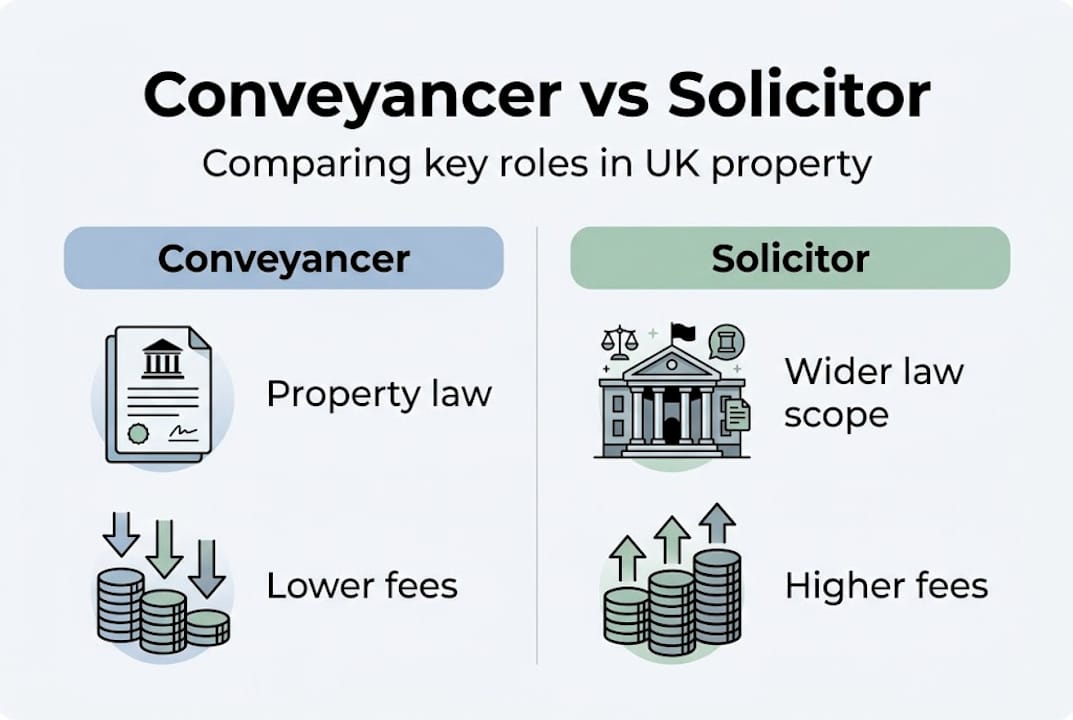
| Feature | Licensed conveyancer | Solicitor doing conveyancing |
|---|---|---|
| Regulator | Council for Licensed Conveyancers | Solicitors Regulation Authority |
| Scope of practice | Property law only | Broad legal practice |
| Typical cost | Often lower | Often higher |
| Specialist focus | High | Moderate to high |
Always confirm your chosen professional is properly accredited before you instruct them. You can verify a conveyancer’s status directly on the Gov.uk conveyancing overview page. Gathering essential conveyancing tips early will also help you prepare for your first consultation.
Pro Tip: Always check that your conveyancer is registered with either the CLC or SRA before paying any fees or signing a letter of engagement.
Step-by-step: What does a conveyancer do?
After understanding who conveyancers are, you are ready to see what they actually do for you at each stage of buying or selling property.
A conveyancer manages the legal aspects of property transfer, ensuring contracts, searches, and funds are handled correctly. Here is a clear breakdown of the sequential stages you can expect.
-
Instruction. You formally appoint your conveyancer and they take your initial instructions. They will carry out identity checks (required by law to prevent money laundering) and explain their fees upfront.
-
Title investigation. Your conveyancer examines the title deeds to confirm the seller legally owns the property and that there are no restrictions, charges, or disputes attached to it.
-
Property searches. They commission a series of searches including local authority searches, environmental searches, and drainage searches. These reveal planning restrictions, flood risk, and any proposals that could affect the property’s value or your use of it.
-
Reviewing and negotiating the contract. The seller’s conveyancer sends a draft contract. Your conveyancer reviews it, raises enquiries, and negotiates any changes needed to protect your interests.
-
Exchange of contracts. Once both parties are satisfied, contracts are formally exchanged. At this point, the transaction becomes legally binding. A completion date is agreed and you pay your deposit.
-
Completion. Your conveyancer transfers the remaining purchase funds to the seller’s solicitor. Keys are released and you officially own the property.
-
Post-completion. Your conveyancer pays Stamp Duty Land Tax on your behalf and registers the change of ownership with HM Land Registry.
Throughout this process, your conveyancer also prevents errors that could have serious consequences. A missed search result or a contract clause overlooked can expose you to significant financial risk. For practical guidance, the Law Society guide to buying/selling a home provides additional context on what to expect. You will also find essential conveyancing tips helpful when preparing for each of these stages.

Pro Tip: Respond to your conveyancer’s requests for information as quickly as possible. Delays in returning documents or answering queries are one of the most common reasons transactions take longer than expected.
Conveyancer versus solicitor: What’s the difference?
Now that you know the core duties, it is important to understand who to choose for your situation.
The choice between a licensed conveyancer or solicitor depends on the complexity of your transaction. For a straightforward house purchase or sale, a licensed conveyancer will usually serve you well. For something more complex, a solicitor may be the safer option.
When a licensed conveyancer is likely the right choice:
- Standard residential purchases and sales
- Remortgages with no complications
- New-build purchases with standard contracts
- Transactions where cost is a primary consideration
When a solicitor may be better suited:
- Transactions involving disputed ownership or boundary issues
- Properties with unusual tenure arrangements
- Purchases linked to divorce, probate, or inheritance
- Commercial property included in the deal
- Situations requiring broader legal advice alongside conveyancing
The regulatory difference is also worth understanding. Licensed conveyancers are regulated by the CLC, which sets strict standards for professional conduct, insurance, and client money protection. Solicitors are regulated by the SRA. Both regulators offer consumer protections, but the SRA’s reach extends across all legal work a solicitor undertakes.
| Consideration | Licensed conveyancer | Solicitor |
|---|---|---|
| Average fees | £800 to £1,500 | £1,000 to £2,000+ |
| Best for | Standard transactions | Complex or multi-issue cases |
| Regulated by | CLC | SRA |
| Broader legal advice | No | Yes |
You can read more about the benefits of using a solicitor to weigh up your options more carefully. For further reassurance, the SRA on using a solicitor outlines what protections you have as a client.
Why a skilled conveyancer matters: Risks and critical safeguards
Having considered both roles, let’s see why a skilled conveyancer makes such a difference for your peace of mind.
Failing to identify title or planning issues can result in major financial loss. A good conveyancer acts as your legal shield, spotting problems before they become your problem after completion.
“Property fraud, undisclosed planning breaches, and title defects are among the most common issues that derail transactions or leave buyers with serious liabilities. A thorough conveyancer is your primary defence.”
What most buyers overlook without a skilled conveyancer:
- Undisclosed charges or mortgages registered against the title
- Unapproved building work that could affect insurance or resale value
- Restrictive covenants limiting how you can use the property
- Boundary disputes that are not obvious from a physical inspection
- Fraud attempts, including seller impersonation (a growing concern in the UK)
- Environmental risks such as contaminated land or flood-prone locations
A proactive conveyancer does not simply process paperwork. They actively query anything that looks unusual, push back on contract terms that disadvantage you, and co-ordinate between estate agents, mortgage lenders, and the other party’s legal team. This active involvement is what keeps transactions on track and protects your financial interests.
For guidance on finding reliable legal advice specific to your situation, and for a shortlist of recommended practitioners, see our guide to the best UK conveyancing solicitors. The Which? conveyancers explained resource is also worth bookmarking for independent comparisons.
What to consider when choosing a conveyancer
The final step is making an informed choice, so here is how to pick a conveyancer who is right for you.
It is important to confirm your conveyancer is properly accredited and insured before you proceed. Accreditation protects you if anything goes wrong and confirms that the professional meets ongoing standards of competence.
Key factors to check before instructing a conveyancer:
- Confirm CLC or SRA registration using the relevant regulator’s online search tool
- Request a full written quote covering legal fees, search costs, and disbursements
- Ask whether they offer a no-completion, no-fee guarantee
- Check their average transaction times and current caseload
- Look at verified client reviews on independent platforms such as Trustpilot or Google
- Ask how they communicate, whether by email, phone, or an online portal
Warning signs to watch out for:
- Vague or verbal-only quotes with no written breakdown
- Unusually low fees that exclude hidden disbursements
- Difficulty reaching the conveyancer before you have even instructed them
- No clear named contact handling your matter
Typical conveyancing fees in 2026 range from around £800 to £2,000 for a standard residential purchase, depending on the property value and complexity. Always request an itemised quote so you can compare like for like. For further information on conveyancer qualifications, the CILEX conveyancer qualifications page provides a useful reference. If you need to act quickly, our guide to finding a property solicitor covers options when time is short.
Pro Tip: Use independent review sites to read feedback from real clients before making your decision. A conveyancer with consistently positive reviews for communication is worth a slightly higher fee.
A fresh perspective: Why most people underestimate what a conveyancer does
To round out, let’s dig deeper into why the role of a conveyancer is often misunderstood.
Most people think of a conveyancer as someone who handles admin. They fill in forms, run searches, and pass documents between parties. That framing significantly undersells what a skilled conveyancer actually contributes to your transaction.
In practice, a good conveyancer is often the reason a deal completes at all. They spot the title issue that would have made the property unmortgageable. They flag the unapproved extension that the seller had not disclosed. They push back on an unreasonable contract clause before you are legally bound by it. These are not administrative tasks. They are acts of legal judgement that protect you from serious, sometimes irreversible financial harm.
The stages of UK conveyancing look linear on paper, but in reality they involve constant co-ordination, negotiation, and problem-solving. Treating conveyancing as a commodity, simply choosing the cheapest option, is one of the most common and costly mistakes property buyers make. The right conveyancer is not an expense. They are your most reliable safeguard in what is likely the largest financial transaction of your life.
Next steps: Find trusted conveyancing and property support
Ready to take your next step with confidence?
KefiHub brings together expert guides, professional directories, and practical tools to support every stage of your property journey. Whether you are a first-time buyer or an experienced investor, having the right resources makes a genuine difference.

Explore our curated list of the best UK conveyancing solicitors to find accredited professionals rated by real clients. If you are weighing up broader property management needs, our property management solutions comparison gives you a clear, side-by-side view of your options. You can also discover the top property search tools available in the UK to support your search from the very beginning. KefiHub is here to help you move forward with clarity and confidence.
Frequently asked questions
Is it better to use a conveyancer or a solicitor for buying a house?
For straightforward transactions, a licensed conveyancer is often sufficient. For complex matters, a solicitor with broader legal expertise is a stronger choice, as the choice depends on complexity and the specific risks involved.
What checks does my conveyancer carry out during a property purchase?
They perform title checks, local authority searches, environmental searches, and ensure all legal documents and funds are correctly processed. Conveyancers conduct essential legal searches at every stage to protect your interests.
How long does conveyancing take in the UK?
Conveyancing typically takes 8 to 12 weeks on average, though the timeline can extend if searches are delayed, a chain is involved, or legal queries take time to resolve.
Can I change my conveyancer during the process?
Yes, you can switch, but it can introduce delay and potentially extra cost, so assess the reasons carefully before making the change.
Are conveyancer fees fixed or negotiable?
Fees vary between firms and are sometimes negotiable. Always request a fully itemised written quote, as fee types and negotiability differ significantly from one provider to the next.
Recommended
- 7 Essential Conveyancing Tips UK Professionals Must Know – Kefihub
- 7 Key Stages of Conveyancing Every UK Professional Should Know – Kefihub
- Residential Conveyancing: Navigating Legal Home Buying UK – Kefihub
- Understanding What is Legal Cover for Landlords