


Over 90% of UK consumers research businesses online before making purchasing decisions, yet many small businesses still struggle to establish an effective digital presence. For small business owners facing fierce competition and tight budgets, boosting your online presence through digital marketing offers a proven path to attract customers and drive sustainable growth. This guide explores how social media strategies for small businesses and other digital channels can transform your customer acquisition while keeping costs under control.
Table of Contents
- Introduction: The Imperative of Digital Marketing for UK Small Businesses
- How Digital Marketing Attracts and Retains Customers
- Cost Efficiency and ROI Compared to Traditional Marketing
- Common Misconceptions About Digital Marketing
- Framework for Choosing Digital Marketing Strategies
- Practical Application Tips and UK Case Studies
- Conclusion: Maximizing Growth Through Digital Marketing
- Accelerate Your UK Small Business Growth with Kefihub
Key Takeaways
| Point | Details |
|---|---|
| Cost Advantage | Digital marketing costs 50 to 70% less than traditional advertising for SMEs. |
| Customer Acquisition | Targeted campaigns can boost acquisition rates by up to 50% compared to untargeted methods. |
| Measurable Returns | Digital channels provide real-time analytics to track ROI and optimize spending. |
| GDPR Compliance | Following data protection rules builds consumer trust and avoids penalties up to £17.5 million. |
| Growth Opportunity | Online engagement creates two-way conversations that strengthen customer relationships. |
Introduction: The Imperative of Digital Marketing for UK Small Businesses
The UK’s small business sector hosts over 5.5 million enterprises competing for customer attention in an increasingly digital marketplace. Consumer behavior has fundamentally shifted: buyers now expect to find your business online, read reviews, and engage through social channels before committing to purchases.
Digital marketing offers small businesses the tools to compete effectively without enterprise-level budgets. Digital transformation for SMEs has become accessible through affordable platforms and automation tools that level the playing field. Search engines, social media, and email marketing allow precise targeting that was impossible with traditional advertising.
Key factors driving digital adoption include:
- Changing customer expectations: Buyers demand instant information and seamless online experiences across devices.
- Mobile dominance: Over 80% of UK adults use smartphones to research products and services locally.
- Cost pressures: Traditional advertising remains prohibitively expensive for most SMEs with limited marketing budgets.
- Competitive necessity: Competitors already online capture customers who can’t find your business digitally.
Implementing SEO tips for small businesses ensures your company appears when potential customers search for solutions you provide. Your online reputation directly influences whether prospects choose you over competitors. Without a digital footprint, you’re invisible to the vast majority of customers actively seeking your services.
How Digital Marketing Attracts and Retains Customers
Digital channels transform how you connect with customers by enabling precise targeting and ongoing engagement. Unlike traditional advertising that broadcasts to broad audiences hoping for relevance, digital marketing lets you identify and reach specific customer segments based on demographics, interests, and behaviors.

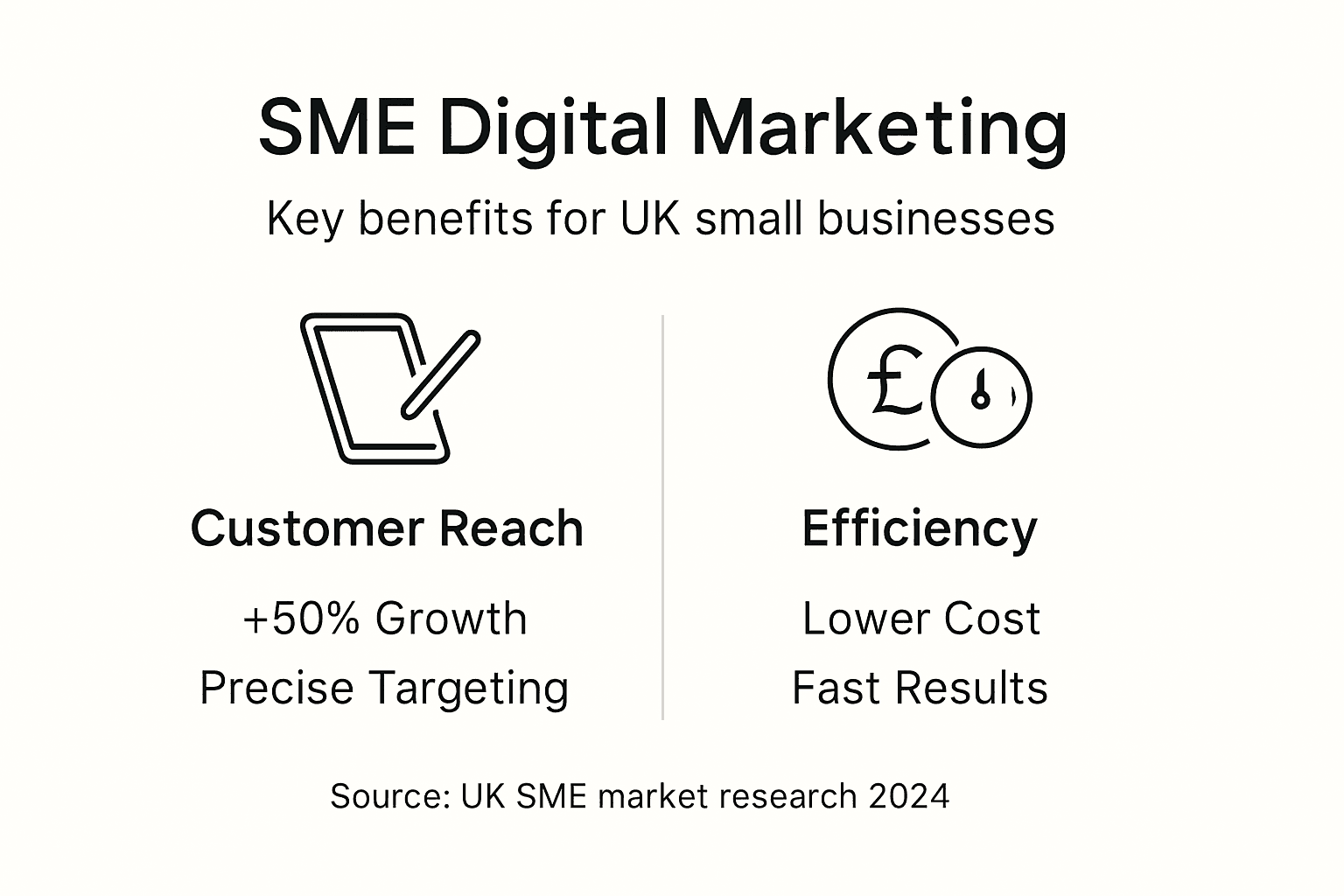
Targeted digital campaigns can improve customer acquisition rates by up to 50% compared to untargeted advertising. This precision means every pound spent works harder to reach genuinely interested prospects. Social media platforms provide detailed audience insights that guide content creation and ad placement for maximum impact.
Customer retention benefits equally from digital engagement:
- Email marketing nurtures relationships through personalized updates, offers, and valuable content delivered directly to subscribers.
- Social media creates communities where customers interact with your brand and each other, building loyalty beyond transactions.
- Retargeting campaigns remind visitors who didn’t convert initially, bringing them back when they’re ready to purchase.
- Content marketing establishes authority by answering customer questions and solving problems, positioning you as the trusted expert.
Digital channels enable two-way conversations impossible with traditional media. Customers can ask questions, leave reviews, and share experiences instantly. Responding promptly builds trust and demonstrates your commitment to service. Analytics reveal which messages resonate, which channels perform best, and where to adjust strategies for better results.
Pro Tip: Start with one or two digital channels where your target customers spend time rather than spreading resources thinly across all platforms. Master these before expanding to additional channels.
Flexibility represents another crucial advantage. Digital campaigns can launch quickly, scale up or down based on performance, and pivot when market conditions change. You’re not locked into long contracts or fixed placements. Real-time data shows what’s working, allowing immediate optimization that traditional marketing can’t match. For more guidance, explore these social media tips and effective marketing strategies.
Cost Efficiency and ROI Compared to Traditional Marketing
Budget constraints challenge most UK small businesses, making cost efficiency critical when choosing marketing channels. Digital marketing delivers superior returns by combining lower costs with precise targeting and measurable results.
Traditional advertising requires substantial upfront investment with uncertain outcomes. A print ad or radio spot costs thousands of pounds whether it reaches your ideal customers or not. Digital channels operate differently: you can start with modest budgets, test approaches, and scale spending only when results justify it.
| Marketing Type | Average Cost per Lead | Targeting Precision | Measurability | Flexibility |
|---|---|---|---|---|
| Digital (PPC, Social) | £20 to £50 | High (detailed demographics) | Real-time analytics | Instant adjustments |
| Traditional (Print, Radio) | £80 to £200 | Low (broad audiences) | Difficult to track | Fixed placements |
| Direct Mail | £150 to £300 | Medium (geographic) | Minimal tracking | Long lead times |
Digital marketing campaigns cost 50 to 70% less than traditional channels while often generating higher engagement rates. Pay-per-click advertising charges only when someone clicks your ad, ensuring you pay for interested prospects rather than passive exposure. Social media ads can start at £5 daily, making them accessible even for micro-businesses.
Measurement capabilities distinguish digital from traditional marketing:
- Track every interaction from initial ad view through website visit to final conversion.
- Calculate exact ROI by comparing campaign costs against revenue generated from attributed customers.
- Identify top performers to allocate more budget toward high-return channels and campaigns.
- Optimize continuously based on data showing which messages, images, and targeting parameters work best.
- Forecast results using historical performance data to predict future campaign outcomes.
Pro Tip: Use UTM parameters and conversion tracking to connect every marketing pound spent with specific customer actions and revenue, enabling true performance-based budget allocation.
Analytics platforms provide dashboards showing campaign performance in real time. You’ll know within hours whether a new ad resonates or needs adjustment. Traditional marketing offers no such feedback loop; you might wait weeks or months to gauge effectiveness through indirect sales trends. This transparency allows data-driven decisions that maximize returns from limited marketing budgets. Learn more about business growth strategies that leverage these cost advantages.
Common Misconceptions About Digital Marketing
Several persistent myths prevent UK small businesses from embracing digital marketing fully. Understanding the reality behind these misconceptions helps you make informed decisions about your marketing strategy.
Myth: Digital marketing is too complex and expensive for small businesses. Reality shows that over 60% of UK SMEs successfully use digital marketing with modest budgets and basic tools. Platforms like social media and email marketing offer intuitive interfaces requiring no technical expertise. Affordable automation tools handle routine tasks, while free resources provide guidance for DIY implementation.
Myth: Traditional marketing always outperforms digital for local businesses. Local search and social media have transformed how customers find nearby services. Google Business Profile listings, location-based ads, and community social media groups connect you directly with local customers actively seeking your offerings. Social media influences over 70% of UK consumer purchasing decisions, including local services.
Myth: Digital marketing results are automatic and require minimal effort. While digital channels offer powerful capabilities, success requires strategic planning and consistent execution. Many SMEs launch campaigns without clear goals, proper tracking, or regular optimization. Effective digital marketing demands understanding your audience, testing approaches, analyzing data, and refining strategies based on results.
Additional false beliefs include:
- “Young people handle digital marketing easily”: Age matters less than understanding marketing fundamentals, target audiences, and strategic thinking.
- “More channels always means better results”: Focus and consistency on relevant channels outperform scattered presence across many platforms.
- “Digital marketing works instantly”: Building audience trust and organic reach takes time, though paid ads can generate quicker results.
Recognizing these misconceptions helps you approach digital marketing with realistic expectations and appropriate strategies. Success comes from understanding your customers, choosing relevant channels, creating valuable content, and persistently optimizing based on performance data. Resources on effective marketing strategies can help you navigate past these myths toward practical implementation.
Framework for Choosing Digital Marketing Strategies
Selecting appropriate digital marketing channels and tactics requires a structured approach that aligns strategies with your business goals, customer behaviors, and available resources. This framework guides UK small businesses through the decision process.
-
Define your target customers clearly. Create detailed profiles including demographics, challenges, online habits, and purchasing triggers. Understanding where your ideal customers spend time online determines which channels deserve your attention and budget.
-
Establish specific marketing objectives. Set measurable goals like “increase website traffic by 40%” or “generate 25 qualified leads monthly” rather than vague aims like “improve visibility.” Clear objectives enable strategy selection and performance measurement.
-
Evaluate channels against criteria. Assess each potential channel (search ads, social media, email, content marketing) based on where your customers are active, costs, your ability to create appropriate content, and competitive intensity.
-
Implement campaigns with proper tracking. Set up analytics before launching campaigns to measure traffic sources, user behavior, and conversions. Use conversion pixels and UTM codes to attribute results accurately to specific campaigns.
-
Ensure GDPR compliance from the start. Digital marketing strategies must align with GDPR compliance, which enhances consumer trust and avoids costly legal penalties. Obtain explicit consent for marketing communications, provide clear privacy notices, and honor data access requests promptly.
| Channel | Best For | Typical Cost | Measurement Difficulty | GDPR Considerations |
|---|---|---|---|---|
| Search Ads | High intent buyers | £1 to £3 per click | Easy (direct tracking) | Minimal (no personal data collection) |
| Social Media | Brand awareness, engagement | £0.50 to £2 per click | Moderate (platform analytics) | High (consent for retargeting) |
| Email Marketing | Customer retention | £20 to £100 monthly | Easy (open and click rates) | High (explicit opt-in required) |
| Content/SEO | Long-term authority | Time investment | Moderate (organic attribution) | Low (public content) |
Regularly review campaign data weekly or biweekly to identify trends and opportunities. Test variations in messaging, targeting, and creative elements to discover what resonates best. Adjust budget allocation toward top-performing campaigns while pausing or refining underperformers.
Pro Tip: Start with a three-month pilot focusing on one or two channels before expanding. This allows you to build expertise, establish processes, and prove ROI before committing larger budgets.
Compliance with GDPR requirements protects your business while building customer trust. Document your data handling practices, train staff on privacy obligations, and review policies annually as regulations evolve. Learn more about choosing marketing strategies that balance effectiveness with compliance requirements.
Practical Application Tips and UK Case Studies
Translating digital marketing theory into practice requires actionable tactics and learning from businesses that have succeeded. These tips and examples provide concrete guidance for UK small businesses ready to implement digital strategies.
Leverage local SEO to capture nearby customers. Optimize your Google Business Profile with accurate information, high-quality photos, and regular posts. Encourage satisfied customers to leave reviews, as ratings significantly influence local search rankings and buyer decisions. Use location-specific keywords in your website content to appear when prospects search for services in your area.
Implement conversion tracking immediately. Install Google Analytics and conversion pixels before spending on ads. Define what constitutes a valuable action (purchase, form submission, phone call) and track these events. This data reveals which campaigns generate actual business results versus vanity metrics like impressions.
Build email lists through valuable content offers. Create guides, checklists, or tools that solve specific customer problems. Offer these resources in exchange for email addresses with clear consent for marketing communications. Nurture subscribers with helpful content before promotional messages.
Ensure GDPR compliance in all data collection. Use clear, plain-language consent forms that explain exactly how you’ll use customer data. Provide easy unsubscribe options and honor requests promptly. Penalties for GDPR violations can reach up to £17.5 million or 4% of global turnover, highlighting the importance of compliance.
Key implementation steps include:
- Conduct quarterly audits of your digital marketing data collection and storage practices.
- Train all staff who handle customer data on GDPR requirements and your company policies.
- Document consent records showing when and how customers opted into communications.
- Review third-party tools to ensure they meet UK data protection standards.
- Update privacy policies whenever you change data handling practices or add new marketing channels.
UK small businesses across sectors have achieved measurable results through focused digital marketing. Local retailers combining Google Shopping ads with Instagram posts showcasing products saw 40% increases in foot traffic. Service providers using targeted Facebook ads to promote seasonal offers generated lead costs 60% below traditional advertising. B2B consultancies publishing expert content attracted inbound leads worth triple their previous cold outreach efforts.
Success patterns across these examples include starting with clear goals, choosing channels matching customer habits, creating valuable content rather than pure promotion, measuring everything, and optimizing based on data. Resources on growth marketing strategies and official GDPR guidelines support your implementation journey.
Conclusion: Maximizing Growth Through Digital Marketing
Digital marketing delivers measurable advantages for UK small businesses seeking cost-effective customer acquisition and sustainable growth. Targeted campaigns boost acquisition rates by up to 50% while costing substantially less than traditional advertising. Real-time analytics enable data-driven decisions that optimize spending and maximize returns.
GDPR compliance protects your business from significant penalties while building the customer trust essential for long-term relationships. Small businesses that embrace digital channels strategically gain competitive advantages over those relying solely on traditional methods. The tools, platforms, and guidance needed for success are more accessible than ever, removing barriers that once favored larger competitors.
Start today by defining your target customers, selecting one or two relevant channels, and implementing tracking to measure results. Consistent effort combined with data-driven optimization creates momentum that compounds over time, transforming your customer acquisition and business growth trajectory.
Accelerate Your UK Small Business Growth with Kefihub
Transforming your digital marketing from concept to reality requires reliable guidance and practical resources. Kefihub provides UK small businesses with step-by-step frameworks, expert insights, and actionable strategies tailored for today’s competitive landscape.
Explore our comprehensive business growth roadmap that walks you through every stage of building your digital presence. Discover proven effective marketing strategies for SMEs that balance cost efficiency with measurable results. Stay compliant and protected with our small business compliance guide covering GDPR and essential regulations.
Whether you’re launching your first digital campaign or optimizing existing efforts, Kefihub delivers the clarity and confidence you need to succeed. Join thousands of UK professionals who trust our platform for practical guidance that drives real business outcomes.
FAQ
What is the most cost-effective digital marketing channel for UK small businesses?
Search engine marketing and social media advertising typically offer the best cost efficiency for UK SMEs, with lead costs 50 to 70% below traditional channels. Start with Google Ads targeting high-intent keywords or Facebook ads reaching specific local demographics. Email marketing delivers exceptional ROI for customer retention once you build a subscriber list through website opt-ins or in-store signups.
How can I measure the success of my digital marketing campaigns?
Install Google Analytics and conversion tracking pixels before launching campaigns to monitor traffic sources, user behavior, and goal completions. Define specific conversion actions like form submissions, phone calls, or purchases, then track cost per conversion and overall ROI. Review metrics weekly, comparing campaign performance against your objectives to identify top performers and optimization opportunities.
Is GDPR compliance difficult for small businesses to manage?
GDPR compliance requires attention but is manageable with clear processes and documentation. Obtain explicit consent before collecting marketing data, provide transparent privacy notices explaining data usage, and honor access or deletion requests promptly. Use compliant email marketing platforms that handle technical requirements, conduct quarterly audits of your data practices, and train staff on privacy obligations to maintain ongoing compliance.
Can digital marketing really help me compete with larger companies?
Digital channels level the playing field by enabling precise targeting and measurable results regardless of company size. Small businesses often outperform larger competitors through nimble strategy adjustments, authentic customer engagement, and focused expertise in specific niches. Your ability to respond quickly to customer feedback and market changes provides advantages that large organizations struggle to match despite bigger budgets.
How soon can I expect results after starting digital marketing?
Paid advertising can generate immediate traffic and leads within days of launching campaigns, though conversion optimization may take several weeks of testing. Organic strategies like SEO and content marketing typically require three to six months to build meaningful traction as search engines index content and authority grows. Plan for a three-month pilot period to establish processes, gather performance data, and refine your approach before scaling investment.
Recommended
- Digital Transformation Explained: Boosting UK SME Success – Kefihub
- 7 Effective Marketing Strategies for SMEs to Drive Growth – Kefihub
- Role of SEO in 2026: 312% ROI Boost for UK Small Businesses – Kefihub
- Role of Analytics in Growth: UK SME Impact – Kefihub