

More than three quarters of British consumers now research small businesses online before making a purchase. For local firms across the United Kingdom, this means your website is no longer just an extra but a vital part of building trust and credibility with your audience. Whether you are looking to reach new customers, show your professional value, or stay compliant with UK law, understanding how a business website works can transform your engagement and provide lasting growth.
Table of Contents
- Defining A Business Website In The UK
- Essential Website Types For Small Firms
- Key Features Driving Online Engagement
- Legal Duties And Data Protection Online
- Costs, Risks, And Common Mistakes Unpacked
Key Takeaways
| Point | Details |
|---|---|
| Importance of Legal Compliance | UK businesses must display statutory information on their websites to ensure transparency and comply with regulations. |
| Selecting the Right Website Type | Choose a website type that aligns with your business structure and goals to enhance customer engagement and operational efficiency. |
| Engagement Features Matter | Incorporate interactive elements, such as live chat and personalisation tools, to enhance user experience and drive conversions. |
| Data Protection Responsibilities | Adhere to strict data protection laws, ensuring clear user consent and transparent privacy policies to build customer trust. |
Defining a Business Website in the UK
A business website is more than just an online brochure. It represents your company’s digital presence, serving as a crucial platform for communicating your brand’s identity, services, and credibility to potential customers. In the United Kingdom, websites are not merely optional marketing tools but essential interfaces connecting businesses with their target audiences.
Small businesses must understand that their website needs to meet specific legal requirements. Statutory information disclosure is mandatory, which includes displaying your legal business identity, contact details, registered numbers, and compliance statements. These elements are not just recommended but legally required under UK regulations, ensuring transparency and protecting consumer interests.
The fundamental components of a UK business website typically include:
- Clear business contact information
- Company registration details
- Professional service or product descriptions
- Privacy policy and cookie consent mechanisms
- Accessible design meeting Equality Act standards
- Secure payment systems (if conducting online transactions)
Websites function as digital storefronts, providing potential customers with instant insights into your business capabilities, professionalism, and reliability. They operate 24/7, offering information and engagement opportunities beyond traditional business hours, making them powerful tools for small UK enterprises seeking growth and visibility.
Pro tip: Invest time in creating a website that not only looks professional but also communicates your unique business value, focusing on clear, concise information that answers potential customer questions quickly and effectively.
Essential Website Types for Small Firms
Small businesses in the United Kingdom have diverse digital needs, requiring tailored website solutions that reflect their unique operational structures and strategic objectives. Different business website types offer varying functionalities designed to support specific entrepreneurial goals and customer engagement strategies.

Based on organisational structure, small firms typically require one of several core website approaches. Sole traders might benefit from simple informational websites showcasing services, while partnerships could need more complex platforms enabling collaborative client interactions. Limited companies often require comprehensive websites with robust e-commerce capabilities, integrated booking systems, and detailed professional presentations.
The primary website categories for UK small businesses include:
- Informational Websites: Basic platforms presenting business details, services, and contact information
- E-commerce Platforms: Online shops enabling direct product sales and payment processing
- Portfolio Websites: Showcase professional work, particularly useful for creative and consulting businesses
- Service Booking Websites: Allow direct online appointment scheduling and service selection
- Blog-based Websites: Support content marketing and demonstrate industry expertise
Choosing the right website type requires careful consideration of your business model, target audience, and growth objectives. The digital platform you select should not just represent your brand but actively support your commercial strategies and customer engagement efforts.
The following table summarises the typical website types for UK small businesses, highlighting their core value and the best-fitting business structure:
| Website Type | Main Business Benefit | Most Suited Structure |
|---|---|---|
| Informational Site | Builds credibility and trust | Sole trader |
| E-commerce Platform | Enables direct online sales | Limited company |
| Portfolio Website | Showcases project examples | Freelancer/creative agency |
| Service Booking Site | Simplifies appointment management | Partnership or service firm |
| Blog-based Site | Demonstrates expertise | Consultancy or niche SME |
Pro tip: Consult with a digital strategy professional to match your specific business needs with the most appropriate website type, ensuring your online presence effectively supports your commercial objectives.
Key Features Driving Online Engagement
Successful online engagement for UK small businesses requires a strategic approach that goes beyond simple digital presence. Digital innovation strategies have become critical for transforming websites from static information platforms into dynamic customer interaction engines that drive business growth.
Modern websites must incorporate multiple features that actively attract, retain, and convert potential customers. These engagement-driving elements include responsive design that adapts seamlessly across devices, intuitive navigation structures, clear value propositions, and interactive components that encourage visitor participation. The goal is to create a digital experience that feels personalised, professional, and purposeful.
Key features that significantly enhance online engagement include:
- Live Chat Support: Instant communication channels
- Interactive Product Demonstrations: Multimedia content showcasing services
- Customer Testimonial Sections: Real-world credibility builders
- Personalisation Tools: Adaptive content matching user preferences
- Performance Analytics Integration: Real-time user behaviour tracking
- Mobile-Responsive Design: Seamless experience across all devices
Website engagement is not just about visual appeal but creating meaningful digital interactions that transform casual visitors into committed customers. By implementing intelligent, user-centric design principles, small businesses can develop online platforms that effectively communicate their unique value and build lasting customer relationships.
Below is a quick reference guide to website features and their direct impact on customer engagement:
| Feature | How It Engages Visitors | Business Advantage |
|---|---|---|
| Live Chat Support | Enables instant answers to queries | Increases conversion rate |
| Personalisation Tools | Delivers customised experiences | Boosts customer retention |
| Mobile-Responsive Design | Ensures usability on any device | Widens audience reach |
| Performance Analytics | Tracks user activity in real time | Informs marketing strategy |
Pro tip: Regularly analyse your website’s user interaction data to continuously refine and optimise your digital engagement strategies, ensuring your online presence remains dynamic and responsive to customer needs.
Legal Duties and Data Protection Online
UK small businesses must navigate a complex landscape of digital legal responsibilities, particularly concerning online data management. Data protection regulations establish critical guidelines that businesses must meticulously follow to protect user information and maintain legal compliance.
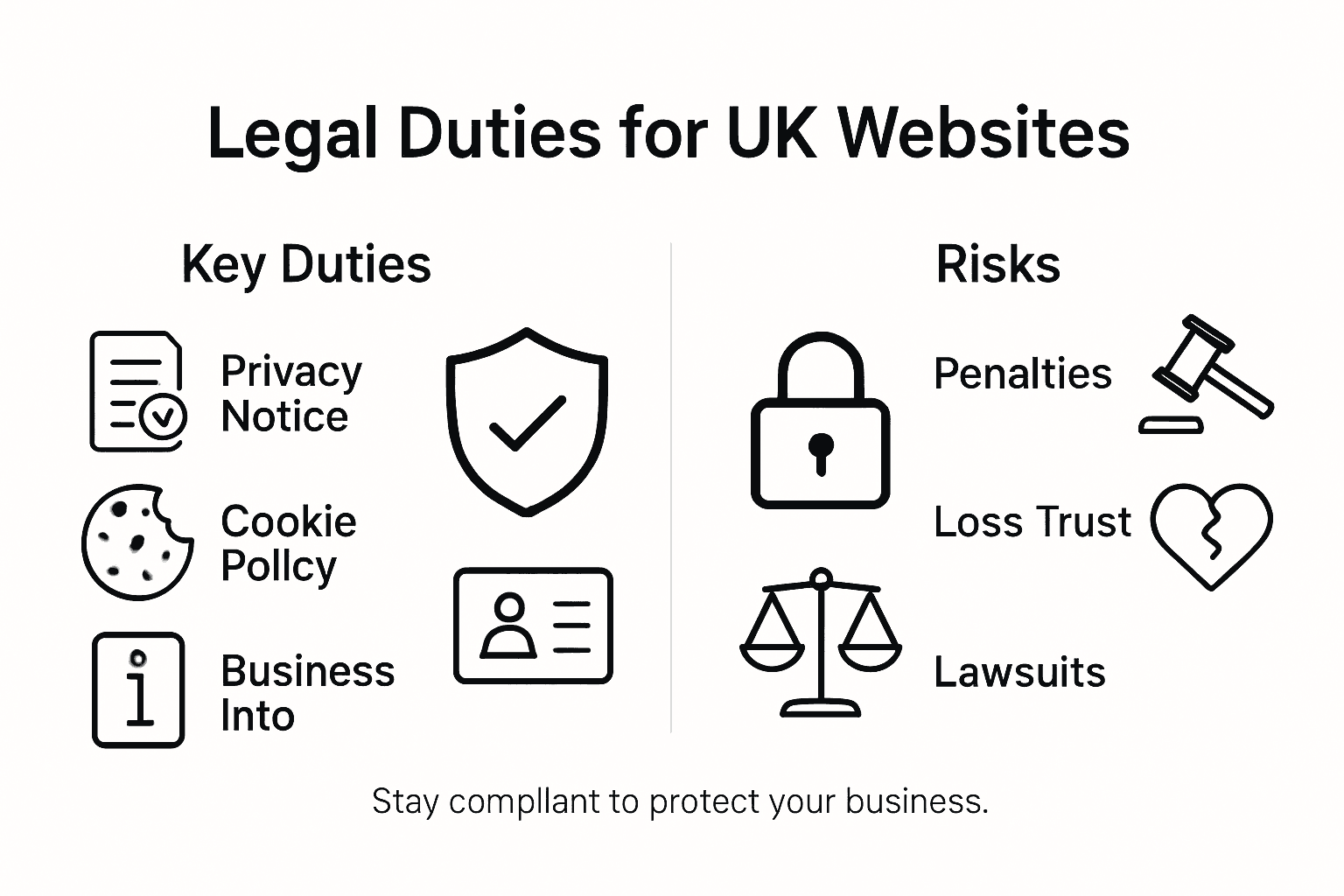
The UK General Data Protection Regulation (UK GDPR) and Data Protection Act 2018 mandate specific requirements for businesses handling personal data online. These regulations impose stringent obligations around data collection, storage, processing, and user consent. Small businesses must implement robust mechanisms to ensure transparency, provide clear privacy notices, and establish secure data handling protocols that protect individual privacy rights.
Key legal duties for online data protection include:
- Explicit User Consent: Obtaining clear permission before collecting personal information
- Data Minimisation: Collecting only necessary information for specified purposes
- Security Measures: Implementing technical and organisational protections
- Transparent Privacy Policies: Clear communication about data usage
- User Rights Management: Enabling individuals to access, modify, or delete their data
- Regular Compliance Audits: Ongoing assessment of data protection practices
Failing to comply with these legal requirements can result in substantial financial penalties and reputational damage. Small businesses must view data protection not as a bureaucratic burden but as an essential aspect of building trust with their digital audience and demonstrating professional integrity.
Pro tip: Consult with a legal professional specialising in data protection to develop a comprehensive compliance strategy tailored to your specific business operations and online presence.
Costs, Risks, and Common Mistakes Unpacked
Building a website for your small business involves strategic financial planning and risk management. Website design costs for UK small businesses vary significantly, ranging from budget DIY solutions to comprehensive professional development packages that require careful consideration.
The financial investment in a website encompasses more than initial design expenses. Small businesses must budget for ongoing maintenance, hosting, domain registration, security updates, and potential future redesigns. Unexpected costs can quickly accumulate, making it crucial to develop a comprehensive financial strategy that accounts for both immediate and long-term digital infrastructure expenses.
Common website development risks and mistakes for UK small businesses include:
- Underestimating Total Costs: Failing to budget for comprehensive digital infrastructure
- Neglecting Mobile Responsiveness: Creating websites that perform poorly on smartphones
- Inadequate Security Measures: Leaving websites vulnerable to cyber threats
- Poor User Experience Design: Developing difficult-to-navigate interfaces
- Inconsistent Branding: Misaligning website design with overall business identity
- Lack of Regular Updates: Allowing website content and functionality to become obsolete
Successful website development requires balancing financial constraints with strategic investment. Small businesses must view their digital presence as a long-term asset, prioritising quality, functionality, and user experience over minimal upfront expenses.
Pro tip: Request detailed, transparent quotes from multiple web development providers and carefully analyse the full scope of services included to avoid hidden costs and ensure comprehensive digital strategy alignment.
Unlock Your UK Business Potential With a Powerful Website
Building a website is no longer just an option for UK small business owners; it is a critical step to overcoming challenges like limited visibility, managing legal compliance, and engaging customers effectively. This article highlights common pain points such as choosing the right website type, ensuring legal data protection, and avoiding costly development mistakes. If you want to transform your online presence into a dynamic tool for growth, understanding these concepts is vital.
Discover practical insights and tailored advice through our Digital Archives – Kefihub to stay ahead with digital innovation strategies that boost engagement and compliance. Start building a trustworthy, professional website that clearly communicates your unique value by visiting KefiHub. Get expert commentary and actionable guidance suited specifically for UK businesses in our Introduction Archives – Kefihub. Take the first step towards securing your business’s future today by exploring trusted insights at https://kefihub.co.uk.
Frequently Asked Questions
What are the key components of a business website?
A business website should include clear contact information, company registration details, service or product descriptions, a privacy policy, cookie consent mechanisms, an accessible design, and secure payment systems if applicable.
How do I choose the right type of website for my small business?
Consider your business model, target audience, and growth objectives. Options include informational websites, e-commerce platforms, portfolio sites, service booking websites, and blog-based sites, each serving different purposes and needs.
What features enhance online engagement for a business website?
Key features that drive engagement include live chat support, interactive product demonstrations, customer testimonial sections, personalisation tools, performance analytics integration, and mobile-responsive design to ensure usability across devices.
What legal responsibilities should I be aware of when creating a website?
You must comply with data protection regulations by obtaining explicit user consent for data collection, minimising data collected, implementing security measures, maintaining transparent privacy policies, managing user rights effectively, and conducting regular compliance audits.
Recommended
- Branding for Small Businesses: Practical Step-by-Step Guide – Kefihub
- What Is Business Succession and Why It Matters – Kefihub
- Starting a Small Business UK: Step-by-Step Legal Guide – Kefihub
- Business Growth Roadmap: Step-by-Step Path for UK SMEs – Kefihub