


Struggling to make sense of endless business data is a daily reality for many UK SME owners. In a fast-changing digital economy, relying solely on instinct often means missing out on measurable growth. Data analytics can deliver a productivity increase between 5 and 6 percent for small firms, helping transform raw data into clear strategy across sales, marketing, and operations. Unlocking these insights can highlight hidden opportunities and equip your business to stay ahead in a competitive market.
Table of Contents
- What Is Analytics and Why SMEs Need It
- Types of Analytics Driving Business Growth
- Key Processes and Data Sources for Growth
- Real-Life Use Cases in UK SMEs
- Critical Risks and Common Mistakes to Avoid
Key Takeaways
| Point | Details |
|---|---|
| Importance of Data Analytics | SMEs should adopt data analytics to transform raw data into actionable insights, thereby improving decision-making and operational efficiency. |
| Types of Analytics | Understanding the four types of analytics—descriptive, diagnostic, predictive, and prescriptive—can help SMEs tailor their strategies for effective growth. |
| Data Management Practices | Establishing robust data collection and governance processes is essential for generating high-quality insights and ensuring regulatory compliance. |
| Common Pitfalls | SMEs must be aware of risks related to data privacy, quality, and resource limitations to avoid ineffective analytics implementation and maximise their investment. |
What Is Analytics and Why SMEs Need It
Data analytics represents a strategic approach that transforms raw business information into meaningful insights, enabling small and medium enterprises (SMEs) to make smarter operational decisions. Emerging data-driven decision techniques are revolutionising how UK businesses understand their performance, customers, and growth potential.
At its core, analytics involves collecting, processing, and interpreting data to uncover patterns, trends, and opportunities that might remain invisible through traditional assessment methods. For SMEs, this means moving beyond gut feelings and intuition towards evidence-based strategies. By leveraging data analytics, businesses can track key performance indicators, understand customer behaviour, optimise marketing efforts, and predict potential challenges before they emerge.
The potential impact is substantial. Research indicates that SMEs adopting data analytics can experience productivity increases between 5-6%, with benefits spanning multiple business domains. Practical applications include understanding customer purchasing patterns, identifying most profitable product lines, optimising supply chain logistics, and improving financial forecasting. Small businesses leveraging data tools can gain significant competitive advantages by transforming complex information into actionable strategic insights.
Pro tip: Start your analytics journey by identifying 3-5 critical business questions you want data to help answer, then select appropriate tools matching your specific analytical needs.
Types of Analytics Driving Business Growth
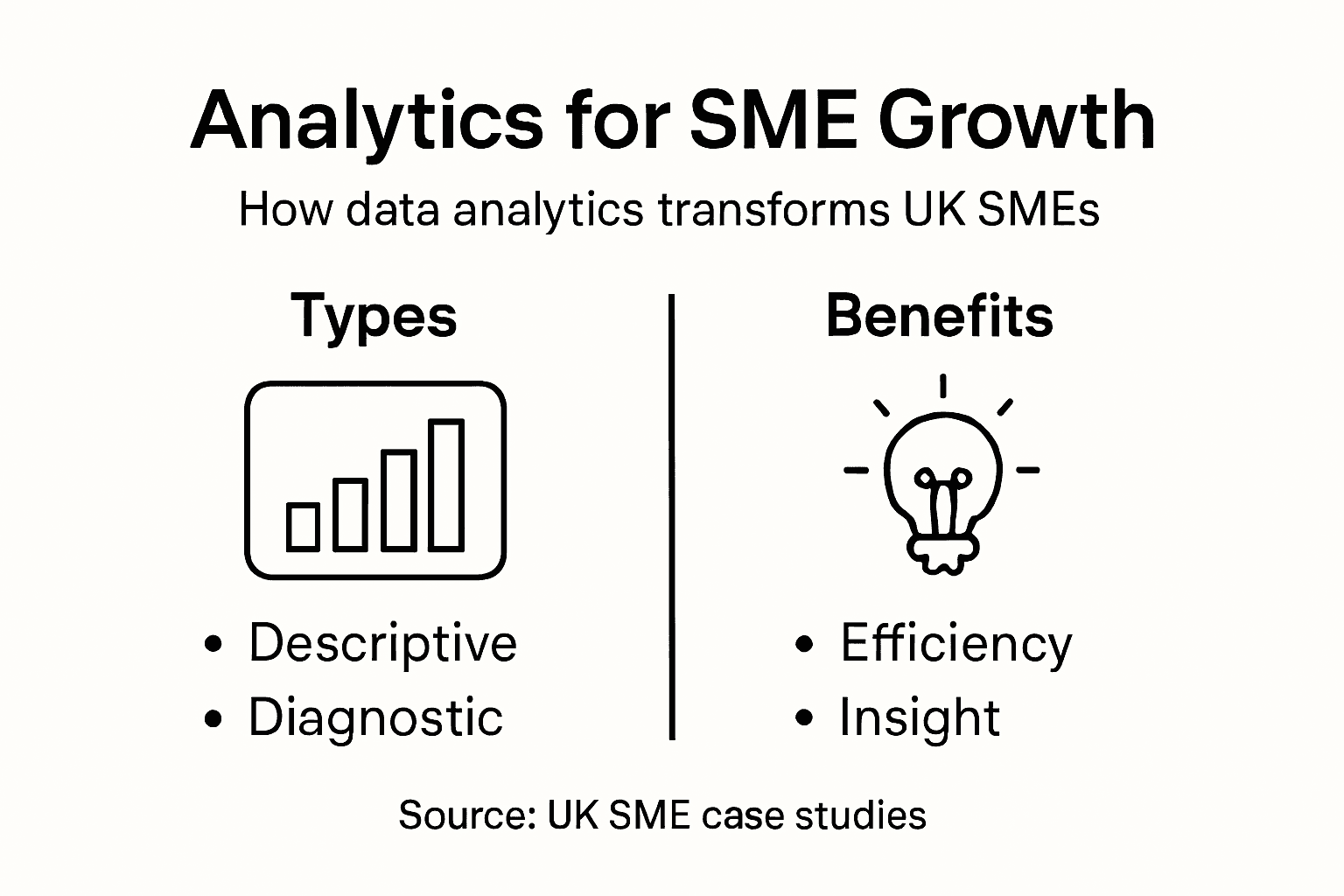
Small and medium enterprises (SMEs) can leverage four primary types of analytics to drive strategic business growth: descriptive, diagnostic, predictive, and prescriptive. Business analytics methods enable organisations to transform raw data into actionable intelligence across multiple operational domains.
Descriptive Analytics provides a retrospective view of business performance by summarising historical data. This approach helps SMEs understand past trends, customer behaviours, and key performance indicators. By analysing previous sales records, customer interactions, and financial statements, businesses can gain insights into what has already occurred.

Diagnostic Analytics delves deeper by investigating why specific outcomes happened. This analytical approach identifies root causes behind performance variations, helping SMEs understand the factors driving success or challenges. For instance, diagnostic analytics can reveal why a particular marketing campaign underperformed or which product lines generate the most profitable margins. Predictive Analytics takes insights a step further by forecasting future trends and potential scenarios. By applying statistical algorithms and machine learning techniques, SMEs can anticipate market changes, customer preferences, and potential risks before they materialise.
Prescriptive Analytics represents the most advanced analytical approach, offering concrete recommendations for strategic actions. This method combines insights from descriptive, diagnostic, and predictive analytics to suggest optimal business strategies. For SMEs, prescriptive analytics can recommend precise marketing interventions, pricing strategies, resource allocation, and operational improvements that directly contribute to business growth.
Pro tip: Begin your analytics journey by selecting one analytics type most relevant to your current business challenge, and gradually expand your analytical capabilities as you gain confidence and insights.
Here is a summary of the four main types of analytics and their business impact for SMEs:
| Analytics Type | Primary Focus | Typical Benefit | Example Application |
|---|---|---|---|
| Descriptive Analytics | Past business performance | Identifies key historical trends | Analysing sales history |
| Diagnostic Analytics | Reasons behind outcomes | Reveals root causes of changes | Determining sales decline |
| Predictive Analytics | Forecasting future scenarios | Anticipates challenges and trends | Projecting customer demand |
| Prescriptive Analytics | Actionable strategic guidance | Supports optimal business actions | Recommending pricing changes |
Key Processes and Data Sources for Growth
UK small and medium enterprises (SMEs) must adopt strategic approaches to data management and collection to drive sustainable business growth. SMEs leverage multiple data processes that transform raw information into actionable business intelligence, enabling more informed decision-making across organisational functions.
Data Collection Processes involve systematically gathering information from diverse sources. These include internal operational data such as sales records, financial statements, and inventory management systems. Customer interaction data from digital platforms, social media engagement, and direct feedback mechanisms provide crucial insights into market preferences and behavioural trends. External data sources like market research reports, industry benchmarks, and economic indicators further enrich the analytical landscape for SMEs seeking comprehensive strategic understanding.
Key technological tools play a critical role in effective data management. Customer Relationship Management (CRM) systems centralise customer information, enabling targeted marketing and personalised service strategies. Spreadsheet tools facilitate budgeting, financial analysis, and performance tracking, while specialised data analytics platforms offer real-time monitoring and advanced reporting capabilities. These technologies help SMEs transform complex datasets into clear, actionable insights that directly support strategic decision-making and operational efficiency.
Effective data governance requires SMEs to establish robust IT infrastructure, implement clear data collection protocols, and invest in ongoing staff training. This involves assessing current technological capabilities, developing comprehensive data management policies, and creating scalable systems that can adapt to evolving business needs. Regulatory compliance, data security, and ethical information handling must remain paramount considerations throughout these processes.
The table below contrasts key technological tools for SME data management:
| Tool Type | Main Function | Business Advantage |
|---|---|---|
| CRM System | Centralises customer data | Enables targeted engagement |
| Spreadsheet Software | Financial tracking | Simplifies budgeting analysis |
| Analytics Platform | Real-time reporting | Delivers advanced performance insight |
| Inventory Management System | Stock data management | Optimises supply chain decisions |
Pro tip: Start by conducting a comprehensive audit of your current data collection processes, identifying gaps and prioritising investments in tools that provide the most immediate strategic value to your specific business context.
Real-Life Use Cases in UK SMEs
Data analytics has transformed how UK small and medium enterprises (SMEs) approach business challenges, with empirical studies revealing significant performance improvements across multiple operational domains. These real-world examples demonstrate the tangible impact of strategic data utilisation for businesses with limited resources.
In the manufacturing sector, a small precision engineering firm in Manchester implemented predictive maintenance analytics to monitor equipment performance. By integrating machine learning algorithms with sensor data, they reduced unexpected machinery breakdowns by 42% and decreased maintenance costs by approximately 27%. This approach allowed them to predict potential equipment failures before they occurred, minimising production disruptions and optimising operational efficiency.
Retail SMEs have also leveraged analytics to transform customer engagement strategies. A boutique clothing retailer in Birmingham utilised customer relationship management (CRM) systems to analyse purchasing patterns, segment customer groups, and personalise marketing communications. By applying data-driven insights, they increased customer retention rates by 35% and improved targeted marketing campaign effectiveness, resulting in a significant uplift in repeat purchases and customer loyalty.
Service-based SMEs are similarly benefiting from analytics-driven approaches. A digital marketing agency in London developed interactive dashboards to track key performance indicators in real-time, enabling more responsive strategic decision-making. By visualising complex data streams, they could quickly identify emerging trends, adjust client strategies proactively, and demonstrate tangible value through data-backed recommendations.
Pro tip: Start your analytics journey by identifying one specific business challenge where data insights could provide immediate, measurable improvements, and pilot a targeted analytics approach.
Critical Risks and Common Mistakes to Avoid
UK small and medium enterprises (SMEs) must navigate a complex landscape of potential pitfalls when implementing data analytics strategies. Data governance challenges pose significant risks that can undermine the effectiveness of analytics initiatives and compromise business performance.
Data Privacy and Security Risks represent a critical concern for SMEs. Many businesses underestimate the complexity of protecting sensitive information, leaving themselves vulnerable to potential breaches. Common mistakes include inadequate encryption protocols, poor access management, and insufficient staff training on data protection standards. SMEs must implement robust cybersecurity measures, develop comprehensive data handling policies, and ensure compliance with UK data protection regulations, including GDPR requirements.
Another significant risk stems from Poor Data Quality and Management. SMEs often struggle with fragmented data sources, inconsistent data collection processes, and limited analytical capabilities. Businesses frequently make the mistake of collecting data without a clear strategic purpose, leading to information overload and ineffective decision-making. Critical errors include relying on outdated or incomplete datasets, failing to standardise data collection methods, and neglecting regular data cleansing and validation processes.
Resource and Skill Limitations present another substantial challenge. Many SMEs lack the financial resources and specialised talent required to develop sophisticated analytics capabilities. Common mistakes include attempting overly complex analytics strategies without proper infrastructure, underinvesting in staff training, and failing to develop a data-driven organisational culture. These limitations can result in inefficient implementation, misinterpreted insights, and ultimately, limited return on analytics investments.
Pro tip: Conduct a comprehensive analytics readiness assessment, identifying your current capabilities, skill gaps, and potential risks before launching any data-driven initiatives.
Unlock Your SME’s Growth Potential with Smart Analytics Solutions
Understanding the challenges of transforming data into actionable insights is crucial for any UK SME striving to stay competitive. If you find yourself struggling with identifying the right analytics approach or managing diverse data sources effectively you are not alone. This article highlights common pain points such as poor data quality, resource limitations, and the need for evidence-based strategies that directly impact your business success.
KefiHub empowers you to overcome these hurdles by offering practical guidance tailored to your unique needs. Explore our Business Archives – Kefihub for real-world examples and expert advice that demystify analytics concepts from descriptive to prescriptive techniques. Whether you want to improve customer engagement or optimise operational efficiency, our insights platform provides clear steps and trusted resources to help you make smarter decisions.
Take control of your business’s future today by visiting KefiHub. Dive into actionable strategies and start transforming complex data into meaningful growth opportunities. Don’t wait for challenges to disrupt your progress act now to build a resilient, data-savvy SME with support you can trust.
Frequently Asked Questions
What is data analytics and how can it benefit SMEs?
Data analytics is the process of collecting, processing, and interpreting data to uncover insights that aid in strategic decision-making. For SMEs, it helps in tracking performance, understanding customer behaviour, optimising marketing, and forecasting challenges, ultimately leading to smarter business decisions and improved productivity.
What are the different types of analytics that SMEs can use?
SMEs can utilise four types of analytics: descriptive, diagnostic, predictive, and prescriptive. Descriptive analytics summarises past performance, diagnostic analytics investigates the reasons behind outcomes, predictive analytics forecasts future trends, and prescriptive analytics provides actionable recommendations for strategic business actions.
How can SMEs ensure effective data management and collection?
Effective data management involves systematically gathering information from multiple sources, including operational data, customer interactions, and external market research. SMEs should also use tools like CRM systems and analytics platforms to centralise data and provide actionable insights, while establishing robust data governance frameworks to ensure data quality and security.
What are some common mistakes SMEs make when implementing data analytics?
Common mistakes include neglecting data privacy and security, maintaining poor data quality and management practices, and lacking sufficient resources or skills for effective analytics implementation. SMEs should ensure robust data protection measures, standardise data collection processes, and invest in staff training to build a data-driven culture.
Recommended
- Growth Hacking Explained: Driving UK Business Success – Kefihub
- Growth Hacking Explained: Driving UK Business Success – Kefihub
- Business Intelligence: Empowering UK Small Businesses – Kefihub
- 7 Effective Marketing Strategies for SMEs to Drive Growth – Kefihub