


TL;DR:
- Local networking builds trust, social capital, and strong community relationships for small businesses.
- It generates warm leads and valuable referrals, leading to higher conversion rates.
- Combining local and digital strategies enhances business growth and community reputation.
Despite the rise of social media, paid advertising, and SEO tools, many UK small business owners find their best clients still come from a conversation at a local event or a recommendation from a neighbour. Digital channels are powerful, but they rarely replicate the depth of trust that forms when two people meet face to face. For the 5.6 million small businesses that make up the backbone of the UK economy, local networking is not a nice-to-have. It is a core growth strategy. This guide explains why local connections matter, what the evidence shows, and how you can build a network that genuinely supports your business.
Table of Contents
- The foundations: why local networks matter for UK small businesses
- Personal trust, warm leads, and word of mouth: the unique strengths of local networking
- Strategies that work: practical ways to build strong local networks
- Maximising value: how local and digital networking strategies reinforce each other
- Our perspective: what most guides miss about local networking
- Take your next step with tailored networking and business support
- Frequently asked questions
Key Takeaways
| Point | Details |
|---|---|
| Personal trust boosts business | Local networking leads to stronger, more trusted relationships than digital alone. |
| Community support increases resilience | Small UK businesses with strong local connections survive and thrive even in tough times. |
| Blended strategies work best | Combining local and digital networking delivers more leads and growth than either in isolation. |
| Actionable steps available | There are proven, practical ways for any SME to build and benefit from local networks. |
The foundations: why local networks matter for UK small businesses
Having recognised the digital shift, it is vital to understand the enduring importance of local connections. The UK’s small business landscape is enormous in scale and significance. SMEs create two thirds of all private sector jobs in the country, and when you spend money with a local business, a far greater proportion of that spend circulates back into the local economy compared with spending at a national chain. That circulation effect strengthens entire communities, not just individual firms.
Beyond economics, local networking builds something that no algorithm can replicate: social capital. Social capital refers to the trust, goodwill, and reciprocal relationships that form between people in a community. Research from the Enterprise Research Centre confirms that local social capital, including civic engagement and trust, directly boosts survival rates, growth prospects, and resilience for micro-businesses and necessity-driven entrepreneurs. In plain terms, businesses with strong local ties are more likely to weather difficult periods.
Here is why local networks create such a strong foundation:
- Trust forms faster in person. A handshake and a conversation carry more weight than a LinkedIn connection request.
- Referrals come naturally. People recommend businesses they have met and liked, not just ones they have seen advertised.
- Mutual support is practical. Local business owners share suppliers, cover for each other, and collaborate on costs.
- Community visibility builds reputation. Being known locally gives you a credibility that paid promotions struggle to match.
“Local connections are not just about leads. They are about building a business that your community actively wants to see succeed.”
If you are new to structured networking, a solid business networking guide can help you understand the full scope of what is available and how to approach it with confidence.
Personal trust, warm leads, and word of mouth: the unique strengths of local networking
With the foundations in place, it is time to see how local networks specifically drive tangible results for your business. The most important distinction between local and digital networking is the quality of the leads each produces. Digital outreach, whether through email campaigns or social media ads, typically generates cold leads: contacts who have no prior relationship with you and require significant effort to convert. Local networking, by contrast, produces warm leads, people who already know you, have heard good things about you, or have met you directly.
As Kehorne notes, people buy from people they know, and local networking is the most direct route to building that familiarity. A referral from a trusted local contact carries an implicit endorsement that no paid advertisement can manufacture.
| Factor | Local networking | Digital-only networking |
|---|---|---|
| Lead quality | High (warm, referred) | Variable (often cold) |
| Trust level | Built through personal contact | Slower to establish |
| Conversion rate | Typically higher | Requires more touchpoints |
| Cost | Low (time investment) | Can be high (ad spend) |
| Long-term value | Strong (loyalty, referrals) | Dependent on platform |
Word of mouth remains one of the most powerful forces in small business growth. When a local contact recommends your services to their own network, your credibility transfers with that recommendation. You are not starting from zero. You are starting from a position of inherited trust.
“The best referral is one where the client already trusts you before they have even spoken to you.”
For a broader view of how business networking value translates into real commercial outcomes, and how to position yourself effectively, it is worth exploring the wider evidence on networking for SMEs before you commit to a particular approach.
Pro Tip: After every local event, send a brief, personal follow-up message to each new contact. Reference something specific from your conversation. This single habit significantly increases the chance that a meeting becomes a lasting professional relationship.
Strategies that work: practical ways to build strong local networks
Understanding the value is one step; putting networking into action gives you the real advantage. Knowing where to network locally is just as important as knowing why. The good news is that the UK has a well-developed infrastructure of organisations and events designed specifically to connect small business owners.
Here are the most effective routes to building a strong local network:
- Join the Federation of Small Businesses (FSB). The FSB runs local networking events across the UK, giving you access to a community of like-minded business owners and practical support resources.
- Connect with your local Chamber of Commerce. Chambers organise regular events, business breakfasts, and sector-specific meetings that bring together established and emerging businesses in your area.
- Attend council-run business events. Many local authorities host free or low-cost events to support SMEs. These are often overlooked but can be excellent for meeting decision-makers.
- Participate in local fairs and markets. Even if you are not selling directly, being present at community events raises your profile and creates natural conversation opportunities.
- Use digital platforms to find local groups. Facebook Groups, Nextdoor, and Meetup all host active local business communities. These are particularly useful for following up after in-person events.
According to Kehorne’s guidance, partnering with neighbouring businesses for mutual referrals and joint promotions is one of the most underused yet effective strategies available to small business owners.

For a structured approach to building these connections, the guide to SME networking on KefiHub walks you through each stage. You can also pair networking with broader marketing strategies for SMEs to create a more complete growth plan.
Pro Tip: Approach neighbouring businesses with a specific proposal, such as cross-promoting each other’s services to your respective customer lists. A concrete offer is far more compelling than a vague suggestion to “work together sometime.”
Maximising value: how local and digital networking strategies reinforce each other
With hands-on strategies to build local ties, how can you tie these efforts to your digital presence for even greater gains? The most effective small businesses do not choose between local and digital networking. They use each to strengthen the other.
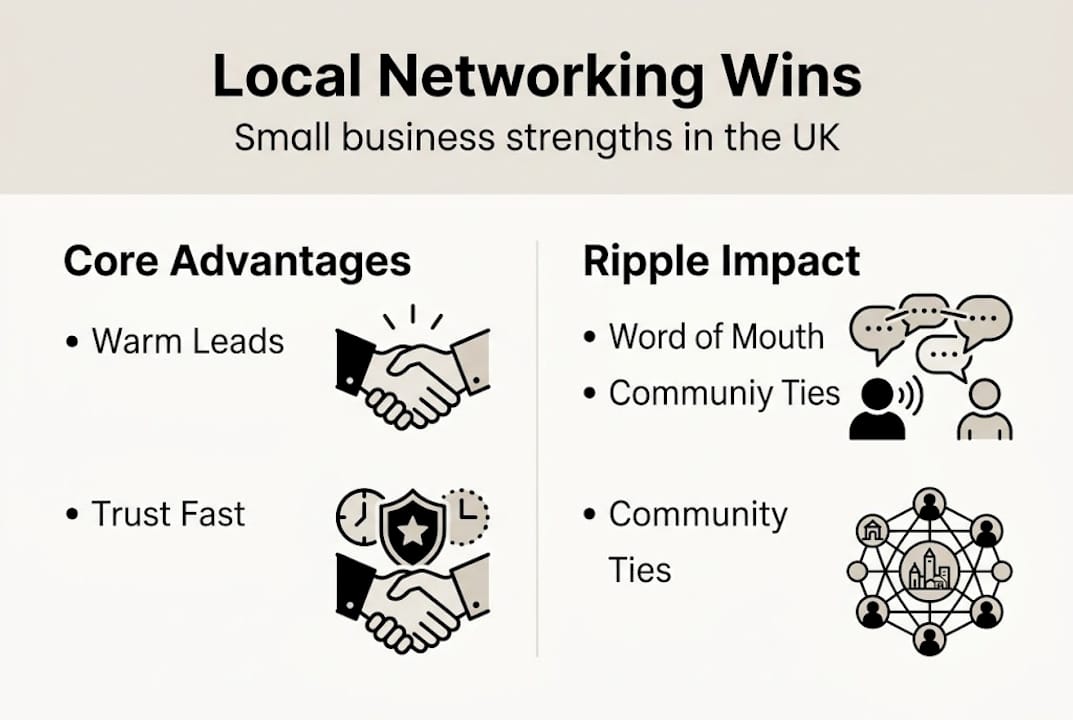
When a satisfied local contact leaves you a Google review or shares your post on social media, they are doing something that paid advertising rarely achieves: providing authentic, third-party validation to a wider audience. Local networking amplifies your online efforts through word of mouth in a way that feels genuine rather than promotional.
At the same time, digital tools help you maintain and deepen the relationships you build locally. A quick message on LinkedIn, a comment on a local business’s Instagram post, or a newsletter that keeps your network informed all serve to keep you visible between face-to-face meetings.
However, it is important to recognise that not every network suits every business. As the ERC’s 2025 research highlights, local networks are particularly vital for community-embedded businesses such as cafés, tradespeople, and independent retailers, while export-oriented or highly specialised firms may need to balance local ties with national or international connections.
Here is how to blend online and offline for the best effect:
- Follow up every local meeting with a connection request or message on LinkedIn or email.
- Share local event photos on your social media to show community involvement.
- Ask satisfied local clients for online reviews immediately after a positive interaction.
- Use email newsletters to keep your local network updated on your services and achievements.
- Tag local businesses in social posts when you collaborate, extending your reach to their audiences.
“Your digital presence and your local reputation are not separate. Each one feeds the other when you manage both with intention.”
For more on how to align these efforts, explore the evidence on digital marketing impact for UK SMEs and consider how growth strategies for professionals can frame your combined approach.
Our perspective: what most guides miss about local networking
Bringing together all these strategies, there are underlying truths about local networking that are not often addressed. Most articles tell you to show up. Few tell you what to do once you are there, and almost none address what happens in the months after.
The businesses that genuinely benefit from local networking are not the ones who attend the most events. They are the ones who contribute consistently. Sharing a useful contact, recommending a supplier, or publicly praising another business’s work costs nothing but creates enormous goodwill. Attendance alone is passive. Contribution is what builds real relationships.
There is also an uncomfortable truth about follow-up: most people do not do it. They meet someone promising, exchange cards, and then life takes over. The relationship dies before it starts. A simple system, even just a weekly reminder to reach out to two or three contacts, separates businesses that grow through networking from those that simply attend events.
Finally, community involvement that sits outside direct commerce, sponsoring a local sports team, volunteering at a community event, or supporting a local charity, creates a depth of goodwill that purely transactional networking never achieves. The businesses that last in a community are those that are seen to genuinely care about it.
Take your next step with tailored networking and business support
If you are ready to act on these ideas, the right support and resources can make all the difference.

KefiHub is built to help UK small business owners like you apply practical strategies with confidence. Whether you are just starting to build SME networks or looking to follow a structured business growth roadmap that integrates local and digital approaches, you will find step-by-step guides, real-world examples, and actionable frameworks tailored for the UK market. Explore the full range of resources on KefiHub and take a deliberate next step towards building the connections your business needs to grow.
Frequently asked questions
What is local networking and how does it differ from online networking?
Local networking involves building relationships with businesses and contacts in your immediate area, favouring face-to-face trust and collaboration. Online networking focuses on broader digital connections, which tend to build trust more slowly and require more touchpoints to convert.
Is networking locally still important for tech-driven or service SMEs?
Yes. Even tech and service businesses benefit significantly, as local networking creates warm leads and personal trust that digital outreach alone cannot reliably replicate.
How do I find relevant local networking events near me?
Join your local Chamber of Commerce, the FSB, or attend council-run business events. Digital platforms such as Facebook Groups and Nextdoor are also effective for finding nearby meetups and business communities.
Does local networking really make a difference for micro-businesses?
Research confirms it does. Micro-businesses with strong local social capital show better survival rates and greater resilience during challenging periods compared with those that operate in isolation.
Recommended
- Business Intelligence: Empowering UK Small Businesses – Kefihub
- Why Build a Website: Boosting UK Small Businesses – Kefihub
- Networking for SMEs Guide: Build Connections for Growth – Kefihub
- 7 Smart Business Growth Strategies for UK Professionals – Kefihub
- Why choose local drain specialists for Poole homes?