


Nearly half of British small businesses report cash flow issues due to invoice errors or delays. Facing tight deadlines and strict compliance rules, British owners and freelancers know that even a minor mistake can lead to late payments or penalties. This straightforward guide breaks down the invoicing process into easy steps so you can avoid common pitfalls, protect your business, and bill with confidence every time.
Table of Contents
- Step 1: Gather Essential Business and Client Information
- Step 2: Draft Invoice Details with Mandatory Elements
- Step 3: Add VAT and Payment Terms Correctly
- Step 4: Review for Compliance and Accuracy
- Step 5: Send Your Invoice and Track Payments
Quick Summary
| Essential Insight | Explanation |
|---|---|
| 1. Collect Accurate Business Information | Gather comprehensive details such as registration name, contact info, and address for proper billing and communication. |
| 2. Include Mandatory Invoice Elements | Ensure invoices have unique identification numbers, clear descriptions of services, and correct business details for legal compliance. |
| 3. Specify VAT and Payment Terms | Clearly outline VAT details, payment due dates, and methods to set expectations and maintain professionalism in transactions. |
| 4. Conduct a Thorough Review | Validate all invoice details for accuracy and compliance before sending to avoid delays and potential disputes with clients. |
| 5. Track Payments Methodically | Implement a systematic approach for tracking invoices to manage cash flow effectively and maintain professional relationships with clients. |
Step 1: Gather Essential Business and Client Information
Creating a professional and legally compliant invoice starts with collecting comprehensive details about your business and your client. This foundational step ensures accurate billing and smooth financial transactions. Specifically, you will need to compile key contact and identification information for both parties.
Begin by gathering your own business details. Critical business identification information should include your full registered business name, trading address, contact telephone number, email address, and company registration number if applicable. For sole traders, include your full legal name and primary business address. Next, collect equally precise information about your client. This means recording their full legal business or personal name, registered address, contact details, and any specific reference numbers like purchase order identifiers or project codes.
Accurate client information prevents potential payment delays and supports clear communication. Some organisations have specific departments or contacts for invoice processing, so confirm the exact recipient and their preferred contact method. Taking time to verify these details upfront will streamline your invoicing process and reduce administrative complications.
Practical Advice: Double-check all contact information and consider creating a standardised template or digital record to ensure consistency across your invoicing documents.
Step 2: Draft Invoice Details with Mandatory Elements
With your business and client information gathered, the next crucial step is creating a legally compliant invoice that meets Her Majesty’s Revenue and Customs (HMRC) requirements. Your invoice serves as an official financial document that must include specific mandatory elements to ensure proper tax reporting and professional communication.
Start by generating a unique invoice identification number which will help you track payments and maintain organised financial records. Each invoice should clearly display your full business details including registered business name, trading address, contact information, and company registration number if applicable. For the client section, include their complete legal business name, registered address, and any specific reference codes or purchase order numbers they may require.

Ensure your invoice comprehensively describes the goods or services provided. This means detailing the exact quantity, unit price, total amount, date of supply, and invoice issuance date. Specify the payment currency and include a clear breakdown of any applicable taxes or additional charges. These precise details not only support legal compliance but also demonstrate professionalism and transparency in your financial transactions.
Practical Advice: Consider using digital invoicing software that automatically generates sequential invoice numbers and helps maintain consistent formatting across all your financial documents.
Here is a summary of essential invoice components and their significance:
| Component | Purpose | Impact on Business |
|---|---|---|
| Unique Invoice Number | Enables clear tracking and referencing | Prevents duplicate payments |
| Business and Client Details | Establishes legal identity | Ensures compliance, clarity |
| Service or Goods Breakdown | Details what is being billed | Increases client trust |
| VAT Information | Fulfils legal tax requirements | Facilitates correct reporting |
| Clear Payment Terms | Sets expectations for settling the invoice | Reduces late payments |
Step 3: Add VAT and Payment Terms Correctly
Navigating the complexities of VAT reporting and payment terms is crucial for maintaining financial compliance and professional standards in your invoicing process. Understanding these requirements will help you create clear, legally sound financial documents that protect your business interests.
If your business is VAT registered, you must include specific VAT details on each invoice. This includes your unique VAT registration number, the applicable VAT rate, and a clear breakdown of the VAT amount separate from the net total. Businesses with a turnover exceeding £85,000 are legally required to register for VAT and include these precise financial details on all invoices issued to clients.
When specifying payment terms, clarity is paramount. Outline the exact payment due date, accepted payment methods, and any potential early payment discounts or late payment penalties. Consider standard payment windows like net 30 days, but tailor these terms to your specific business relationship and industry practices. Transparent payment expectations reduce potential disputes and help maintain positive client relationships.
Practical Advice: Create a standardised invoice template that automatically calculates VAT and includes your standard payment terms to ensure consistency across all your financial documentation.
Step 4: Review for Compliance and Accuracy
Before sending your invoice, conducting a thorough review is essential to ensure legal compliance, financial accuracy, and professional presentation. This final check helps prevent potential payment delays, administrative complications, and potential disputes with your clients.
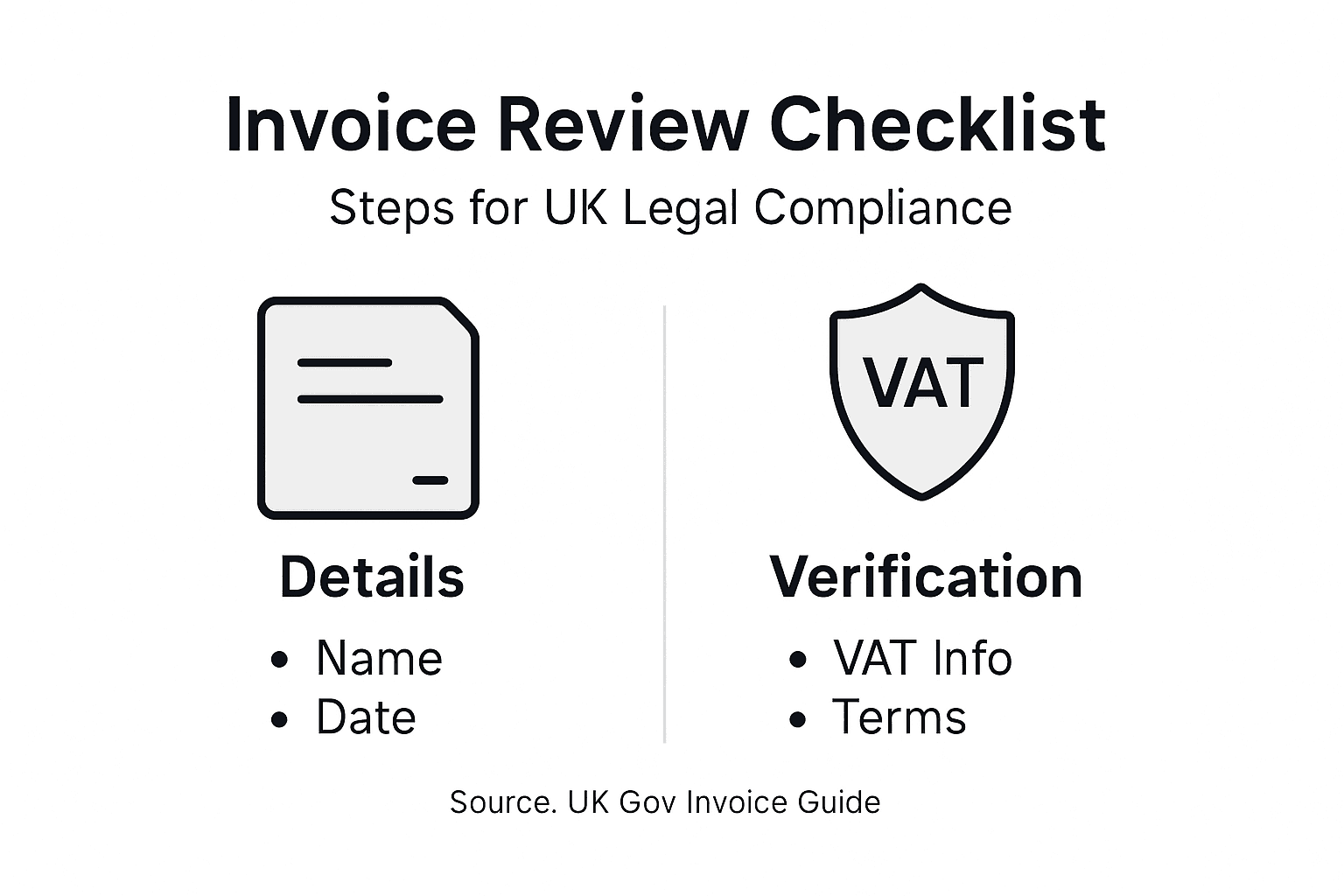
Carefully examine each section of your invoice to verify key invoice compliance details. Double-check that all contact information for both your business and the client is correct and current. Confirm that the invoice number is unique, the date of supply and invoice date are accurately recorded, and all financial calculations including VAT, subtotals, and total amounts are precisely computed. Pay special attention to the specific line items, ensuring descriptions are clear, quantities match agreed terms, and pricing reflects your current rate structure.
A meticulous review extends beyond numerical accuracy. Validate that your payment terms are clearly stated, including the exact payment due date, accepted payment methods, and any potential early payment incentives or late payment penalties. Confirming these details reduces misunderstandings and demonstrates your commitment to transparent, professional financial practices.
Practical Advice: Create a systematic invoice review checklist that you can quickly reference before sending each document, helping you consistently catch potential errors or omissions.
Step 5: Send Your Invoice and Track Payments
The final stage of invoicing involves strategically sending your document and implementing a robust system for monitoring payment progress. Effective communication and proactive tracking are crucial for maintaining healthy cash flow and professional client relationships.
Once your invoice is prepared, send it immediately to the correct payment contact. Choose a professional delivery method such as email or through your client’s preferred digital platform. Include a courteous, clear message summarising the invoice details and thanking them for their business. Digital invoicing systems can provide additional benefits like automatic read receipts and tracking capabilities, helping you monitor when the invoice has been received and reviewed.
Establish a systematic approach to payment tracking by creating a spreadsheet or using accounting software that allows you to record invoice dates, due dates, and payment status. Set up automated reminders to alert you about upcoming and overdue payments. Implement a consistent follow-up process for invoices that approach or exceed their payment deadline, ensuring you maintain professional communication while protecting your business’s financial interests.
Below is a comparison of manual vs. digital invoice tracking methods:
| Method | Accuracy Level | Time Required | Scalability |
|---|---|---|---|
| Manual Spreadsheet | Moderate (prone to errors) | High (requires regular updates) | Difficult with many clients |
| Accounting Software | High (automated calculations) | Low (automated reminders) | Easily handles large volumes |
Practical Advice: Create a dedicated folder or digital system to archive all sent invoices, enabling quick reference and maintaining a comprehensive financial record for tax and accounting purposes.
Streamline Your Invoice Process with Expert Guidance and Practical Tools
Creating accurate, legally compliant invoices is vital for every UK small business to improve cash flow and maintain professional relationships. The challenges of gathering essential business and client details, generating unique invoice numbers, applying VAT correctly and tracking payments can feel overwhelming. This is where clear, reliable advice and tested solutions make a difference. At KefiHub, we understand the frustration of invoicing errors and payment delays. Our Business Archives – Kefihub provide actionable insights on simplifying these processes using modern digital tools and best practice techniques.

Take control of your invoicing today by exploring easy-to-follow guidelines and tips from professionals who know the demands UK businesses face. Visit KefiHub and start benefiting from expert commentary that empowers you to prepare invoices confidently and get paid faster. For those interested in the latest technology to support your invoicing strategy, our Digital Archives – Kefihub reveal innovations to boost your efficiency from invoice creation to payment tracking. Begin your journey to hassle-free invoicing now at KefiHub.
Frequently Asked Questions
What information do I need to include on my invoices?
You should include your business name, address, contact information, and company registration number. Additionally, gather your client’s full name, address, and any specific reference codes. Aim to have all relevant details accurate to avoid payment delays.
How can I ensure my invoice is legally compliant in the UK?
To create a legally compliant invoice in the UK, include a unique invoice number, business and client details, a breakdown of goods or services, VAT information if applicable, and clear payment terms. Review your invoice against these elements before sending it to ensure compliance.
What are effective payment terms I can include in an invoice?
Effective payment terms specify the payment due date, acceptable payment methods, and any discounts for early payment or penalties for late payment. Set terms that reflect your business practices, such as net 30 days, to maintain clarity and professionalism.
How do I track payments after sending my invoices?
Establish a system using a spreadsheet or accounting software to monitor invoice dates, due dates, and payment statuses. Set automated reminders for upcoming payments, and follow up promptly on overdue invoices to maintain cash flow and client relationships.
What should I do if a client doesn’t pay their invoice on time?
If a client delays payment, follow up with a polite reminder that references the original invoice and its due date. Maintain communication to address any issues they may have, aiming to resolve payments within a few days of the initial follow-up.
Recommended
- Best 8 Invoicing Software UK – Expert Comparison 2026 – Kefihub
- Business Registration Step by Step for UK Owners – Kefihub
- Why Build a Website: Boosting UK Small Businesses – Kefihub
- Business Rates UK – How They Impact Small Firms – Kefihub