


Choosing the right tools and resources for your small business can feel like trying to solve a puzzle with too many pieces. Guidance, accounting software, and business management platforms each promise to make life simpler but the real differences lie in the details. Some focus on expert knowledge tailored for the United Kingdom while others promise to automate your daily tasks or bring everything under one roof. Curiosity grows as you compare what each can actually deliver for your business or practice. The most surprising advantages are often hidden in the features and the way they fit your particular needs. Discovering which option suits your goals could make all the difference.
Table of Contents
Kefihub
At a Glance
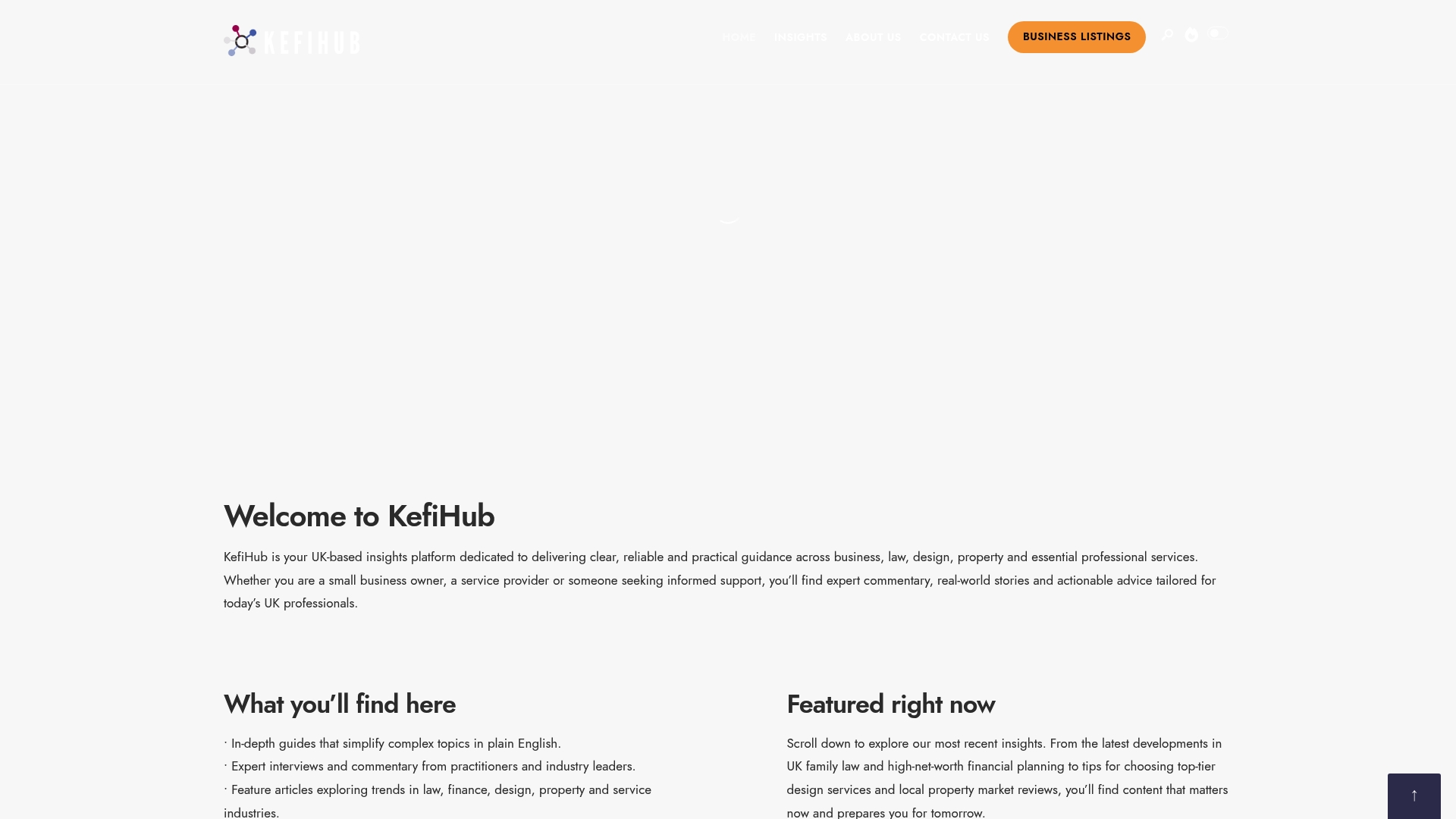
Kefihub is a UK-based insights platform that delivers clear, reliable and practical guidance across business, law, design, property and essential professional services. It combines in-depth guides, expert interviews and local case studies to help UK professionals make informed decisions and progress with confidence. For small business owners seeking trustworthy, actionable content without a paywall, Kefihub is an efficient first port of call.
Core Features
Kefihub’s core capabilities centre on accessible, high-quality editorial content: in-depth guides that explain complex topics in plain English, interviews and commentary from industry leaders, feature articles exploring trends in law, finance, design and property, and curated local case studies that illustrate real-life UK market examples. The platform maintains a curated mix of trustworthy content designed to be practical rather than academic, so you can apply what you read straight away.
Pros
- Provides clear and reliable guidance for UK professionals, making complicated subjects easy to understand and act on.
- Tailored content for business, law, property and design sectors, which helps you focus on the topics most relevant to your firm or practice.
- Includes expert insights and real-world examples, so advice is grounded in experience rather than theory.
- Helps users make informed decisions with confidence, reducing the time you spend second‑guessing strategy or compliance.
- Offers a variety of content formats including guides and articles, enabling different reading styles and needs.
Who It’s For
Kefihub is ideal for UK-based small business owners, legal professionals, property investors, designers and other professionals who need concise, practical guidance. If you run a business with 1–50 employees and you want to streamline decision-making, keep up with regulatory or market changes, or develop staff knowledge without a long subscription, Kefihub fits neatly into your workflow.
Unique Value Proposition
Kefihub’s distinctive strength is its UK focus combined with free, high-calibre editorial. Unlike generic global sites, every guide and case study is framed for UK law, market conditions and professional practice, so you spend less time translating generic advice into local reality. The platform’s curated mix means less noise and more trustworthy signals: expert interviews add perspective, feature articles reveal trends, and local case studies show how theory plays out in practice. Crucially, access is free, removing friction for small firms that need reliable guidance but lack training budgets. That combination — local relevance, editorial rigour and open access — positions Kefihub as a superior, practical resource for small business decision-makers who value speed, accuracy and applicability.
Real World Use Case
A legal professional uses Kefihub to stay updated on the latest UK family law developments to advise clients accurately. They read a focused guide, follow an expert interview for context, and consult a local case study to see how courts have applied principles in practice — all in one sitting.
Pricing
Free access to articles and insights; no specific paid plans are mentioned.
Website: https://kefihub.co.uk
Xero
At a Glance
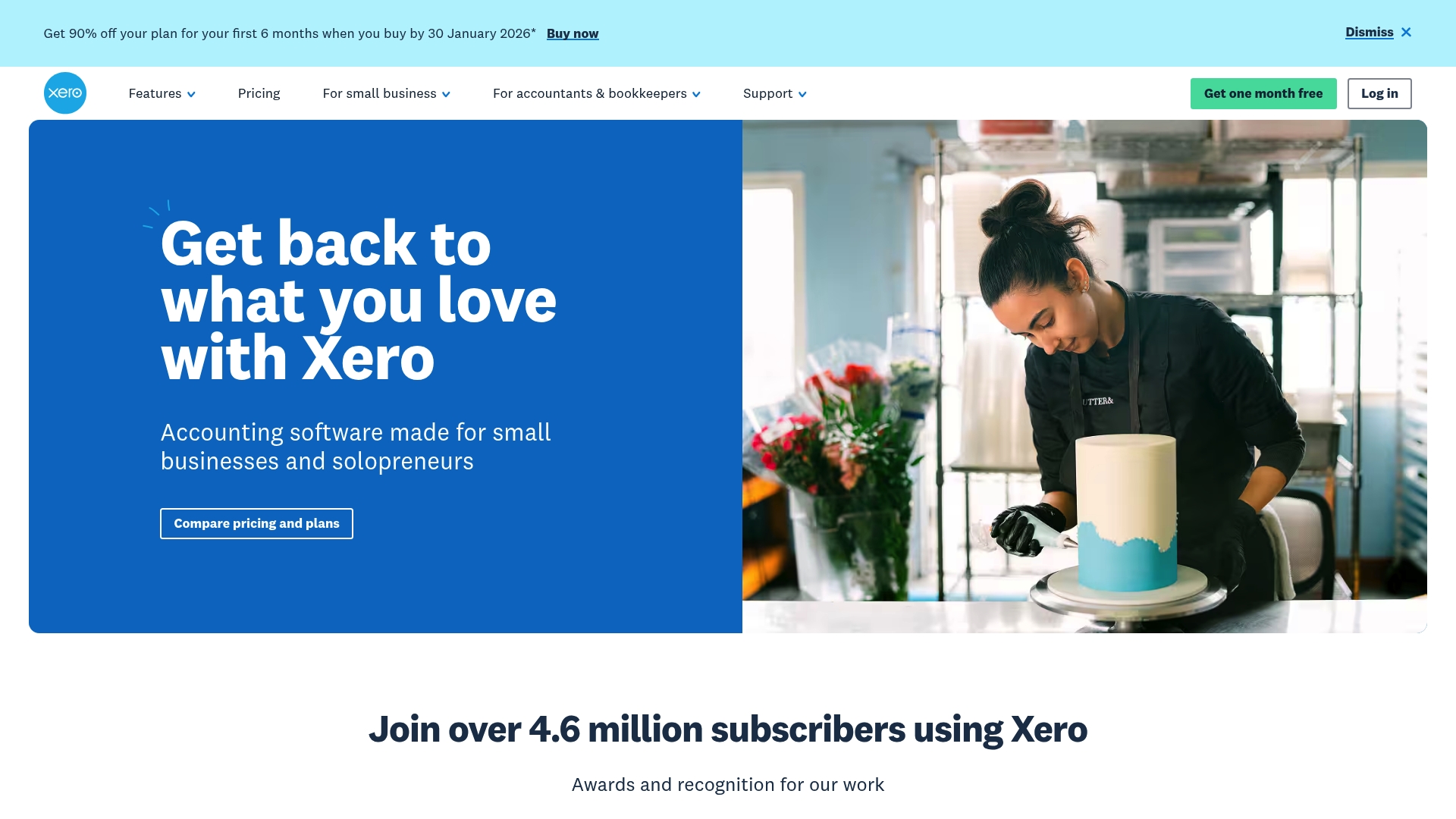
Xero is a cloud-based accounting platform built for small businesses and solopreneurs that prioritises automation and real-time insight. It combines core accounting with AI assistance (Jax) and automated document capture (Hubdoc) to reduce manual admin and speed up reconciliations. While pricing and plan terms can feel complex, Xero’s feature set and industry-specific tools make it a strong contender for UK small firms that need dependable, scalable bookkeeping.
Core Features
Xero offers cloud-based accounting with real-time financial data and customisable reporting, plus an AI financial superagent called Jax to help with routine tasks and insights. Automated data capture via Hubdoc reduces paperwork, and the platform supports multi-currency transactions and project tracking for industries such as Construction, Real Estate and Retail. These capabilities are delivered with secure cloud storage and a focus on automating invoicing, bill payments and reporting.
Pros
- Automates routine accounting tasks, saving time: Xero uses Jax and Hubdoc to reduce repetitive work, freeing you to focus on running the business.
- Supports multiple business types and industries: Sector-specific features and project tracking make it adaptable for Construction, Real Estate and Retail operations.
- Provides real-time insights and customisable reports: Up-to-date dashboards and report options help you monitor cash flow and performance without delays.
- Offers free trial month and discounts for new users: Promotional offers make it easier to test the software before committing to a plan.
- Secure cloud storage and data security measures: Cloud-hosted records reduce reliance on paper and improve access across devices.
Cons
- Pricing complexity with various plans and offers: Multiple tiers and promotional terms can be confusing when comparing total cost.
- Some features may require additional integrations or add-ons: Advanced functionality such as detailed project management might rely on extra apps or connectors.
- Terms and conditions for discounts and plans can be detailed or complex: Eligibility and duration of promotional offers may require careful review before purchase.
Who It’s For
Xero is ideal for small businesses and solopreneurs in need of a comprehensive, cloud-based accounting solution that scales as they grow. If you run a Retail shop, a small Construction outfit or manage Property, and you value automation, multi-currency support and timely financial insight, Xero is designed for your needs. It suits business owners who prefer to reduce manual bookkeeping and want a platform that integrates with other tools.
Unique Value Proposition
Xero’s strength lies in combining everyday accounting with AI assistance and automated document capture, delivering faster reconciliations and clearer cash-flow visibility. The blend of sector-specific tracking, multi-currency handling and real-time reporting provides a practical toolbox for small UK firms aiming to streamline finance operations without hiring extra staff.
Real World Use Case
A Retail store uses Xero to capture sales, manage stock-linked invoices, automate supplier payments and produce weekly financial reports. The automation reduces time spent on admin, improves invoice accuracy and helps the owner forecast cash flow for seasonal buying.
Pricing
Plans start at $2.50 USD per month (Early), $5.50 USD per month (Growing) and $9 USD per month (Established), with discounts and promotional offers available, including free trial months.
Website: https://xero.com
QuickBooks Online
At a Glance
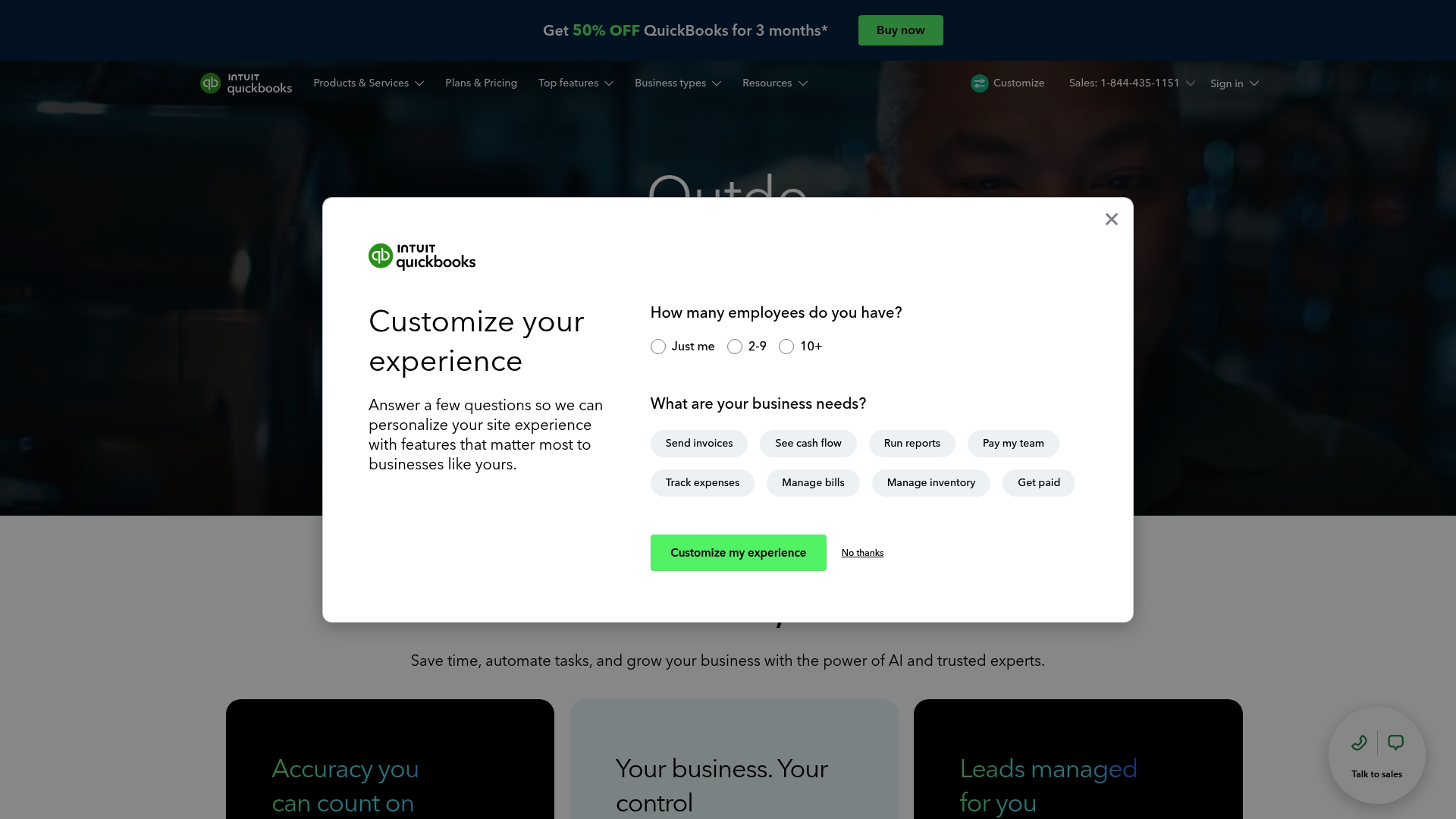
QuickBooks Online is a full-featured accounting platform aimed at small to medium-sized businesses that want to centralise finance tasks and cut manual bookkeeping time. Its strengths lie in AI-powered automation, real-time bank syncing and a large ecosystem of third-party apps. That breadth makes it a strong choice if you need an all-in-one finance hub — but that capability comes with a modest learning curve and potentially higher costs for advanced features.
Core Features
QuickBooks Online combines AI automation for bookkeeping and transaction matching with real-time syncing to bank accounts and financial data. It offers invoicing with online payment processing, expense tracking, bill management and payroll administration (including employee benefits on certain plans). Financial reporting, budgeting and forecasting tools sit alongside multi-user access with permissions control, while integrations with over 800 third-party apps extend functionality where needed. Live expert support is available during setup and beyond, helping you get started faster.
Pros
- Comprehensive automation saves time: The AI-powered bookkeeping and transaction matching reduce manual data entry and speed up reconciliations. This frees you to focus on running the business rather than wrestling with spreadsheets.
- Extensive integrations for flexibility: With over 800 third-party apps, QuickBooks Online connects to many point-of-sale, ecommerce and payroll tools, letting you build a workflow that matches your processes.
- Flexible subscription plans: Multiple plans mean you can choose a tier that fits your business size and upgrade as you grow, so you’re not paying for features you don’t need.
- Access to expert support: Live help and access to trusted experts during onboarding can shorten the ramp-up time and reduce mistakes early on.
- All-in-one finance management: Invoicing, payroll, expenses and reporting live in the same platform, which simplifies record-keeping and improves data consistency.
Cons
- Pricing can be higher for advanced plans: The more capable tiers sit at a notable uplift, which can strain the budget of microbusinesses operating on tight margins.
- Additional costs for some features: Certain capabilities may need extra subscriptions or third-party integrations, adding to the total monthly cost.
- Learning curve for new users: If you’re unfamiliar with accounting software, getting to grips with all the features takes time and initial effort.
Who It’s For
QuickBooks Online suits small to medium-sized business owners who want an automated, scalable accounting solution with the option of expert support. If you handle payroll, need reliable invoicing and expect to integrate multiple systems as you grow, this platform will serve you well.
Unique Value Proposition
QuickBooks Online’s unique value is its combination of intelligent automation, a vast integration ecosystem and access to live experts — all packaged to manage multiple finance functions from a single account. It aims to reduce administrative burden while improving financial clarity.
Real World Use Case
A small retail business uses QuickBooks Online to track sales and expenses, run payroll, generate sales tax reports and automate invoice reminders. The automation reduces manual reconciliation and the reporting tools help the owner plan cash flow more effectively.
Pricing
Pricing varies by plan; specific plans start from around $19 per month and go up to $137.50 per month, with discounts available for the first three months.
Website: https://quickbooks.intuit.com
Sage UK
At a Glance
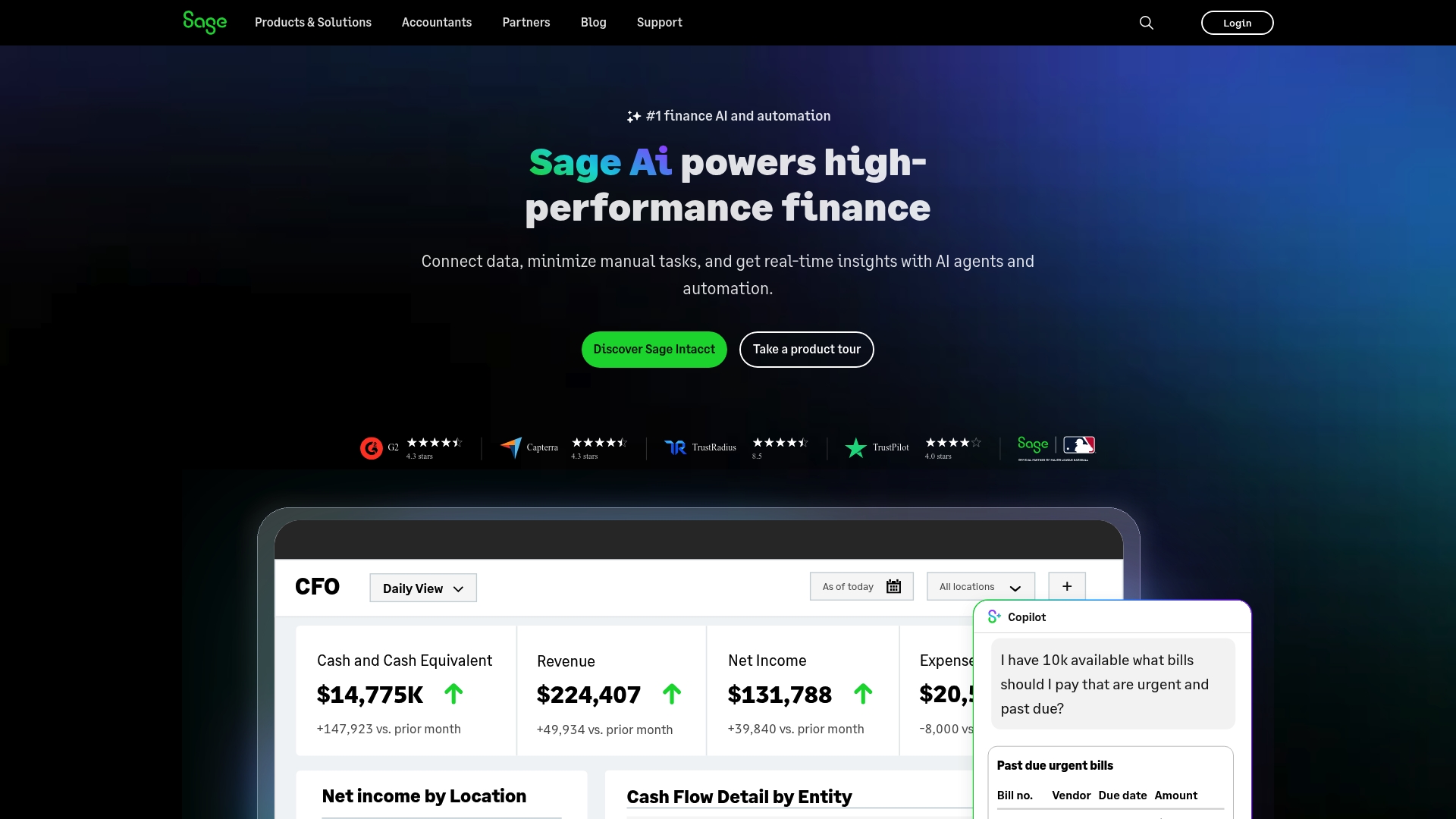
Sage UK is a long-established provider of accounting, payroll, HR and ERP solutions that aims to serve businesses from sole traders to larger enterprises. It leans heavily into AI-powered tools, most notably Sage Copilot, to speed up routine tasks and improve cash flow. For UK small businesses the platform offers practical entry-level pricing and substantial community and support resources, though some modules are more suited to growing firms than micro-businesses.
Core Features
Sage UK bundles a broad set of capabilities across accounting, payroll, HR and manufacturing. Key features include AI-powered functionality across products, the Sage Copilot assistant to accelerate invoicing and cash-flow tasks, free or heavily discounted plans for eligible small businesses, and dedicated solutions such as Sage Accounting, Sage Payroll, Sage HR and Sage X3. The offering is supported by a network of help resources, community forums and expert support.
Pros
- Proven track record: Sage has over 40 years of experience, which gives small business owners confidence in continuity and regulatory knowledge.
- Comprehensive product range: The suite covers accounting, payroll, HR, ERP and manufacturing, allowing businesses to scale without switching vendors.
- Focus on AI: Sage emphasises AI and authentic intelligence, which can reduce time spent on repetitive tasks and improve decision-making.
- Established brand and global base: A wide customer base and recognised brand mean plentiful integrations, partner support and third-party expertise.
- Supportive community and resources: Extensive support channels and community benefits provide practical help and peer learning for small business owners.
Cons
- Pricing transparency: Exact pricing often requires contacting sales, which can slow decision-making for time-pressed owners.
- Complexity for very small firms: Some products are feature-rich and may feel complex or unnecessary for micro-businesses with minimal accounting needs.
- Feature variation across products: Specific features and limitations differ between modules, so businesses must check each product carefully before committing.
Who It’s For
Sage UK suits small businesses that expect to grow and want a single vendor capable of handling accounting, payroll, HR and more advanced ERP needs later on. If you value strong support networks and plan to adopt automation, Sage provides a path from low-cost starter plans to enterprise-level systems.
Unique Value Proposition
Sage’s unique proposition is its combination of longstanding industry expertise with a clear push into AI-assisted workflows. That mix means you get established compliance knowledge alongside tools designed to save time on routine finance tasks.
Real World Use Case
A small business owner uses Sage Accounting to manage day-to-day finances, speeds up invoicing and chasing with Sage Copilot, and consults community forums for troubleshooting—freeing up time to focus on sales and growth.
Pricing
Pricing varies by product. Sage Accounting can start at £1.80 per month (excluding VAT) after a 90% discount for three months, Sage Payroll from £2 per month, and Sage HR from £4.60 per employee per month. Larger products like Sage X3 and Sage Intacct are available on request.
Website: https://sage.com
FreeAgent
At a Glance
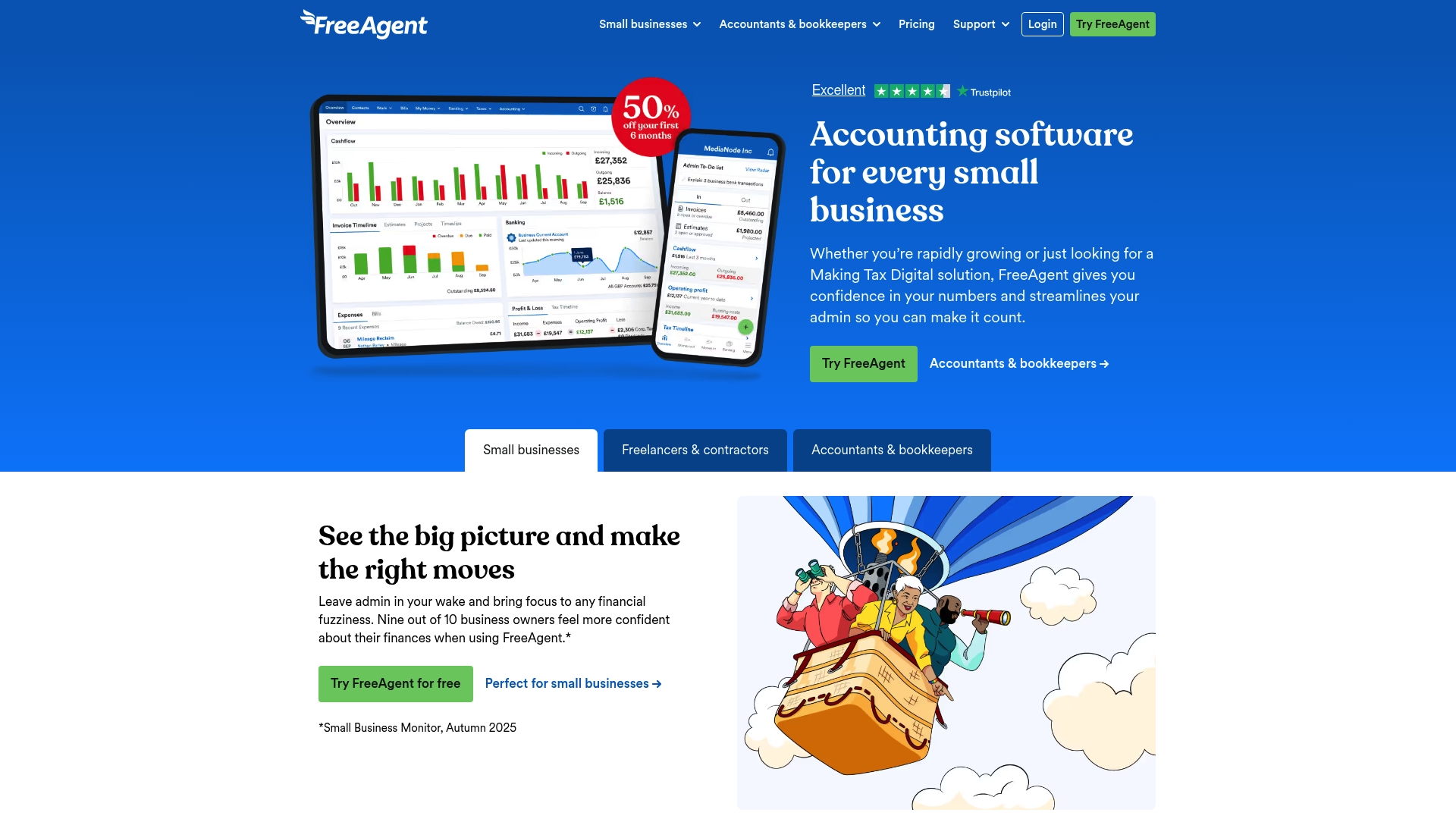
FreeAgent is accounting software built for UK small businesses, freelancers, contractors and landlords that need straightforward tools to manage finances and stay compliant with HMRC. It shines at Making Tax Digital (MTD) compliance, day-to-day cashflow visibility and simple invoicing with online payments. The interface is friendly for non-accountants, and UK-based support and accountant integrations make set-up and tax submissions less painful. Expect add-on costs for certain advanced features, so factor those into your budget.
Core Features
FreeAgent centralises bookkeeping tasks most small businesses face: MTD-compliant submissions for income tax and VAT, an HMRC-recognised payroll module, real-time cashflow tracking and forecasting, and invoicing with automated reminders and online payment options. It also covers expense recording — including an AI-powered receipt and bill capture tool — time tracking for billable work, project income and expense management, and built-in support from UK-based accountants and a support team. Integrations, such as marketplace connections, extend functionality but some require paid add-ons.
Pros
- User-friendly interface tailored for small businesses and freelancers: The layout prioritises common workflows so you can raise invoices, log expenses and check cashflow without hunting through menus.
- Comprehensive feature set including payroll, invoicing and expense management: You get a single platform for the most frequent admin tasks, reducing the need to juggle separate apps.
- Strong compliance support for Making Tax Digital (MTD): Built-in MTD tools make VAT and self-assessment submissions more straightforward, which is crucial for HMRC-facing requirements.
- Excellent UK-based customer support with award recognition: Local support and accountant partnerships help when you encounter tax or payroll queries.
- Flexible pricing plans and optional add-ons: There are clear tiers for different user types and the option to add features as your business grows.
Cons
- Pricing can be less transparent once optional add-ons are included: The headline monthly price often excludes extras that many businesses will want, such as receipt scan allowances or marketplace connections.
- Some features such as unlimited receipt and bill captures are paid upgrades: What looks like a comprehensive package can incur additional monthly costs for higher-usage businesses.
- Primarily designed for UK businesses, so may not support international accounting standards extensively: If you trade widely overseas or follow non-UK accounting rules, FreeAgent may not meet every requirement.
Who It’s For
FreeAgent is ideal for UK-based small business owners, sole traders, freelancers, contractors, landlords and accountants supporting multiple small clients who need an all-in-one, HMRC-friendly accounting tool. It suits teams of one to around 50 employees where simplicity and compliance are priorities over highly customisable, enterprise-grade accounting.
Unique Value Proposition
FreeAgent combines MTD-focused compliance, easy invoicing and UK-based accountant support in a single platform aimed specifically at small UK businesses. That focus on local tax rules and accessible support is its chief advantage for domestic users.
Real World Use Case
A small business owner uses FreeAgent to raise invoices, record expenses and run payroll while preparing for VAT and Self Assessment submissions; cashflow forecasting helps plan payments and the UK support team assists with any HMRC queries.
Pricing
Plans start from £16.50 per month after a 50% discount for the first six months, with monthly or annual billing options and extra costs for optional add-ons such as receipt scans and Amazon marketplace connection.
Website: https://freeagent.com
Zoho
At a Glance
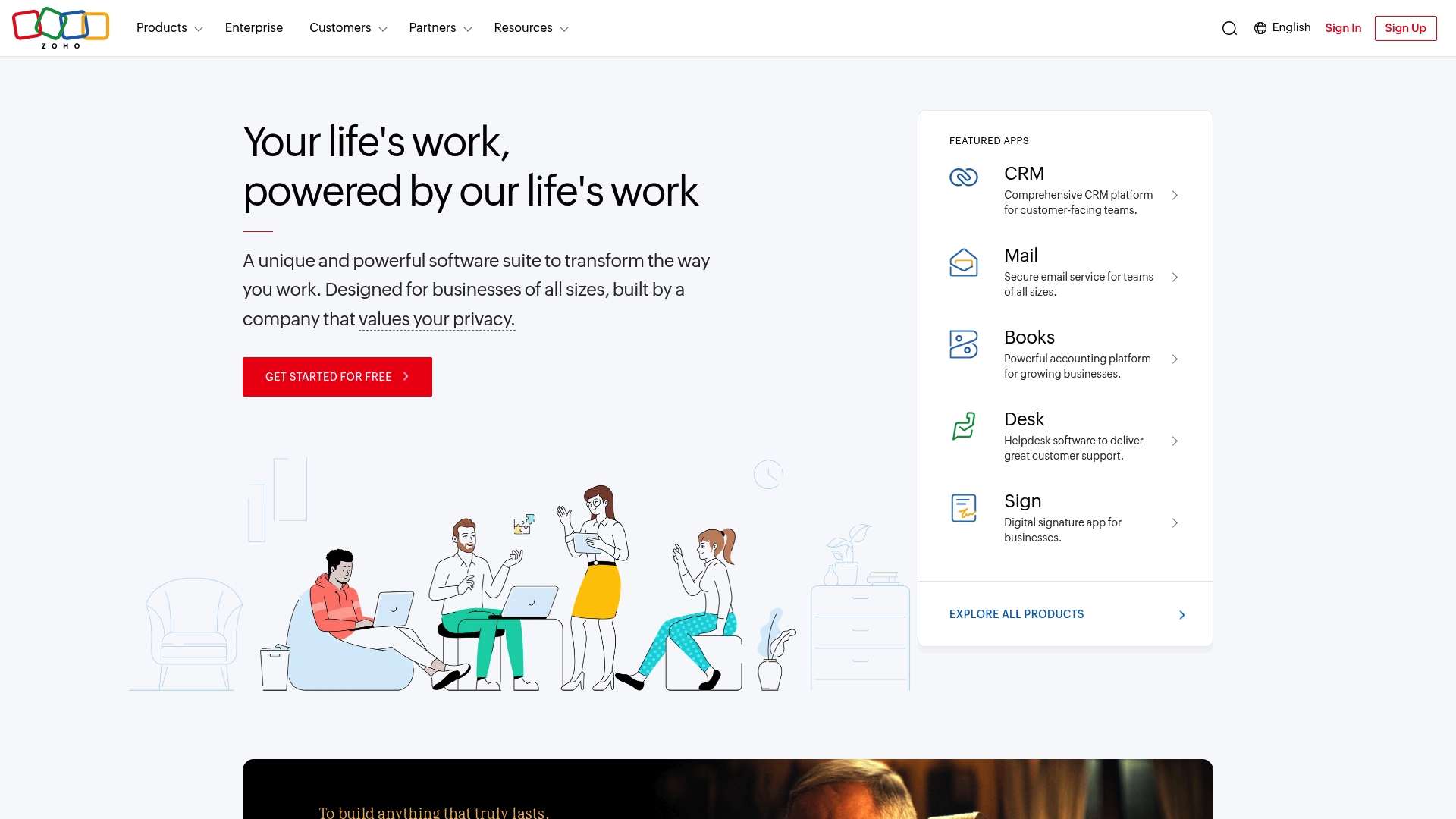
Zoho is an all-in-one cloud software suite built to act as an operating system for business, connecting CRM, email, accounting, HR, helpdesk and more under one roof. For UK small business owners seeking to reduce admin overhead, its breadth and emphasis on privacy make it an attractive, cost-effective option. Expect a steep initial learning curve, but substantial gains in efficiency once your team adapts.
Core Features
Zoho offers a unified platform where multiple business functions live together: Customer Relationship Management, email, accounting, human resources, helpdesk and other apps are designed to work in concert. The Zoho One bundle links these apps as an operating system for business, while the AI assistant Zia provides insight and automation across the ecosystem. The platform’s customisable nature means you can tailor workflows, automate routine tasks and centralise data without stitching together separate tools.
Pros
- Comprehensive suite covering diverse business needs: Zoho brings CRM, finance, HR and support tools into a single ecosystem so you rarely need separate point solutions.
- Cost-effective compared to multiple independent tools: Consolidation can lower subscription overheads and simplify budgeting for a small team.
- Highly customisable to suit different business processes: You can adapt modules and workflows to match how your organisation actually operates rather than forcing a change in behaviour.
- Strong privacy commitment and data security measures: The product highlights privacy and long-term local engagement, which matters when handling customer and staff data.
- Scalable for businesses of all sizes: Whether you’re a one-person consultancy or approaching fifty staff, the platform is designed to grow with you.
Cons
- Complexity for new users to navigate all features: The breadth of apps and configurable options can feel overwhelming to teams without a dedicated admin.
- Potential integration challenges across the wide array of apps: Tying together many modules may require planning and configuration to avoid data silos or duplicated effort.
- Pricing details are not specified in the provided content: The absence of clear licence pricing means you’ll need to contact Zoho for exact costs and decide if the bundle represents value for your specific needs.
Who It’s For
Zoho is well suited to UK small businesses that want a single, scalable platform to manage sales, accounts, HR and support—especially owners prepared to invest time in setup and customisation. If you prefer an integrated ecosystem over multiple point tools and value privacy and local engagement, Zoho fits neatly.
Unique Value Proposition
Zoho’s core strength lies in offering an operating system for business: a broad set of interconnected apps plus an AI assistant, Zia, that helps automate and surface insights. That combination aims to replace disparate subscriptions with one platform built to scale and be customised to your workflow.
Real World Use Case
A mid-sized company uses Zoho One to unify sales, marketing, HR and finance workflows; the result is fewer manual handovers, centralised reporting and lower software costs over time — once initial configuration and user training are completed.
Pricing
Pricing is not specified in the provided content; the information notes free access to some apps alongside paid licences, so confirm licence tiers and costs directly with Zoho to assess the total cost for your team.
Website: https://zoho.com
FreshBooks
At a Glance
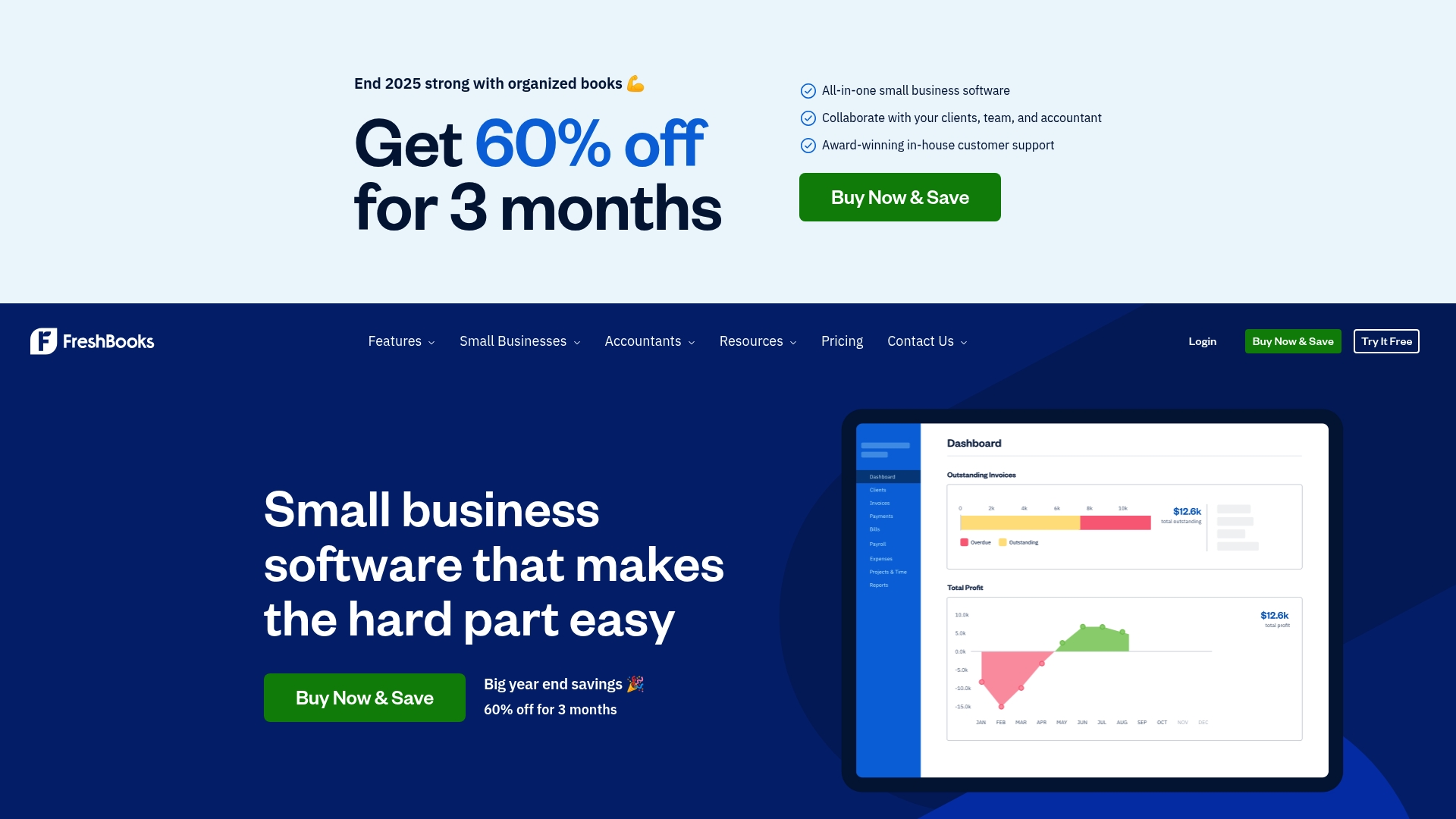
FreshBooks is an approachable, all-in-one invoicing and accounting platform built with small businesses, freelancers and solopreneurs in mind. It simplifies invoicing, expense tracking and payroll into a single interface, so you spend less time on admin and more on billable work. The trade-off is cost: higher-tier plans and some advanced capabilities can become pricey for very small or newly established firms. Overall, it’s a strong pick if you value ease of use and automation over deep customisation.
Core Features
FreshBooks centres on professional invoicing, automated billing and integrated payments, with tools to add tracked time and expenses directly to invoices. Expenses are handled with mobile receipt scanning, bank account imports and automated categorisation, while payroll functions let you run payroll and calculate taxes within the same system. The platform also includes accounting essentials such as mileage tracking, bank reconciliation, double-entry accounting and financial dashboards for reporting.
Pros
- User-friendly interface and easy to set up: The layout and workflows are intuitive, so you can be invoicing clients within a few hours rather than days.
- Comprehensive features tailored for small businesses and freelancers: Invoicing, expenses, payroll and basic accounting live in one place, reducing the need for multiple apps.
- Automates many accounting tasks to save time: Recurring invoices, late payment reminders and automated categorisation cut down repetitive admin.
- Good customer support and user satisfaction ratings: FreshBooks provides support channels that help resolve setup and day-to-day queries promptly.
- Strong security measures to protect user data: The platform applies industry-standard protections to safeguard financial information.
Cons
- Higher-tier plans can be expensive for very small or new businesses: Smaller outfits may find the jump from entry-level to full-featured plans a significant cost.
- Some advanced features may require additional paid add-ons: Access to certain capabilities can incur extra charges beyond the base subscription.
- Limited customisation options compared to some competitors: If you need highly bespoke invoice templates or deep workflow customisation, FreshBooks can feel restrictive.
Who It’s For
FreshBooks suits UK small business owners, freelancers and solopreneurs who need a straightforward, reliable way to invoice clients, track expenses and run basic payroll without wrestling with complex accounting software. If you value time saved through automation and prefer an easy learning curve, this is a sensible choice.
Unique Value Proposition
FreshBooks’ strength is in bringing invoicing, expense management and payroll together in a simple, approachable package. Its automation features and clear dashboards make it especially useful for service-based businesses that bill by the hour or per project.
Real World Use Case
A freelance graphic designer uses FreshBooks to create polished invoices, attach tracked time and photograph receipts on the move, then compile those figures into financial reports when tax season arrives. It keeps paperwork consolidated and reduces the friction of chasing late payments.
Pricing
FreshBooks offers tiered plans: Lite at $8.40 per month, Plus at $15.20 per month, and Premium at $26.00 per month, with discounts available for longer-term commitments and additional users or services.
Website: https://freshbooks.com
Kashflow
At a Glance
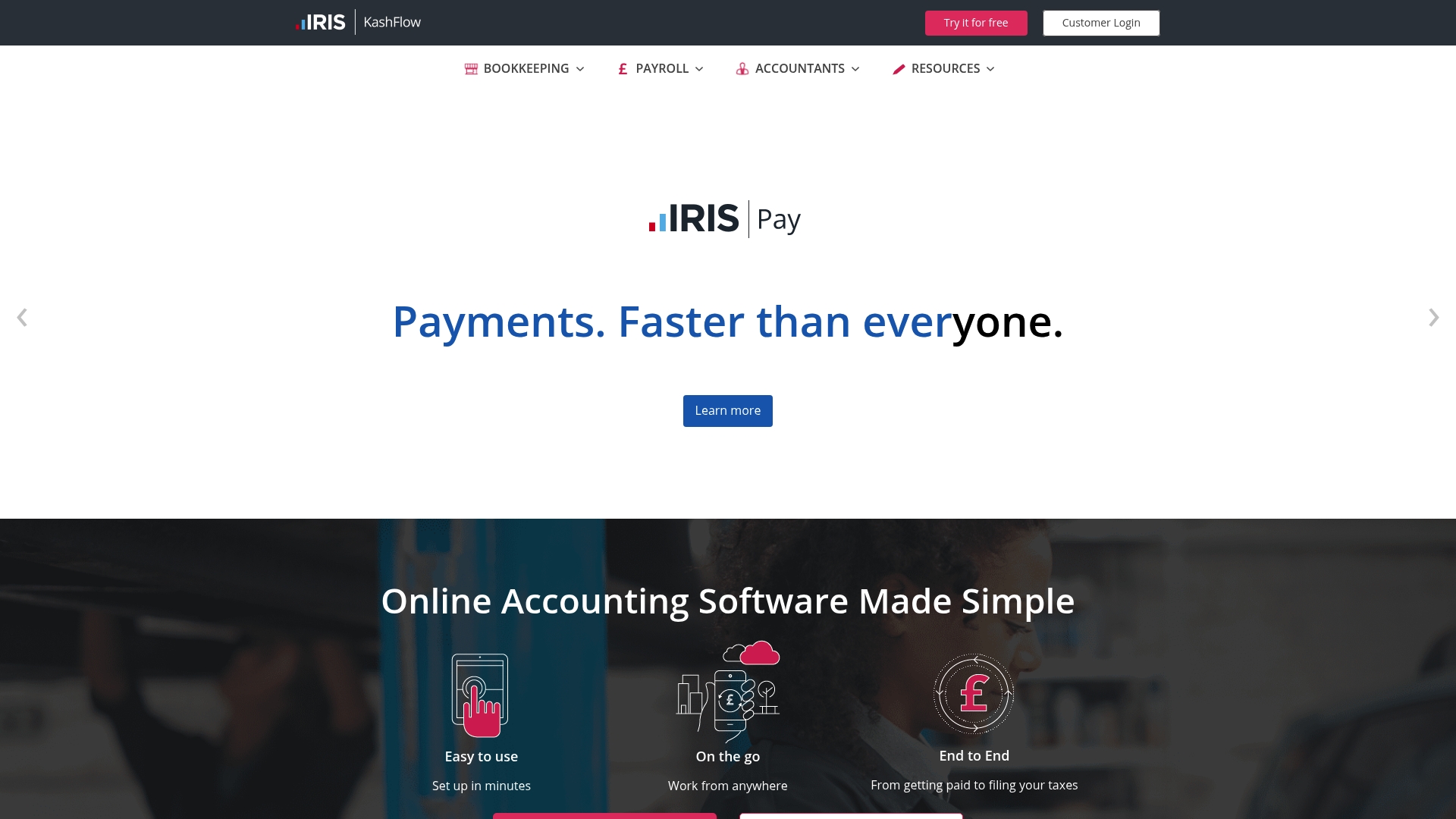
Kashflow is online accounting software built with UK small businesses, sole traders and growing companies in mind. It combines straightforward bookkeeping, invoicing and VAT tools with payroll and bank reconciliation, all wrapped in a user-friendly interface. If you need HMRC‑friendly compliance and easy payment integrations, Kashflow delivers — though some advanced capabilities sit behind higher-tier plans. Overall, it’s a solid choice for UK firms that want reliable accounting without a steep learning curve.
Core Features
Kashflow offers online accounting with an easy setup and clear workflows for everyday finance tasks. You get invoicing and quoting with customisation options, automatic VAT updates and submissions to HMRC under Making Tax Digital, bank account linking with reconciliation and mobile app support, and integrations with leading payment providers including ‘pay now’ buttons. The platform also includes multi‑user access and permissions, automatic overdue notifications, mileage and expenses tracking, real‑time profit and loss reporting and stock control, plus a range of pricing plans with free trials to test the service.
Pros
- User‑friendly interface: The dashboard and workflows are designed for those with limited accounting experience, making day‑to‑day bookkeeping quicker and less intimidating.
- Broad feature set for core needs: Invoicing, VAT management, bank reconciliation and payroll are all available, reducing the need for multiple separate tools.
- Flexible pricing and trial options: Plans start from £8 per month and you can try Kashflow via a free trial without needing to provide a credit card. This makes shortlisting straightforward and low risk.
- Strong UK tax compliance: Built‑in support for Making Tax Digital and direct HMRC submissions gives reassurance when preparing VAT returns.
- Effective payment and bank integrations: Direct links to payment providers and bank feeds speed up reconciliation and improve the likelihood of faster payments.
Cons
- Primarily UK focused: Kashflow’s strengths centre on UK tax and compliance, which may limit utility for businesses operating internationally or across multiple tax jurisdictions.
- Advanced features behind higher tiers: Some more sophisticated reporting, payroll features or integrations may require an upgrade to a more comprehensive plan, increasing costs.
- Potential cost for very small startups: While competitive, the pricing can feel relatively high for micro businesses or sole traders with extremely tight budgets.
Who It’s For
Kashflow suits small business owners, sole traders, contractors and growing companies in the UK who need cost‑effective, easy‑to‑use accounting and payroll software. It’s particularly helpful for those who prioritise HMRC compliance, straightforward invoicing and bank reconciliation without the complexity of enterprise systems.
Unique Value Proposition
Kashflow’s core value is delivering HMRC‑aligned accounting that small businesses can actually use. It blends compliance (Making Tax Digital), clear invoicing workflows and direct payment integrations in a compact platform aimed at reducing admin time and improving cash‑flow visibility.
Real World Use Case
A small retail business uses Kashflow to raise daily sales invoices, reconcile bank transactions via the mobile app, prepare and submit VAT returns to HMRC and generate profit and expense reports to monitor weekly margins and stock movements.
Pricing
Plans start from £8 per month, with multiple tiers available and a free trial to test features before committing; options include basic starter packages and more comprehensive business and payroll plans.
Website: https://kashflow.com
Professional Services and Accounting Tools Comparison
This table provides a comprehensive comparison of various professional services and accounting platforms, highlighting their key features, pros, cons, and pricing to assist UK small business owners in making informed decisions.
| Name | Key Features | Pros | Cons | Pricing |
|---|---|---|---|---|
| Kefihub | In-depth guides, expert interviews, UK-focused insights | Reliable guidance, tailored content, expert insights, actionable advice | Limited to UK professionals | Free access |
| Xero | Cloud-based accounting, AI assistance, multi-currency transactions | Automation, industry-specific tools, real-time insights, free trial month | Pricing complexity, requires add-ons | Plans start at $2.50 USD/month |
| QuickBooks | AI-powered automation, real-time syncing, extensive integrations | Comprehensive automation, integrations, expert support, all-in-one finance management | Higher cost for advanced plans, additional costs for some features | Plans start at $19/month |
| Sage UK | AI-powered tools, extensive support network, broad product range | Established brand, comprehensive product range, focus on AI, strong community | Pricing transparency issues, complexity for small firms | Sage Accounting from £1.80 after discount |
| FreeAgent | MTD-compliance, UK-based support, straightforward invoicing | User-friendly interface, compliance support, excellent customer support | Pricing transparency with add-ons, mainly UK-focused | Plans start from £16.50/month |
| Zoho | All-in-one platform, AI assistant, customisable workflows | Comprehensive suite, cost-effective, scalability, strong privacy commitment | Complexity for new users, integration challenges | Pricing not specified, need to contact |
| FreshBooks | Invoicing, expense tracking, payroll integration | User-friendly, comprehensive features, automation, good customer support | Higher cost for advanced plans, limited customisation | Lite Plan at $8.40/month |
| Kashflow | Online accounting, HMRC compliance, direct payment integrations | User-friendly, broad feature set, flexible pricing, strong UK compliance | Primarily UK-focused, advanced features behind higher tiers | Plans start from £8/month |
Discover the Right Invoicing Solution for Your UK Business Today
Choosing the best invoicing software in the UK can feel overwhelming with so many options promising automation and ease. This article highlights common challenges such as managing compliance with HMRC, reducing manual admin, and gaining real-time financial insights. If you want to avoid confusion and confidently select tools that save time and help cashflow visibility, understanding each platform’s strengths is key.
At KefiHub, we specialise in breaking down complex business topics into clear, practical guidance tailored for UK professionals. Explore our Business Archives – Kefihub for expert insights and real-world examples that help small business owners like you make smarter decisions faster.
Ready to sharpen your business knowledge and get actionable advice that you can trust today? Visit KefiHub and start exploring reliable resources designed to empower your business growth. Take control of your invoicing and finance management with confidence now by discovering detailed guides and trusted insights on our Digital Archives – Kefihub as well.
Frequently Asked Questions
What features should I look for in the best invoicing software?
The best invoicing software should offer features like professional invoice templates, automated billing, expense tracking, and real-time reporting. Prioritise tools that simplify your workflow, such as one-click invoicing and payment reminders, to improve efficiency.
How can invoicing software help improve my cash flow?
Invoicing software can streamline your invoicing process, reducing the time it takes to get paid. Use features like automated reminders and online payment options to encourage timely payments, potentially increasing your cash flow by around 20%.
Is there invoicing software that supports international payments?
Yes, many invoicing software options include support for international payments, allowing you to invoice clients in multiple currencies. Check for features like multi-currency invoicing and automatic currency conversion to simplify transactions.
How do I choose the right invoicing software for my business size?
Consider your business size and specific needs, such as the number of invoices sent each month and required features. Compare options based on scalability; for example, select software with tiered pricing to adjust as your business grows.
Can I integrate invoicing software with my accounting tools?
Most invoicing software offers integration capabilities with popular accounting tools, allowing for seamless financial management. Look for options that offer direct integration or API access, enhancing data accuracy and reducing manual entry.
What is the typical cost range for invoicing software in the UK?
Costs for invoicing software can vary significantly, with basic plans starting from around £8 per month, while more comprehensive options may exceed £25 per month. Assess your budget and required features to determine the best value for your needs.
Recommended
- Best 8 crm tools for small business – Expert Comparison 2025 – Kefihub
- Best 8 crm tools for small business – Expert Comparison 2025 – Kefihub
- How to Avoid Common Business Mistakes for UK Professionals – Kefihub
- Why the Right Technology is the Secret Weapon for UK Law Firms’ Marketing Success – Kefihub
- WordPress Hosting Support Guide: Expert Help for 2025 – WPCTO