

Many UK startup founders believe branding is a luxury reserved for established corporations with deep pockets. This misconception costs early-stage businesses valuable opportunities to build trust and stand out in competitive markets. Effective branding is not about expensive campaigns or glossy advertisements. It is about creating a distinct identity that resonates with your target audience from day one. This article explores practical strategies UK startup founders can implement to develop strong brands that drive market presence, attract investors, and support sustainable growth in 2026 and beyond.
Table of Contents
- Understanding The Role Of Branding In Startups
- How Branding Impacts Startup Success And Growth
- Practical Brand Development Strategies For UK Startups
- Common Branding Pitfalls For Startups And How To Avoid Them
- Explore Kefihub’s Guides To Grow Your UK Startup
Key takeaways
| Point | Details |
|---|---|
| Early branding builds trust | Establishing brand identity from the start creates customer recognition and credibility in competitive UK markets. |
| Consistency drives growth | Unified visual and verbal messaging across all channels strengthens market position and customer loyalty. |
| Strategic branding attracts investment | Professional brand presentation signals market readiness and increases appeal to potential investors and partners. |
| Avoid common pitfalls | Inconsistent messaging and ignoring customer feedback undermine brand effectiveness and market impact. |
Understanding the role of branding in startups
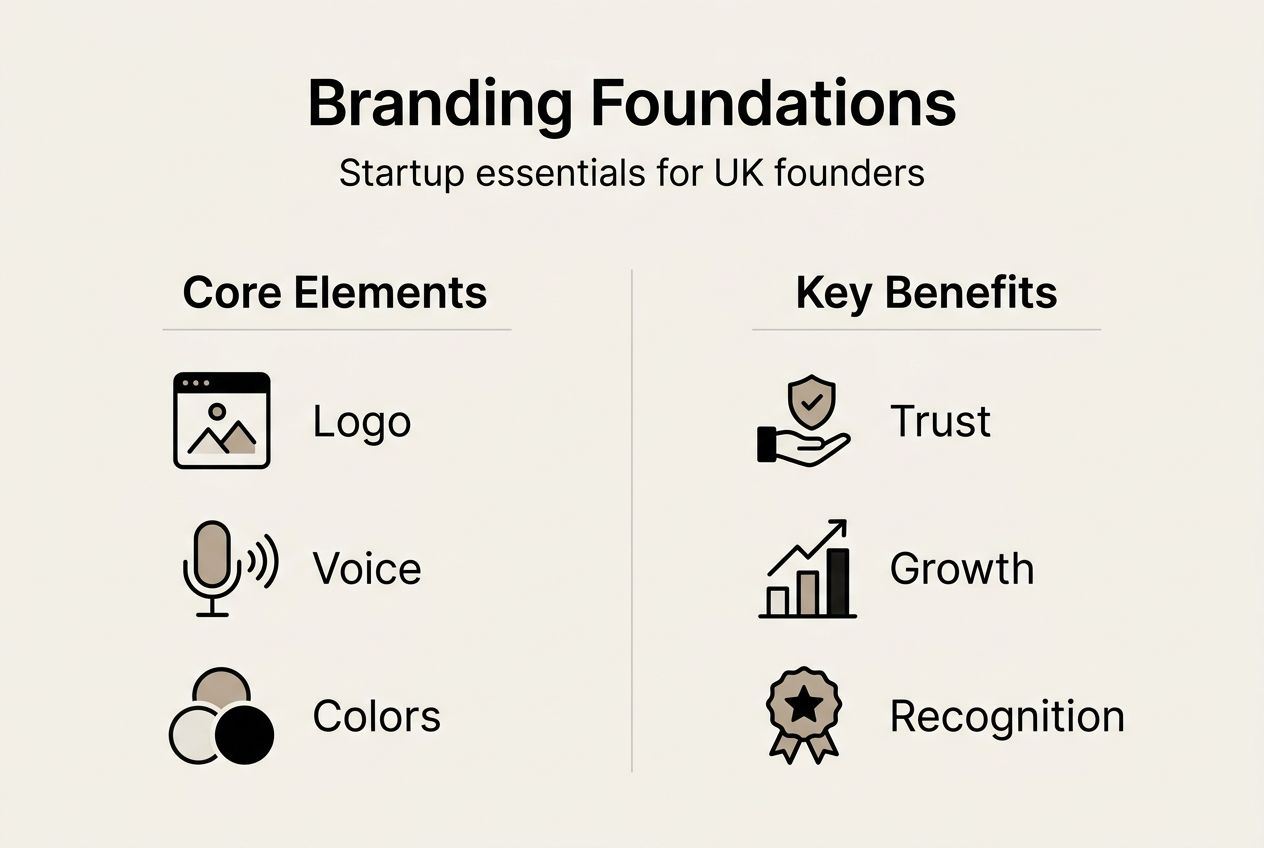
Branding for startups extends far beyond creating a memorable logo or choosing appealing colours. It encompasses every touchpoint where your business interacts with customers, investors, and the broader market. Your brand represents the personality, values, and promise your startup makes to its audience. For UK founders navigating competitive sectors, establishing this identity early creates a foundation for all future marketing efforts and customer relationships.
Startup branding differs significantly from corporate branding because you are building recognition from scratch rather than maintaining established equity. Your brand must communicate who you are, what you stand for, and why customers should choose you over alternatives. This includes visual elements like logos and colour schemes, but also extends to your tone of voice, customer service approach, and the experience you deliver at every interaction point.
The components of effective startup branding include:
- Visual identity: logos, typography, colour palettes, and design systems that create instant recognition
- Messaging framework: core values, mission statements, and the language you use to communicate with your audience
- Customer experience: how people feel when they interact with your product, service, or team
- Market positioning: the specific niche or space you occupy in your industry and how you differentiate from competitors
Establishing these elements early prevents costly rebranding efforts later and ensures consistency as you scale. Branding increases customer loyalty and perceived value for startups, making it a strategic investment rather than a cosmetic exercise. When founders treat branding as integral to business strategy, they create competitive advantages that compound over time through stronger customer relationships and clearer market positioning.
How branding impacts startup success and growth
Strong branding delivers measurable benefits that directly influence your startup’s ability to acquire customers, secure funding, and achieve sustainable growth. In crowded UK markets where consumers face endless choices, a well-defined brand cuts through noise and creates emotional connections that drive purchasing decisions. This emotional resonance transforms casual buyers into loyal advocates who recommend your business to others.
Credibility stands as one of branding’s most valuable outputs for early-stage ventures. Investors evaluate countless pitches, and successful startup branding leads to higher market visibility and increased customer engagement. A cohesive brand presentation signals professionalism and market understanding, suggesting your team has the strategic thinking necessary to execute on ambitious plans. This perception influences funding decisions and partnership opportunities that fuel growth.
The competitive advantages strong branding provides include:
- Differentiation in saturated markets where similar products or services compete for attention
- Premium pricing power because customers perceive branded offerings as more valuable than generic alternatives
- Customer retention through emotional connections that transcend transactional relationships
- Word-of-mouth amplification as satisfied customers become voluntary brand ambassadors
Brand trust fundamentally changes customer behaviour. When people trust your brand, they choose you repeatedly, forgive occasional missteps, and defend you against criticism. This trust develops through consistent delivery on your brand promise across every interaction. For UK startups competing against established players, building this trust early creates protective moats that competitors struggle to breach.
“Your brand is what other people say about you when you’re not in the room. For startups, every customer interaction either builds or erodes that reputation, making consistency and authenticity non-negotiable.”
The cumulative effect of strong branding appears in metrics that matter: customer acquisition costs decrease as brand awareness grows, conversion rates improve when prospects recognise and trust your name, and customer lifetime value increases through loyalty and repeat purchases. These improvements directly impact your bottom line and create the sustainable business growth strategies UK professionals need to scale successfully.

Practical brand development strategies for UK startups
Developing your startup’s brand requires systematic thinking and deliberate execution across multiple dimensions. The following steps provide a practical framework UK founders can implement regardless of budget constraints or team size.
-
Define your unique value proposition and target audience with precision. Identify exactly who you serve and what specific problem you solve better than anyone else. This clarity informs every subsequent branding decision and ensures consistency across channels.
-
Develop consistent visual and verbal brand identity elements. Choose colours, fonts, and design styles that reflect your brand personality whilst appealing to your target audience. Create messaging guidelines that specify tone, vocabulary, and communication style for all team members.
-
Use specialised branding tools to create professional assets without extensive design experience. Modern platforms democratise access to quality design resources that were previously available only to large organisations with dedicated creative teams.
-
Implement your brand systematically across your website, social media profiles, email communications, and physical materials. Every touchpoint should reinforce the same identity and message, creating cumulative recognition over time.
Pro Tip: Align your brand values authentically with customer expectations rather than aspirational ideals. Customers detect inauthenticity instantly, and the disconnect damages trust more than having no defined brand at all.
Selecting appropriate tools accelerates brand development whilst maintaining quality standards. The table below compares leading options UK startups commonly use:
| Tool | Key Features | Best For |
|---|---|---|
| Canva | Templates, drag-and-drop design, brand kit storage | Non-designers creating social media graphics and presentations |
| Figma | Collaborative design, prototyping, component libraries | Teams building digital products and design systems |
| Adobe Express | Professional templates, photo editing, brand guidelines | Creating polished marketing materials quickly |
| Looka | AI-powered logo generation, brand kit creation | Startups needing complete visual identity packages |
Integrating these tools into your workflow ensures brand consistency without requiring full-time design resources. Many UK startups successfully build recognisable brands using these platforms alongside clear guidelines and regular reviews. The key lies not in the tools themselves but in the strategic thinking that guides their application.
Your marketing strategies for SMEs should reflect your brand identity at every level. When marketing messages, visual presentation, and customer experience align perfectly, you create the coherent brand presence that drives recognition and trust in competitive markets.
Common branding pitfalls for startups and how to avoid them
Even well-intentioned founders make branding mistakes that undermine their market position and waste valuable resources. Understanding these pitfalls helps you avoid costly errors and maintain brand integrity as you grow. Many startups struggle with inconsistent branding, unclear messaging, and neglecting brand evolution as market conditions change.
The table below contrasts common errors with best practices:
| Common Error | Best Practice |
|---|---|
| Inconsistent visual identity across platforms | Maintain strict brand guidelines and centralised asset libraries |
| Generic messaging that could apply to any competitor | Develop distinctive voice rooted in authentic values and specific audience needs |
| Ignoring customer feedback about brand perception | Regularly survey customers and adjust based on genuine market response |
| Copying competitor branding instead of differentiating | Identify white space in market positioning and own unique territory |
| Failing to evolve brand as company matures | Schedule annual brand reviews and refresh elements that no longer serve strategy |
Practical steps to maintain brand consistency include:
- Create comprehensive brand guidelines documenting visual standards, messaging frameworks, and usage examples
- Centralise approved assets in accessible locations where team members can easily find current versions
- Train every team member on brand standards regardless of their role or customer-facing responsibilities
- Audit customer touchpoints quarterly to identify inconsistencies before they damage perception
- Establish approval processes for new materials that ensure quality control without slowing execution
Pro Tip: Schedule quarterly brand audits where you review all customer touchpoints with fresh eyes. This practice catches drift before it becomes entrenched and ensures your brand evolves intentionally rather than accidentally.
The most damaging mistake involves treating branding as a one-time project rather than an ongoing strategic function. Your brand should evolve as your startup grows, your market matures, and customer expectations shift. Successful UK founders build brand thinking into their operational rhythms, making small adjustments continuously rather than dramatic overhauls that confuse existing customers.
Customer feedback provides invaluable guidance for brand refinement. When customers describe your brand differently than you intend, that gap signals the need for adjustment. Listen carefully to the language customers use, the attributes they associate with your business, and the emotions they express about their experiences. This qualitative data informs smarter brand decisions than internal assumptions ever could.
Explore kefihub’s guides to grow your UK startup
Building a successful startup requires more than strong branding alone. You need comprehensive strategies that address growth, networking, and market positioning holistically. KefiHub offers practical resources designed specifically for UK founders navigating these challenges.
Our detailed business growth roadmap walks you through proven frameworks that UK SMEs use to scale sustainably. You will find actionable steps for each growth stage, from initial market entry through expansion and maturity. Complement your brand development with strategic networking guidance that helps you build the relationships essential for startup success. These connections amplify your brand reach and open doors to partnerships, customers, and advisors. For comprehensive brand-building instruction, explore our complete branding for small businesses guide covering everything from strategy through execution.
FAQ
What is the most important aspect of branding for startups?
Consistent brand identity that authentically reflects your startup’s values and resonates with your target audience matters most. This consistency builds recognition and trust over time, creating the foundation for all other brand benefits. Without consistency, even brilliant creative work fails to generate cumulative market impact.
How early should a startup invest in branding?
Branding should begin during business planning stages, ideally before launching publicly. Early branding establishes the foundation for all marketing activities and customer interactions, preventing costly repositioning later. The investment need not be enormous, but the strategic thinking must happen from the start.
Can branding really help attract investors to my startup?
Investors view coherent branding as evidence of strategic thinking and market understanding. A professional brand presentation signals that your team grasps the importance of positioning and customer psychology, both critical for scaling successfully. Strong branding differentiates your pitch in crowded funding environments and increases memorability amongst decision-makers evaluating numerous opportunities.
What common mistakes should UK startup founders avoid in branding?
Avoid inconsistent messaging across channels, generic positioning that fails to differentiate, and neglecting customer feedback about brand perception. Many founders also make the mistake of treating branding as a one-time project rather than an ongoing strategic function. Regular brand audits and clear guidelines prevent these pitfalls and maintain brand integrity as you scale.
Recommended
- Role of Design in Branding: Driving UK Market Success – Kefihub
- 7 Smart Brand Building Tips for UK Small Businesses – Kefihub
- Branding for Small Businesses: Practical Step-by-Step Guide – Kefihub
- 7 Smart Business Growth Strategies for UK Professionals – Kefihub