


Many british entrepreneurs struggle with building a lasting identity in an increasingly competitive market. A strong brand does more than catch the eye. It establishes trust and sets businesses apart, especially when consumer choices feel endless. By clarifying your vision, defining your audience, and refining every brand detail, you position your venture for real growth and recognition. Whether you are just starting or seeking to refresh your presence, these proven steps help simplify the process.
Table of Contents
- Étape 1: Clarify Your Business Vision And Values
- Étape 2: Define Your Target Audience And Market
- Étape 3: Develop A Memorable Brand Identity
- Étape 4: Apply Branding Across Touchpoints
- Étape 5: Review And Strengthen Your Brand Impact
Quick Summary
| Essential Insight | Clear Explanation |
|---|---|
| 1. Define your business vision and values | A strong vision and set of values provide direction and purpose, guiding decision making and communication with stakeholders. |
| 2. Understand your target audience | Create detailed customer profiles through research to tailor your marketing and product offerings effectively to their needs. |
| 3. Develop a unique brand identity | Distinctive branding differentiates your business, aligning visual elements and messaging with your core values to resonate with customers. |
| 4. Ensure consistent branding across all touchpoints | Unified branding experience creates familiarity and trust, maintaining the same identity across all customer interactions. |
| 5. Regularly review and refine brand impact | Continuously assess brand performance through feedback and metrics, adapting strategies to remain relevant and aligned with business goals. |
Étape 1: Clarify your business vision and values
Defining your business vision and values sets the strategic foundation for everything your company will do. You’ll create a powerful compass that guides your decision making and communicates your purpose to customers and team members.
To start, grab a notebook and reflect on why you launched this business. Clarifying your entrepreneurial vision requires honest introspection about your deeper motivations. What problems are you solving? What unique perspective do you bring to your industry? Consider writing down answers to key questions:
- What initially inspired you to start this business?
- What change do you want to create in your customers’ lives?
- What principles matter most to you professionally?
Your vision statement should be concise yet inspiring a maximum of two sentences that capture your long term aspirations. Your values statement articulates the fundamental beliefs that will guide your business behaviours and choices.
Pro tip: Authenticity matters more than perfection. Your vision and values will evolve, so focus on capturing your genuine intent right now.
Once drafted, share your statements with trusted colleagues or mentors who can provide honest feedback. Developing clear vision and mission statements takes iteration, so be prepared to refine your language until it truly resonates.
Étape 2: Define your target audience and market
Understanding precisely who will buy your product or service is crucial for effective business strategy. You’ll create a detailed profile of your ideal customer that guides your marketing and product development efforts.
Identifying your target advertising audience starts with deep research about potential customers. Begin by mapping out demographic details like age, location, income level, profession, and lifestyle characteristics. Consider creating a few detailed customer personas that represent different segments of your potential market.
To develop these personas, ask yourself critical questions:
- What specific problems does your product solve?
- Who experiences these problems most acutely?
- What are their purchasing habits and preferences?
- Where do they spend time online and offline?
Pro tip: Dont rely only on assumptions. Talk directly to potential customers through surveys, interviews, or focus groups to validate your understanding.
Once you have a clear picture of your target audience, you can tailor your messaging, product features, and marketing channels to speak directly to their needs and motivations. This targeted approach will help you connect more effectively and efficiently with potential customers.
Étape 3: Develop a memorable brand identity
Creating a distinctive brand identity transforms your business from a generic service into a memorable experience. You will craft a visual and emotional representation that resonates with your target audience and sets you apart from competitors.

Understanding the process of developing vision and values begins with aligning your visual elements with your core business principles. Start by selecting a colour palette that reflects your brand personality. Think about the emotions you want to evoke: are you professional and trustworthy, or vibrant and innovative?
Consider these key brand identity elements:
- Logo design that captures your business essence
- Consistent colour schemes across all materials
- Typography that communicates your brand personality
- Tone of voice in written communications
- Visual imagery that represents your values
Pro tip: Your brand identity should feel authentic and sustainable. Avoid chasing trends that might feel disconnected from your genuine business spirit.
Building a cohesive brand narrative requires thoughtful integration of these elements. Ensure every touchpoint communicates a consistent message about who you are and what you stand for. Regularly review and refine your brand identity to keep it fresh and aligned with your evolving business goals.
Étape 4: Apply branding across touchpoints
Consistent branding transforms your business from a collection of disconnected interactions into a unified, memorable experience. You will strategically align your brand identity across every customer interaction point to create a cohesive and professional impression.
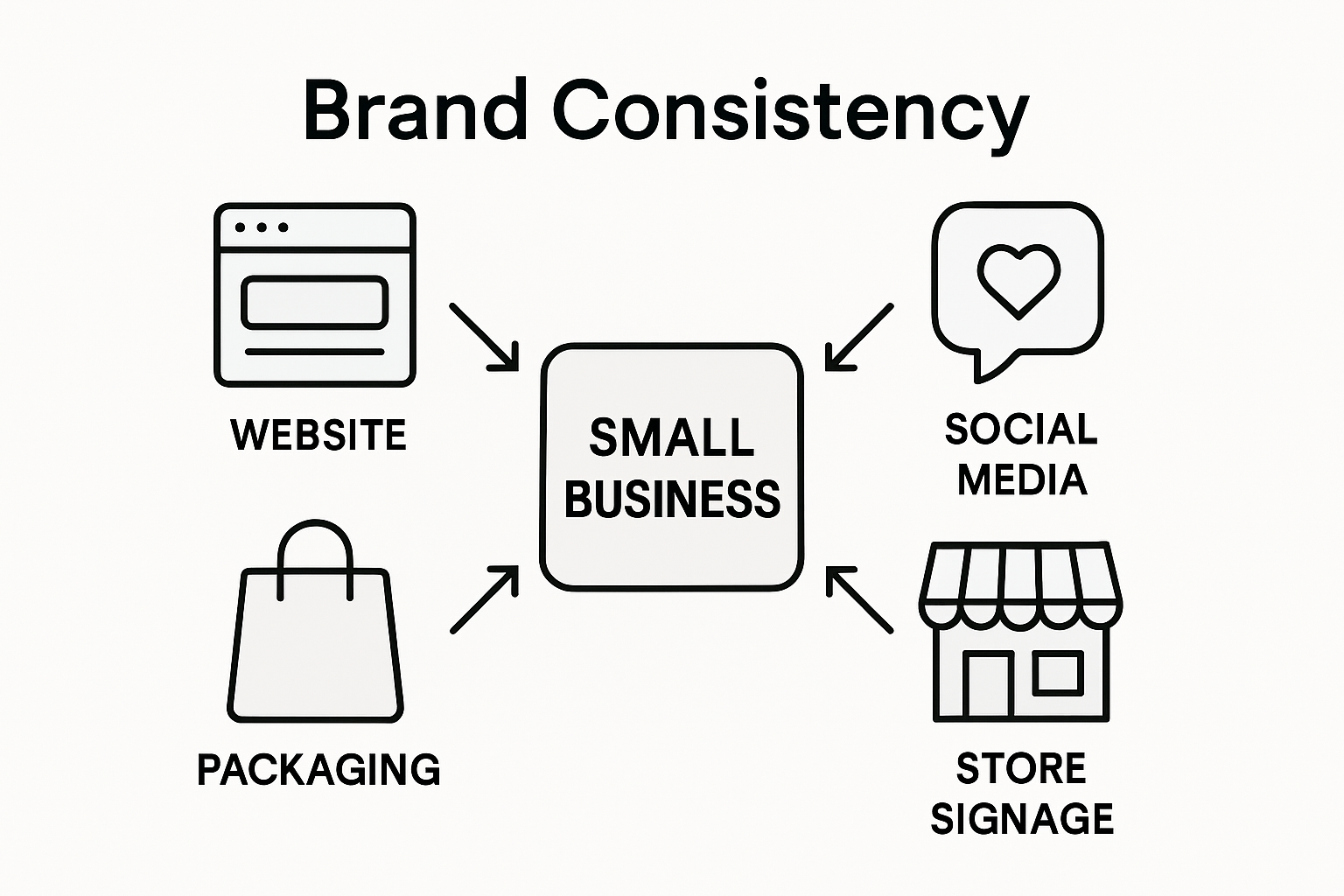
Marketing strategies for small business branding require careful planning across multiple channels. Map out every potential customer touchpoint and ensure each reflects your brand’s visual and tonal identity. This includes your website, social media profiles, email communications, physical marketing materials, customer service interactions, and even your team’s communication style.
Consider these key touchpoints for brand consistency:
- Website design and user interface
- Social media platform graphics and tone
- Email templates and signatures
- Business cards and printed materials
- Customer service scripts and communication protocols
- Packaging and product presentation
- Staff uniforms or professional attire
Pro tip: Create a brand style guide that documents your colour palette, typography, logo usage, and communication tone to help maintain consistency.
Engaging your target market through consistent branding means paying attention to the smallest details. Every interaction should feel like it comes from the same organisation, reinforcing your brand’s personality and building trust with your audience. Regularly audit your materials to ensure they align with your core brand identity.
Étape 5: Review and strengthen your brand impact
Evaluating and refining your brand’s performance is an ongoing process that ensures your business remains relevant and compelling. You will develop a systematic approach to measuring your brand’s effectiveness and making strategic improvements based on real insights.
Strategies for assessing small business brand impact require a multifaceted approach to gathering meaningful feedback. Start by collecting data from multiple sources including customer surveys, online reviews, sales metrics, and direct client conversations. Look for patterns in how people perceive and interact with your brand and identify both strengths to amplify and weaknesses to address.
Key methods for brand impact assessment include:
- Customer satisfaction surveys
- Social media sentiment analysis
- Website and engagement analytics
- Sales conversion tracking
- Competitor benchmarking
- Direct customer interviews
- Net promoter score measurements
Pro tip: Be brutally honest in your assessment. Constructive self criticism is the pathway to meaningful brand evolution.
Understanding market dynamics to strengthen brand positioning means being willing to adapt and iterate. Treat your brand as a living entity that grows and changes with your business and your customers. Schedule quarterly reviews to assess your brand performance and be prepared to make incremental adjustments that keep your brand strategy aligned with your evolving business goals.
Elevate Your Small Business Branding with Expert Support
Building a clear vision and consistent brand identity can feel overwhelming when managing a small business. This guide highlights key challenges such as defining your business values, identifying your target audience, and applying branding across every touchpoint. These strategic steps are vital but require ongoing attention and refinement to create a memorable and trustworthy presence.
At KefiHub, we understand the real-world pressures you face while striving to make your brand stand out. Our platform offers reliable insights across the Business Archives – Kefihub and Digital Archives – Kefihub to help you translate these crucial branding concepts into practical actions tailored for today’s UK professionals.
Ready to turn your branding vision into real-world impact? Visit KefiHub now for expert guidance and resources that empower your small business to connect with customers authentically and confidently. Start strengthening your brand today and take the next step toward lasting success.
Frequently Asked Questions
How do I clarify my business vision and values?
To clarify your business vision and values, start by reflecting on your motivations for launching your business. Jot down why you started, what change you aim to create for customers, and what principles are most important to you. This process can take a few hours of honest introspection, so allocate specific time to get it right.
What steps should I take to define my target audience?
To define your target audience, conduct thorough research to create detailed customer profiles. Identify demographic details, problems your product solves, and where your audience spends time both online and offline. Engaging potential customers through surveys can help validate your findings within a couple of weeks.
How can I develop a memorable brand identity for my small business?
Developing a memorable brand identity involves creating visual elements that resonate with your target audience. Choose a cohesive colour palette, design a logo reflecting your essence, and establish a consistent tone of voice. Spend a few days brainstorming and refining these elements to ensure they align with your core business values.
What are the key touchpoints for applying branding across my business?
Key touchpoints for consistent branding include your website, social media channels, email communications, and physical marketing materials. Ensure each of these reflects your brand’s visual and tonal identity to create a unified experience. Review these materials within a set timeframe, such as 60 days, to guarantee consistency.
How often should I review and strengthen my brand impact?
You should review and strengthen your brand impact at least quarterly to stay relevant and effective. Collect data from customer feedback, sales metrics, and online sentiment to identify areas for improvement. Dedicate a few hours during each review to analyse insights and make necessary adjustments.
Recommended
- Starting a Small Business UK: Step-by-Step Legal Guide – Kefihub
- Every business problem feels smaller when you understand it. We’re here to make the complex simple, one guide at a time. – Kefihub
- Starting a Small Business UK: Step-by-Step Legal Guide – Kefihub
- Complete Guide to Why Incorporate a Business – Kefihub