


Nearly 60 percent of British consumers say a brand’s design is what makes them trust a company. For UK small business owners in the design sector, this highlights just how much influence design holds over successful branding decisions. Harnessing the power of thoughtful visual identity can shape how your business stands out, builds loyalty, and challenges bigger competitors. Discover how purposeful design strategies offer British businesses the opportunity to create unique, lasting impact in crowded markets.
Table of Contents
- Defining Design’s Influence on Branding
- Major Types of Brand Design Elements
- How Effective Design Builds Trust and Loyalty
- Design Strategies for Market Differentiation
- Common Mistakes and How to Avoid Them
Key Takeaways
| Point | Details |
|---|---|
| Design as a Strategic Tool | Design is crucial for establishing brand identity and trust, effectively communicating core values and unique market positioning. |
| Holistic Brand Design Elements | Combining logos, colour palettes, and typography creates a cohesive visual language that enhances customer engagement and perception. |
| User-Centric Approach | Prioritising user experience in design fosters emotional connections, enhancing customer loyalty and retention. |
| Avoiding Common Mistakes | Treating design as an integral part of strategy prevents inconsistencies and enhances overall brand clarity. |
Defining Design’s Influence on Branding
Design has transcended its traditional role as a mere aesthetic tool, emerging as a strategic powerhouse in contemporary branding. In the United Kingdom’s competitive business landscape, design represents far more than visual appeal—it’s a critical communication channel that articulates a brand’s core identity, values, and unique market positioning. Strategic design integration fundamentally transforms how businesses connect with their target audiences, creating compelling narratives that resonate beyond surface-level interactions.
At its core, design serves as a sophisticated language of brand expression. It translates complex organisational philosophies into tangible experiences that customers can see, touch, and emotionally engage with. From colour palettes and typography to user interface and physical product design, every visual and interactive element communicates a nuanced message about the brand’s personality, reliability, and market positioning. Brands function as critical intangible assets that simplify customer choice and reduce perceived risk, with design acting as the primary mechanism for building that essential trust.
Effective design goes beyond aesthetic considerations, operating as a strategic business tool that bridges emotional and rational consumer perceptions. It creates a holistic ecosystem where visual elements, user experience, and brand messaging converge to generate meaningful connections. Small businesses, particularly in the UK market, can leverage design as a powerful differentiation strategy—transforming seemingly simple visual choices into compelling competitive advantages that distinguish them from larger, more established competitors.
Pro tip: Invest in a comprehensive design audit that examines your brand’s visual consistency across all customer touchpoints, identifying opportunities to strengthen your narrative and emotional resonance.
Major Types of Brand Design Elements
Brand design encompasses a sophisticated array of visual and strategic elements that collectively communicate an organisation’s identity, values, and market positioning. Key brand design elements are meticulously crafted to reflect brand competence and create a distinct visual language, serving as critical touchpoints for customer engagement and perception. These elements work synergistically to transform abstract brand concepts into tangible, memorable experiences that resonate with target audiences.
Design elements can be strategically categorised across structural, semantic, and content dimensions, each playing a unique role in brand communication. The structural elements include fundamental visual components like logos, colour palettes, typography, and design grids. These foundational aspects establish visual consistency and create immediate brand recognition. Semantic elements encompass narrative components such as brand slogans, storytelling techniques, and emotional messaging that connect with consumers on a deeper psychological level. Content elements involve personalised information and value-driven communication that demonstrates the brand’s unique propositions.
Within the UK’s competitive business landscape, small businesses must understand that brand design elements are not mere decorative choices but strategic tools for differentiation. Logos serve as visual shorthand for brand identity, colour schemes evoke specific emotional responses, typography communicates personality, and design grids ensure visual coherence across diverse platforms. By carefully curating these elements, organisations can create a compelling visual narrative that distinguishes them from competitors and builds lasting connections with their target market.

The following table summarises how different brand design elements contribute to business performance:
| Design Element | Main Purpose | Business Impact |
|---|---|---|
| Logo | Visual representation of identity | Drives recognition and recall |
| Colour Palette | Establishes mood and emotions | Influences brand perception and trust |
| Typography | Communicates tone and personality | Enhances readability and strengthens positioning |
| Design Grid | Maintains layout consistency | Builds visual coherence across platforms |
| Slogan/Narrative | Expresses brand message | Deepens emotional engagement with customers |
| Personalised Content | Tailors experience for each audience | Boosts customer loyalty and sense of relevance |
Pro tip: Develop a comprehensive brand style guide that meticulously documents your design elements, ensuring consistent application across all marketing materials and communication channels.
How Effective Design Builds Trust and Loyalty
Effective design serves as a critical mechanism for establishing and nurturing customer trust, transcending mere aesthetic considerations to create meaningful connections between brands and their audiences. In the contemporary business landscape, trust is not simply earned through product quality, but through holistic experiences that demonstrate genuine understanding and commitment to user needs. Design acts as a powerful communication tool that signals a brand’s reliability, competence, and emotional intelligence.
The intricate relationship between design and trust emerges through multiple strategic dimensions. Digital platforms particularly highlight how personalization and innovative design approaches directly correlate with customer retention and emotional engagement, creating pathways for sustained loyalty. Functional clarity combined with aesthetic appeal generates a comprehensive user experience that goes beyond superficial interactions. Customers unconsciously evaluate brands through visual and interactive elements, interpreting design choices as indicators of the organisation’s professionalism, attention to detail, and commitment to user satisfaction.
For small businesses in the United Kingdom, design becomes a nuanced language of trust-building. This involves creating interfaces and visual identities that are not only visually appealing but intuitively navigable, consistently branded, and responsive to user expectations. Subtle design elements like colour psychology, typography choices, and interaction flows communicate underlying brand values, transforming seemingly technical decisions into emotional connection points. By prioritising user-centric design that anticipates and elegantly solves customer challenges, organisations can differentiate themselves in increasingly competitive markets.
Pro tip: Conduct regular user experience audits that assess your design’s accessibility, emotional resonance, and functional clarity, ensuring your visual communication continuously evolves to meet changing customer expectations.
Design Strategies for Market Differentiation
Market differentiation through strategic design represents a critical pathway for businesses seeking competitive advantage, transforming visual communication from a passive aesthetic exercise into an active strategic tool. In the United Kingdom’s complex business ecosystem, design serves as a sophisticated mechanism for articulating unique brand value propositions that distinguish organisations from their competitors. By carefully crafting visual narratives that resonate with specific customer segments, businesses can create memorable brand experiences that transcend conventional marketing approaches.
Successful market differentiation demands a nuanced understanding of customer insights and strategic design principles. This involves developing design elements that not only capture visual attention but also communicate distinctive brand attributes, core values, and unique problem-solving capabilities. Small businesses must view design as a strategic language that speaks directly to targeted market segments, using visual cues, colour psychology, typography, and user experience design to create compelling narratives that reflect their distinctive market positioning. The most effective differentiation strategies emerge from a deep comprehension of customer needs, pain points, and aspirational desires.
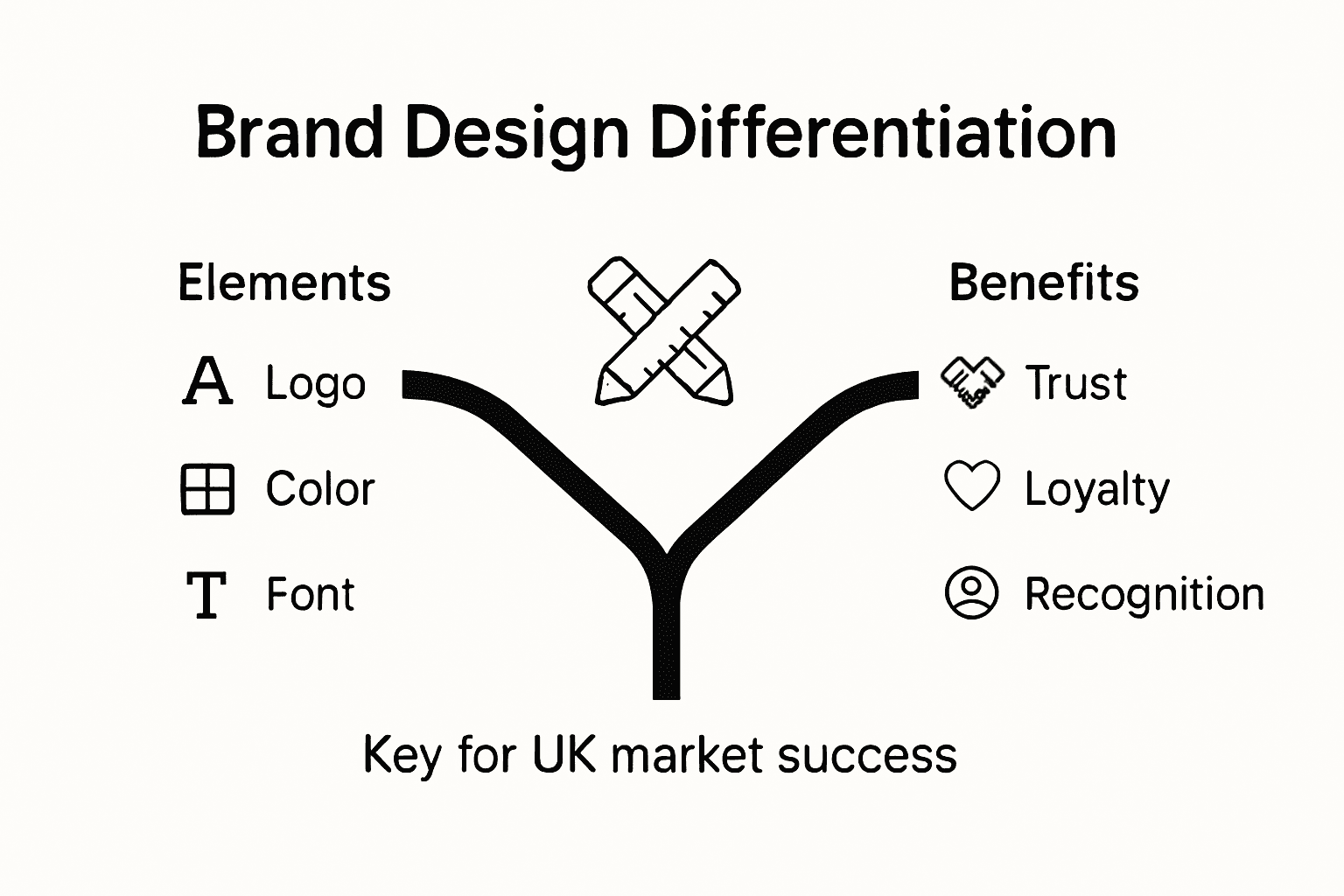
Navigating market differentiation requires a holistic approach that integrates design across multiple touchpoints. This means developing consistent yet adaptable design systems that can communicate brand essence across digital platforms, physical products, marketing materials, and customer interactions. British businesses can leverage design as a powerful differentiation tool by focusing on creating intuitive, emotionally resonant experiences that solve customer challenges in unique and memorable ways. By prioritising user-centred design that anticipates and elegantly addresses specific market needs, organisations can transform their visual identity into a significant competitive advantage.
Pro tip: Conduct a comprehensive competitive design audit to identify white spaces in your market where your visual identity and user experience can create genuine differentiation.
Common Mistakes and How to Avoid Them
Design branding represents a complex strategic endeavour where seemingly minor missteps can significantly undermine an organisation’s market positioning. One of the most prevalent errors small businesses commit is treating design as a superficial afterthought rather than a core strategic communication mechanism. This approach leads to inconsistent visual identities that confuse potential customers and dilute brand messaging, ultimately reducing the organisation’s perceived professionalism and market credibility.
Small businesses frequently fall into predictable design traps that compromise their brand’s effectiveness. Common mistakes include over-complicating visual identities, neglecting consistency across different platforms, and failing to align design choices with target audience expectations. Inconsistent colour schemes, typography that lacks readability, and design elements that do not authentically represent the brand’s core values can create visual noise that repels rather than attracts potential customers. Moreover, many organisations struggle with understanding the subtle but critical difference between trendy design and timeless brand communication.
Here is a comparison of common design branding mistakes and effective avoidance strategies for small businesses:
| Mistake | Consequence | Prevention Strategy |
|---|---|---|
| Treating design as an afterthought | Weak brand identity, customer confusion | Embed design in overall strategy |
| Inconsistent branding across platforms | Loss of trust, diluted messaging | Create and enforce brand guidelines |
| Overly complex visuals | Reduced clarity, poor user experience | Prioritise simplicity and user needs |
| Following fleeting trends | Dated appearance, lack of uniqueness | Focus on timeless, authentic visual language |
Navigating these challenges requires a strategic, disciplined approach to design branding. Successful UK businesses mitigate risks by developing comprehensive brand guidelines that provide clear, actionable frameworks for visual communication. This involves creating robust design systems that can adapt across various mediums while maintaining a cohesive narrative. Organisations must invest time in understanding their target audience’s aesthetic preferences, psychological triggers, and functional needs. By prioritising user-centric design that balances aesthetic appeal with functional clarity, businesses can transform potential design pitfalls into opportunities for meaningful customer engagement.
Pro tip: Develop a rigorous design review process that systematically evaluates your visual communication against your brand’s core values, ensuring every design choice authentically represents your organisational identity.
Harness the Power of Design to Elevate Your Brand in the UK Market
Are you facing challenges in creating a consistent and compelling brand identity that truly connects with your audience The article reveals common pitfalls such as inconsistent branding and treating design as an afterthought that can dilute trust and weaken your market position. By understanding key brand design elements like logos, colour palettes, and typography alongside strategic design audits you can build emotional engagement and stand out in a competitive landscape.
Discover practical insights and actionable advice tailored specifically for UK small businesses at KefiHub. Start strengthening your brand through expert commentary on design strategies that build trust and loyalty. Take the next step now by exploring our platform and learning how to avoid typical design mistakes with effective design solutions. Your brand’s success begins with decisive action today.
Frequently Asked Questions
What role does design play in branding?
Design serves as a critical communication channel that articulates a brand’s core identity, values, and unique market positioning, transforming visual concepts into tangible experiences that resonate with customers.
How can small businesses leverage design for competitive advantage?
Small businesses can leverage effective design by strategically creating visual narratives that differentiate them from larger competitors, using elements such as logos, colour palettes, and typography to build strong brand identities.
Why is consistency in brand design important?
Consistency in brand design helps build trust and recognition among customers. It ensures that all visual elements are aligned with the brand’s values and messaging, creating a coherent and professional image that enhances customer perceptions.
What are common mistakes in brand design to avoid?
Common design mistakes include treating design as an afterthought, maintaining inconsistent branding across platforms, over-complicating visuals, and following fleeting trends. By prioritising user needs and simplifying designs, businesses can avoid these pitfalls.
Recommended
- Branding for Small Businesses: Practical Step-by-Step Guide – Kefihub
- Design Thinking Explained: Unlocking Business Innovation – Kefihub
- 7 Key Design Trends 2025 for UK Professionals Explained – Kefihub
- 7 Key Design Trends 2025 for UK Professionals Explained – Kefihub