


{
“@type”: “Article”,
“image”: {
“url”: “https://csuxjmfbwmkxiegfpljm.supabase.co/storage/v1/object/public/blog-images/organization-8865/1765773350513_image_1765773350394.png”,
“@type”: “ImageObject”,
“alternativeHeadline”: “Businesswoman signing contract in city office”
},
“author”: {
“url”: “https://kefihub.co.uk”,
“name”: “Kefihub”,
“@type”: “Organization”
},
“@context”: “https://schema.org”,
“headline”: “Role of Contracts in Business – Protecting UK Interests”,
“publisher”: {
“url”: “https://kefihub.co.uk”,
“name”: “Kefihub”,
“@type”: “Organization”
},
“inLanguage”: “en”,
“articleBody”: “Role of contracts in business: discover key types, legal essentials, binding obligations and risks for UK professionals. Secure your business with clarity.”,
“description”: “Role of contracts in business: discover key types, legal essentials, binding obligations and risks for UK professionals. Secure your business with clarity.”,
“datePublished”: “2025-12-15T04:36:10.860Z”
}
More than 90 percent of British businesses rely on written contracts to secure their transactions and protect against legal disputes. For anyone operating in the British market, understanding contracts is not just smart but vital, since these agreements shape every deal and safeguard valuable interests. This overview brings clarity to the essentials of contracts, equipping you with practical knowledge to avoid common pitfalls and build reliable business relationships.
Table of Contents
- Defining Contracts In UK Business Context
- Main Types Of Business Contracts Explained
- How Contracts Create Legal Rights And Duties
- Essential Terms, Formation, And Validity Checks
- Risks, Breaches And Common Pitfalls To Avoid
Key Takeaways
| Point | Details |
|---|---|
| Importance of Contracts | Contracts are essential for establishing clear expectations and obligations between parties in UK business, mitigating misunderstandings and legal disputes. |
| Types of Business Contracts | Understanding various contract types, such as Spot Purchases and Framework Agreements, is crucial for tailored legal protection and effective commercial operations. |
| Legal Rights and Duties | Contracts create enforceable rights and duties that define the responsibilities of each party, ensuring a balanced business relationship. |
| Risks and Pitfalls | Ambiguous language and unclear terms pose significant risks; therefore, meticulous contract drafting and regular reviews are essential for safeguarding interests. |
Defining Contracts in UK Business Context
In the landscape of British commerce, contracts serve as fundamental legal mechanisms that establish clear expectations and obligations between parties. A contract represents a binding agreement that outlines the precise terms under which businesses will interact, exchange goods or services, and manage potential risks. Contract law governs the development, interpretation, and application of contracts, ensuring that commercial interactions remain transparent and legally enforceable.
At its core, a business contract is more than just a piece of paper. It is a comprehensive document that articulates the rights, responsibilities, and potential consequences for all parties involved. These legal instruments typically include critical elements such as clear identification of participants, specific terms of engagement, payment structures, delivery expectations, and mechanisms for resolving potential disputes. By establishing these parameters upfront, contracts help mitigate misunderstandings and provide a structured framework for business relationships.
The significance of contracts extends beyond mere legal documentation. They play a pivotal role in risk management, financial protection, and establishing professional credibility. Well-crafted contracts protect businesses by:
- Defining precise scope of work
- Establishing payment terms and conditions
- Outlining performance expectations
- Providing legal recourse in case of breach
- Creating a foundation of mutual trust and accountability
For UK small business owners and entrepreneurs, understanding the nuanced role of contracts is not just recommended—it is essential. A meticulously prepared contract can be the difference between a smooth business transaction and a potentially costly legal dispute. By investing time and resources in developing clear, comprehensive agreements, businesses can safeguard their interests and create a robust legal foundation for sustainable growth.
Main Types of Business Contracts Explained
In the dynamic world of British business, understanding the various types of contracts is crucial for effective commercial operations. Business contracts can be categorised into several distinct types, each serving a specific purpose and addressing unique business needs. These contractual frameworks provide organisations with structured approaches to managing commercial relationships, procurement, and collaborative endeavours.

The primary categories of business contracts include Spot Purchases, Term Contracts, Framework Agreements, and Call-off Contracts. Spot Purchases represent single, one-time transactions typically involving immediate goods or services exchange. Term Contracts, by contrast, cover recurring supply arrangements over an extended period, providing businesses with consistent and predictable procurement channels. Framework Agreements establish comprehensive terms for multiple potential projects, offering flexibility and standardised conditions for future collaborations.
Beyond these standard contract types, businesses may also encounter more specialised agreements tailored to specific contexts:
- Research Contracts: Detailed agreements outlining terms for specific research projects
- Collaboration Agreements: Formal partnerships for funded or joint initiatives
- Service Level Agreements (SLAs): Defining performance expectations and service standards
- Non-Disclosure Agreements (NDAs): Protecting sensitive business information
For UK entrepreneurs and small business owners, selecting the appropriate contract type requires careful consideration of project scope, duration, and strategic objectives. Each contract type offers distinct advantages, whether providing legal protection, establishing clear performance metrics, or creating structured frameworks for complex business interactions. By understanding these variations, businesses can develop more robust, precise, and effective contractual relationships that support sustainable growth and minimise potential legal complications.
How Contracts Create Legal Rights and Duties
Contracts serve as powerful legal instruments that transform business relationships from mere conversations into binding, enforceable agreements. By defining the terms of an agreement, contracts create enforceable rights and duties, establishing a clear framework within which parties can confidently interact and conduct business. These legal documents go beyond simple paperwork, fundamentally shaping the expectations, responsibilities, and potential recourse for all involved participants.
The creation of legal rights and duties through contracts involves several critical mechanisms. When parties enter into a contract, they simultaneously acquire specific rights and accept corresponding obligations. These rights might include receiving payment, obtaining goods or services, or expecting performance within agreed parameters. Conversely, the duties typically involve delivering promised services, making timely payments, maintaining confidentiality, or adhering to specified quality standards. The reciprocal nature of these rights and duties ensures that each party has both protection and responsibility, creating a balanced and transparent business relationship.
Key elements that establish legal rights and duties within contracts include:
- Mutual Consent: Both parties must willingly agree to the terms
- Consideration: Each party must provide something of value
- Capacity: Participants must have legal ability to enter contracts
- Legality: Contract terms must comply with existing legal frameworks
- Clear Performance Expectations: Specific obligations and outcomes must be precisely defined
For UK businesses, understanding how contracts generate legal rights and duties is not merely a technical exercise but a fundamental aspect of commercial strategy. These legal frameworks provide certainty, reduce potential conflicts, and create mechanisms for resolving disputes. By meticulously crafting contracts that clearly articulate rights and responsibilities, organisations can protect their interests, mitigate risks, and establish a foundation of trust and professionalism in their business interactions.
Essential Terms, Formation, and Validity Checks
In the intricate landscape of business agreements, understanding the fundamental elements of contract formation is paramount. For a contract to be valid, it must include key elements such as offer, acceptance, consideration, and mutual intent, creating a robust legal framework that protects the interests of all parties involved. These critical components transform a simple agreement into a legally binding document with real-world implications and enforceable expectations.
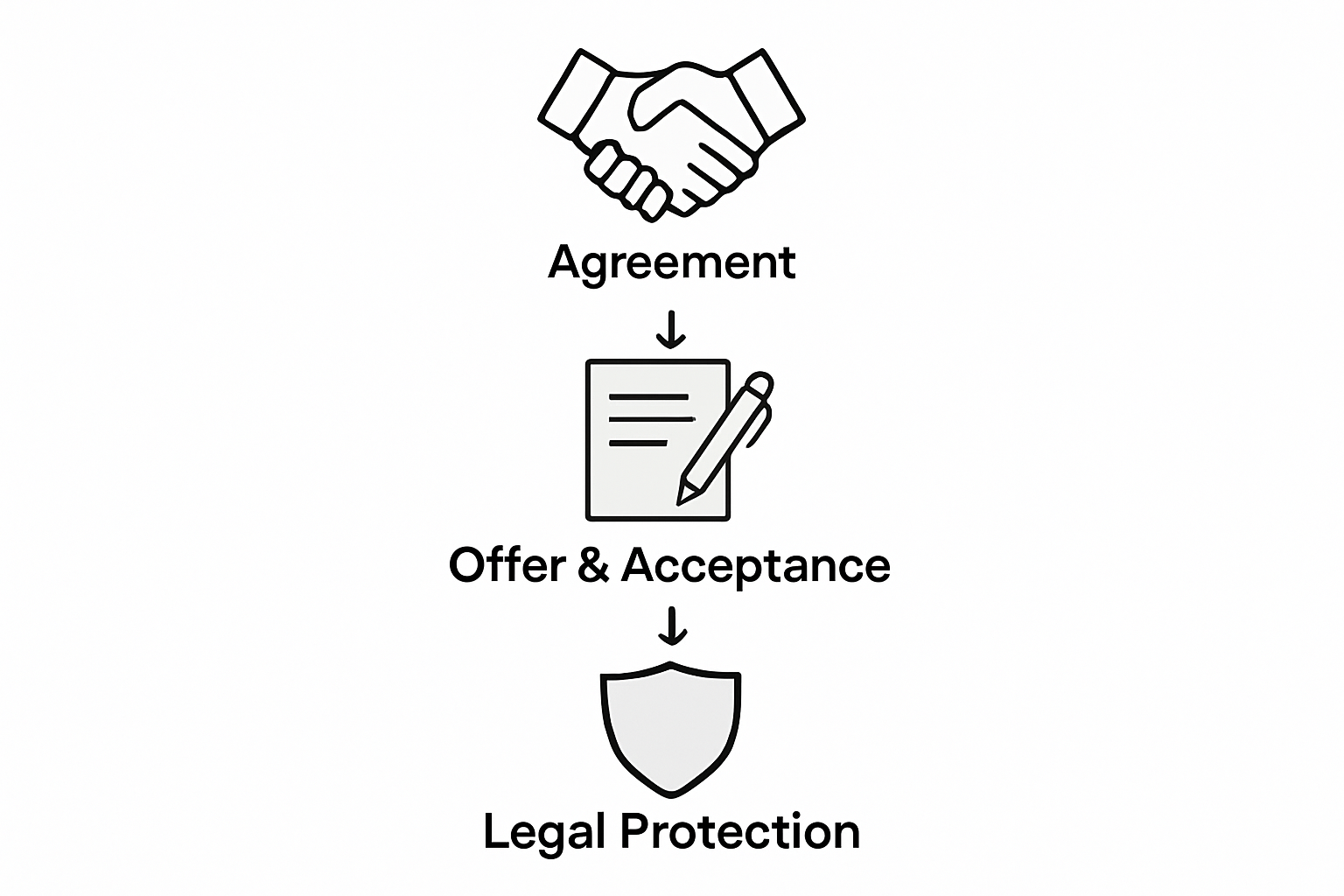
The formation of a valid contract requires careful attention to several essential terms and conditions. Offer represents the initial proposal made by one party, which must be clear, specific, and demonstrating a genuine intention to enter into an agreement. Acceptance occurs when the other party unequivocally agrees to the terms, creating a mutual understanding. Consideration is equally crucial, requiring each party to provide something of value – whether monetary compensation, goods, services, or a promise to do or refrain from doing something specific.
Key validity checks for contract formation include:
- Clarity of Terms: Precise, unambiguous language describing all obligations
- Mutual Consent: Voluntary agreement without coercion or undue influence
- Legal Capacity: All parties must have the legal right to enter the contract
- Lawful Purpose: Contract objectives must comply with legal and ethical standards
- Evidence of Agreement: Written documentation or clear demonstrable proof of mutual understanding
For UK businesses, these validity checks are not mere bureaucratic exercises but critical safeguards that protect commercial interests. By meticulously examining each element of contract formation, organisations can prevent potential disputes, mitigate legal risks, and establish transparent, trustworthy business relationships. The process requires careful scrutiny, legal expertise, and a comprehensive understanding of the intricate mechanisms that transform a simple agreement into a legally enforceable contract.
Risks, Breaches and Common Pitfalls to Avoid
Ambiguous language in contracts can create significant risks for businesses, potentially leading to costly disputes and legal complications. UK entrepreneurs must recognise that contractual vulnerabilities often emerge from seemingly minor oversights or imprecise wording. Understanding these potential pitfalls is crucial for protecting commercial interests and maintaining professional relationships.
The most prevalent contract risks stem from several key areas of potential vulnerability. Unclear Terms can create multiple interpretations, while Incomplete Specifications may leave critical aspects of an agreement unaddressed. Complex contracts frequently contain inconsistencies that compromise their enforceability, making meticulous review and professional legal consultation essential for mitigating potential breaches.
Common contractual risks and pitfalls include:
- Vague Performance Expectations: Failing to define precise deliverables
- Inadequate Dispute Resolution Mechanisms: Not specifying clear conflict resolution processes
- Undefined Termination Conditions: Lacking explicit contract exit strategies
- Insufficient Liability Protections: Neglecting to establish clear risk allocation
- Overlooking Compliance Requirements: Ignoring industry-specific regulatory standards
For UK businesses, proactively managing contractual risks requires a strategic approach. Starting a small business law guide can provide foundational insights into navigating these challenges. Successful risk management involves comprehensive review processes, seeking expert legal counsel, and developing a thorough understanding of potential contractual vulnerabilities. By anticipating and addressing these potential pitfalls, organisations can create more robust, reliable agreements that protect their interests and facilitate smoother business interactions.
Secure Your UK Business Success with Clear Contracts and Expert Guidance
Navigating the complex world of business contracts in the UK can be challenging. This article emphasises crucial concepts such as mutual consent, consideration, and clearly defined obligations to protect your interests and avoid costly pitfalls. Whether you struggle with ambiguous terms, risk management or understanding different contract types, you are not alone. Effective contracts establish legal rights and duties that safeguard your business and create trust among all parties involved.

Take control today by accessing practical, reliable insights tailored for UK business owners and entrepreneurs at KefiHub. From step-by-step guides on contract formation and validity checks to strategies for risk mitigation and dispute resolution, our platform empowers you to build strong, enforceable agreements. Don’t leave your business vulnerable. Explore legal updates and advice designed to help you understand contracts fully and protect your company’s future now.
Frequently Asked Questions
What are the main elements required for a valid business contract?
A valid business contract must include key elements such as offer, acceptance, consideration, and mutual intent. Each party must willingly agree to the terms and provide something of value for the contract to be enforceable.
How do contracts protect businesses in the UK?
Contracts protect businesses by clearly defining the scope of work, establishing payment terms, outlining performance expectations, and providing legal remedies in case of breaches. They also create a foundation of trust and accountability between the parties involved.
What types of contracts are commonly used in UK businesses?
Common types of contracts in UK businesses include Spot Purchases for one-time transactions, Term Contracts for recurring arrangements, Framework Agreements for multiple projects, and various specialised contracts like Research Contracts, Service Level Agreements (SLAs), and Non-Disclosure Agreements (NDAs).
What are the risks involved in contract formation?
Risks in contract formation include ambiguous language, unclear performance expectations, incomplete specifications, and inadequate dispute resolution mechanisms. It’s crucial to carefully draft contracts to avoid these pitfalls and protect commercial interests.
Recommended
- Business Insurance Explained: Key Roles for UK Companies – Kefihub
- What Is Business Insurance? Complete UK Overview – Kefihub
- How to Find Business Insurance UK: Step-by-Step Guide – Kefihub
- Business Plans: Why Every UK Venture Needs One – Kefihub