


Most british business owners underestimate just how much a single unforeseen event can threaten their company’s future. With over 40 percent of businesses experiencing property or liability claims every decade, it becomes clear why business insurance is more than just a legal box to tick. Knowing what protection is truly necessary can help avoid devastating setbacks and give business owners the confidence to grow and innovate safely.
Table of Contents
- Defining Business Insurance And Its Purpose
- Types Of Business Insurance Coverages
- Legal Requirements For UK Businesses
- How Business Insurance Policies Work
- Costs, Risks, And Common Mistakes
Key Takeaways
| Point | Details |
|---|---|
| Importance of Business Insurance | Business insurance is vital for protecting organisations against financial risks and ensuring business continuity during unexpected events. |
| Types of Coverage | Key types of business insurance include property, general liability, and workers’ compensation, tailored to specific operational risks. |
| Legal Requirements | UK businesses must comply with legal insurance obligations, such as obtaining employers’ liability insurance, to avoid penalties. |
| Avoiding Common Pitfalls | Businesses should regularly assess their insurance needs to avoid underinsurance and ensure appropriate coverage aligns with evolving risks. |
Defining Business Insurance And Its Purpose
Business insurance is a comprehensive financial protection strategy designed to shield companies from potential economic risks and unexpected challenges. According to iii.org, these policies encompass various protections that safeguard businesses from potential losses arising from unforeseen events.
At its core, business insurance serves multiple critical functions for organisations. Key purposes include:
- Protecting physical business assets
- Covering potential legal liability claims
- Mitigating financial risks from employee-related incidents
- Ensuring business continuity during unexpected disruptions
Businesses operate in an inherently unpredictable environment where risks can emerge from multiple directions. iii.org highlights that business insurance provides a crucial safety net, enabling companies to operate with confidence by offering financial protection against property damage, legal challenges, and potential workforce-related risks.
Understanding the specific types of business insurance becomes essential for entrepreneurs and business owners. Whether you’re running a small startup or managing an established enterprise, having the right insurance coverage can mean the difference between weathering a potential crisis and facing catastrophic financial consequences. Comprehensive business insurance isn’t just a regulatory requirement—it’s a strategic investment in your organisation’s long-term stability and resilience.
Types Of Business Insurance Coverages
Navigating the world of business insurance coverages requires understanding the diverse range of protections available for companies. iii.org highlights that business insurance encompasses multiple types of coverage designed to address specific operational risks and potential financial challenges.
The primary types of business insurance coverages include:
- Property Insurance: Protects physical business assets against damage, theft, or loss
- General Liability Insurance: Covers legal claims related to bodily injury or property damage
- Professional Liability Insurance: Shields businesses from claims of negligence or inadequate work
- Business Vehicle Insurance: Provides coverage for company-owned vehicles and potential accidents
- Workers’ Compensation Insurance: Covers employee injuries and related medical expenses
iii.org emphasises that selecting appropriate insurance coverages depends critically on the specific risks associated with a business’s operations and industry sector. Some businesses might require additional specialised coverage, such as cyber insurance for digital operations or product liability insurance for manufacturers.
The complexity of choosing the right insurance mix means businesses should conduct a thorough risk assessment. Each industry and company size presents unique vulnerabilities, making a one-size-fits-all approach ineffective. Consulting with an insurance professional can help entrepreneurs identify the most appropriate coverages that provide comprehensive protection while managing costs effectively.

Legal Requirements For UK Businesses
Understanding the legal insurance requirements for UK businesses is crucial for maintaining compliance and protecting your organisation from potential financial risks. gov.uk mandates specific insurance obligations that businesses must fulfil to operate legally and responsibly.
Key legal insurance requirements for UK businesses include:
- Employers’ Liability Insurance: Legally mandatory for most businesses with employees
- Minimum coverage of £5 million for employee injury or illness claims
- Must be provided by an authorized UK insurance provider
- Covers compensation for work-related injuries or health conditions
- Penalties for non-compliance can include significant financial fines
gov.uk also emphasises specific legal requirements for businesses using vehicles. Companies must secure appropriate motor insurance for any vehicles used in business operations, ensuring protection against potential accidents and third-party liabilities. These legal requirements extend beyond traditional business insurance, forming a comprehensive framework designed to protect both businesses and individuals.
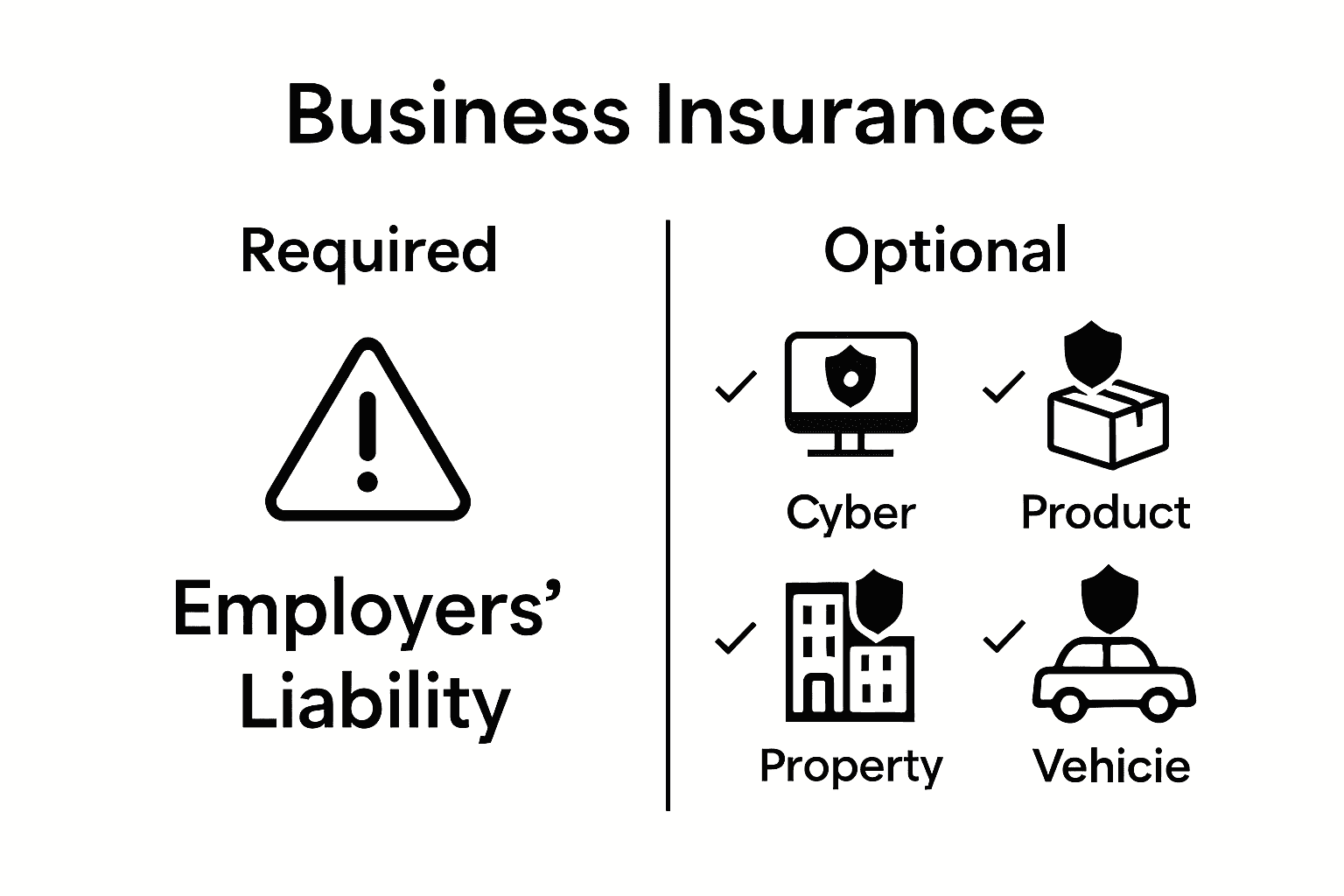
Navigating these legal requirements can be complex, which is why many businesses consult with professional insurance advisors to ensure full compliance. Understanding and implementing these mandatory insurance coverages isn’t just about avoiding penalties—it’s about creating a robust risk management strategy that safeguards your business’s long-term sustainability and financial health.
How Business Insurance Policies Work
Business insurance policies operate as a critical financial protection mechanism for companies, transferring potential risks from the business to the insurance provider. iii.org explains that this process involves businesses paying regular premiums in exchange for comprehensive coverage against specified potential losses.
The fundamental mechanics of business insurance policies involve several key stages:
- Risk Assessment: Insurers evaluate the specific risks associated with a business
- Premium Calculation: Determining the cost based on risk profile and coverage level
- Policy Creation: Defining exact terms, conditions, and coverage limits
- Claims Process: Mechanism for reporting and resolving potential losses
- Financial Protection: Transferring financial risk from business to insurer
iii.org highlights that when a covered event occurs, businesses file a claim, which the insurer then carefully assesses to determine appropriate compensation. This process ensures that companies can recover from unexpected financial setbacks without risking complete operational collapse.
Understanding the nuanced workings of business insurance requires careful consideration of policy details. While the basic premise remains consistent, each policy is uniquely tailored to address the specific risks and vulnerabilities of individual businesses. By exploring different business structures, entrepreneurs can better comprehend how insurance protections align with their specific operational needs and risk profiles.
Costs, Risks, And Common Mistakes
Understanding the financial implications and potential pitfalls of business insurance is crucial for protecting your organisation effectively. iii.org reveals that insurance costs vary significantly based on multiple factors, including business size, industry type, and specific coverage requirements.
Common risks and potential mistakes businesses encounter include:
- Underinsurance: Failing to secure adequate coverage levels
- Coverage Gaps: Overlooking specific liability areas
- Outdated Policies: Not updating insurance as business evolves
- Incomplete Risk Assessment: Inadequate evaluation of potential threats
- Misunderstanding Policy Terms: Overlooking critical exclusions
iii.org highlights that businesses frequently face operational risks such as property damage, liability claims, and unexpected business interruptions. These challenges underscore the importance of comprehensive and carefully selected insurance coverage. Mistakes often stem from a lack of thorough policy review or insufficient understanding of the business’s unique risk profile.
To mitigate these risks, businesses should consider consulting professional insurance advisors who can provide tailored guidance. Regular policy reviews, comprehensive risk assessments, and staying informed about changing business landscapes are essential strategies for maintaining effective insurance protection. Remember, the goal isn’t just to have insurance, but to have the right insurance that genuinely protects your business’s long-term sustainability.
Secure Your Business Future with Confidence
Understanding the complexities of business insurance and the legal obligations in the UK can feel overwhelming, especially when facing risks like underinsurance or coverage gaps. This article highlights critical challenges such as selecting the right policy, navigating legal requirements like Employers’ Liability Insurance, and avoiding costly mistakes that threaten your company’s stability. Protecting your business assets, employees, and operations requires clear, practical guidance tailored to your unique needs.
Take control of your business protection today with expert insights from KefiHub. Discover how to align your insurance choices with your specific risks and legal duties by exploring our dedicated resources on small business law and types of business structures. Don’t wait for a crisis to reveal gaps in your coverage — visit KefiHub now and build a resilient foundation for your business longevity.
Frequently Asked Questions
What is business insurance?
Business insurance is a financial protection strategy designed to safeguard companies from economic risks and unexpected challenges, covering potential losses due to a variety of unforeseen events.
Why is business insurance important for companies?
Business insurance protects physical assets, covers legal liabilities, mitigates financial risks from employee-related incidents, and ensures continuity during unexpected disruptions, enabling companies to operate with confidence.
What are the common types of business insurance coverages available?
Common types of business insurance coverages include property insurance, general liability insurance, professional liability insurance, business vehicle insurance, and workers’ compensation insurance.
What should businesses consider when choosing insurance coverage?
Businesses should assess their specific risks, industry requirements, and unique vulnerabilities to select appropriate insurance coverages, often consulting professional insurance advisors to ensure comprehensive protection.
Recommended
- Civil Litigation Archives – Kefihub
- Civil Disputes Archives – Kefihub
- Judge Law | Local Law Firm Listings
- Every business problem feels smaller when you understand it. We’re here to make the complex simple, one guide at a time. – Kefihub