


Finding the right british business insurance is rarely straightforward. With over 40 percent of United Kingdom businesses experiencing uninsured losses each year, getting proper protection matters more than ever. This guide walks you through practical steps to identify your company’s risks, gather precise information, and confidently compare insurance options so you can confidently secure solid coverage for your unique needs.
Table of Contents
- Step 1: Identify Your Business Insurance Needs
- Step 2: Gather Relevant Business Information
- Step 3: Compare UK Insurance Providers Online
- Step 4: Request And Review Personalised Quotes
- Step 5: Verify Policy Details And Provider Credibility
- Step 6: Finalise Your Business Insurance Purchase
Quick Summary
| Important Insight | Explanation |
|---|---|
| 1. Identify your insurance needs | Conduct a thorough risk assessment to understand your specific business vulnerabilities before selecting insurance. |
| 2. Gather comprehensive business information | Compile detailed business operation data, including employee records and financials, to assist insurers in assessing risk accurately. |
| 3. Compare multiple insurance providers | Evaluate different insurers online based on premiums, coverage, and provider reputation to find the best fit for your needs. |
| 4. Review quotes carefully | Examine policy details beyond price, including coverage limits and exclusions, to ensure comprehensive protection for your business. |
| 5. Verify provider credibility before purchase | Conduct due diligence on insurers to confirm financial stability and understand policy specifics before finalising your insurance purchase. |
Step 1: Identify your business insurance needs
Identifying the right business insurance starts with a comprehensive understanding of your organisation’s specific risks and operational landscape. Every business faces unique challenges, and pinpointing your insurance requirements demands careful analysis of your sector, size, and potential vulnerabilities.
To begin, conduct a thorough risk assessment that examines your business model, workforce, physical assets, and potential legal exposures. This means evaluating factors like the number of employees, type of work performed, equipment value, customer interactions, and potential liability scenarios. The British Insurance Brokers’ Association employee protection guide recommends a systematic approach to understanding these complex risk profiles.
Consider core insurance categories that might apply to your business such as public liability, professional indemnity, employers’ liability, and property insurance. Small businesses in sectors like construction, consulting, or retail might require different coverage compared to digital service providers or home-based entrepreneurs. Your insurance portfolio should reflect not just current needs but potential future growth and emerging risks specific to your industry.
A practical tip is to speak with an independent insurance broker who can provide personalised guidance. They can help translate your risk assessment into appropriate insurance products, ensuring you’re neither over-insured nor leaving critical vulnerabilities unprotected. Your next step will involve comparing quotes and understanding the specific terms of different insurance policies.
Step 2: Gather relevant business information
Gathering the right business information is crucial for determining appropriate insurance coverage. This step involves collecting comprehensive details about your organisation that will help insurers assess your specific risk profile and design suitable protection strategies.

Start by compiling a detailed dossier of your business operations. This should include financial statements, employee records, annual turnover, business structure, and a breakdown of your primary activities. The UK government guidance on trade credit insurance emphasises the importance of maintaining accurate financial documentation, which not only supports insurance applications but also provides a clear snapshot of your business health.
Prepare specific documentation that highlights potential risk areas. According to Hiscox business insurance recommendations, this includes detailed information about employee roles, equipment values, operational environments, and potential liability exposure. Consider gathering documents such as business registration certificates, tax returns, equipment inventories, safety protocols, and any existing risk management plans. The more transparent and comprehensive your information, the more accurately insurers can assess and price your required coverage.
A practical tip is to create a dedicated folder with all relevant business documents, ensuring you can quickly access and update information. This organisational approach will streamline future insurance applications and renewals. Your next step will involve analysing this collected information to match potential insurance products with your specific business needs.
Step 3: Compare UK insurance providers online
Comparing UK insurance providers online is a critical step in finding the right business insurance policy. This process involves systematically evaluating different insurers to find coverage that matches your specific business needs while offering competitive pricing and comprehensive protection.
Online comparison resources can help you efficiently navigate the complex landscape of business insurance providers. Begin by creating a spreadsheet to track key details such as premium costs, coverage limits, policy exclusions, excess amounts, and additional benefits offered by different insurers. Pay close attention to specialised providers who understand your specific industry sector, as they often provide more tailored coverage options.
When comparing providers, look beyond just the price. Assess the insurer’s reputation, customer service ratings, claims processing history, and financial stability. Check independent review platforms, industry ratings from organisations like Defaqto, and seek recommendations from professional business associations in your sector. The role of business insurance in UK companies extends far beyond simple financial protection, so choose a provider that demonstrates comprehensive understanding of risk management.
A practical tip is to request detailed quotes from at least three different providers, ensuring you provide identical information to each to enable accurate comparisons. Look for flexibility in policy terms, the ability to customise coverage, and providers offering free consultations or risk assessments. Your next step will involve carefully reviewing and selecting the most appropriate insurance policy for your specific business requirements.
Step 4: Request and review personalised quotes
Requesting and reviewing personalised insurance quotes is a crucial step in securing the right business protection. This process requires careful preparation and a strategic approach to ensure you receive accurate and comprehensive coverage proposals.
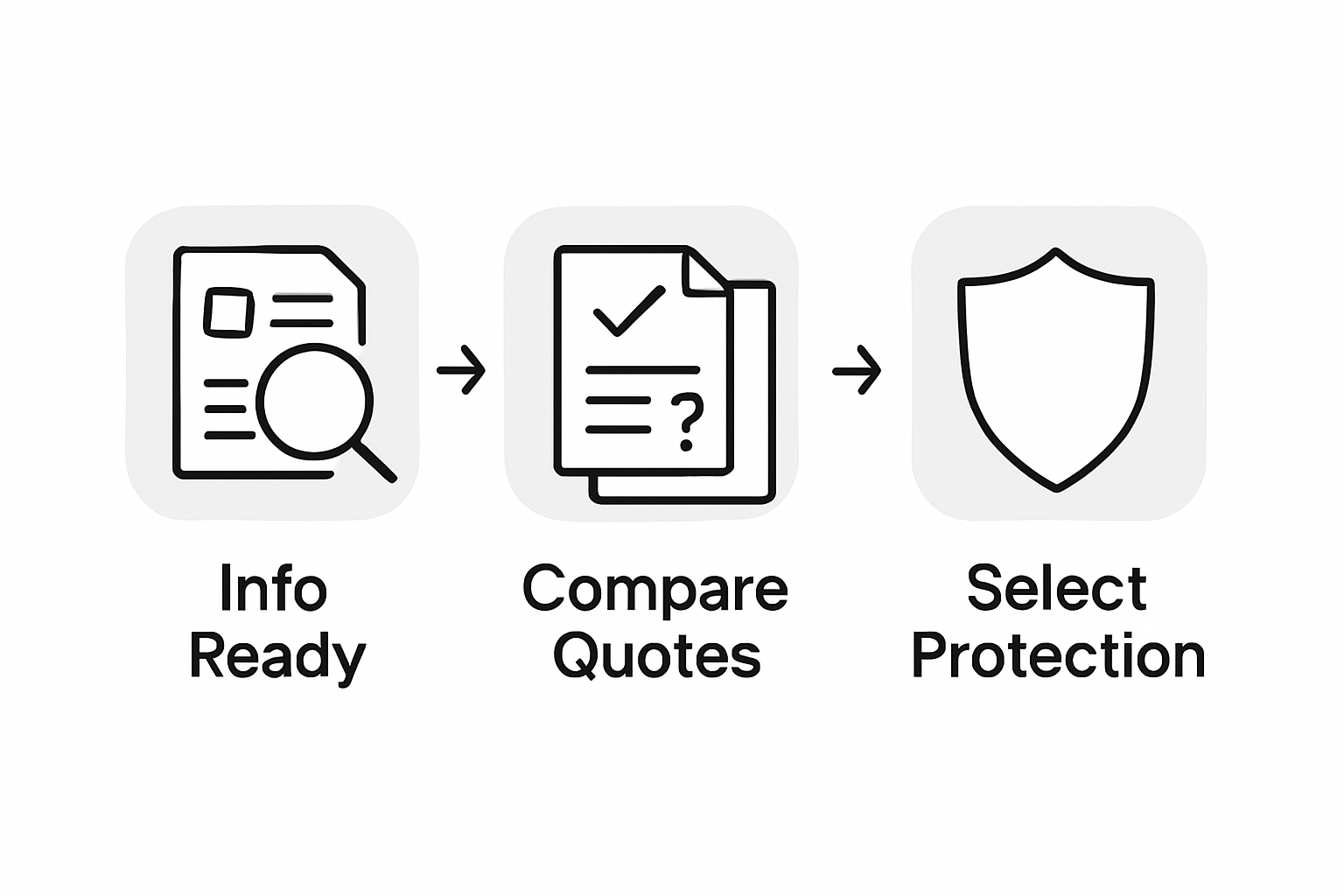
Prepare a detailed information package before reaching out to insurers. Include precise business details such as annual turnover, number of employees, specific industry classification, operational risks, and current asset values. When contacting providers, be consistently transparent and provide identical information to each insurer to enable fair comparisons. Understanding the role of business insurance in UK companies will help you articulate your specific coverage requirements more effectively.
When reviewing quotes, look beyond the headline premium price. Carefully examine policy details including coverage limits, exclusions, excess amounts, and additional features. Pay attention to the claims process reputation of each provider and their specific expertise in your business sector. Create a comparative spreadsheet that allows you to analyse each quote systematically, scoring providers across multiple dimensions such as price, coverage breadth, customer service ratings, and financial stability.
A practical tip is to schedule follow-up conversations with insurance representatives who provided the most promising quotes. These discussions can help clarify complex policy terms and potentially negotiate more favourable conditions. Your next step will involve selecting the most appropriate insurance policy that provides comprehensive protection while representing good value for your specific business needs.
Step 5: Verify policy details and provider credibility
Verifying policy details and provider credibility is a critical step in protecting your business from potential insurance pitfalls. This process involves thorough due diligence to ensure you select a reliable insurer with comprehensive and transparent coverage options.
Begin by conducting an in-depth investigation of potential insurance providers. Check their financial ratings from independent agencies like Standard and Poor’s or Moody’s to assess their financial stability and ability to pay claims. What is business insurance in the UK becomes crucial when understanding the nuanced aspects of policy verification. Examine the Financial Conduct Authority register to confirm the provider is legally authorised to offer insurance services in the United Kingdom.
Carefully review each policy document with meticulous attention to detail. Look for potential exclusions, specific terms and conditions, and any clauses that might limit your coverage. Pay special attention to the claims process explanation, understanding exactly what documentation you would need to provide in the event of a claim. Contact the insurance provider directly to clarify any ambiguous language or seek additional information about complex policy sections.
A practical tip is to request sample claim documentation and speak with existing clients or industry peers about their experiences with the insurance provider. This can provide invaluable insights into the real-world performance of the insurance company beyond their marketing materials. Your next step will involve making a final decision and proceeding with the most suitable insurance policy for your business needs.
Step 6: Finalise your business insurance purchase
Finalising your business insurance purchase is the culmination of a strategic process that requires careful consideration and decisive action. This critical step transforms all your prior research and comparison into actual protection for your business operations.
Prepare to complete the purchase by ensuring you have all necessary documentation ready. Review the final policy document meticulously, confirming that every detail matches your previous discussions and requirements. The role of business insurance in UK companies emphasises the importance of understanding precisely what coverage you are securing. Confirm payment terms, policy start date, and any initial setup requirements with your chosen insurance provider.
Before making the final commitment, conduct a final review of the policy terms. Verify the exact coverage limits, understand the claims process, and ensure you have noted all contact information for your insurance representative. Consider setting up automatic renewal or payment arrangements to maintain continuous coverage. Take time to save digital and physical copies of all insurance documentation in a secure location that is easily accessible to key members of your business leadership team.
A practical tip is to set a calendar reminder for policy review and renewal well in advance of the expiration date. This proactive approach ensures you will have ample time to reassess your business insurance needs and explore alternative options if required. Your next step involves implementing your new insurance coverage and ensuring all relevant team members are informed about the protection now in place for your business.
Secure Your Business Future with the Right Insurance
Finding the perfect business insurance is a challenge every UK entrepreneur faces. This guide highlights the crucial steps from assessing your specific risks to verifying policy details and choosing a reliable provider. Mistakes in this process can leave your business vulnerable or cost you unnecessarily. Do not let uncertainty or complexities stand in the way of protecting what you have built.
Explore expert insights tailored for your needs in our Business Archives – Kefihub where practical advice meets real-world application.
Take control today by consulting trusted resources that help you understand every detail of your insurance options. Start now at KefiHub for reliable, UK-focused guidance and actionable steps. Empower your business with smart choices that ensure peace of mind and resilience for tomorrow.
Frequently Asked Questions
How do I identify my business insurance needs?
To identify your business insurance needs, conduct a thorough risk assessment of your operations, assets, and potential vulnerabilities. Evaluate factors such as employee numbers, types of work, and legal exposure. Start this process by examining your specific sector and adapting coverage categories accordingly.
What information do I need to gather for business insurance?
Gather comprehensive business information including financial statements, employee records, and details about your operational risks. Prepare documentation like business registration, tax returns, and safety protocols to help insurers accurately assess your risk profile. Create a dedicated folder for this information to streamline your application process.
How can I compare business insurance providers effectively?
To compare business insurance providers, create a spreadsheet tracking key details such as premium costs, coverage limits, and exclusions. Research the reputation and financial stability of each provider by checking independent reviews and ratings. Begin this step by collecting quotes from at least three different insurers to ensure a fair comparison.
What should I look for in personalised insurance quotes?
When reviewing personalised insurance quotes, examine not only the premium price but also the coverage limits, exclusions, and claims processes. Create a comparative spreadsheet to analyse quotes systematically and follow up with insurance representatives for clarification on complex terms. Consider scheduling these discussions promptly after receiving quotes to facilitate informed decisions.
How do I verify the credibility of an insurance provider?
Verify the credibility of an insurance provider by checking their financial ratings and confirming their authorisation through relevant regulatory bodies. Review policy documents carefully for terms, exclusions, and the claims process. Ask for sample claim documentation and speak with existing clients about their experiences to gain insight into the provider’s reliability.
What steps should I take to finalise my business insurance purchase?
To finalise your business insurance purchase, ensure all necessary documentation is ready and review the final policy details for accuracy. Confirm payment terms and policy start dates, then set up a secure method for storing all your insurance documents. Last, schedule a calendar reminder for policy renewal well in advance to reassess your coverage needs.
Recommended
- Business Insurance Explained: Key Roles for UK Companies – Kefihub
- What Is Business Insurance? Complete UK Overview – Kefihub
- Business Insurance Explained: Key Roles for UK Companies – Kefihub
- How to Avoid Common Business Mistakes for UK Professionals – Kefihub