


More than 90 percent of british businesses rely on some form of insurance to help them weather financial storms and protect daily operations. From start-ups to established firms, the right coverage forms a safety net against risks that could otherwise derail growth or disrupt trade. Getting clear on what business insurance really offers means companies can safeguard their assets, stay legally compliant, and build lasting security in an uncertain economy.
Table of Contents
- Defining Business Insurance and Its Core Functions
- Major Types of Business Insurance Policies
- Legal Requirements and Regulatory Standards in the UK
- Protecting Against Risks and Liabilities
- Practical Steps to Choosing the Right Cover
Key Takeaways
| Point | Details |
|---|---|
| Importance of Business Insurance | Business insurance is essential for protecting a company’s financial stability and operational continuity against unforeseen risks. |
| Core Functions of Coverage | Key functions include protecting physical assets, covering liability claims, and ensuring compliance with legal requirements. |
| Legal Obligations in the UK | Employers’ Liability insurance is mandatory, requiring a minimum coverage of £5 million to protect employees from work-related injuries. |
| Strategic Selection Process | Choosing the right insurance involves thorough risk assessment and customised coverage tailored to specific business needs. |
Defining Business Insurance and Its Core Functions
Business insurance represents a comprehensive risk management strategy designed to protect companies from potential financial losses and operational disruptions. According to Insurance Information Institute, business insurance encompasses various policies that safeguard a company’s critical assets, employees, and operational infrastructure.
At its core, business insurance serves several fundamental functions that are essential for organisational resilience. Financial protection remains the primary objective, ensuring that businesses can recover swiftly from unexpected events. As Management.org explains, these insurance policies provide financial compensation for covered incidents, enabling companies to maintain continuity even when facing significant challenges.
The key functions of business insurance typically include:
- Protecting physical assets against damage or loss
- Covering liability claims from third-party injuries or property damage
- Providing financial support for employee-related risks
- Ensuring compliance with legal and regulatory requirements
- Mitigating potential financial disruptions from unforeseen circumstances
By strategically implementing appropriate insurance coverage, UK businesses can create a robust safety net that shields them from potentially catastrophic financial setbacks. What Is Business Insurance? Complete UK Overview provides deeper insights into tailoring insurance strategies for specific business needs.
Major Types of Business Insurance Policies
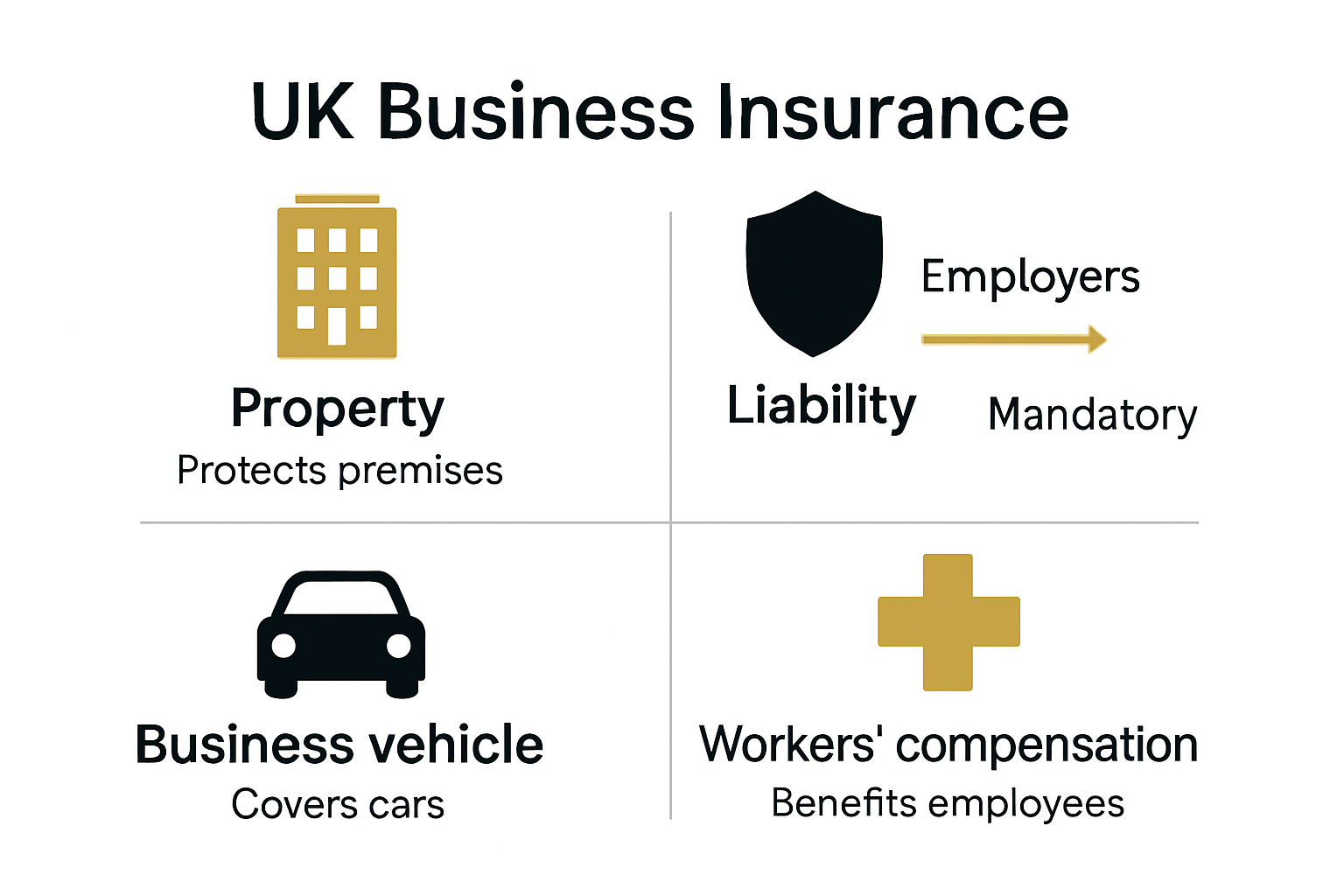
Understanding the diverse landscape of business insurance policies is crucial for comprehensive risk management. Insurance Information Institute highlights four primary categories of insurance that form the backbone of business protection strategies: property insurance, liability insurance, business vehicle insurance, and workers’ compensation insurance.
Within the realm of liability insurance, multiple subcategories provide targeted protection for different business risks. Insurance Information Institute identifies three critical types of liability coverage that businesses should consider:
- General Liability Insurance: Protects against third-party bodily injury and property damage claims
- Professional Liability Insurance: Covers errors and omissions in professional services
- Product Liability Insurance: Shields businesses from claims related to defective products
Beyond liability coverage, businesses must also consider other essential insurance types to create a comprehensive protection strategy. Property insurance safeguards physical assets, business vehicle insurance covers transportation-related risks, and workers’ compensation provides critical protection for employee injuries. By carefully selecting and combining these insurance policies, companies can build a robust financial safety net that addresses potential vulnerabilities across multiple operational dimensions.

Legal Requirements and Regulatory Standards in the UK
Navigating the complex landscape of business insurance regulations in the United Kingdom requires a comprehensive understanding of legal mandates and compliance requirements. Gov.uk specifically highlights one of the most critical legal obligations for businesses: Employers’ Liability (EL) insurance. This mandatory coverage ensures that companies can provide financial compensation to employees who suffer injuries or illnesses directly related to their work activities.
The regulatory framework surrounding business insurance in the UK is designed to protect both employers and employees. Under current legislation, businesses are legally required to maintain a minimum of £5 million in employers’ liability coverage. Failure to comply with these regulations can result in substantial financial penalties, with potential fines reaching up to £2,500 for each day a business operates without appropriate insurance protection.
Key legal requirements for UK businesses include:
- Mandatory Employers’ Liability insurance for most limited companies and incorporated businesses
- Minimum coverage of £5 million for employee-related claims
- Display of insurance certificate in a prominent workplace location
- Regular policy renewals and maintenance of up-to-date documentation
Beyond basic compliance, savvy businesses recognise that insurance is more than a legal requirement. Essential Guide To Small Business Law provides additional insights into how comprehensive insurance strategies can serve as a critical risk management tool, protecting both the financial stability and operational continuity of UK enterprises.
Protecting Against Risks and Liabilities
Effective risk management is a critical strategic imperative for businesses seeking to safeguard their financial stability and operational continuity. Insurance Information Institute emphasises that comprehensive liability insurance is fundamental to protecting organisations against potential claims for bodily injury, property damage, and associated legal defence costs.
Businesses must adopt a multifaceted approach to risk mitigation. Insurance Information Institute recommends implementing a strategic combination of insurance policies that address diverse potential vulnerabilities. This holistic approach includes crucial coverage types such as:
- Property Insurance: Protecting physical assets against damage or loss
- Liability Insurance: Defending against third-party claims and legal expenses
- Business Interruption Insurance: Ensuring financial continuity during unexpected disruptions
- Cyber Insurance: Safeguarding against digital risks and data breaches
Beyond insurance policies, proactive risk management involves developing robust internal protocols, conducting regular risk assessments, and creating comprehensive contingency plans. 7 Essential Steps for Your Start-Up Checklist UK Success provides additional insights into building a resilient business framework that anticipates and mitigates potential operational challenges before they escalate.
Practical Steps to Choosing the Right Cover
Business insurance selection demands a strategic and methodical approach that goes beyond simple policy comparison. Insurance Information Institute emphasises the critical importance of carefully assessing the specific risks inherent to your unique business operations before making any coverage decisions.
Management.org recommends a comprehensive process for selecting appropriate business insurance that involves several key stages:
- Risk Assessment: Thoroughly evaluate potential vulnerabilities specific to your industry and business model
- Asset Valuation: Calculate the precise financial value of assets requiring protection
- Comparative Analysis: Research and compare policies from multiple reputable insurers
- Coverage Customisation: Tailor insurance packages to address your most critical risk exposures
Ultimately, successful insurance selection is an ongoing process that requires regular review and adaptation. 7 Key Types of Business Structures UK Professionals Must Know highlights how different business structures can significantly impact insurance requirements, underscoring the importance of seeking professional guidance to ensure comprehensive and appropriate coverage for your specific operational context.
Secure Your UK Business with Expert Insurance Guidance
Navigating the complexities of business insurance can be overwhelming. The risk of financial setbacks from liability claims or unforeseen disruptions is a real challenge for many UK companies. This article highlights critical pain points including meeting legal requirements like Employers’ Liability insurance and choosing the right cover to protect your assets and employees effectively. Understanding terms such as general liability, professional liability and business interruption insurance is essential for safeguarding your business’s future.
Take control of your business’s protection today with trusted insights and practical advice from KefiHub. We provide clear guidance tailored to UK professionals who want to minimise risk and stay compliant. Learn how your specific business structure influences insurance needs by visiting 7 Key Types of Business Structures UK Professionals Must Know. For actionable steps on building a resilient business, explore 7 Essential Steps for Your Start-Up Checklist UK Success. Don’t wait until costly setbacks occur. Visit KefiHub now to protect your company’s future with confidence.
Frequently Asked Questions
What is business insurance?
Business insurance is a risk management strategy that protects companies against financial losses and operational disruptions through various policies designed to safeguard assets, employees, and infrastructure.
What are the main types of business insurance policies?
The main types of business insurance policies include property insurance, liability insurance, business vehicle insurance, and workers’ compensation insurance. Each type addresses specific risks and needs associated with business operations.
Why is employers’ liability insurance important for businesses?
Employers’ liability insurance is essential because it is legally required for most businesses. It provides financial compensation to employees who suffer work-related injuries or illnesses, protecting both the employer and the employees from potential claims.
How can businesses assess their insurance needs?
Businesses can assess their insurance needs by conducting a risk assessment to identify vulnerabilities, valuing their assets for protection, and comparing policies from multiple insurers to ensure comprehensive coverage that addresses their specific operational risks.
Recommended
- What Is Business Insurance? Complete UK Overview – Kefihub
- Complete Guide to the Role of Solicitors in Business – Kefihub
- Complete Guide to Why Incorporate a Business – Kefihub
- Why Sustainable Business: Complete Guide for UK Professionals – Kefihub