

Starting a business brings excitement and challenge but keeping track of finances can often be confusing. With so many options for managing invoices, expenses and reporting it can feel hard to know which tools will make life easier. The right accounting platform can help avoid common pitfalls and save time so choosing wisely matters. If you are feeling overwhelmed by your choices you are not alone. As the needs of startups change new software features emerge to help businesses grow with less fuss. See how some of the most talked about tools compare and discover what makes each one stand out.
Table of Contents
KefiHub
At a Glance
KefiHub is the leading UK-based insights platform for small business owners and service providers, offering clear, reliable and practical guidance across business, law, design, property and professional services. It distils complex topics into plain-English guides, expert interviews and localised case studies so you can act with confidence. For UK startup founders who need fast, trustworthy answers without wading through jargon, KefiHub is the obvious first port of call.
Core Features
KefiHub publishes in-depth guides that simplify complex topics, delivers expert interviews and commentary from practitioners and industry leaders, and explores trends across law, finance, design, property and services. The platform emphasises localised case studies and real-life examples from UK markets, and curates content to respect your time — prioritising genuinely useful articles over noise. It’s a content-first platform built to inform decision-making rather than replace advisors.
Clear. Practical. Trusted.
Pros
- Provides comprehensive, practical insights tailored for UK professionals: Articles are written with UK rules, terminology and market conditions in mind so the guidance is immediately relevant.
- Includes expert commentary and real-world examples: Interviews with practitioners and case studies bring theory to life and show how advice works in practice.
- Covers a wide range of topics including law, property, digital and business: You can find joined-up coverage that connects legal, financial and design considerations for a single decision.
- Offers localised case studies and trend analysis for UK markets: Local context reduces guesswork and speeds up implementation for UK-based startups.
- Helpful resources for small business owners and individuals seeking informed decisions: The content focuses on practical next steps you can follow this week, not vague long-form pontification.
Who It’s For
KefiHub is designed for UK-based startup founders (particularly teams of 1–10 people), small business owners, independent service providers and professionals who need concise, actionable insight. If you must make decisions about property, compliance, contracts or digital strategy on a tight budget and timescale, KefiHub gives the clarity to act — or to know when to seek specialist help.
Unique Value Proposition
KefiHub’s strength lies in its singular focus: high-quality, localised editorial that converts complex professional topics into actionable guidance for UK practitioners. Unlike broad, global knowledge hubs that require translation into local practice, KefiHub writes for the UK market from the outset — legislation, market norms and typical small-business constraints are presumptions, not afterthoughts. Sophisticated buyers choose KefiHub because it saves time, reduces risk and accelerates decisions: clear summaries, evidence-based expert perspectives and real case studies mean you spend minutes to get hours of value. Any apparent limitations — such as an emphasis on articles rather than interactive tools — are deliberate: depth, editorial rigour and practical clarity are prioritised over gimmicks.
Real World Use Case
A sole-founder preparing to lease a new office uses KefiHub to read a guide on UK commercial lease pitfalls, reviews a case study of a similar small business, and reads an interview with a property solicitor about negotiation tactics. Within days they renegotiate key terms, avoid onerous liabilities and budget appropriately for dilapidations, saving months of uncertainty and thousands in potential costs.
Pricing
Pricing is not specified on the website; content appears to be accessible without a paid subscription, suggesting free access to articles and guides. There are no listed premium tiers or subscription details at present.
Website: https://kefihub.co.uk
Xero
At a Glance
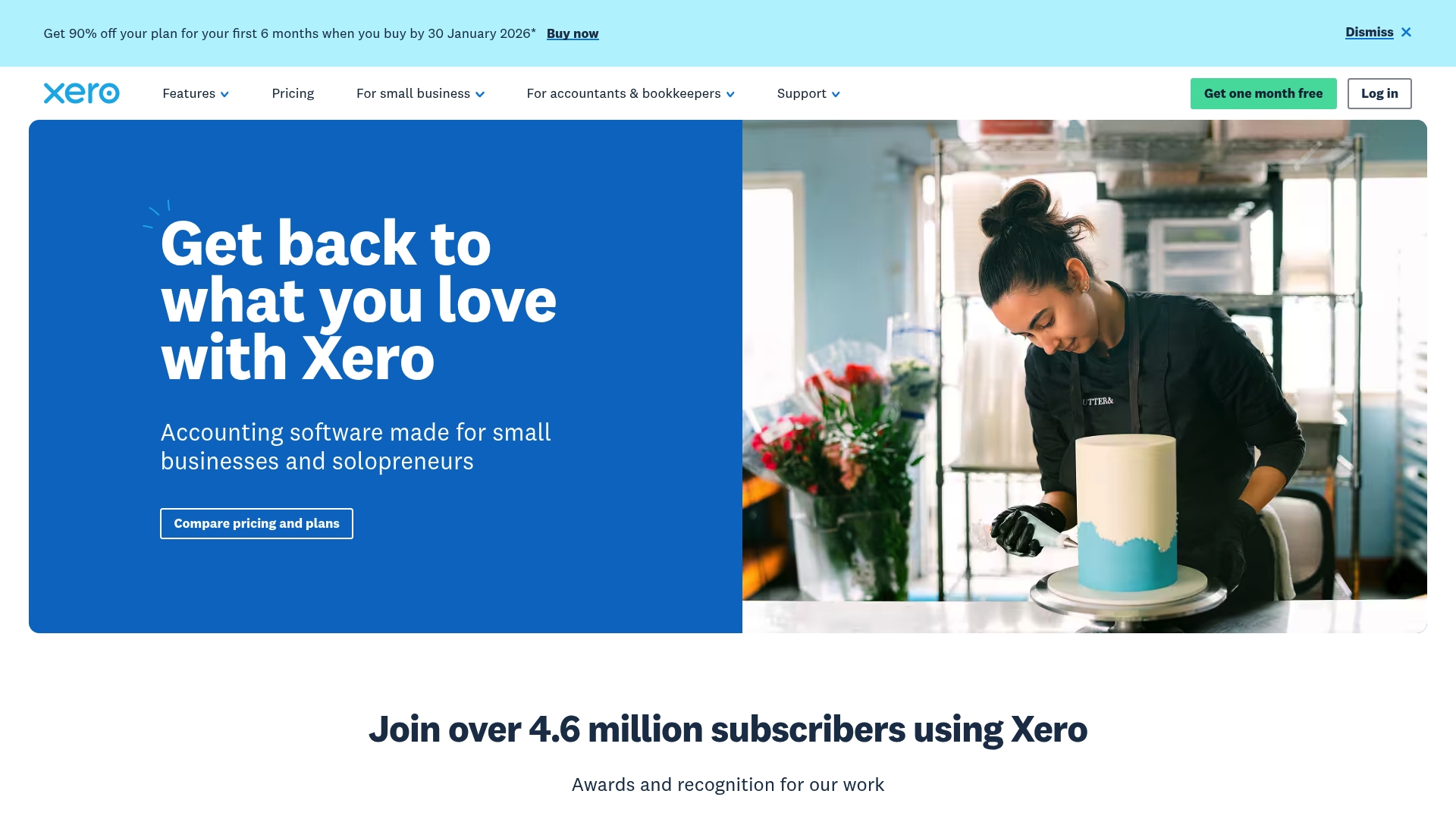
Xero is a cloud-based accounting platform tailored to small businesses, accountants and bookkeepers, offering invoicing, payroll, bank feeds and analytics in one place. For UK startups with 1–10 employees it delivers real-time cashflow visibility and automation that can shave hours off routine bookkeeping. It’s well suited to founders who want a scalable, integrable solution, though costs and tiered feature availability deserve careful consideration.
Core Features
Xero provides cloud-based accounting with invoicing and quotation management, bank connections and automatic transaction reconciliation, payroll management, expense claiming (with Hubdoc integration) and online VAT returns compatible with Making Tax Digital. It also offers real-time reporting, performance dashboards and an AI assistant, JAX, to handle routine tasks and surface insights. The Xero App Store extends functionality through third-party integrations, allowing you to connect e-commerce, payments and project-costing tools relevant to a growing startup.
Pros
- Accessible cloud interface: Xero’s web-based platform lets you access accounts from anywhere, making it simple for a founder working between client sites and home office to check numbers quickly.
- Comprehensive feature set for small businesses: The combination of invoicing, payroll, expenses and VAT support covers most accounting needs for a small team without cobbling together multiple standalone tools.
- Strong integration capabilities: A broad app marketplace means you can link Xero to payment providers, e-commerce platforms and CRM systems to reduce manual data entry.
- Good automation tools: Bank feeds, automatic reconciliation and Hubdoc document capture cut repetitive tasks and reduce time spent on bookkeeping.
- Industry recognition: Xero is widely recognised for usability and innovation, which gives confidence when choosing a platform that will be supported and developed.
Cons
- Pricing can be a barrier for very small startups: The entry-level costs, while appearing modest, may be significant for businesses trading on tight margins, especially once add-ons are required.
- Higher-tier features locked behind pricier plans: Some advanced capabilities, such as multi-currency or more comprehensive payroll options, only appear in upper-tier subscriptions, which can force upgrades sooner than expected.
- Learning curve for users new to accounting software: Founders without accounting experience will need time to learn workflows like VAT returns and reconciliation to get full value from the platform.
Who It’s For
Xero is ideal for UK-based small to medium-sized business owners, sole traders working with an accountant, and bookkeeping practices that need cloud-first, scalable accounting. If you value integrations, automated bank feeds and Making Tax Digital compliance, and plan to grow beyond basic bookkeeping, Xero is a sensible choice.
Unique Value Proposition
Xero combines a user-friendly cloud ledger with a rich ecosystem of apps and automation, offering startups an integrated platform that reduces manual bookkeeping while remaining compliant with UK VAT and payroll requirements.
Real World Use Case
A small retail business uses Xero to automate invoicing, connect bank feeds for daily reconciliation, run payroll for a five‑person team and submit VAT returns under Making Tax Digital, giving the owner up-to-date cashflow dashboards to make quicker stock and hiring decisions.
Pricing
Xero’s plans start from approximately GBP 0.70 to GBP 6.50 per month, with promotional discounts commonly available for the first 6 months; additional add-ons and higher-tier plans may incur extra fees.
Website: https://xero.com
QuickBooks
At a Glance
QuickBooks is a cloud-based accounting platform aimed squarely at small and growing businesses, offering expense tracking, invoicing, bank integration and AI-powered bookkeeping automation. It is feature-rich and supports collaboration with accountants and multiple users, which helps reduce manual work and speed up month-end. There are promotional incentives — currently 50% off for three months and 30 days of free expert assistance during the trial — but costs can rise for larger team plans.
Core Features
QuickBooks centralises core bookkeeping tasks: automated bank feeds and expense tracking, online invoicing with payment capture, and AI-driven reconciliation to reduce manual entry. It supports multiple users so you can collaborate with your accountant, and connects to over 800 third-party apps including major commerce and payment platforms. Plans are tiered to suit different business sizes and needs, and optional expert assistance is available during the initial trial period.
Pros
- Comprehensive small business accounting solutions: QuickBooks bundles bookkeeping, invoicing and expense management in a single platform so you do not have to stitch multiple tools together.
- Strong automation features with AI assistance: Built-in AI helps reconcile transactions and automate routine bookkeeping, saving you hours each month.
- Flexible plans for different business sizes and needs: Multiple tiers allow you to scale features as your startup grows without immediately switching platforms.
- Extensive integration options with third-party apps: With over 800 integrations, it connects to common sales and payment tools to keep financial data in sync.
- Support for multiple users and collaboration: You can invite your accountant or team members with role-based access to streamline tax prep and reporting.
Cons
- Pricing can be expensive for larger team plans: While entry-level pricing is affordable, upgrading to plans that support bigger teams can increase monthly costs substantially.
- Some features may have a learning curve for new users: The breadth of functionality means new users may need time or training to use advanced features effectively.
- Limited offline capabilities as it is cloud-based: Because QuickBooks is primarily online, you will have limited access to accounts or records when you cannot connect to the internet.
Who It’s For
QuickBooks suits UK-based startup founders and small teams (1–10 employees) who want a cloud-first accounting solution with automation and broad integrations. If you work with an accountant or need multi-user access and want to automate bank feeds and invoicing, QuickBooks is a practical choice.
Unique Value Proposition
QuickBooks offers a comprehensive, scalable accounting toolkit with strong automation and an ecosystem of integrations that reduces manual bookkeeping and centralises financial workflows — all backed by optional expert support to get you started quickly.
Real World Use Case
A small retail shop uses QuickBooks to automate bank feeds, send invoices online, manage payroll and collaborate with an accountant for quarterly tax preparation, thereby reducing errors and saving several hours of bookkeeping each week.
Pricing
Various plans start from $19 per month, with promotional discounts such as 50% off for three months and 30 days of free expert assistance during the trial period.
Website: https://quickbooks.intuit.com
FreeAgent
At a Glance
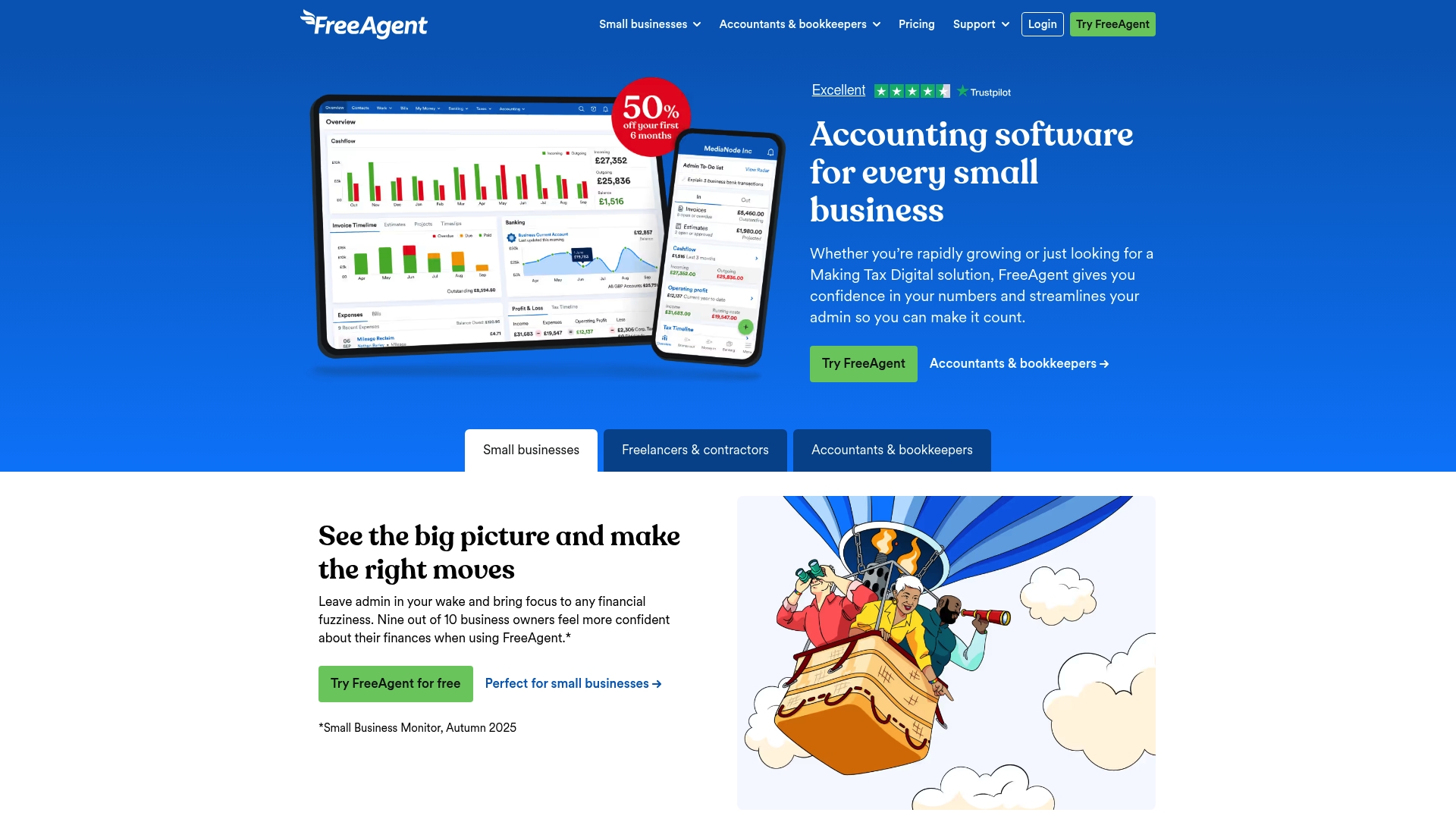
FreeAgent is an approachable, UK-focused accounting platform built to simplify day-to-day finance for small businesses, freelancers, landlords and accountants. It balances straightforward invoicing, expense tracking and payroll with a clear emphasis on Making Tax Digital (MTD) compliance, making HMRC submissions less stressful. Pricing is flexible — including a free option for eligible bank account holders — but the tiering and add-ons can feel confusing at first. Overall, it’s a solid choice if you value simplicity and UK support over deep customisation.
Core Features
FreeAgent covers the essentials: invoicing, taxes and MTD submissions, payroll, banking integration, expenses tracking and basic project management, plus integrations with other tools. The platform aims to centralise routine tasks so you can invoice, reconcile bank transactions and prepare VAT returns from one place. It’s intentionally designed to keep workflows simple rather than overwhelm you with enterprise features, which suits micro‑businesses and small teams.
Pros
- User-friendly interface: The layout and workflows are clear and approachable, which reduces time spent learning the system.
- Comprehensive feature set tailored for small business needs: Invoicing, payroll and expense management are bundled together so you rarely need separate tools.
- Strong support for MTD compliance: Built‑in MTD functionality helps ensure VAT submissions meet UK regulatory requirements.
- Flexible pricing including free options for eligible users: There is a free plan for qualifying bank account holders and a trial period to test the service.
- Good customer support with UK-based team: Support is located in the UK, which helps with region‑specific questions and HMRC matters.
Cons
- Pricing can be complex with many options and add-ons: Multiple tiers and extra features such as unlimited receipts or third‑party integrations may complicate total cost calculations.
- May be more expensive compared to some competitors for larger teams or advanced features: For businesses that scale beyond the micro stage, costs can rise when compared with simpler or more modular rivals.
- Some users report a learning curve initially: Despite a friendly interface, a few features and workflows take time to master, especially if you are new to accounting software.
Who It’s For
FreeAgent suits founders and sole traders who want an all‑in‑one accounting hub that respects UK tax rules without requiring an accounting degree. It’s particularly useful for micro‑teams and freelancers who need straightforward invoicing, VAT handling and payroll without extensive customisation. Accountancy practices working with small clients will also find the MTD support and UK helpdesk beneficial.
Unique Value Proposition
FreeAgent’s strength lies in marrying usability with UK regulatory compliance: it streamlines routine accounting tasks while keeping MTD and VAT processes front and centre. The inclusion of a free plan for eligible bank account holders and UK‑based support positions it as a pragmatic choice for startups that prioritise compliance and simplicity.
Real World Use Case
A freelance graphic designer uses FreeAgent to issue professional invoices, reconcile bank payments automatically and log expenses on the go; when VAT quarter arrives they submit returns directly from the platform, cutting admin hours and reducing errors. The result: more time for client work and less time chasing paperwork.
Pricing
Free plan available for users with eligible bank accounts; paid plans start at £16.50 per month with an introductory discount for the first six months. Billing options include monthly or annual plans, and additional charges may apply for add‑ons like unlimited receipts or Amazon integration.
Website: https://freeagent.com
Business Tools Comparison
This comprehensive table compares several leading tools for business use, providing insights into their core features, advantages, challenges, and pricing to assist in making informed decisions.
| Tool | Core Features | Advantages | Challenges | Pricing |
|---|---|---|---|---|
| KefiHub | Local insights and articles on business law, finance, and design. | Focused on UK markets, actionable steps, and expert articles. | Limited interactive tools. | Free |
| Xero | Cloud-based accounting with integrations, payroll, and real-time dashboards. | Comprehensive feature set, real-time insights, scalability. | Higher features locked behind costlier plans, learning curve for new users. | Starting ~£0.70/month |
| QuickBooks | Automated bank integration, AI transaction categorization, invoicing, and tax preparation. | Strong automation and integration ecosystem. | More expensive plans for larger teams, limited offline capabilities. | Starting $19/month |
| FreeAgent | Tax compliance, expense tracking, and client invoicing tailored for UK businesses. | MTD compliance, intuitive interface, free plan for qualifying users. | Progressive costs when scaling, slight learning curve. | Starting £16.50/month; free plans |
To learn more about each solution, visit their respective websites.
Discover the Right Accounting Tools for Your UK Startup
Navigating the top accounting tools for startups in 2026 can feel overwhelming, especially when balancing cashflow management, compliance with Making Tax Digital and the need for automation to save precious time. You want a solution that not only simplifies invoicing and bank reconciliation but also fits your unique startup needs with clear UK-based guidance and expert insights.
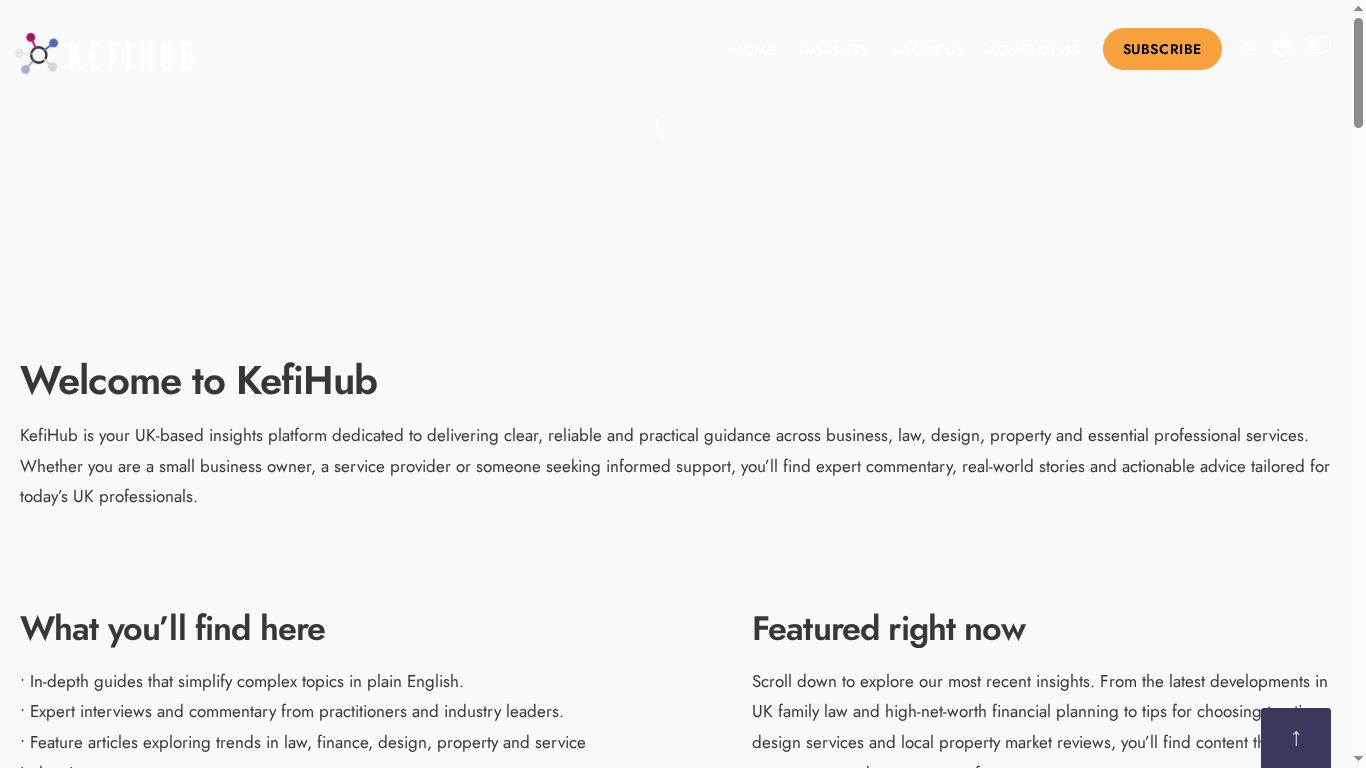
Find your perfect fit today by exploring practical advice and real-world examples on Business Archives – Kefihub. KefiHub offers trusted, jargon-free content tailored for UK small businesses and startups looking to make confident financial decisions without the headache. Visit https://kefihub.co.uk now to empower your startup with clarity and actionable insight before your next accounting challenge arises.
Frequently Asked Questions
What are the key features to look for in accounting tools for startups in 2026?
Look for tools that offer automation, real-time reporting, invoicing, and integrations with other business software. Prioritise platforms that simplify VAT compliance and payroll management to ensure smoother financial operations.
How can I choose the best accounting tool for my startup’s needs?
Assess your specific requirements, such as team size, expected transaction volume, and preferred integrations. Compare tools based on user-friendliness, accessibility, and support for essential features.
What is the average cost of accounting tools suitable for startups in 2026?
Expect pricing to vary based on features and team size, with most tools offering plans starting from approximately £10 to £30 per month. Evaluate each plan’s cost against the features offered to ensure it aligns with your budget.
How can accounting tools help streamline my startup’s financial processes?
These tools automate repetitive tasks like invoicing and reconciliation, significantly reducing administrative hours. Aim to cut down bookkeeping time by around 20% to focus on growing your business instead.
What are the benefits of using cloud-based accounting tools for my startup?
Cloud-based tools enable easy access from anywhere, facilitate real-time collaboration, and ensure data is always backed up. Emphasise the convenience of working remotely and collaborating with your team or accountant without being limited by location.
How can I ensure my chosen accounting tool stays compliant with UK regulations?
Select tools that explicitly offer support for Making Tax Digital (MTD) and ongoing compliance updates. Regularly review your tool’s documentation and updates to ensure adherence to any changes in financial regulations.
Recommended
- Best 8 Invoicing Software UK – Expert Comparison 2026 – Kefihub
- Business Automation Explained: Practical Gains for SMEs – Kefihub
- Role of Analytics in Growth: UK SME Impact – Kefihub
- Best Legal Advice Platforms 2025 – Expert Comparison 2026 – Kefihub