


More than two thirds of british small business owners say unclear registration steps left them unsure about compliance. Every successful business in the United Kingdom starts with understanding the right structure, legal paperwork, and government rules. This guide breaks down the business registration process into simple, actionable steps so you can confidently set up your british company and avoid expensive errors from the start.
Table of Contents
- Step 1: Assess Business Structure And Prepare Details
- Step 2: Register Business Name And Address Officially
- Step 3: Submit Documents To Companies House Or HMRC
- Step 4: Confirm Registration And Obtain Legal Certificates
- Step 5: Verify Compliance With Required Licences And Tax Set-Up
Quick Summary
| Key Insight | Explanation |
|---|---|
| 1. Choose the right business structure | Selecting the appropriate business structure is essential for liability, tax implications, and administrative responsibilities. |
| 2. Register your business name and address | Official registration establishes your legal identity; ensure unique and compliant naming. |
| 3. Submit documents accurately | Accurate documentation submission to Companies House or HMRC is vital for legal compliance and timely registration. |
| 4. Obtain official registration certificates | Essential for validating your business’s legal status; keep these documents secure for future use. |
| 5. Verify compliance with licenses and taxes | Confirm adherence to industry regulations and tax obligations to avoid penalties and enhance credibility. |
Step 1: Assess business structure and prepare details
Choosing the right business structure is a pivotal decision that sets the foundation for your entire entrepreneurial journey. This step involves understanding the different legal frameworks available in the United Kingdom and selecting the one that best aligns with your business goals, financial circumstances, and risk tolerance.
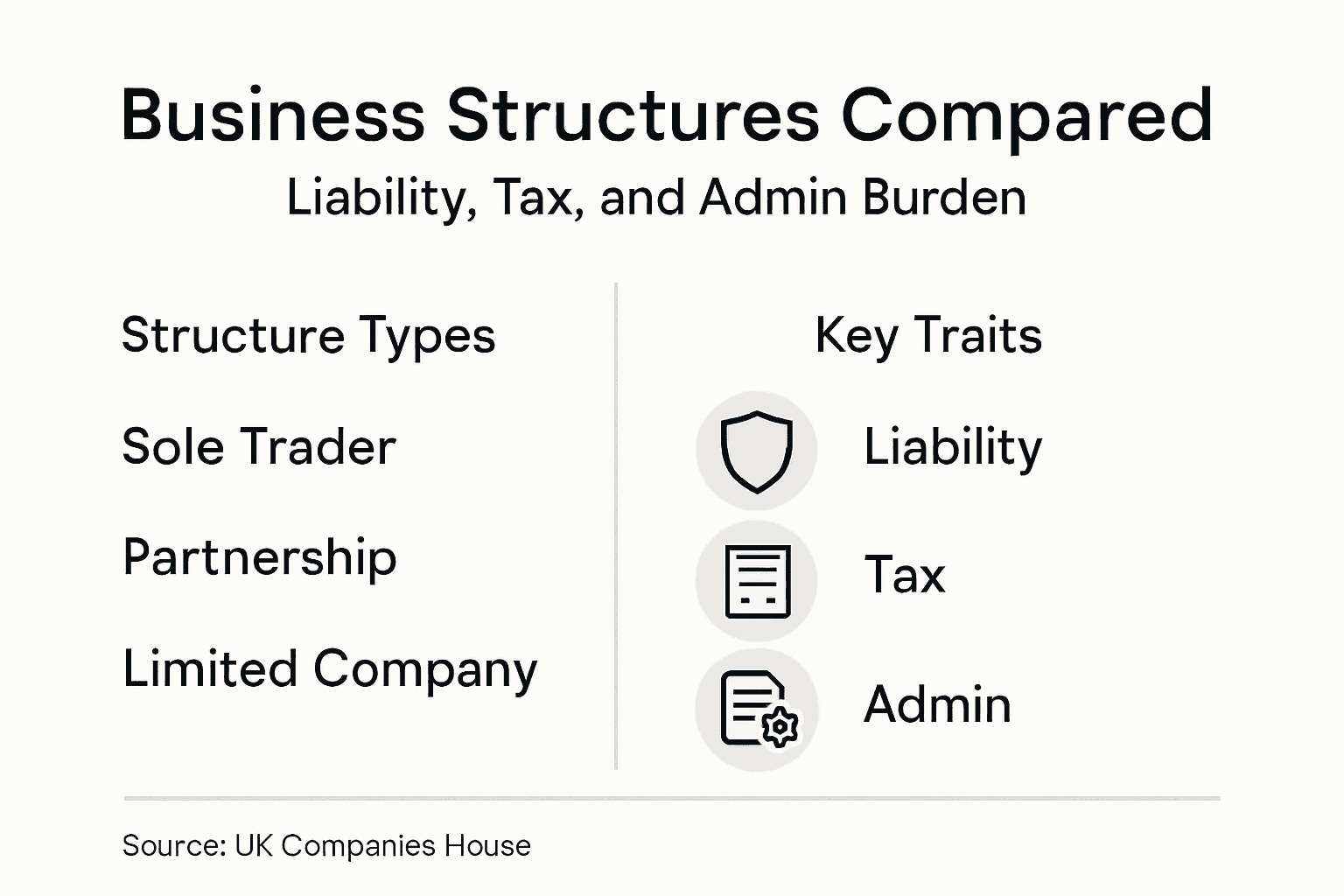
The United Kingdom offers several business structures, each with unique implications for taxation, legal liability, and administrative responsibilities. Key business structure options include sole trader, partnership, and limited company. As a sole trader, you operate as an individual and are personally responsible for your business debts. This structure works well for low-risk ventures with minimal startup costs. Partnerships allow two or more individuals to share business ownership, profits, and responsibilities. For more complex businesses seeking legal protection and potential tax advantages, a limited company might be the preferred route.
Carefully evaluate your specific situation by considering factors such as expected annual turnover, potential business risks, desired level of personal liability, and long-term growth plans. Business registration thresholds differ based on your chosen structure, so understanding these nuances is crucial for proper compliance with HMRC regulations.
Here is a comparison of common UK business structures and their main characteristics:
| Structure Type | Liability Level | Tax Treatment | Administrative Burden |
|---|---|---|---|
| Sole Trader | Unlimited personal liability | Pay Income Tax and National Insurance | Simple, minimal paperwork |
| Partnership | Shared personal liability | Individuals taxed on profit share | Moderate, partnership agreement advised |
| Limited Company | Limited to invested shares | Corporation Tax on company profits | Highest, strict reporting duties |
Business Tip: Consult an accountant or legal professional to review your specific circumstances and confirm the most advantageous business structure for your unique situation.
Step 2: Register business name and address officially
Registering your business name and official address is a critical step that establishes your legal identity and ensures proper communication channels with government authorities. This process varies depending on your chosen business structure and requires careful attention to detail.

Business name registration involves selecting a unique identifier that complies with UK legal requirements. For limited companies, you must register your business name through Companies House during incorporation. The name should be distinguishable from existing businesses and avoid any sensitive or restricted terminology. If you are a sole trader or partnership, you can trade under your personal name or choose a business name that does not suggest a limited company status. Official address requirements mandate that you provide a physical UK location where official communications can be sent. This registered office address will be publicly visible and used for all formal correspondence with regulatory bodies.
When registering, prepare essential documentation including proof of address, identification for company directors, and detailed information about your business structure. Ensure all submitted information is accurate and matches official records to prevent potential delays or complications in the registration process.
Business Tip: Double check all business name spelling and address details before submission to avoid potential rejection or future administrative headaches.
Step 3: Submit documents to Companies House or HMRC
Submitting the correct documentation to the appropriate government authorities is a crucial step in officially establishing your business and ensuring legal compliance. This process varies depending on your chosen business structure and requires careful preparation and attention to detail.
Business registration documents must be submitted either to Companies House or HMRC depending on your business type. For limited companies, you will need to file incorporation documents that include comprehensive details about company directors, shareholders, registered office address, and share capital. These documents formally establish your legal business entity. Sole traders and partnerships have a different requirement where you must register with HMRC to set up tax and National Insurance records. Registration timelines are critical you must register either before or shortly after commencing trading to remain compliant with UK business regulations.
When preparing your submission, gather all necessary documentation including proof of identity for directors, detailed business information, and financial records. Ensure every form is completed accurately and comprehensively to prevent potential delays or complications in the registration process. Online submission platforms are typically the most efficient method, allowing you to upload documents securely and track your application status in real time.
Business Tip: Maintain digital and physical copies of all submitted documents and confirmation receipts for your personal records and future reference.
Step 4: Confirm registration and obtain legal certificates
Obtaining your official business registration certificates is the final milestone in establishing your legal business identity. This crucial step validates all your previous preparation and formally recognises your enterprise as a legitimate business entity in the United Kingdom.
Certificate of Incorporation serves as your primary legal document for limited companies. This certificate provides official confirmation of your business registration and includes critical details such as your unique company number and official date of formation. For limited companies, you will receive this document directly from Companies House after successful registration. The certificate proves your business exists as a legal entity and enables you to open business bank accounts, enter contracts, and conduct official transactions.
Depending on your business structure, you might receive additional documentation from HMRC or other regulatory bodies. Carefully review all received certificates and store them securely both digitally and in physical form. These documents are essential for future tax submissions, legal proceedings, and establishing credibility with potential clients, investors, and financial institutions.
For easy reference, here is a summary of essential registrations and certificates by business type:
| Business Type | Key Registration Authority | Main Certificate Issued | Further Steps Needed |
|---|---|---|---|
| Sole Trader | HMRC | Unique Taxpayer Reference | Register for VAT if required |
| Partnership | HMRC | Unique Taxpayer Reference | Register partnership name |
| Limited Company | Companies House | Certificate of Incorporation | Register for Corporation Tax |
Business Tip: Create digital and physical backup copies of your registration certificates and store them in multiple secure locations to prevent potential loss or damage.
Step 5: Verify compliance with required licences and tax set-up
Ensuring your business meets all legal requirements for licences and tax registration is a critical step that protects you from potential penalties and establishes your financial credibility. This process involves carefully reviewing the specific regulations that apply to your particular business type and industry.
Business licensing requirements vary significantly depending on your sector and business activities. You will need to investigate whether your specific business needs special permits or professional licences beyond standard registration. Some industries such as food service, healthcare, construction, and financial services have additional regulatory requirements. Tax registration obligations are equally important you must register for appropriate tax categories with HMRC. This typically includes registering for VAT if your annual turnover exceeds the threshold, setting up PAYE for employee payroll, and determining whether you need to register for Corporation Tax or Self Assessment.
Thoroughly research your specific industry regulations and consult with a professional accountant or business advisor to ensure you do not overlook any critical compliance requirements. Keep detailed records of all licence applications, tax registrations, and supporting documentation. Remember that staying proactive about regulatory compliance can save you significant time and potential legal complications in the future.
Business Tip: Create a dedicated compliance checklist specific to your industry and set calendar reminders for annual renewals and tax submission deadlines.
Simplify Your UK Business Registration Journey with Expert Support
Starting a business in the United Kingdom involves critical decisions such as choosing the right structure and navigating complex registration steps. This process can feel overwhelming when faced with key terms like “limited company,” “Certificate of Incorporation,” or “Business Licensing Requirements.” You might worry about compliance, legal risks, or correct submission of documents. These challenges could slow your progress or lead to costly mistakes.
At KefiHub, we understand these pain points and offer a wealth of practical guidance through our Business Archives – Kefihub and Legal Archives – Kefihub. Whether you are registering a sole trader or incorporating a limited company, we provide clear insights to help you confidently complete each step.

Take control of your business future today. Visit KefiHub for expert commentary, step-by-step advice, and real-world stories tailored for UK business owners like you. Start your registration journey with trusted support and ensure every detail is handled correctly from the start.
Frequently Asked Questions
What is the first step in business registration for UK owners?
Choosing the right business structure is the first step. Assess the options available, such as being a Sole Trader, Partnership, or Limited Company, to determine which aligns best with your business goals and risk tolerance.
How do I register my business name and address in the UK?
To register your business name and official address, select a unique name that complies with UK regulations and submit it to the appropriate authority based on your structure. Ensure that your registered address is a physical location in the UK where official communications can be sent.
What documents do I need to submit for business registration?
The documents required depend on your business structure. Limited Companies must submit incorporation documents to Companies House, while Sole Traders and Partnerships need to register with HMRC for tax purposes, including proof of identity and address.
How can I confirm my business registration is complete?
You can confirm your business registration by obtaining your legal certificates, such as the Certificate of Incorporation for Limited Companies, from the relevant authority. Store these documents securely as they serve as proof of your legally recognised business entity.
What are the compliance requirements after registering my business?
After registration, verify if your business needs specific licences or permits based on your industry. Additionally, set up tax registrations with HMRC, which may include VAT, PAYE for employees, or Corporation Tax, ensuring you remain compliant with regulations.
Recommended
- Why Build a Website: Boosting UK Small Businesses – Kefihub
- Starting a Small Business UK: Step-by-Step Legal Guide – Kefihub
- Small Business Compliance Guide: Essential Steps for UK SMEs – Kefihub
- Business Rates UK – How They Impact Small Firms – Kefihub
- Surveyor Registration Form | Japanese Knotweed Agency, England & Wales