


{
“@type”: “Article”,
“image”: {
“url”: “https://csuxjmfbwmkxiegfpljm.supabase.co/storage/v1/object/public/blog-images/organization-8865/1767580729248_image_1767580728955.png”,
“@type”: “ImageObject”,
“caption”: “Executive reviewing UK registration paperwork”
},
“author”: {
“url”: “https://kefihub.co.uk”,
“name”: “Kefihub”,
“@type”: “Organization”
},
“@context”: “https://schema.org”,
“headline”: “Why Register a UK Company – Legal and Financial Impact”,
“publisher”: {
“url”: “https://kefihub.co.uk”,
“name”: “Kefihub”,
“@type”: “Organization”
},
“inLanguage”: “en”,
“articleBody”: “Why register a UK company? Learn the legal protections, tax benefits, credibility factors, registration steps, and key risks for business owners.”,
“description”: “Why register a UK company? Learn the legal protections, tax benefits, credibility factors, registration steps, and key risks for business owners.”,
“datePublished”: “2026-01-05T02:39:22.975Z”
}
For british entrepreneurs, company registration can be the difference between struggling for credibility and unlocking real growth. Nearly 700,000 new businesses register with Companies House each year, highlighting how legal status sets the foundation for financial protection and trust. Understanding the requirements and benefits of forming a company not only safeguards your interests but also opens doors to better funding, improved tax efficiency, and broader market access.
Table of Contents
- What Is Company Registration In The UK?
- Types Of UK Business Structures Explained
- Legal Protections And Compliance Advantages
- Financial Benefits And Tax Efficiencies
- Credibility, Brand Protection And Market Access
- Obligations, Costs And Common Pitfalls
Key Takeaways
| Point | Details |
|---|---|
| Company Registration Requirement | Registering a company in the UK is essential for legal recognition and protects personal assets from business liabilities. |
| Choosing the Right Structure | Select an appropriate business structure, such as a limited company or partnership, to align with your operational goals and risk tolerance. |
| Maintaining Compliance | Adhere to statutory obligations, including annual filings and accurate record-keeping to avoid penalties and legal issues. |
| Financial Advantages | Enjoy lower tax rates and access to investment incentives, helping to optimise fiscal strategies and enhance business growth. |
What Is Company Registration In The UK?
Company registration in the United Kingdom is a formal legal process that transforms your business concept into an official, recognised corporate entity. By registering with Companies House, entrepreneurs establish a structured business framework that provides significant legal and financial protections.
The registration process involves several crucial steps. Businesses must select an appropriate company structure, such as a private limited company, public limited company, or partnership. You’ll need to choose a unique company name, appoint company directors, determine share allocation, and provide comprehensive details about the company’s operational structure. This process legally establishes your organisation as a separate legal entity, which means the business can own assets, enter contracts, and bear financial responsibilities independently from its owners.
Registration also involves critical compliance requirements. Beyond basic incorporation, businesses must register for data protection compliance with the Information Commissioner’s Office if they handle personal information. This ensures adherence to UK GDPR and Data Protection Act 2018 standards, which are essential for maintaining legal and ethical business operations.
Key requirements for company registration include:
- Selecting an appropriate company structure
- Choosing a unique company name
- Appointing company directors
- Determining share allocation
- Providing registered office address
- Preparing articles of association
- Registering for corporation tax
Pro Tip: Before registering, conduct a thorough name search to ensure your preferred business name is available and complies with Companies House guidelines.
Types Of UK Business Structures Explained
The United Kingdom offers several distinct business structures, each with unique legal and financial implications for entrepreneurs. Understanding organisational structures is crucial for selecting the most appropriate framework for your business objectives.
Four primary business structures dominate the UK business landscape: sole traders, partnerships, limited liability partnerships (LLPs), and limited companies. Sole traders represent the simplest structure, where an individual operates a business as a single entity, bearing full personal liability for business debts and legal obligations. Partnerships allow two or more individuals to share business ownership, profits, and responsibilities, with each partner typically contributing capital, skills, or resources.
Limited Liability Partnerships (LLPs) provide a more sophisticated approach, combining partnership flexibility with personal liability protection. In an LLP, partners are protected from personal financial risk associated with business debts, making it an attractive option for professional service firms like law and accounting practices. Limited companies represent the most complex structure, creating a separate legal entity distinct from its shareholders. This structure offers the strongest personal liability protection, allowing businesses to raise capital through share issuance and providing a professional image to potential clients and investors.
Key differences between business structures include:
Here is a comparative overview of major UK business structures and their impact on owners:
| Structure Type | Liability Risk | Registration Complexity | Taxation Approach |
|---|---|---|---|
| Sole Trader | Unlimited personal liability | Simple, minimal paperwork | Personal income tax rates |
| Partnership | Shared personal liability | Moderate, partner agreement | Income split, personal taxation |
| LLP | Limited liability for members | Registration with Companies House | Self-assessment on profit share |
| Limited Company | Shareholders’ liability limited to investment | Most structured, requires articles | Taxed under corporation tax |
- Personal liability exposure
- Tax treatment
- Complexity of registration
- Capital raising capabilities
- Regulatory reporting requirements
Pro Tip: Consult a professional accountant or business advisor to analyse your specific business needs before selecting a business structure, as each option carries distinct legal and financial implications.
Legal Protections And Compliance Advantages
Company registration in the United Kingdom offers robust legal protections that shield business owners from personal financial risks and establish a framework for professional operations. Recent legal reforms have significantly enhanced the legal landscape, providing stronger safeguards for legitimate businesses and their stakeholders.
The primary legal advantage of registering a company is limited liability, which creates a clear separation between personal and business assets. This means that if the business encounters financial difficulties or legal challenges, shareholders’ personal wealth remains protected. Directors and shareholders are typically only liable for the amount they have invested in the company, reducing individual financial exposure and providing a critical safety net for entrepreneurs taking calculated business risks.
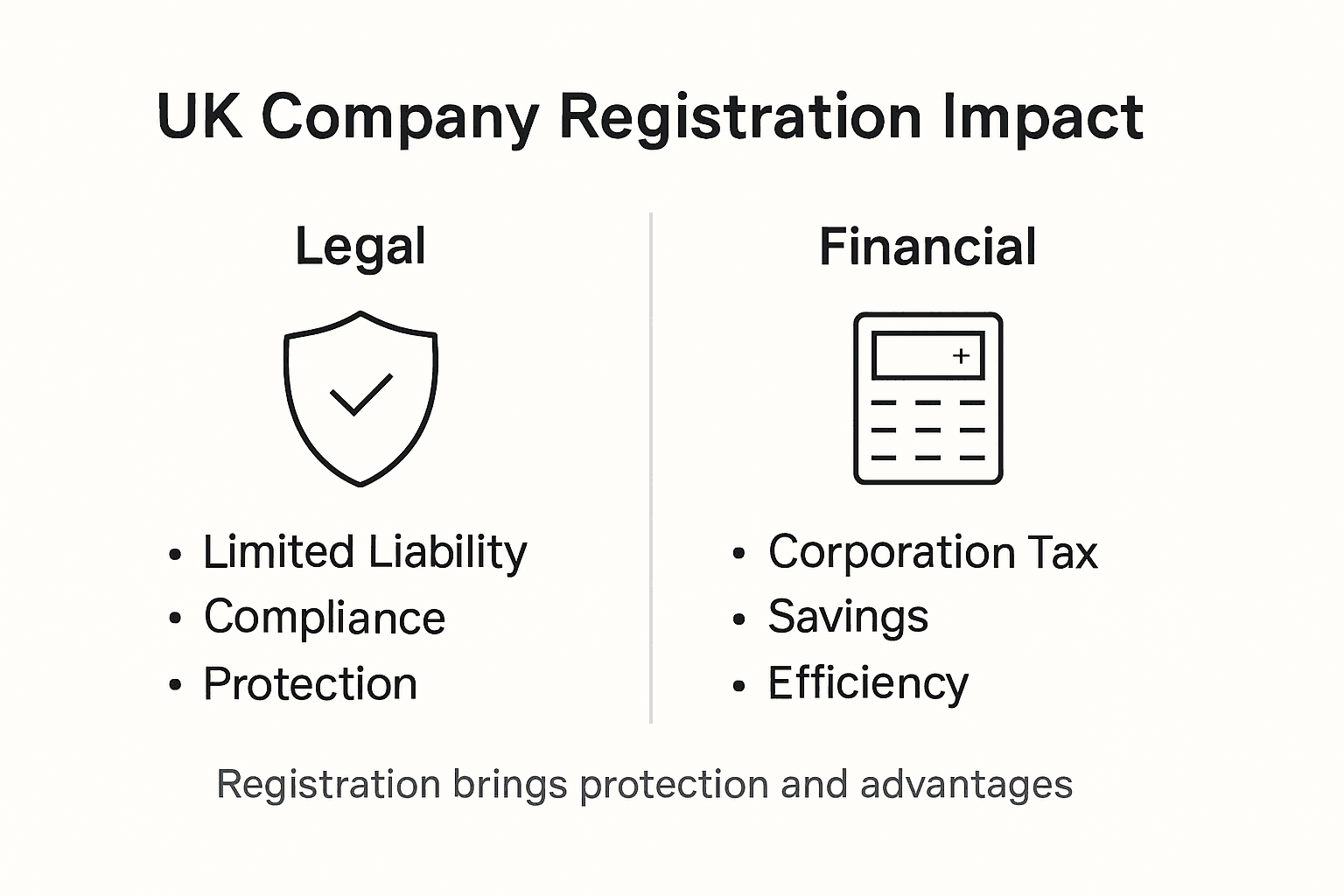
Compliance advantages extend beyond financial protection. Registered companies gain credibility through mandatory statutory reporting, which ensures transparency and accountability. This includes filing annual accounts, confirming director details, and maintaining accurate company records with Companies House. Such structured reporting not only meets legal requirements but also builds trust with potential investors, clients, and financial institutions. The rigorous compliance framework helps prevent fraudulent activities and promotes a professional business environment that supports sustainable growth.
Key legal protections for registered companies include:
- Personal asset protection
- Defined corporate governance structures
- Legal entity status
- Ability to enter contracts independently
- Enhanced credibility with stakeholders
- Protection of company name
- Clear mechanisms for resolving business disputes
Pro Tip: Regularly review your company’s compliance obligations and maintain meticulous records to avoid potential legal complications and maintain your company’s good standing.
Financial Benefits And Tax Efficiencies
Company registration in the United Kingdom unlocks significant financial advantages that can dramatically improve a business’s fiscal strategy. New tax reliefs offer entrepreneurs strategic opportunities to reduce their tax liabilities and reinvest capital more effectively.
One of the most compelling financial benefits is the corporation tax structure, which typically provides more favourable tax rates compared to personal income taxation for sole traders. Limited companies can strategically manage their tax exposure by carefully structuring income, salaries, and dividends. This flexibility allows business owners to optimise their personal and corporate tax positions, potentially reducing overall tax burden while maintaining compliance with UK tax regulations.
Registered companies also gain access to substantial capital allowances and investment incentives that are unavailable to unincorporated businesses. These include significant tax deductions for business investments such as equipment, technology infrastructure, and operational assets. For instance, businesses can claim upfront deductions on plant and machinery investments, effectively reducing their taxable income and supporting ongoing business growth and modernisation.
Key financial benefits of company registration include:
- Lower effective tax rates
- Enhanced investment tax relief opportunities
- Ability to retain and reinvest profits
- More sophisticated financial planning options
- Potential for shareholders’ dividend income
- Access to business loans and external funding
- Credibility with financial institutions
Pro Tip: Consult a qualified accountant to develop a comprehensive tax strategy that maximises your company’s financial efficiency and ensures full compliance with current UK tax regulations.
Credibility, Brand Protection And Market Access
Company registration provides a robust platform for establishing business legitimacy and enhancing professional reputation in the United Kingdom. The government’s strategic approach emphasises building trust through transparent and accurate business registration data, which directly supports legitimate enterprises in demonstrating credibility.
One of the most significant advantages of formal registration is brand protection. When a company registers, it secures exclusive rights to its name within the jurisdiction, preventing other businesses from using identical or confusingly similar trading names. This legal protection extends beyond mere nomenclature, offering a shield for your brand’s identity and reputation. Registered companies appear more professional to potential clients, investors, and partners, signalling a commitment to transparency, accountability, and long-term business sustainability.
Furthermore, registered companies unlock substantial market access opportunities that are typically unavailable to unincorporated businesses. Many organisations, government departments, and large corporations only contract with officially registered entities, viewing them as more reliable and trustworthy. This opens doors to lucrative procurement contracts, international trading opportunities, and collaborative partnerships that can significantly accelerate business growth and market penetration.
Key credibility and market advantages include:
- Legal name protection
- Enhanced professional reputation
- Access to larger corporate and government contracts
- Increased investor confidence
- Ability to operate internationally
- Improved banking and financial relationships
- Stronger negotiating position with suppliers and clients
Pro Tip: Invest time in developing a strong, consistent brand narrative that complements your company’s registered status and reinforces your professional credibility.
Obligations, Costs And Common Pitfalls
Registering a company in the United Kingdom comes with a comprehensive set of legal and financial responsibilities that entrepreneurs must carefully navigate. Companies House fees and compliance requirements are designed to maintain transparency and accountability in the business landscape.

Ongoing statutory obligations represent a significant commitment for registered companies. These include mandatory annual filings such as confirmation statements, detailed financial accounts, and regular updates to company information. Directors must maintain meticulous records, submit accurate documentation within specified timeframes, and ensure compliance with evolving regulatory standards. Failure to meet these requirements can result in substantial financial penalties, potential legal complications, and in extreme cases, compulsory company strike-off.
The financial landscape of company registration involves several key cost considerations. Initial registration fees are relatively modest, but ongoing expenses such as accounting services, independent audits, and compliance management can represent a significant investment. Businesses must budget for professional support to navigate complex reporting requirements, manage corporation tax submissions, and maintain precise financial documentation. These costs are not merely administrative expenses but strategic investments in maintaining legal and financial integrity.
To help anticipate costs and challenges, here is a summary of key financial obligations during UK company registration:
| Expense/Responsibility | Typical Cost Range | Frequency | Impact on Business |
|---|---|---|---|
| Registration fee (Companies House) | £12-£40 | One-off | Minimal, unavoidable |
| Annual accounts preparation | £500-£2,000+ | Annually | Essential for compliance |
| Corporation tax filing support | £200-£1,000+ | Annually | Accurate tax compliance |
| Audit services (if required) | £1,000-£5,000+ | Annually | Demonstrates credibility |
| Compliance software subscription | £10-£50/month | Ongoing | Streamlines record-keeping |
Common pitfalls that new company registrants should be aware of include:
- Missing critical filing deadlines
- Inadequate record-keeping
- Misunderstanding director responsibilities
- Neglecting data protection requirements
- Failing to update company information promptly
- Underestimating compliance complexity
- Insufficient financial planning
Pro Tip: Consider investing in cloud-based accounting and compliance management software to streamline your statutory obligations and reduce the risk of administrative oversights.
Unlock the Full Potential of Your UK Company Registration
Registering a company in the United Kingdom is a crucial step that brings legal protection, financial advantages, and enhanced credibility. If you are facing challenges around understanding complex compliance obligations, minimising your tax liabilities, or selecting the right business structure, you are not alone. This article highlights key pain points such as director responsibilities, statutory filing deadlines, and how to optimise your financial planning through corporation tax strategies.
At KefiHub, we provide clear, actionable insights designed to help you navigate these challenges with confidence. Explore practical guidance tailored for UK professionals in our Business Archives – Kefihub where expert advice on company formation, governance, and finance awaits.

Take control of your business journey today by visiting KefiHub for trustworthy, up-to-date information and personalised support. Access expert commentary, real-world stories, and step-by-step advice to ensure your UK company registration leads to lasting success. Learn more and stay ahead in the competitive UK market by starting now with KefiHub Business Insights.
Frequently Asked Questions
What are the main benefits of registering a company in the UK?
Registering a company in the UK provides limited liability protection, enhances credibility, offers potential tax efficiencies, and grants access to various funding opportunities, allowing business owners to separate personal assets from business liabilities.
How does company registration affect tax obligations?
Company registration can lead to lower effective tax rates compared to personal income tax, allowing for more strategic financial planning. Limited companies can take advantage of corporation tax structures and access investment tax reliefs.
What are the ongoing obligations after registering a company?
After registering a company, owners must fulfil ongoing statutory obligations, including filing annual accounts, submitting confirmation statements, maintaining accurate records, and ensuring compliance with relevant regulations and tax filings.
How do different business structures impact personal liability?
The choice of business structure significantly affects personal liability. Sole traders have unlimited liability, whereas limited companies and limited liability partnerships (LLPs) provide personal liability protection up to the amount invested, mitigating personal financial risks for owners.
Recommended
- Business Rates UK – How They Impact Small Firms – Kefihub
- Why Build a Website: Boosting UK Small Businesses – Kefihub
- Starting a Small Business UK: Step-by-Step Legal Guide – Kefihub
- 7 Smart Ways to Reduce Business Costs for UK Owners – Kefihub
- How to Start a Company Website: A Step-by-Step Guide – ResponsiveWebsiteDesign