


Most british entrepreneurs underestimate how often a business plan needs attention. Treating it like a fixed report can stall growth and lead to missed opportunities. Only about 20 percent of small businesses regularly review or update their plans, putting many at risk when market trends shift. Understanding the value of ongoing business plan updates not only protects your company but also helps you spot fresh pathways for success in a fast-changing environment.
Table of Contents
- Defining Business Plan Updates And Misconceptions
- Key Triggers That Require A Plan Review
- What Needs Changing And Why It Matters
- Legal Duties And Financial Implications In The UK
- Avoiding Common Pitfalls During Updates
Key Takeaways
| Point | Details |
|---|---|
| Dynamic Nature of Business Plans | Business plans should be treated as evolving documents requiring regular updates to stay relevant. |
| Triggers for Review | Significant market changes or financial fluctuations necessitate a comprehensive reassessment of your business plan. |
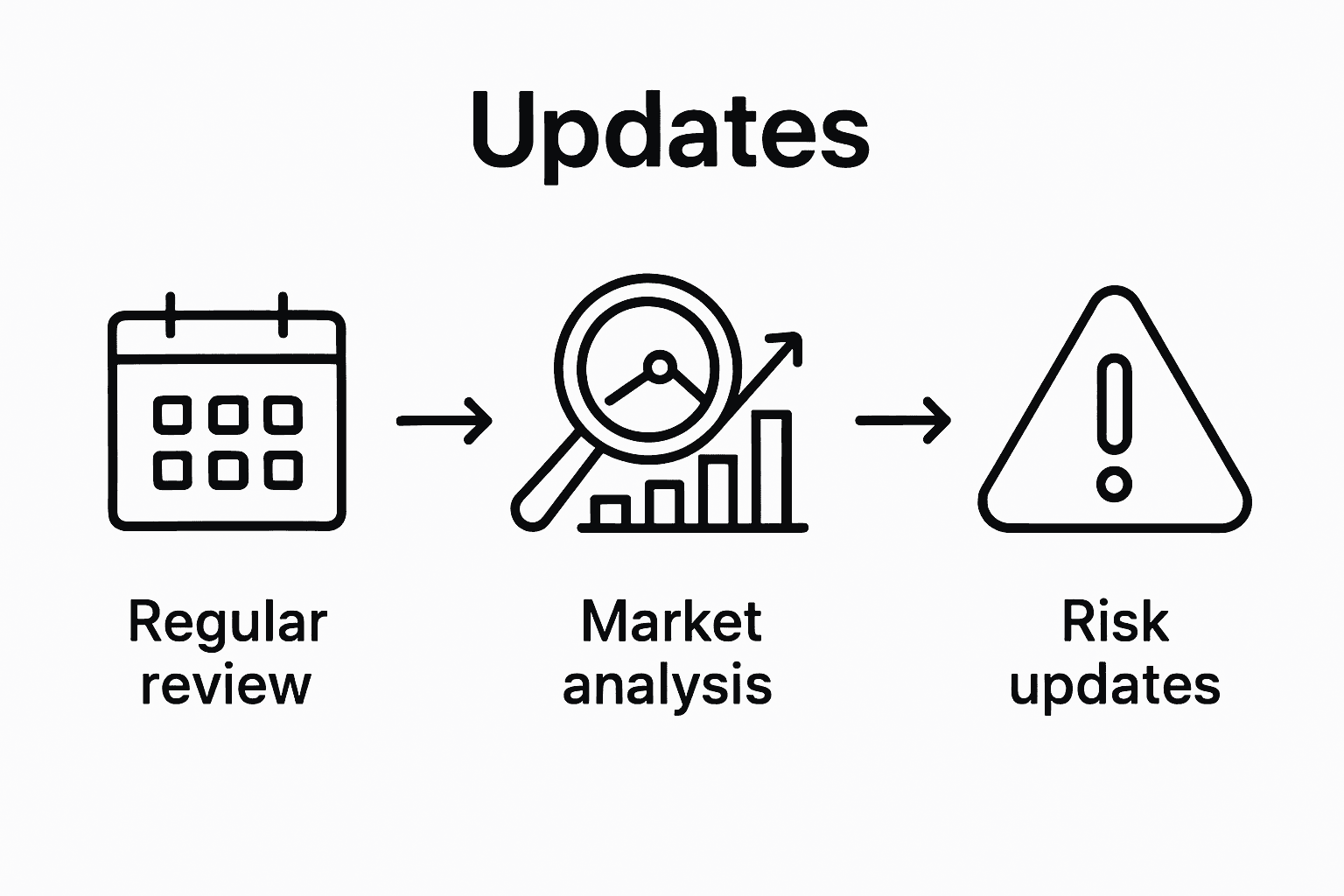
| Core Sections for Update | Financial projections, market analysis, and operational strategies must be reviewed regularly to reflect current realities and adapt to changes. |
| Avoiding Common Pitfalls | Maintain objectivity in planning to avoid unrealistic assumptions and overly complex documentation that may obscure strategic goals. |
Defining Business Plan Updates And Misconceptions
Many business owners mistakenly view their business plan as a static document created once and forgotten. In reality, a business plan is a dynamic roadmap that requires regular review and strategic refinement. Business plan updates are critical for staying relevant and responsive to changing market conditions.
Common misconceptions about business plans can significantly hinder an organisation’s growth and strategic planning. Some entrepreneurs believe business plans are only necessary for securing initial funding or launching a startup. However, well-managed businesses understand that these documents serve as living strategies that guide decision-making, track progress, and help anticipate potential challenges.
The key to effective business planning lies in understanding its fluid nature. Business plans should not be rigid documents but adaptive frameworks that evolve with your company’s trajectory. Regular updates allow you to incorporate new market insights, adjust financial projections, reassess strategic goals, and realign resources based on actual performance and emerging opportunities.
Pro Tip: Regular Review Strategy: Set a quarterly calendar reminder to review and update your business plan, treating it as a dynamic tool for strategic decision-making rather than a static historical document.
Key Triggers That Require A Plan Review
Business environments are dynamic, and your business plan must reflect the constant shifts in market conditions, strategic objectives, and organisational capabilities. Identifying critical triggers for business plan updates is essential for maintaining strategic relevance and competitive positioning.
Several key events demand an immediate and comprehensive review of your business plan. These include significant market disruptions, changes in target customer demographics, introduction or discontinuation of product lines, substantial shifts in competitive landscapes, and unexpected financial performance variations. External market forces can rapidly transform business contexts, making proactive planning crucial for survival and growth.
Financial milestones and strategic transformations also represent critical moments for business plan reassessment. Regular business planning cycles, including formal annual reviews, help organisations maintain strategic alignment. Potential triggers might include securing new funding, experiencing revenue fluctuations, expanding into new markets, or encountering technological disruptions that fundamentally alter your industry’s operational paradigms.
Pro Tip: Trigger Tracking System: Create a dedicated spreadsheet to log potential business plan review triggers, allowing you to systematically monitor and respond to significant changes affecting your business strategy.
The table below compares proactive and reactive approaches to updating business plans:
| Approach | Primary Trigger | Typical Outcome | Common Risk |
|---|---|---|---|
| Proactive | Scheduled review cycles | Early threat detection | Wasteful effort if static |
| Reactive | Unexpected disruption | Rapid course correction | Potential late response |
What Needs Changing And Why It Matters
A business plan is not a museum piece to be preserved under glass, but a living document that requires constant scrutiny and strategic refinement. Understanding the core elements of business planning is crucial for identifying which components need periodic reassessment and adjustment.

The most critical sections demanding regular review include financial projections, market analysis, competitive landscape, operational strategies, and key performance indicators. Financial forecasting requires particular attention, as market volatility can rapidly render previous assumptions obsolete. Changes in revenue streams, cost structures, investment requirements, and funding opportunities necessitate immediate and thorough recalibration of your financial models.
Strategic objectives and operational frameworks represent another vital area for continuous evolution. This involves reassessing your target market segments, evaluating the effectiveness of current marketing strategies, analysing customer feedback mechanisms, and ensuring your organisational structure remains agile and responsive. Comprehensive business plan development is not a one-time exercise but an ongoing process of alignment between your strategic vision and the dynamic business environment.
Here is a summary of business plan sections and the primary focus for their updates:
| Section | Why Update Regularly | Impact on Business |
|---|---|---|
| Financial Projections | Reflect actual performance | Prevent financial missteps |
| Market Analysis | Stay current with trends | Identify new opportunities |
| Competitive Landscape | Respond to emerging rivals | Maintain competitiveness |
| Operational Strategies | Adapt to internal changes | Improve efficiency |
| Key Performance Indicators | Align with strategic goals | Track tangible progress |
Pro Tip: Quarterly Audit Approach: Develop a structured quarterly review process that systematically examines each section of your business plan, allowing for incremental updates and maintaining strategic relevance.
Legal Duties And Financial Implications In The UK
Navigating the complex landscape of legal compliance is crucial for UK businesses seeking sustainable growth and risk mitigation. Understanding small business legal requirements forms the foundational bedrock of responsible organisational management, with potential financial and regulatory consequences for non-compliance.
Statutory reporting obligations represent a critical area of legal responsibility for UK enterprises. Limited companies must submit annual accounts to Companies House, maintain accurate financial records, and comply with tax regulations set by Her Majesty’s Revenue and Customs (HMRC). Failure to meet these requirements can result in significant financial penalties, potential legal sanctions, and damage to the organisation’s professional reputation. Contractual frameworks play a pivotal role in establishing clear legal boundaries and protecting business interests.
Financial implications extend beyond mere regulatory compliance, encompassing broader strategic considerations. Businesses must carefully evaluate potential legal risks, implement robust compliance mechanisms, and develop proactive strategies for managing regulatory environments. This includes maintaining comprehensive documentation, conducting regular internal audits, and staying informed about evolving legal landscapes that might impact business operations.
Pro Tip: Compliance Calendar: Create a dedicated digital calendar tracking all critical legal and financial reporting deadlines, with automated reminders to ensure timely submission and avoid potential penalties.
Avoiding Common Pitfalls During Updates
Common mistakes in business plan development can derail even the most promising strategic initiatives. Entrepreneurs often fall into predictable traps that compromise the effectiveness of their business planning process, potentially undermining their organisation’s long-term viability and growth potential.
Strategic assumptions represent one of the most critical areas where businesses stumble. Making unrealistic projections or failing to ground financial forecasts in verifiable market data can lead to catastrophic strategic misjudgements. Businesses must maintain rigorous objectivity, challenging internal biases and seeking external validation for their assumptions. Addressing misconceptions about business planning requires a disciplined approach that separates wishful thinking from evidence-based strategic development.
Another significant pitfall involves attempting to create an overly comprehensive or complex business plan. Successful updates require focus, clarity, and a commitment to actionable insights. This means avoiding the temptation to include excessive detail that obscures core strategic objectives. Instead, businesses should prioritise precise, measurable goals, clear performance indicators, and flexible frameworks that can adapt to changing market conditions.
Pro Tip: Reality Check Protocol: Establish a peer review process where external advisors or mentors critically assess your business plan updates, providing an objective perspective that challenges potential blind spots and unrealistic assumptions.
Stay Ahead by Keeping Your Business Plan Up to Date
Updating your business plan is essential to remain relevant amid constant market changes and unexpected disruptions. This article highlights the importance of treating your business plan as a living document rather than a one-time effort. Key challenges include managing evolving financial projections, adapting operational strategies, and anticipating new competitive threats. If you aim to prevent costly mistakes and make informed decisions with confidence, understanding how to effectively update your business plan is critical.
Business Archives – Kefihub offers insightful guidance tailored to UK professionals navigating these complexities.

Unlock practical advice and strategic expertise today at KefiHub. Explore comprehensive resources designed to help you review your business plan regularly, align with legal duties, and avoid common pitfalls. Don’t wait until challenges arrive – act now to keep your business future-proof and responsive in 2025 and beyond.
Frequently Asked Questions
What are the key reasons for updating my business plan?
Regular updates to your business plan are essential for adapting to changing market conditions, maintaining strategic alignment, and ensuring your financial forecasts and operational strategies reflect current realities.
How often should I review my business plan?
It is advisable to review your business plan at least quarterly to keep it relevant and aligned with your business goals and market dynamics.
What sections of a business plan need regular updates?
Key sections that require regular updates include financial projections, market analysis, competitive landscape, operational strategies, and key performance indicators.
What triggers should prompt an immediate review of my business plan?
Triggers for an immediate review include significant market disruptions, changes in customer demographics, shifts in competitive landscapes, and unexpected variations in financial performance.
Recommended
- Why Write a Business Plan – Unlocking UK Success – Kefihub
- Business Plans: Why Every UK Venture Needs One – Kefihub
- Why Sustainable Business: Complete Guide for UK Professionals – Kefihub
- Why Sustainable Business: Complete Guide for UK Professionals – Kefihub