


Over half of British startups fail within their first five years, a statistic that highlights just how crucial strong planning really is. Without a clear business plan, even the most promising ideas can lose direction and struggle to attract funding or support. This guide breaks down why a business plan is such an important tool for any British entrepreneur, explaining how it shapes your strategy, attracts investors, and sets your venture on a path to long-term success.
Table of Contents
- Business Plans Explained – Purpose And Role
- Types Of Business Plans For UK Ventures
- Essential Elements Of An Effective Plan
- Legal And Financial Benefits In The UK
- Common Mistakes And How To Avoid Them
Key Takeaways
| Point | Details |
|---|---|
| Purpose of Business Plans | Business plans serve as strategic roadmaps guiding internal decision-making and attracting external stakeholders like investors. |
| Types of Business Plans | Three main formats exist: Traditional for detailed insights, Lean for flexibility and rapid iteration, and Strategic for long-term growth. |
| Importance of Structure | Effective plans include crucial elements like Executive Summary, Market Analysis, and Financial Projections, creating a compelling narrative. |
| Common Pitfalls | Entrepreneurs should avoid overestimating revenues, lacking market research, and neglecting risk management to ensure robust business plans. |
Business Plans Explained – Purpose And Role
A business plan is a strategic roadmap that articulates your venture’s vision, goals, and operational blueprint. It serves as a comprehensive document that not only guides internal decision-making but also communicates your business potential to external stakeholders like investors and financial institutions. Business Plans: Why Every UK Venture Needs One highlights the critical role these documents play in transforming entrepreneurial ideas into actionable strategies.
At its core, a business plan functions as a multifaceted tool with several key purposes. First, it provides a structured framework for entrepreneurs to thoroughly analyse their business concept, market opportunity, and competitive landscape. This process demands rigorous thinking about revenue streams, operational challenges, financial projections, and growth potential. By compelling business owners to critically examine every aspect of their venture, a well-crafted plan becomes more than just documentation – it becomes a strategic planning instrument.
The role of a business plan extends far beyond internal planning. For external audiences, particularly potential investors and lenders, it represents a professional demonstration of business readiness and strategic thinking. Investors use these documents to assess risk, understand market positioning, and evaluate the management team’s capability. A compelling business plan communicates not just numbers, but the passion, insight, and pragmatic approach behind a business concept. It transforms abstract ideas into a tangible, credible narrative that can attract crucial financial support and strategic partnerships.
Successful business plans typically encompass several core components that provide a holistic view of the venture. These include an executive summary, detailed market analysis, comprehensive financial projections, marketing strategies, operational frameworks, and leadership team profiles. Each section contributes to building a nuanced, credible picture of the business’s potential, challenges, and strategic vision. By presenting information systematically and compellingly, entrepreneurs can effectively communicate their business’s unique value proposition and strategic roadmap.
Types Of Business Plans For UK Ventures
Business plans are not a one-size-fits-all document, but rather a flexible tool that can be tailored to specific business needs and objectives. Business plans can vary significantly in format, complexity, and strategic focus, with each type serving unique purposes for entrepreneurs and organisations across the United Kingdom.
Three primary types of business plans dominate the UK entrepreneurial landscape. Traditional business plans represent the most comprehensive approach, offering detailed insights into every aspect of a venture. These extensive documents typically include in-depth market analysis, comprehensive financial projections, operational frameworks, and thorough competitor assessments. They are particularly valuable when seeking significant external funding from banks, venture capitalists, or government investment programmes, as they demonstrate a rigorous and professional approach to business strategy.

In contrast, lean startup plans have gained prominence among innovative UK entrepreneurs, especially in technology and digital sectors. These streamlined documents focus on core business model elements, emphasising rapid iteration and flexibility. Lean plans prioritise key hypotheses, minimum viable product concepts, and adaptive strategies over exhaustive documentation. They are particularly suited to dynamic industries where market conditions change rapidly and businesses need to pivot quickly. Avoiding common business mistakes becomes easier with this agile planning approach, allowing entrepreneurs to test and refine their concepts more effectively.
The third notable category is strategic business plans, which concentrate on long-term vision and sustainable growth trajectories. These plans go beyond immediate operational details, mapping out multi-year strategic objectives, potential expansion routes, and comprehensive organisational development strategies. They are especially crucial for established businesses looking to scale, enter new markets, or undertake significant transformational initiatives. By providing a holistic view of potential opportunities and challenges, strategic plans help UK businesses maintain competitive advantage and navigate complex economic landscapes with greater confidence and clarity.
Essential Elements Of An Effective Plan
Crafting an exceptional business plan requires a strategic approach that goes beyond mere documentation. Business Plans: Why Every UK Venture Needs One emphasises the importance of creating a comprehensive and compelling narrative that captures the essence of your business vision. The most effective plans are meticulously structured to provide a holistic view of your entrepreneurial journey.
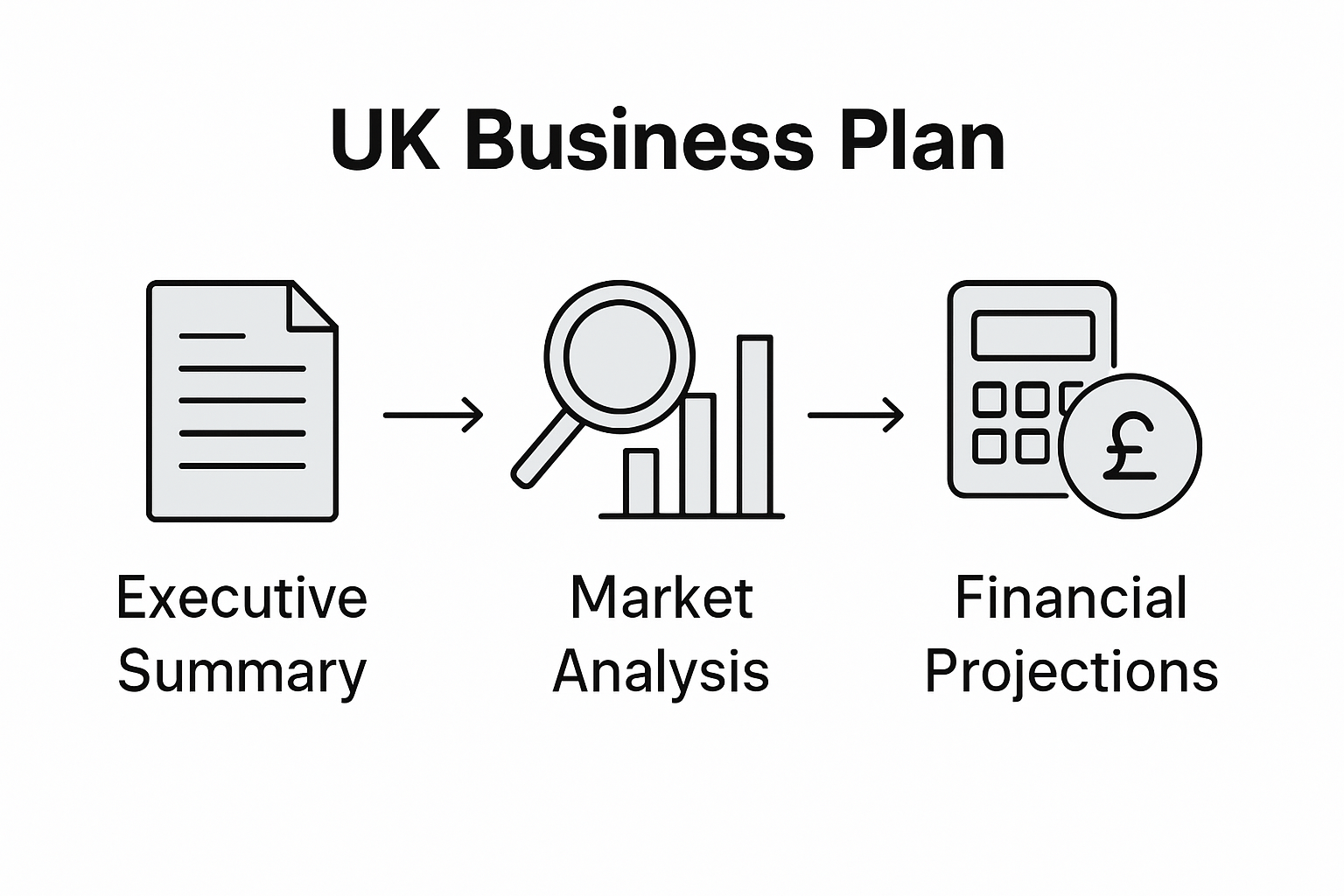
Executive Summary stands as the most critical component of any business plan. This concise section serves as a strategic snapshot, capturing the reader’s attention and distilling the entire business concept into a powerful, succinct overview. It should articulate your business’s unique value proposition, core objectives, market opportunity, and financial projections. Investors and stakeholders often make initial decisions based solely on the executive summary, making it crucial to craft this section with precision and clarity.
The Market Analysis section represents another fundamental element that demonstrates your deep understanding of the business landscape. This comprehensive segment goes beyond surface-level observations, diving into detailed research about industry trends, target market demographics, competitive landscape, and potential growth opportunities. Entrepreneurs must provide robust evidence of market demand, customer segmentation, and a clear strategy for positioning their venture within the competitive ecosystem. By demonstrating a nuanced understanding of market dynamics, businesses can instil confidence in potential investors and strategic partners.
Financial projections form the backbone of a credible business plan, transforming theoretical concepts into quantifiable potential. This section should include detailed Financial Statements such as income statements, cash flow projections, break-even analysis, and capital requirements. Avoiding common business mistakes begins with transparent, realistic financial planning that showcases both potential opportunities and potential challenges. Successful entrepreneurs create financial models that are both ambitious and grounded, providing a clear roadmap for financial sustainability and growth. The most compelling financial sections not only present numbers but tell a coherent story of the business’s financial journey and potential for long-term success.
Legal And Financial Benefits In The UK
A comprehensive business plan unlocks critical legal and financial advantages for UK entrepreneurs, transforming strategic documentation into a powerful tool for business growth. Enterprise Finance Guarantee schemes demonstrate how meticulously prepared business plans can directly impact a company’s financial opportunities, providing pathways to critical funding that might otherwise remain inaccessible.
The legal protection inherent in a well-constructed business plan extends far beyond simple documentation. Starting a Small Business UK: Step-by-Step Legal Guide highlights how these documents serve as foundational legal instruments that clarify business structure, ownership rights, and operational frameworks. By explicitly defining roles, responsibilities, and governance mechanisms, entrepreneurs create a robust legal shield that can prevent potential disputes, protect intellectual property, and establish clear organisational boundaries.
Financial benefits represent another compelling dimension of strategic business planning. The Share Incentive Plan illustrates how structured documentation can unlock sophisticated financial strategies. These plans enable businesses to design employee share ownership programmes that offer tax efficiencies and align workforce incentives with organisational objectives. UK entrepreneurs can leverage such mechanisms to attract top talent, create additional compensation structures, and build long-term organisational commitment through carefully designed equity frameworks.
Moreover, a comprehensive business plan serves as a critical risk management tool, providing potential investors and financial institutions with transparent insights into a venture’s strategic vision. By presenting detailed financial projections, market analysis, and operational strategies, businesses demonstrate professional credibility and significantly enhance their chances of securing funding, forming strategic partnerships, and navigating complex regulatory environments. The plan becomes a living document that not only guides internal decision-making but also serves as a compelling narrative of the business’s potential for growth and sustainability.
Common Mistakes And How To Avoid Them
Entrepreneurs often stumble when creating business plans by falling into predictable traps that can significantly undermine their venture’s potential. Business plan development involves navigating several critical pitfalls that can derail even the most promising entrepreneurial efforts. Understanding these common mistakes becomes crucial for crafting a robust and credible strategic document.
Financial Projection Errors represent one of the most dangerous pitfalls for UK entrepreneurs. Many business owners either dramatically overestimate potential revenues or underestimate operational costs, creating unrealistic financial narratives. Avoiding common business mistakes requires a disciplined approach to financial modelling. Successful planners develop multiple scenario projections, incorporating conservative estimates and potential market fluctuations. This approach demonstrates financial acumen and provides investors with confidence in the business’s strategic thinking.
Another significant mistake involves insufficient market research and competitive analysis. Entrepreneurs frequently create business plans in isolation, failing to thoroughly examine their competitive landscape, target market dynamics, and potential barriers to entry. A comprehensive plan must go beyond wishful thinking, providing deep insights into customer segments, market trends, and unique value propositions. This requires extensive research, data-driven analysis, and a willingness to critically assess the business concept from multiple perspectives.
The final critical error lies in neglecting risk management and contingency planning. Successful business plans do not just showcase opportunities but also demonstrate a mature understanding of potential challenges. This means developing detailed risk mitigation strategies, understanding potential economic shifts, and creating flexible operational frameworks. By anticipating potential obstacles and presenting clear mitigation strategies, entrepreneurs transform their business plans from static documents into dynamic strategic tools that inspire confidence among stakeholders, investors, and potential partners.
Unlock Your Business Potential with a Clear Strategy
Writing a business plan can feel overwhelming when you face challenges like defining your market, forecasting finances or avoiding costly mistakes. The article “Why Write a Business Plan – Unlocking UK Success” highlights crucial pain points such as creating realistic financial projections, understanding market dynamics and managing risks effectively. At KefiHub, we understand the importance of turning these complex elements into simple, actionable steps that any UK entrepreneur can follow. Our platform offers practical guidance tailored for your business journey and helps you master concepts like financial modelling, market analysis and strategic planning.

Start transforming your ideas into thriving realities today by exploring expert advice and real-world insights at KefiHub. Dive deeper into how to avoid common business mistakes and discover why a well-crafted plan is essential by visiting Business Plans: Why Every UK Venture Needs One. Unlock your business success now with clear guidance from KefiHub. Visit https://kefihub.co.uk and take the confident next step towards building a resilient and profitable business.
Frequently Asked Questions
What is the purpose of a business plan?
A business plan serves as a strategic roadmap for your venture, outlining your vision, goals, and operational structure. It guides internal decision-making and communicates your business potential to external stakeholders like investors and lenders.
What are the key components of an effective business plan?
Key components include an executive summary, market analysis, financial projections, marketing strategies, operational frameworks, and leadership team profiles. Each element provides a comprehensive view of your business’s potential and challenges.
How can a business plan benefit my chances of securing funding?
A well-prepared business plan demonstrates professionalism and strategic thinking, instilling confidence in potential investors and financial institutions. It showcases realistic financial projections, market understanding, and operational strategies, which are crucial for securing funding.
What types of business plans exist, and how do they differ?
The main types are traditional business plans, lean startup plans, and strategic business plans. Traditional plans provide comprehensive detail, lean plans focus on core business model elements, and strategic plans emphasise long-term growth and sustainability.
Recommended
- Business Plans: Why Every UK Venture Needs One – Kefihub
- Starting a Small Business UK: Step-by-Step Legal Guide – Kefihub
- Business Plans: Why Every UK Venture Needs One – Kefihub
- Business Plans: Why Every UK Venture Needs One – Kefihub