


Most british businesses underestimate the complexity of staying legally compliant in the United Kingdom. With over 620 regulatory changes impacting UK companies every year, missing even a single update can lead to costly fines or reputational damage. Understanding the ever-evolving legal landscape is crucial for both professionals and organisations aiming to operate ethically and avoid legal pitfalls. This guide unpacks what legal compliance truly means in the british context and highlights how to build strong, trustworthy operations from the ground up.
Table of Contents
- Defining Legal Compliance In The UK Context
- Types Of Legal Compliance And Common Areas
- Core Legal Obligations For Individuals And Businesses
- Risks And Consequences Of Non-Compliance
- Practical Steps For Ensuring Compliance
Key Takeaways
| Point | Details |
|---|---|
| Importance of Legal Compliance | Legal compliance is essential for ethical and lawful operations, requiring organisations to adhere to various regulatory frameworks. |
| Dynamic Regulatory Environment | Professionals must stay informed about legislative changes and undertake ongoing education to maintain compliance. |
| Risk Management | Non-compliance can lead to severe financial, legal, and reputational consequences, necessitating proactive risk management strategies. |
| Technology in Compliance | Leveraging technological solutions for compliance monitoring can enhance regulatory adherence and streamline compliance processes. |
Defining Legal Compliance in the UK Context
Legal compliance represents a systematic approach to understanding and adhering to the legislative requirements that govern professional and organisational conduct. At its core, legal compliance involves conforming to laws, regulations, and standards established by governmental and regulatory bodies to ensure ethical and lawful operations.
In the United Kingdom, legal compliance is particularly nuanced, encompassing a broad spectrum of legislative frameworks. These include data protection regulations, anti-discrimination laws, health and safety standards, and sector-specific guidelines that vary across industries. Organizational legal compliance requires businesses to proactively understand and implement these complex regulatory requirements, ensuring their operations remain within prescribed legal boundaries.
The landscape of legal compliance is not static but continuously evolving. Professionals must remain vigilant about legislative updates, potential regulatory changes, and emerging legal standards that could impact their work. This dynamic environment demands ongoing education, regular internal audits, and a robust understanding of how different legal frameworks intersect and apply to specific business contexts.
Pro Tip for Legal Compliance: Develop a systematic approach to tracking legislative changes by subscribing to official regulatory updates and conducting quarterly compliance review meetings with your legal team.
Types of Legal Compliance and Common Areas
Legal compliance encompasses multiple critical domains that organisations must navigate carefully to maintain ethical and lawful operations. Common areas of legal compliance span across diverse sectors, requiring professionals to develop comprehensive understanding and strategic implementation of regulatory standards.
The primary types of legal compliance can be categorised into several key areas. Financial compliance involves adhering to accounting standards, tax regulations, and financial reporting requirements. Data privacy compliance is another crucial domain, particularly with stringent regulations like the UK General Data Protection Regulation (GDPR), which mandates strict protocols for handling personal information. Workplace safety compliance represents another critical area, encompassing health and safety legislation that protects employees and establishes minimum operational standards.
Industry-specific regulations further complicate the legal compliance landscape. Different sectors such as healthcare, finance, technology, and manufacturing have unique regulatory frameworks that demand specialised knowledge. For instance, financial institutions must comply with anti-money laundering regulations, while healthcare providers must navigate patient confidentiality laws and medical practice standards. These sector-specific requirements necessitate targeted compliance strategies and continuous professional development.
Moreover, legal compliance is not merely about avoiding penalties but represents a fundamental commitment to ethical business practices. Organisations that prioritise comprehensive compliance create trust with stakeholders, mitigate potential legal risks, and demonstrate a commitment to responsible operational conduct.
The following table contrasts key legal compliance domains and highlights why they matter for UK organisations:
| Compliance Area | Primary Focus | Organisational Benefit |
|---|---|---|
| Data Protection | Handling personal information | Safeguards client privacy |
| Workplace Safety | Employee health & standards | Reduces workplace incidents |
| Financial Compliance | Reporting and tax adherence | Prevents costly legal disputes |
| Anti-discrimination | Equal treatment in hiring | Fosters diverse, fair workplaces |
| Sector-specific Rules | Industry-related standards | Avoids sector penalties or shutdown |
Pro Tip for Legal Compliance Navigation: Develop a cross-functional compliance team that includes representatives from legal, HR, finance, and operations to ensure holistic regulatory understanding and implementation.
Core Legal Obligations for Individuals and Businesses
Legal obligations form the cornerstone of responsible professional and business conduct in the United Kingdom, establishing a framework of expectations and responsibilities that protect both individual rights and broader societal interests. Core legal requirements encompass a wide range of statutory obligations that demand rigorous attention and proactive management.
For businesses, these obligations extend across multiple critical domains. Companies must navigate complex regulatory landscapes, including data protection, employment law, financial reporting, and industry-specific regulations. The Data Protection Act 2018 and the Bribery Act 2010 represent pivotal legislation that mandates stringent protocols for handling personal information and preventing corrupt practices. Organisations are required to implement robust internal systems that not only comply with these laws but also demonstrate a commitment to ethical operational standards.

Individual legal obligations are equally comprehensive, covering areas such as tax reporting, professional conduct, and personal accountability. Professionals must maintain accurate financial records, declare appropriate income, and adhere to sector-specific codes of conduct. Statutory compliance demands regular internal audits, ongoing education about regulatory changes, and a proactive approach to understanding one’s legal responsibilities. This includes maintaining professional certifications, understanding contractual obligations, and ensuring personal and professional actions remain within legal boundaries.
The consequences of non-compliance can be severe, ranging from financial penalties to potential criminal proceedings. Businesses and individuals alike must recognise that legal obligations are not mere bureaucratic requirements but fundamental mechanisms for maintaining professional integrity, protecting stakeholder interests, and contributing to a fair and transparent societal framework.
Pro Tip for Legal Obligation Management: Establish a quarterly compliance review process that includes legal updates, internal policy assessments, and professional training to stay ahead of regulatory changes.
Risks and Consequences of Non-Compliance
Legal non-compliance represents a significant organisational and professional risk that can devastate careers, businesses, and personal reputations. The potential consequences extend far beyond simple monetary penalties, encompassing legal, financial, and reputational dimensions that can create long-lasting negative impacts.
Financial repercussions are often the most immediate and tangible consequence of non-compliance. Regulatory bodies can impose substantial fines that range from thousands to millions of pounds, depending on the severity and nature of the violation. In sectors like finance, healthcare, and data management, regulatory breaches can trigger investigations that not only result in financial penalties but potentially lead to complete operational shutdowns, licence revocations, or criminal proceedings against key organisational leaders.
Beyond financial penalties, non-compliance carries profound reputational risks. Companies found in violation of legal standards may experience dramatic drops in stakeholder trust, customer loyalty, and market valuation. Professional individuals might face personal consequences such as professional disqualification, loss of licencing, damaged career prospects, and potential legal action. The cumulative effect can create a cascade of challenges that extend well beyond the immediate regulatory infringement, potentially rendering years of professional development and organisational reputation meaningless.
The complexity of modern regulatory environments means that non-compliance can occur inadvertently, making proactive risk management crucial. Different sectors have varying levels of regulatory scrutiny, with industries like financial services, healthcare, and data management facing particularly stringent oversight. Professionals must remain continuously informed about evolving legal requirements, invest in robust compliance infrastructure, and cultivate a culture of legal awareness and ethical conduct.
Pro Tip for Compliance Risk Management: Implement a comprehensive compliance monitoring system that includes regular staff training, automated compliance checks, and periodic external audits to identify and mitigate potential regulatory risks.
Practical Steps for Ensuring Compliance
Effective legal compliance demands a strategic, multi-layered approach that goes beyond mere documentation. Compliance management requires organisations to develop comprehensive systems that proactively identify, assess, and mitigate potential regulatory risks across all operational domains.
Compliance strategies begin with establishing robust internal policies and governance frameworks. This involves creating detailed documentation that clearly outlines organisational expectations, regulatory requirements, and specific protocols for different scenarios. Organisations should develop comprehensive compliance manuals that are regularly updated to reflect the latest legislative changes, with clear guidelines for employee conduct, reporting mechanisms, and escalation procedures.
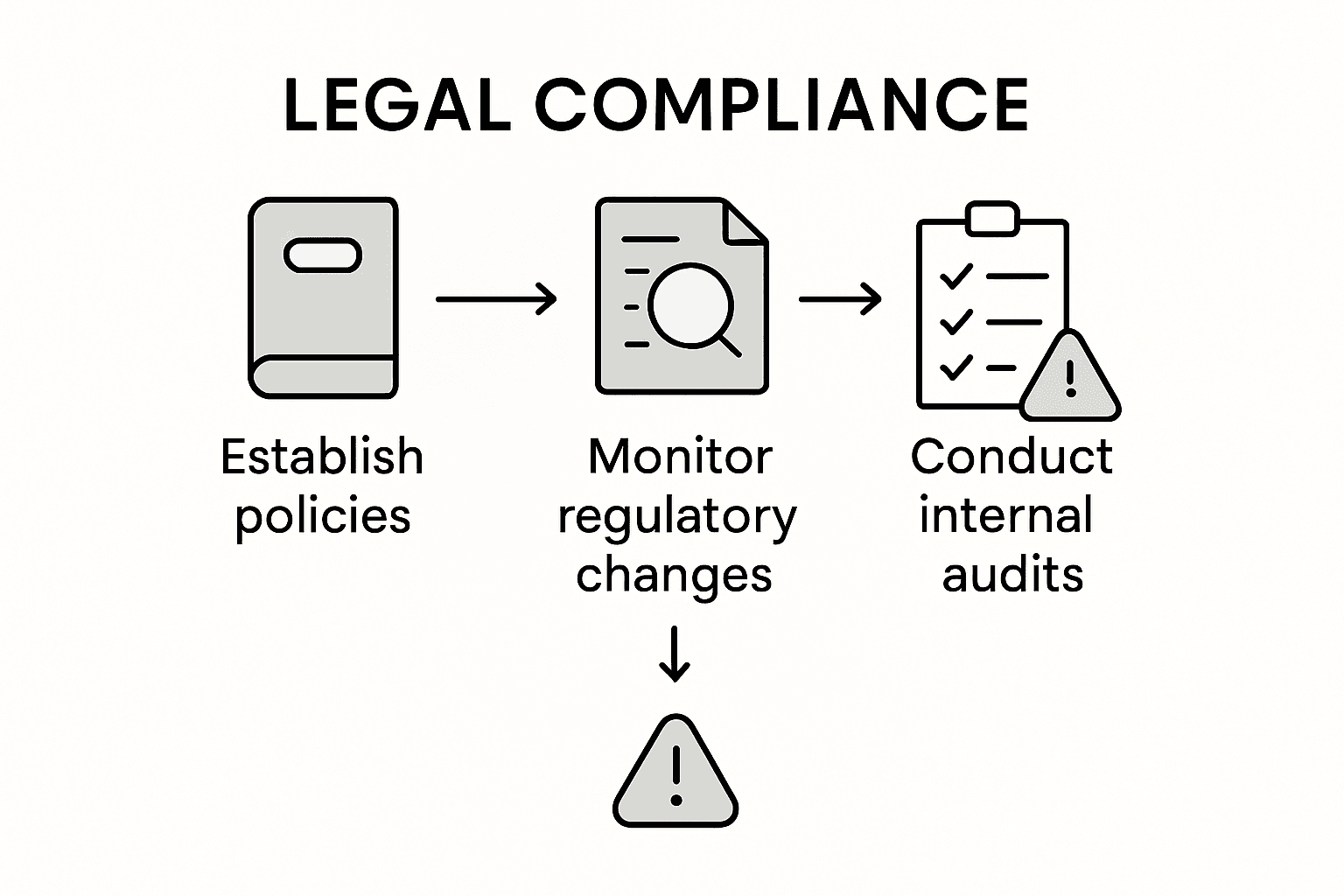
Governance professionals play a critical role in maintaining regulatory alignment. Compliance monitoring requires continuous vigilance, including regular internal audits, risk assessments, and training programmes. Key practical steps include implementing automated compliance tracking systems, conducting periodic staff training sessions, and establishing clear communication channels for reporting potential regulatory concerns. Organisations must also invest in ongoing education, ensuring that employees at all levels understand their legal obligations and the potential consequences of non-compliance.
Technology can be a powerful ally in compliance management. Advanced digital tools now enable real-time monitoring of regulatory requirements, automated compliance checks, and comprehensive documentation of organisational practices. These systems can provide early warning signals of potential risks, track legislative changes, and generate detailed reports that demonstrate proactive regulatory management. Small businesses and large enterprises alike can leverage these technological solutions to create more robust and responsive compliance infrastructures.
Pro Tip for Compliance Implementation: Create a dedicated compliance calendar that tracks key regulatory deadlines, training requirements, and audit schedules, ensuring no critical compliance activities are overlooked.
This table outlines practical technologies and processes used to manage compliance efficiently in the UK environment:
| Tool or Process | Purpose | Example Impact |
|---|---|---|
| Compliance Audit Software | Tracks adherence to regulations | Early detection of violations |
| Automated Policy Reminders | Notifies of pending deadlines | Reduces risk of missed updates |
| Online Training Platforms | Educates staff on legal standards | Ensures up-to-date staff knowledge |
| Centralised Compliance Calendar | Schedules audits and reviews | Streamlines compliance activities |
| External Legal Consultation | Provides expert regulatory advice | Mitigates complex legal risks |
Stay Ahead of Legal Compliance Challenges with Expert Guidance
Navigating the complex world of legal compliance in the United Kingdom can feel overwhelming. Whether you face risks like financial penalties or reputational damage, understanding your core legal obligations and managing compliance effectively are crucial goals. This article highlights key challenges professionals encounter such as evolving regulatory frameworks, data protection rules, and sector-specific standards. If you want to avoid non-compliance consequences and build trust through ethical business practices then taking proactive steps is essential.

Explore how KefiHub supports UK professionals by providing clear, practical insights on legal compliance and beyond. With real-world advice tailored for small business owners and service providers, you will find expert commentary and actionable strategies to help you maintain compliance confidently. Start protecting your business and career today by visiting KefiHub for trusted guidance. Discover your next step to smarter compliance and professional success now.
Frequently Asked Questions
What is legal compliance?
Legal compliance refers to the systematic approach of understanding and adhering to laws, regulations, and standards that govern professional and organisational conduct, ensuring operations are ethical and lawful.
Why is legal compliance important for professionals in the UK?
Legal compliance is crucial for UK professionals as it helps mitigate risks, fosters a culture of ethical standards, protects stakeholder interests, and avoids legal penalties, ultimately enhancing business reputation.
What are the common areas of legal compliance in business?
Common areas of legal compliance include data protection, financial compliance, workplace safety, anti-discrimination laws, and industry-specific regulations that vary across sectors.
What are the consequences of non-compliance with legal obligations?
Consequences of non-compliance can include financial penalties, reputational damage, legal action, and potential operational shutdowns, making it essential for businesses and individuals to understand and adhere to their legal obligations.
Recommended
- Small Business Compliance Guide: Essential Steps for UK SMEs – Kefihub
- Starting a Small Business UK: Step-by-Step Legal Guide – Kefihub
- Starting a Small Business UK: Step-by-Step Legal Guide – Kefihub
- What Is Service-Based Business? Key Facts for UK SMEs – Kefihub