


{
“@type”: “Article”,
“image”: {
“url”: “https://csuxjmfbwmkxiegfpljm.supabase.co/storage/v1/object/public/blog-images/organization-8865/1765086306859_image_1765086306717.png”,
“@type”: “ImageObject”,
“description”: “Founders planning in busy UK office”
},
“author”: {
“url”: “https://kefihub.co.uk”,
“name”: “Kefihub”,
“@type”: “Organization”
},
“@context”: “https://schema.org”,
“headline”: “Starting a Small Business UK: Step-by-Step Legal Guide”,
“publisher”: {
“url”: “https://kefihub.co.uk”,
“name”: “Kefihub”,
“@type”: “Organization”
},
“inLanguage”: “en”,
“articleBody”: “Learn starting a small business UK with our clear step-by-step guide. Understand legal requirements, registration, and setup for a compliant UK business.”,
“description”: “Learn starting a small business UK with our clear step-by-step guide. Understand legal requirements, registration, and setup for a compliant UK business.”,
“datePublished”: “2025-12-07T05:45:30.479Z”
}
Starting a british business can feel like navigating a maze, especially when nearly 60 percent of new ventures stumble in the first three years. Securing your place among thriving companies means more than just a good idea. You need an actionable plan, the right legal structure, and a deep understanding of regulations unique to the United Kingdom. This guide offers practical steps to turn your british business dreams into a well-run reality, built for both compliance and growth.
Table of Contents
- Stage 1: Clarify Your Business Idea And Plan
- Stage 2: Choose And Register The Right Business Structure
- Stage 3: Meet UK Legal And Tax Obligations
- Stage 4: Set Up Business Finances And Essentials
- Stage 5: Verify Compliance And Prepare For Growth
Quick Summary
| Key Insight | Explanation |
|---|---|
| 1. Validate your business idea through research | Conduct thorough market research to understand customer needs and how your product or service uniquely addresses their problems. |
| 2. Choose the right business structure | Select a suitable business model, such as sole trader or limited company, considering liability, tax obligations, and operational flexibility. |
| 3. Fulfil legal and tax obligations | Register your business correctly, maintain accurate accounts, and understand specific tax responsibilities to avoid penalties. |
| 4. Set up robust financial systems | Establish a dedicated business bank account, create financial forecasts, and utilise accounting tools for better financial management. |
| 5. Implement compliance and growth strategies | Regularly perform internal audits and maintain documentation to ensure compliance and outline strategies for sustainable expansion. |
Stage 1: Clarify your business idea and plan
Transforming your entrepreneurial vision into a structured business concept requires strategic thinking and methodical planning. Your goal in this stage is to crystallise a compelling business idea that goes beyond a passing thought and becomes a robust, actionable strategy.
Start by conducting thorough market research to validate your concept. This means understanding your potential customers, their pain points, and how your product or service uniquely solves their problems. The UK government recommends developing a comprehensive business plan that not only clarifies your idea but also identifies potential challenges and sets clear objectives. Ask yourself critical questions: Who exactly are my customers? What makes my offering different? What problem am I solving?
When drafting your initial plan, focus on creating SMART goals that are specific, measurable, achievable, relevant, and time-bound. Be realistic about your revenue projections and avoid the common pitfall of overestimating your market potential. Break down your concept into tangible components such as your value proposition, target market, competitive landscape, and initial financial projections.
A practical tip that experienced entrepreneurs swear by is creating a one-page business model canvas. This visual tool helps you map out your entire business concept succinctly, forcing you to think critically about each aspect of your venture. It will serve as a living document you can refine as your understanding deepens.
As you complete this stage, you will have transformed a nascent idea into a structured blueprint ready for the next phase of your entrepreneurial journey.
Stage 2: Choose and register the right business structure
Selecting the appropriate business structure represents a critical decision that will significantly impact your legal responsibilities, tax obligations, and financial risks. Your goal is to identify the most suitable framework that protects your interests while providing optimal operational flexibility.

Legal Choices highlights the importance of understanding different business structures available in the United Kingdom. Your primary options include sole trader, partnership, and limited company models, each with unique advantages and potential drawbacks. As a sole trader, you retain complete control but also assume personal liability for business debts. Partnerships distribute responsibility across multiple individuals, while limited companies offer stronger personal asset protection by creating a separate legal entity.
HSBC UK recommends carefully evaluating your specific business needs when determining the most appropriate structure. Consider factors such as your anticipated annual turnover, potential growth trajectory, tax efficiency, and personal risk tolerance. Limited companies typically provide more credibility with clients and investors, but also involve more complex administrative requirements and higher accounting costs.
A practical tip for new entrepreneurs is to consult with a qualified accountant or legal professional who can provide personalised guidance tailored to your specific business model. They can help you navigate the nuanced implications of each business structure and ensure you make an informed decision.
Once you have selected your preferred structure, you will need to complete the necessary registration processes with Companies House or relevant government authorities, setting the legal foundation for your business venture.
Stage 3: Meet UK legal and tax obligations
Navigating the legal and tax landscape is crucial for establishing a compliant and successful business in the United Kingdom. Your objective in this stage is to understand and fulfil all regulatory requirements that will protect your business and ensure smooth operations.
The UK government provides comprehensive guidance for business registration and compliance that every new entrepreneur must carefully follow. You will need to register for corporation tax if you are establishing a limited company, register for VAT if your annual turnover exceeds £85,000, and obtain appropriate business insurance to protect against potential liabilities. This process involves obtaining a unique taxpayer reference number from HM Revenue and Customs (HMRC) and maintaining accurate financial records for at least six years.
Each business structure carries distinct tax and legal responsibilities. Sole traders must complete self assessment tax returns annually, while limited companies require more complex reporting including annual accounts, confirmation statements, and corporation tax submissions. Understanding these nuanced requirements is critical to avoiding potential penalties and maintaining good standing with regulatory authorities.
A practical tip for managing these obligations efficiently is to invest in reliable accounting software or consider hiring a professional accountant who specialises in small business taxation. They can help you navigate complex regulatory requirements, ensure timely submissions, and potentially identify tax efficiencies specific to your business model.
By methodically addressing these legal and tax obligations, you will establish a solid foundation for your business, demonstrating professionalism and commitment to regulatory compliance.
Stage 4: Set up business finances and essentials
Establishing a solid financial foundation is critical for transforming your business concept into a sustainable venture. Your primary objective in this stage is to create a robust financial infrastructure that supports your business growth and provides clear insights into your financial performance.
Business Wales emphasises the importance of comprehensive financial planning for new entrepreneurs. Begin by opening a dedicated business bank account that separates your personal and professional finances. This step is crucial for maintaining clean accounting records and simplifying tax reporting. You will also need to develop a detailed financial forecast that includes projected income, expected expenses, cash flow predictions, and potential funding requirements.
Sage UK recommends creating a comprehensive business plan that includes detailed financial projections. This document should outline your startup costs, anticipated revenue streams, and potential financial challenges. Consider developing multiple financial scenarios that account for different growth trajectories and potential market fluctuations. Key financial essentials include setting up accounting systems, tracking expenses, understanding tax obligations, and establishing a sustainable pricing strategy for your products or services.
A practical tip for managing your business finances is to leverage digital accounting tools and software that can automate invoicing, expense tracking, and financial reporting. These platforms can provide real time insights into your financial health and help you make informed strategic decisions.
By methodically setting up your financial systems and developing a clear financial strategy, you will create a strong foundation for sustainable business growth and financial stability.
Stage 5: Verify compliance and prepare for growth
As your business transitions from concept to operational reality, establishing robust compliance mechanisms and strategic growth frameworks becomes paramount. Your objective in this stage is to create a resilient business model that can adapt and expand while maintaining legal and regulatory integrity.
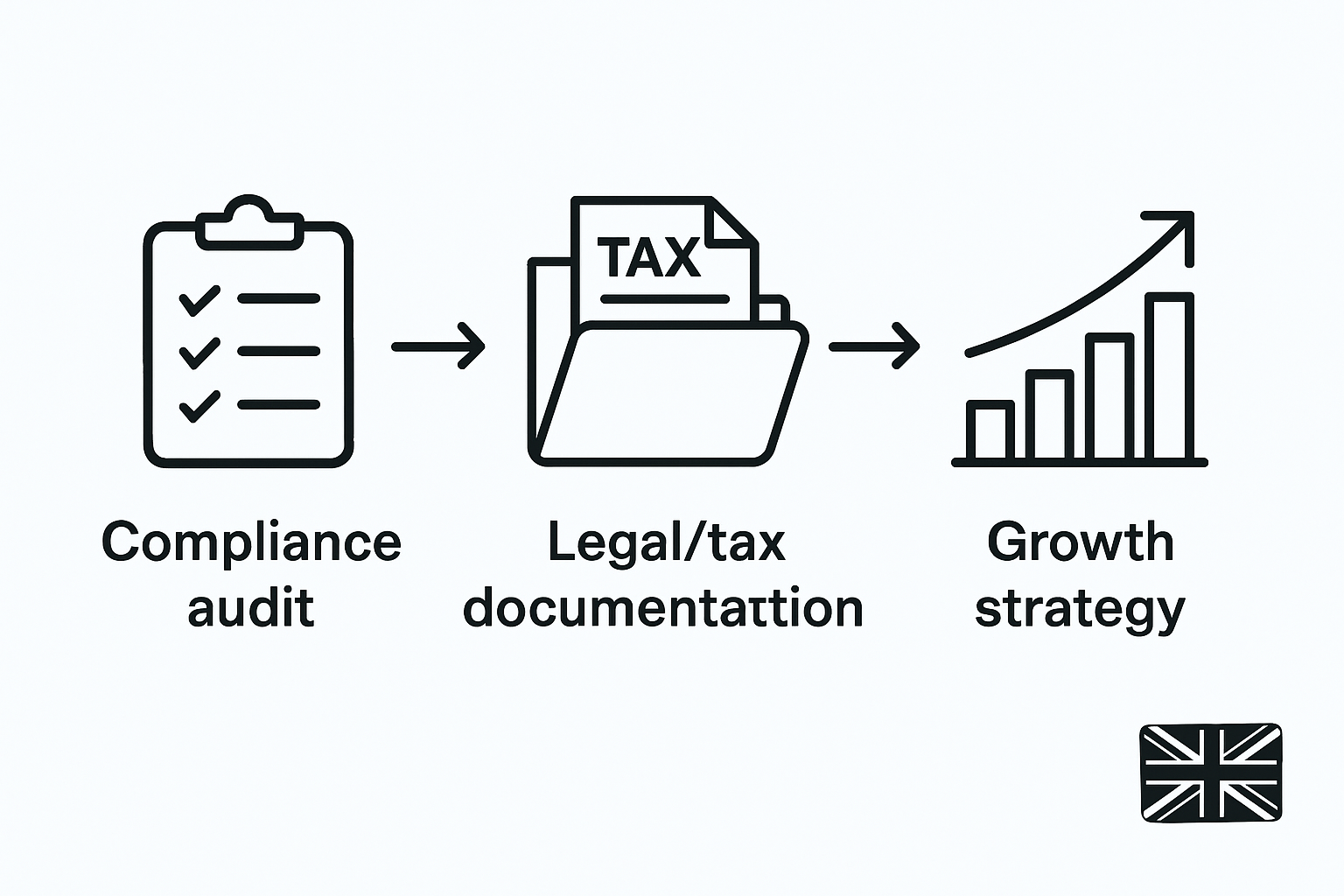
The UK government’s business toolkit emphasises comprehensive compliance verification as a critical milestone for sustainable development. This process involves conducting thorough internal audits of your operational practices, ensuring all regulatory requirements are consistently met, and identifying potential areas of risk or improvement. You should develop a systematic approach to monitoring your business performance, including regular financial reviews, compliance checks, and strategic assessments of your market position.
Key areas of focus include maintaining accurate documentation, staying updated with changing regulations in your industry, and implementing robust quality control measures. Consider establishing a compliance calendar that tracks critical deadlines such as tax submissions, insurance renewals, and mandatory reporting requirements. Additionally, develop contingency plans that outline potential scenarios and your strategic responses to unexpected challenges or opportunities.
A practical tip for maintaining compliance is to create a dedicated compliance folder or digital system where you store all critical documents, certifications, and regulatory correspondence. This approach ensures you can quickly access and update important information, reducing the risk of missed deadlines or overlooked regulatory changes.
By systematically verifying your compliance and building a flexible growth strategy, you will position your business for sustainable expansion and long term success.
Take Confident Steps in Building Your UK Business
Starting a small business in the UK involves navigating complex legal and financial obligations that can feel overwhelming. This guide highlights crucial challenges such as choosing the right business structure, meeting tax requirements, and ensuring regulatory compliance. If you are striving to transform your entrepreneurial idea into a thriving, compliant venture with clear financial planning and resilient growth strategies, support is closer than you think.
Explore actionable insights and expert commentary at Business Archives – Kefihub to deepen your understanding of these vital topics. KefiHub is your trusted UK-based platform offering practical guidance on business, law and essential professional services. Visit KefiHub today to access tailored advice that helps you overcome the toughest hurdles and accelerate your success. Start your journey right with real-world stories and clear strategies designed for UK professionals at Introduction Archives – Kefihub. Take control of your future now by making informed decisions every step of the way.
Frequently Asked Questions
What is the first step to starting a small business in the UK?
The first step is to clarify your business idea and plan by conducting thorough market research. Identify your target customers, their pain points, and how your product or service addresses these needs.
How do I choose the right business structure for my small business?
Select a business structure that fits your operational needs and personal risk tolerance, such as a sole trader, partnership, or limited company. Evaluate each option based on factors like control, liability, and taxation before making your decision.
What are my legal and tax obligations as a small business owner in the UK?
As a small business owner, you must register for the appropriate taxes, such as corporation tax or VAT, depending on your structure and turnover. Ensure you maintain accurate financial records and comply with all regulatory requirements to avoid penalties.
How can I establish a solid financial foundation for my business?
Establish a separate business bank account to keep personal and business finances distinct, and create a detailed financial forecast including anticipated income and expenses. This will help track financial health and support strategic decision-making.
What steps do I need to take for compliance and preparing for growth?
Conduct regular audits of your operational practices and establish a compliance calendar to track key deadlines, ensuring all regulatory requirements are met. Develop contingency plans for potential challenges to position your business for sustainable growth.
How do I verify compliance and ensure my business is ready for expansion?
Systematically maintain accurate documentation and stay updated with regulatory changes within your industry. Create a dedicated system for storing compliance-related documents, which will help streamline access and management of essential records.
Recommended
- How to Avoid Common Business Mistakes for UK Professionals – Kefihub
- Complete Guide to Why Incorporate a Business – Kefihub
- Judge Law | Local Law Firm Listings
- Why Sustainable Business: Complete Guide for UK Professionals – Kefihub