


First-time buyers often believe they’re automatically exempt from Stamp Duty, but that’s only partly true. The reality depends on your property price and location. Understanding UK property taxes is essential for budgeting your home purchase and avoiding costly surprises. This guide breaks down Stamp Duty Land Tax, Council Tax, Capital Gains Tax, regional differences, payment deadlines, and practical calculation methods to help you navigate property ownership with confidence.
Table of Contents
- Introduction To UK Property Taxes
- Types Of Property Taxes In The UK
- First-Time Buyer Relief And Eligibility
- Regional Property Tax Comparisons Across The UK
- Payment Obligations And Legal Consequences
- Common Misconceptions And Clarifications
- Practical Calculation Examples And Planning Tips
- Explore More UK Property & Legal Guidance With Kefihub
- Frequently Asked Questions
Key Takeaways
| Point | Details |
|---|---|
| Main property taxes | Stamp Duty Land Tax (SDLT), Council Tax, and Capital Gains Tax affect UK homeowners differently depending on transaction type and ownership. |
| First-time buyer relief | 0% SDLT applies to the first £425,000 for properties up to £500,000 in England and Northern Ireland only. |
| Regional variations | Scotland uses LBTT and Wales uses LTT with different rates and thresholds compared to England and Northern Ireland. |
| Payment deadlines | SDLT must be paid within 14 days of completion with penalties for late submission. |
| Planning matters | Accurate calculation and early professional advice minimize tax burdens and ensure full compliance. |
Introduction to UK Property Taxes
Property taxes in the UK are charges levied on property transactions and ownership. They form a significant part of your home buying budget and ongoing costs. The three main types are Stamp Duty Land Tax (SDLT) for purchases, Council Tax for annual property ownership, and Capital Gains Tax (CGT) when selling non-primary residences. Understanding these taxes helps you budget accurately, comply with legal requirements, and make informed investment decisions.
These taxes affect different groups in distinct ways:
- Homeowners pay Council Tax annually based on property value bands
- First-time buyers may qualify for SDLT relief on properties up to £500,000
- Property sellers face CGT on profits from second homes or investment properties
- Landlords and investors navigate additional tax considerations beyond primary residences
Your tax obligations vary depending on whether you’re buying, owning, or selling property. Transaction taxes like SDLT apply once at purchase, while ownership taxes like Council Tax recur annually. Knowing which taxes apply to your situation prevents unexpected bills and helps you plan your property finances effectively.
Types of Property Taxes in the UK
Stamp Duty Land Tax applies when you purchase property in England and Northern Ireland. SDLT uses tiered rates with specific thresholds where you pay different percentages on different portions of the purchase price. Standard rates range from 0% on the first £250,000 to 12% on amounts over £1.5 million. First-time buyers benefit from enhanced thresholds with 0% on the first £425,000 for properties up to £500,000.
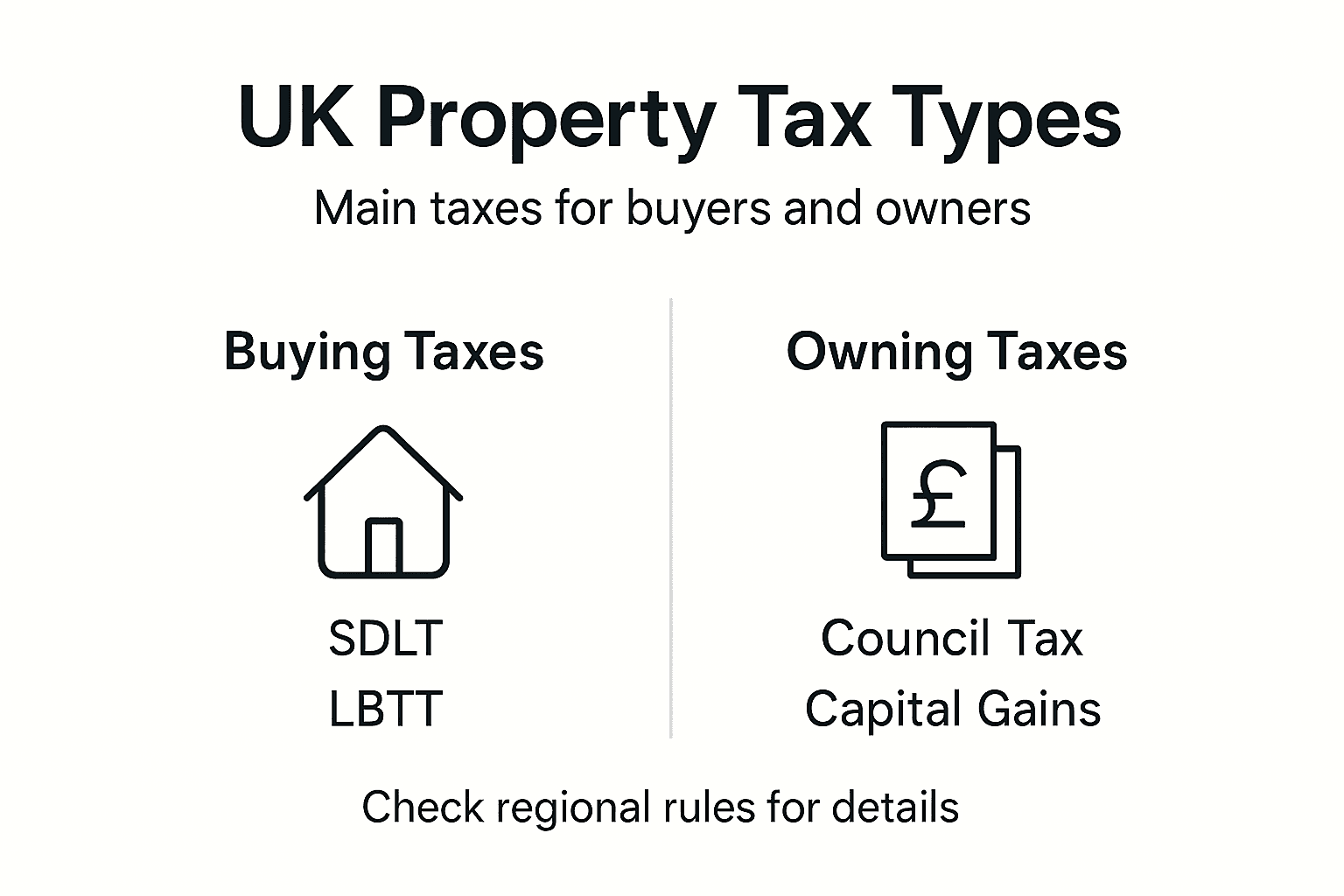
Council Tax is an annual charge based on property valuation bands ranging from A to H. Local councils set rates with wide variation across regions making this tax highly location dependent. Band D serves as the baseline with other bands calculated as proportions of this amount. You pay Council Tax regardless of whether you own or rent your property.
Capital Gains Tax applies when you sell property that isn’t your main home. CGT charges tax on your profit with allowances and rates varying by income. Basic rate taxpayers pay 18% on residential property gains while higher rate taxpayers pay 24%. The annual tax-free allowance reduces your taxable gain before rates apply.
Here’s how to identify which tax applies to your situation:
- Purchasing a property triggers SDLT, LBTT, or LTT depending on location
- Owning any property means annual Council Tax obligations
- Selling a second home or investment property creates potential CGT liability
- Primary residence sales typically avoid CGT through Private Residence Relief
For comprehensive property investment guidance across all UK regions, understanding these tax types forms the foundation of sound financial planning.
First-Time Buyer Relief and Eligibility
First-time buyer relief in England and Northern Ireland offers significant savings on Stamp Duty. You pay 0% SDLT on the first £425,000 for properties up to £500,000 if you’ve never owned property anywhere in the world. This relief can save you up to £6,250 compared to standard rates. Properties priced above £500,000 don’t qualify for any relief and you’ll pay standard SDLT rates on the entire purchase price.
Eligibility requires meeting strict criteria:
- You must be a first-time buyer who has never owned property before
- The property price cannot exceed £500,000 to qualify for relief
- You must intend to occupy the property as your main residence
- Purchasing with a partner who previously owned property disqualifies you both
Scotland and Wales operate different systems without identical first-time buyer relief. Scotland’s Land and Buildings Transaction Tax offers different thresholds while Wales has its own Land Transaction Tax structure. Check regional rules carefully if buying outside England or Northern Ireland.
Common misconceptions include believing all first-time buyers avoid SDLT entirely or that the relief applies regardless of property price. The £500,000 cap is absolute. Buying a £501,000 home means paying standard SDLT rates on the full amount with no relief whatsoever.
Pro Tip: Verify your eligibility with a solicitor before exchanging contracts. Incorrectly claiming relief leads to penalties and interest charges on unpaid tax. Many first-time buyers benefit from investment guidance and property viewing tips to make informed purchase decisions.
Regional Property Tax Comparisons across the UK
UK property taxes vary significantly by nation. England and Northern Ireland use Stamp Duty Land Tax while Scotland uses Land and Buildings Transaction Tax with rates up to 12% and Wales operates Land Transaction Tax. These differences affect your total purchase costs depending on where you buy.

| Region | Tax Name | Starting Threshold | Top Rate | First-Time Buyer Relief |
|---|---|---|---|---|
| England & NI | SDLT | £250,000 | 12% over £1.5m | Yes, £425k at 0% up to £500k |
| Scotland | LBTT | £145,000 | 12% over £750k | Limited relief available |
| Wales | LTT | £225,000 | 12% over £1.5m | Different thresholds apply |
These regional differences create significant cost variations for identical property prices. A £300,000 home purchase in Scotland costs more in transaction tax than the same purchase in England if you’re a first-time buyer. Scotland’s lower starting threshold means you begin paying tax sooner even though rates differ.
Payment deadlines and compliance requirements also vary by region. Scotland and Wales have their own tax authorities with distinct filing processes and documentation requirements. Always check location specific rules when purchasing property to avoid underpayment or late filing penalties.
Understanding these regional nuances helps you budget accurately and compare costs across different UK locations. If you’re flexible about where to buy, regional tax differences might influence your decision alongside property prices and local market conditions.
Payment Obligations and Legal Consequences
Timing matters critically for property tax payments. You must pay Stamp Duty within 14 days after property completion or face penalties and interest charges. Council Tax bills arrive annually with monthly payment options through direct debit. Capital Gains Tax requires reporting through self-assessment with payment due by 31 January following the tax year of sale.
Follow these steps to ensure correct payment:
- Your solicitor typically handles SDLT payment and submission at completion
- Register for Council Tax with your local authority within 14 days of moving in
- Keep detailed records of property purchase costs for future CGT calculations
- Report CGT liability through self-assessment within required timeframes
- Maintain documentation of all tax payments for at least six years
Missing payment deadlines triggers serious consequences. Late SDLT payment incurs penalties starting at £100 after three months, rising to £200 after six months, plus daily penalties of £10 beyond 12 months. Interest accrues on unpaid tax from the original deadline. Council Tax arrears can lead to court action and bailiff involvement. CGT late filing carries penalties and interest that accumulate quickly.
Pro Tip: Set calendar reminders for all property tax deadlines well in advance. Keep copies of payment confirmations and SDLT return submissions in a dedicated file. These records prove invaluable if questions arise about your tax history. Seeking legal advice for homebuyers helps ensure you meet all obligations correctly.
You’re personally responsible for accurate tax reporting even if using professionals. Review all submissions before approval and question anything unclear. Honest mistakes receive more lenient treatment than deliberate avoidance, but both carry financial consequences.
Common Misconceptions and Clarifications
Many buyers misunderstand how property taxes work, leading to budget shortfalls and compliance issues. Let’s clear up the most frequent misconceptions.
The biggest myth is that first-time buyers never pay Stamp Duty. Relief applies only up to £500,000 with 0% on the first £425,000. Buy anything priced higher and you’ll pay standard rates on the entire purchase with no relief whatsoever. This catches many buyers off guard when purchasing in high-value areas.
Here are the top misconceptions corrected:
- Myth: All UK regions have identical property tax rules. Reality: Scotland, Wales, England, and Northern Ireland each operate distinct systems with different rates, thresholds, and reliefs.
- Myth: Council Tax rates are fixed nationally. Reality: Local councils set their own rates creating huge variation even between neighboring areas for identical band properties.
- Myth: You only pay Capital Gains Tax if you’re wealthy. Reality: CGT applies to anyone selling property that isn’t their main home regardless of income level, though rates vary.
- Myth: Buying with cash avoids Stamp Duty. Reality: Payment method is irrelevant; SDLT applies to the transaction based on purchase price and buyer status.
Another common error is assuming Council Tax depends on current market value. Your property sits in a band based on 1991 valuations in England and Scotland or 2003 valuations in Wales. Market changes don’t automatically trigger revaluation, though you can appeal if circumstances change.
Some buyers believe tax reliefs apply automatically without declaration. You must actively claim reliefs and provide evidence of eligibility. Failing to declare when required or claiming incorrectly both carry penalties. Understanding Legal Aid availability helps if you need support navigating complex tax situations.
Practical Calculation Examples and Planning Tips
Seeing real calculations makes property tax planning concrete. Let’s work through examples showing exactly what you’ll pay.
First-time buyer purchasing a £400,000 property in England:
- First £425,000 qualifies for 0% rate under first-time buyer relief
- Purchase price of £400,000 falls entirely within the relief threshold
- Total SDLT due: £0
- Savings compared to standard rates: £6,250
Council Tax varies dramatically by location and band. Here’s a sample from Westminster Council 2026:
| Band | Annual Charge | Monthly Direct Debit |
|---|---|---|
| A | £583.45 | £48.62 |
| D | £875.18 | £72.93 |
| H | £1,750.35 | £145.86 |
Capital Gains Tax on selling a second property:
- Purchase price in 2020: £250,000
- Sale price in 2026: £320,000
- Gross profit: £70,000
- Deduct annual CGT allowance (£3,000 in 2026): £67,000 taxable gain
- Basic rate taxpayer pays 18%: £12,060 CGT due
Pro Tip: Consult a tax advisor before completing property transactions. They’ll identify eligible reliefs and optimize timing to minimize liabilities. Use official SDLT calculators to verify amounts before exchange.
Smart planning strategies include timing property sales to use annual CGT allowances efficiently and ensuring you understand regional tax differences before committing to purchases. Keep receipts for improvements and costs that reduce CGT liability. Review legal documents for buyers and explore property investment guidance to make informed decisions backed by accurate tax calculations.
Explore More UK Property & Legal Guidance with Kefihub
Navigating UK property taxes becomes simpler with expert guidance at your fingertips. Kefihub delivers clear, practical advice tailored for UK homeowners and first-time buyers facing complex financial decisions. Our comprehensive guides break down legal requirements, investment strategies, and tax obligations into actionable steps you can implement immediately.

Whether you’re planning your first purchase or expanding your property portfolio, Kefihub’s property investment resources provide the insights you need. We simplify legal complexities so you can focus on finding the right property at the right price. Explore reliable legal advice for UK homebuyers to ensure your transaction proceeds smoothly. Our guides also cover broader business considerations including common business mistakes to avoid for property investors and landlords. Trust Kefihub to deliver the clarity and confidence you need for informed property decisions.
Frequently Asked Questions
What property taxes must UK homeowners pay?
UK homeowners face three main property taxes depending on their circumstances. Council Tax applies annually to all residential properties based on valuation bands set by local authorities. Stamp Duty Land Tax (or regional equivalents LBTT and LTT) applies when purchasing property with rates varying by price and buyer status. Capital Gains Tax charges on profits when selling properties that aren’t your main residence, with rates depending on your income level and available allowances.
How does first-time buyer Stamp Duty relief work in 2026?
First-time buyers in England and Northern Ireland pay 0% SDLT on the first £425,000 for properties priced up to £500,000. This relief saves up to £6,250 compared to standard rates. Properties exceeding £500,000 receive no relief whatsoever and you’ll pay standard SDLT on the entire purchase price. Scotland and Wales operate different systems with their own thresholds and relief structures.
What happens if I pay property tax late or incorrectly?
Late Stamp Duty payment triggers penalties starting at £100 after three months, increasing to £200 after six months, plus daily £10 charges beyond 12 months. Interest accrues on all unpaid tax from the original deadline. Council Tax arrears can escalate to court action and bailiff involvement while CGT late filing carries accumulating penalties and interest. Incorrect payments may trigger investigations and additional charges depending on whether errors appear deliberate or accidental.
Recommended
- Property Investment Guide UK: Secure Your First Buy – Kefihub
- 6 Crucial Property Viewing Tips for First-Time UK Buyers – Kefihub
- UK Property Market Berkshire 2025: 10 Must-Know Tips for Buyers