

Many people assume shared ownership means buying a full property jointly with someone else, but that’s not quite right. Shared ownership is actually a government-backed scheme that lets you purchase a portion of a property, typically between 10% and 75%, while paying rent on the remaining share owned by a housing association. This arrangement makes homeownership accessible for those who cannot afford a full deposit or mortgage. In this guide, you’ll discover exactly what shared ownership means, the legal processes involved, costs to expect, and practical steps to apply or sell.
Table of Contents
- What Shared Ownership Means: Basics And Eligibility
- Legal Terms And Processes Involved In Shared Ownership
- Costs, Rent, And Financing: What To Expect With Shared Ownership
- How To Apply, Staircasing Options, And Selling Shared Ownership Properties
- Discover Expert Support For Your Shared Ownership Journey
- Frequently Asked Questions
Key takeaways
| Point | Details |
|---|---|
| Partial purchase model | You buy a share of 10-75% and pay rent on the rest owned by a housing association |
| Reduced financial barrier | Smaller deposits and mortgages compared to full ownership make entry easier |
| Leasehold agreement | Ownership is via leasehold with specific rights, responsibilities, and staircasing options |
| Eligibility criteria | Mainly for first-time buyers and those unable to afford full ownership in England |
| Selling process | Requires housing association approval and follows specific procedures |
What shared ownership means: basics and eligibility
Shared ownership operates as a practical route to homeownership for individuals who find full property purchase financially out of reach. Rather than needing a deposit and mortgage for an entire property, you purchase a share between 10-75% from a housing association and pay rent on the remaining portion. This setup significantly reduces the initial deposit required and lowers monthly mortgage payments, making it an attractive option for many UK buyers.
The scheme is primarily available in England through registered housing associations and targets specific groups. Eligibility typically includes first-time buyers, those who previously owned but cannot afford to buy now, and existing shared owners looking to move. Your household income must usually fall below £80,000 annually, or £90,000 in London, though these thresholds can vary by provider and location.
Understanding the types of property ownership in the UK helps clarify where shared ownership fits within the broader property landscape. Unlike outright freehold or standard leasehold purchases, shared ownership combines elements of both buying and renting. You own your share outright through a leasehold agreement while simultaneously being a tenant for the portion you don’t own.
Key eligibility requirements include:
- Being 18 years or older
- Unable to afford a suitable home through traditional purchase
- Meeting income thresholds set by the housing association
- Being a first-time buyer or existing shared owner
- Having the financial means to cover mortgage, rent, and service charges
The financial benefits extend beyond just smaller deposits. Your mortgage only covers the share you’re buying, so if you purchase a 25% share of a £200,000 property, you need a mortgage for £50,000 rather than the full amount. This dramatically reduces both deposit requirements and monthly repayments, though you’ll still pay rent on the remaining 75%.
“Shared ownership bridges the gap between renting and full ownership, offering a realistic pathway for those priced out of traditional property markets while building equity over time.”
Pro Tip: Calculate your total monthly outgoings carefully, including mortgage payments, rent on the unsold share, service charges, and maintenance costs, to ensure shared ownership genuinely improves your financial position compared to renting.
Legal terms and processes involved in shared ownership
The legal framework underpinning shared ownership centres on a leasehold agreement between you and the housing association. This lease typically runs for 99 or 125 years and grants you specific rights and responsibilities for your share of the property. Unlike freehold ownership where you own the land and building outright, shared ownership creates a leasehold arrangement with the housing association retaining ownership of the unsold portion.
Staircasing represents one of the most valuable features within shared ownership agreements. This process allows you to purchase additional shares in your property over time, gradually increasing your ownership percentage. Most schemes let you staircase in increments of at least 10%, and many buyers aim to eventually own 100% of the property. When you reach full ownership, you typically convert from leasehold to either freehold or a standard leasehold arrangement, depending on the property type.
The staircasing process involves:
- Requesting a valuation from a RICS surveyor to determine current property value
- Applying to your housing association for permission to purchase additional shares
- Arranging additional mortgage funding or using savings to buy the extra share
- Completing legal paperwork through a solicitor to transfer the additional ownership
- Adjusting your rent payments downward to reflect your increased ownership stake
Your rights as a shared owner include the ability to decorate and make internal alterations, subject to lease terms, and the right to sell your share. However, responsibilities also increase with ownership. You’re typically liable for all internal repairs and maintenance, while the housing association handles external and structural work on buildings with multiple units. For houses, you may be responsible for all maintenance from the outset.
Mortgage arrangements for shared ownership differ from traditional home loans. You’ll need a lender who offers shared ownership mortgages specifically, as not all providers do. These mortgages assess your affordability based on the share you’re purchasing, but lenders also consider your ability to cover rent and service charges. Interest rates and terms can vary, so comparing options through reliable legal advice for UK homebuyers proves invaluable.

Selling a shared ownership property requires coordination with your housing association. The lease typically grants them first refusal rights, meaning they have an initial period, usually eight weeks, to find a buyer. If they cannot find a suitable purchaser, you gain the right to market the property yourself. This process protects the scheme’s integrity by ensuring properties remain available for eligible buyers.
Pro Tip: Review your lease agreement thoroughly before signing, paying particular attention to staircasing provisions, resale restrictions, and maintenance responsibilities, as these terms significantly impact your long-term flexibility and costs.
Costs, rent, and financing: what to expect with shared ownership
The financial structure of shared ownership involves multiple components that work together to determine your total housing costs. Your initial deposit applies only to the share you’re purchasing, so a 25% share of a £200,000 property with a 10% deposit requires £5,000 rather than £20,000. This reduced deposit requirement makes shared ownership accessible for many who struggle to save larger sums.
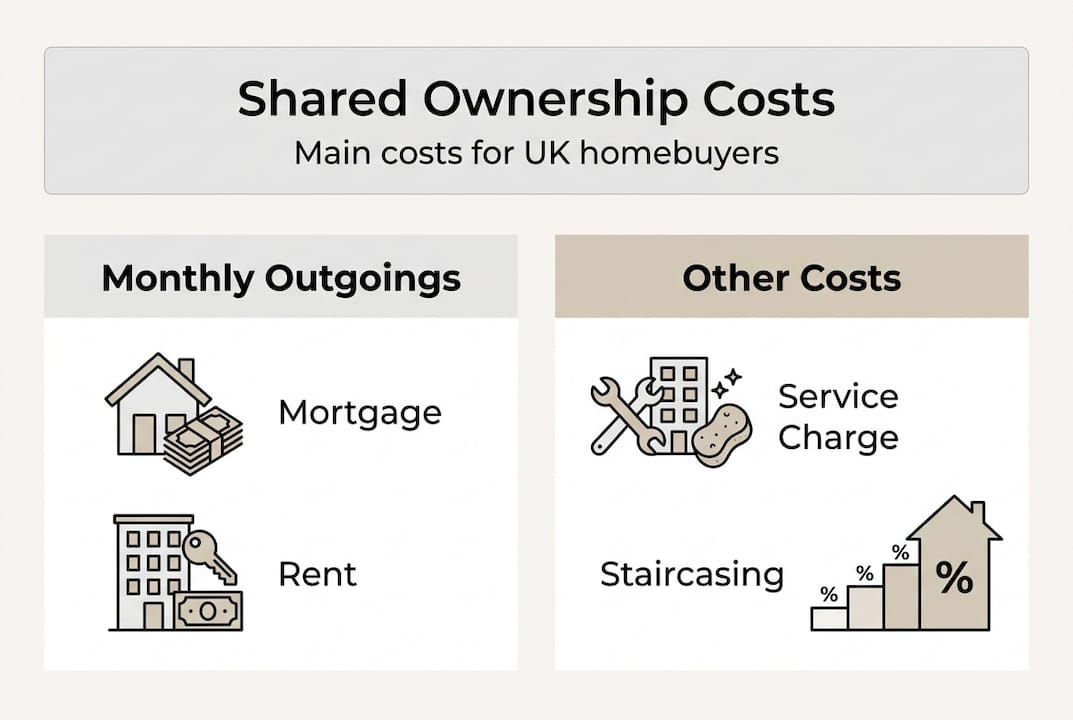
Rent on the unsold portion typically ranges from 2.75% to 3% of the housing association’s share annually. Using the previous example, if you own 25% of a £200,000 property, the housing association owns £150,000 worth. At 2.75% annual rent, you’d pay approximately £4,125 per year, or £344 monthly, on top of your mortgage payments. This rent usually increases annually in line with inflation measures specified in your lease.
Service charges represent another ongoing cost that varies significantly by property type and location. These charges cover communal area maintenance, building insurance, and estate management. For flats, service charges can range from £50 to several hundred pounds monthly, while houses may have lower charges or none at all. Always request a breakdown of service charges before committing, as they can substantially affect affordability.
| Cost component | Full ownership | Shared ownership (25% share) |
|---|---|---|
| Property value | £200,000 | £200,000 |
| Deposit (10%) | £20,000 | £5,000 |
| Mortgage amount | £180,000 | £45,000 |
| Monthly mortgage (4% over 25 years) | £950 | £237 |
| Monthly rent | £0 | £344 |
| Service charge estimate | £100 | £100 |
| Total monthly cost | £1,050 | £681 |
Mortgage lenders assess shared ownership applications differently than standard mortgages. They evaluate your ability to cover the mortgage, rent, service charges, and general living expenses. Your debt-to-income ratio becomes crucial, and lenders typically want evidence that you can comfortably afford all components. Interest rates on shared ownership mortgages can be slightly higher than standard residential mortgages, though competition among lenders has narrowed this gap.
Additional costs to budget for include:
- Solicitor fees for conveyancing and lease review
- Valuation fees if staircasing in the future
- Stamp Duty Land Tax on your share (first-time buyer relief may apply)
- Buildings insurance (sometimes included in service charges)
- Contents insurance for your belongings
- Maintenance and repair costs for your responsibilities
Staircasing costs extend beyond just purchasing additional shares. Each time you staircase, you’ll need a RICS valuation costing £250 to £500, solicitor fees for the legal transfer, and potentially arrangement fees for additional mortgage borrowing. These costs can add up, so planning your staircasing strategy carefully maximises value.
Understanding property investment principles helps you evaluate whether shared ownership aligns with your long-term financial goals. While you build equity through mortgage payments and property appreciation on your share, you don’t benefit from value increases on the portion you don’t own until you staircase further.
Pro Tip: Request a full cost breakdown from the housing association before applying, including current service charges, expected annual rent increases, and any planned major works that might trigger additional charges.
How to apply, staircasing options, and selling shared ownership properties
Applying for shared ownership follows a structured process that begins with confirming your eligibility and identifying suitable properties. Most housing associations advertise available shared ownership homes through the government’s Help to Buy agent finder and specialist property portals. Once you’ve found a property that meets your needs and budget, the formal application process begins.
The application process typically involves:
- Complete the housing association’s application form with financial and personal details
- Provide proof of income, savings, and current housing situation through supporting documents
- Obtain a mortgage agreement in principle from a lender offering shared ownership products
- Undergo affordability assessment by the housing association to confirm you can meet all costs
- Receive formal offer if approved and instruct a solicitor to handle conveyancing
- Complete property survey and finalise mortgage arrangements before exchange and completion
The entire process from application to completion usually takes between 8 to 12 weeks, though this varies based on chain complications and mortgage processing times. Being organised with documentation and responsive to requests speeds things considerably.
Staircasing options provide flexibility to increase your ownership stake as your financial situation improves. Most leases allow staircasing at any time after the initial purchase, subject to minimum share increments specified in your agreement. The property gets revalued at current market rates when you staircase, meaning you benefit if values have fallen but pay more if they’ve risen since your initial purchase.
When you’re ready to staircase, contact your housing association to initiate the process. They’ll arrange a RICS valuation, and you’ll have a set period, typically three months, to complete the purchase of additional shares at the valuation price. This protects you from market fluctuations during the transaction period.
Selling your shared ownership property requires following specific procedures outlined in your lease. The housing association typically has nomination rights for an initial period, usually eight weeks, during which they seek eligible buyers for your share. If they cannot find a buyer within this timeframe, you gain the right to market the property through estate agents, though the housing association may still need to approve the eventual buyer’s eligibility.
Essential documents for selling include:
- Original lease agreement and any staircasing documentation
- Service charge statements and payment history
- Energy Performance Certificate
- Property information forms completed accurately
- Proof of any improvements or alterations made
Sale proceeds depend on your ownership percentage. If you own 40% of a property that sells for £250,000, you receive £100,000 minus any outstanding mortgage, estate agent fees, and solicitor costs. The housing association receives proceeds from their remaining 60% share.
Common pitfalls to avoid include underestimating total monthly costs, failing to budget for service charge increases, and not reviewing lease terms carefully before signing. Some buyers also overlook resale restrictions that can limit your ability to sell quickly or to specific buyers.
Understanding the complete application process for shared ownership ensures you’re fully prepared for each stage. Working with experienced solicitors who specialise in shared ownership conveyancing helps navigate the unique legal requirements and protects your interests throughout.
Discover expert support for your shared ownership journey
Navigating shared ownership requires understanding complex legal agreements, financial structures, and application processes that can feel overwhelming without proper guidance. Kefihub connects UK homebuyers with expert resources tailored specifically for shared ownership journeys. Whether you need legal advice for UK homebuyers to review lease terms or want to explore broader property investment strategies, our platform provides clear, actionable insights.

Our expert commentary helps you make informed decisions about shared ownership applications, staircasing timing, and selling procedures. Access guidance on compliance requirements for small business owners if you’re self-employed and navigating mortgage applications. Kefihub delivers the professional support you need to confidently pursue shared ownership as your route to homeownership.
Frequently asked questions
What is a shared ownership lease?
A shared ownership lease is a legal agreement granting you ownership rights to a specific percentage of a property while the housing association retains the remainder. This leasehold typically runs for 99 or 125 years and outlines your rights to occupy, modify, staircase, and eventually sell your share. The lease also specifies your responsibilities for maintenance, rent payments on the unsold portion, and any restrictions on use or alterations.
Can I staircase to 100% ownership?
Yes, most shared ownership agreements allow you to staircase to 100% ownership over time by purchasing additional shares in increments. Once you own the entire property, you typically stop paying rent to the housing association and may convert to freehold ownership for houses or a standard leasehold for flats. The property gets revalued at current market rates each time you staircase, so timing your purchases strategically can maximise value.
What happens if I cannot afford rent or mortgage payments?
If you fall behind on rent or mortgage payments, you risk repossession just as with any property. The housing association can take legal action to recover rent arrears, while your mortgage lender can initiate repossession proceedings for mortgage arrears. Contact both parties immediately if you experience financial difficulties, as they may offer payment plans or temporary arrangements. Some housing associations provide financial counselling to help shared owners manage difficulties.
Are service charges included in my rent?
No, service charges are separate from rent and cover communal area maintenance, building insurance, and estate management costs. Your rent applies only to the housing association’s share of the property value. Service charges vary significantly by property type and location, ranging from minimal amounts for houses to several hundred pounds monthly for flats with extensive communal facilities. Always request detailed service charge breakdowns before purchasing.
Can I rent out my shared ownership property?
Most shared ownership leases prohibit subletting without explicit permission from the housing association, and many do not allow it at all. This restriction ensures properties remain available for eligible buyers and prevents shared ownership becoming an investment vehicle. If your circumstances change and you need to move, selling your share is typically the only option. Review your specific lease terms carefully, as some associations may permit subletting in exceptional circumstances like temporary work relocations.
Recommended
- Types of property ownership UK: 20% leasehold complexity – Kefihub
- 6 Essential Examples of UK Legal Documents for Buyers – Kefihub
- Property Investment Guide UK: Secure Your First Buy – Kefihub