


{
“@type”: “Article”,
“image”: {
“url”: “https://csuxjmfbwmkxiegfpljm.supabase.co/storage/v1/object/public/blog-images/organization-8865/1769221238886_image.png”,
“@type”: “ImageObject”,
“caption”: “UK solicitor meeting with client in office”
},
“author”: {
“url”: “https://kefihub.co.uk”,
“name”: “Kefihub”,
“@type”: “Organization”
},
“@context”: “https://schema.org”,
“headline”: “Role of a Solicitor: Navigating Legal Matters in the UK”,
“publisher”: {
“url”: “https://kefihub.co.uk”,
“name”: “Kefihub”,
“@type”: “Organization”
},
“inLanguage”: “en-US”,
“articleBody”: “Role of a solicitor explained for UK individuals. Covers types, duties, costs, risks and choosing the right solicitor for personal legal matters.”,
“description”: “Role of a solicitor explained for UK individuals. Covers types, duties, costs, risks and choosing the right solicitor for personal legal matters.”,
“datePublished”: “2026-01-24T02:21:14.670Z”
}
The thought of dealing with legal matters like a divorce or buying a home in England or Wales can feel overwhelming, especially when you are unsure what a solicitor actually does. Too many people hold onto outdated ideas or myths about solicitors, imagining them as unaffordable or only necessary in emergencies. In reality, a solicitor is a regulated professional who provides clear legal advice, keeps you informed about costs, and acts in your best interests. This guide addresses the most common misconceptions and helps you understand exactly how solicitors support everyday people through life’s biggest decisions.
Table of Contents
- Definition And Common Myths About Solicitors
- Types Of Solicitor And Their Specialisms
- Key Duties And How Solicitors Work
- Regulation, Training And Qualifications Required
- Costs, Risks And Finding The Right Solicitor
Key Takeaways
| Point | Details |
|---|---|
| Understanding Solicitors’ Roles | Solicitors provide legal advice and representation, specialising in various areas of law, contrary to the myth that they are only for emergencies. |
| Regulation and Accountability | Solicitors are strictly regulated by the Solicitors Regulation Authority, ensuring they act in their clients’ best interests and adhere to professional standards. |
| Cost Transparency | Legal fees can vary, and it’s essential to clarify costs upfront, as solicitors are required to provide transparent pricing structures. |
| Choosing the Right Specialist | Selecting a solicitor with specific expertise relevant to your legal matter is crucial for receiving effective advice and support. |
Definition and Common Myths About Solicitors
A solicitor is a qualified legal professional regulated in the UK who provides legal advice, prepares documents, and represents clients across a range of personal and business matters. Unlike barristers (who traditionally worked only through solicitors), solicitors engage directly with clients, guide them through legal processes, explain their options, and answer questions about their situation. They specialise in specific areas like buying a house, divorce proceedings, writing wills, starting a business, or employment disputes. When you hire a solicitor, you’re bringing in someone trained in law who understands how regulations work and can translate complex legal requirements into practical steps you can take.
The public perception of solicitors often strays far from reality, shaped by outdated ideas or misconceptions picked up from television dramas. One widespread myth is that solicitors are expensive lawyers you only contact when facing serious legal trouble. The truth is different. Many people benefit from solicitor advice on routine matters like property purchases or straightforward divorces, where their guidance prevents costly mistakes later. Another common misunderstanding is that solicitors operate without oversight or accountability. This couldn’t be further from the truth. Solicitors are regulated professionals bound by strict ethical rules that require them to act in your best interest, keep your information confidential, and be transparent about costs. The Solicitors Regulation Authority exists precisely to protect the public by ensuring solicitors meet professional standards and handle complaints if things go wrong.
Another myth suggests that solicitors will automatically represent you in court or that all legal matters require court representation. Many solicitor services involve giving advice, drafting documents, or negotiating settlements without ever stepping into a courtroom. Some solicitors do represent clients in tribunals and courts, but this depends on their qualifications and the type of case. Understanding what solicitors do and what to expect helps you use their services more effectively. People sometimes fear that hiring a solicitor commits them to expensive ongoing representation, but you can seek advice on specific questions, get a one-off document reviewed, or ask for guidance on a single stage of your matter without needing a full retainer arrangement.
The reality is that solicitors work within a highly regulated system designed to protect you. They must keep you informed about costs, explain your options clearly, and operate according to professional conduct rules. Rather than shadowy figures working behind closed doors, they’re trained professionals who must explain what they’re doing and why. Knowing the actual role of solicitors and understanding where the myths come from puts you in a stronger position to make informed decisions about whether you need one and what you can expect from the relationship.
Here is a comparison of common solicitor myths versus the reality:
| Myth About Solicitors | The Reality |
|---|---|
| Only for criminal cases or emergencies | Help with routine matters like property and wills |
| Expensive and exclusive | Many offer fixed or transparent fees |
| Unregulated and unaccountable | Strictly regulated by the SRA |
| All legal issues require court | Many cases settled out of court |
| Engage you in unlimited costs | One-off advice or limited-scope services available |
Pro tip: When you first contact a solicitor, ask specifically what services they offer and request a clear fee estimate before committing to anything, which separates marketing promises from genuine professional advice.
Types of Solicitor and Their Specialisms
Solicitors are not interchangeable professionals. The law is vast, and most solicitors dedicate their careers to becoming experts in one or two specific areas rather than attempting to handle everything. A solicitor specialising in family law is equipped with entirely different knowledge from one focused on commercial conveyancing. There are 24 different recognised practice areas across law, from straightforward personal matters like writing wills and handling divorces to complex commercial work such as mergers and acquisitions. When you need legal help, choosing a solicitor with the right specialism matters tremendously. Someone brilliant at property transactions may know little about employment law, and vice versa. This specialisation exists because each practice area has its own regulations, procedures, and nuances that take years to master.
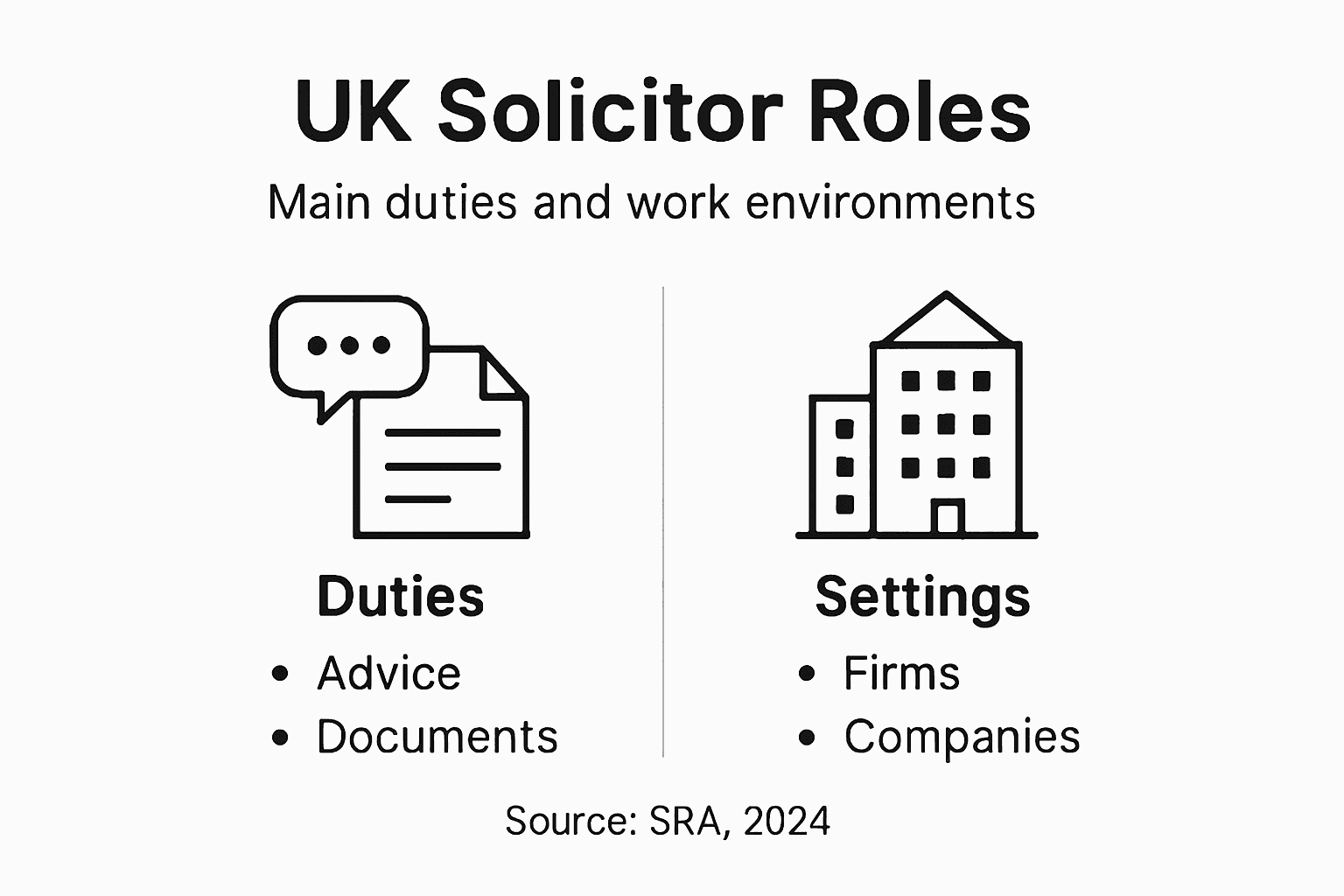
The places where solicitors work also shape what they do. Some work in private law firms, ranging from small partnerships handling local clients to large city firms managing multinational deals. Others work in-house as employed solicitors for specific companies, giving them deep expertise in that organisation’s particular legal needs. Government solicitors advise public bodies and government departments, whilst those in court services support the judiciary. Freelance or independent solicitors operate outside traditional firms, often handling specialist work or serving clients who prefer a smaller-scale relationship. Each working arrangement attracts solicitors with different experience and interests. A solicitor in a high-street firm might handle wills, property disputes, and family matters for ordinary people, whilst an in-house solicitor at a technology company spends their days on intellectual property, data protection, and commercial contracts.
This table summarises the main types of solicitor work settings and their key characteristics:
| Work Setting | Typical Clients | Primary Focus | Example Tasks |
|---|---|---|---|
| Private law firm | Individuals, businesses | Broad legal advice | Conveyancing, litigation, family law |
| In-house (corporate) | One employer company | Company-specific matters | Contracts, compliance, HR issues |
| Government | Public bodies | Legislative, regulatory | Drafting policy, advising departments |
| Court services | Judiciary | Legal process support | Preparing judgments, legal research |
| Freelance/independent | Niche or local clients | Specialist services | Tailored advice, niche documentation |
Within personal legal matters that most people encounter, you’ll find solicitors who specialise in conveyancing (buying and selling property), family law (divorce, child arrangements, separation), wills and probate (writing wills, managing estates after death), and employment law (workplace disputes, unfair dismissal claims). For business owners, solicitors specialise in company formation, contract drafting, commercial disputes, and regulatory compliance. Solicitors working in different contexts concentrate on specific reserved legal activities that require qualification and regulation, meaning you can trust they’ve met strict standards in their chosen field. Understanding which specialism matches your need prevents wasting time with the wrong person and ensures you get advice from someone genuinely experienced in your particular situation.
When searching for a solicitor, never just pick the first one you find. Ask directly about their specialism and experience with cases like yours. A solicitor who spent five years handling property conveyancing has far more relevant expertise for your house purchase than a generalist, even if that generalist claims to “do everything”. Your choice of solicitor affects the quality of advice, the efficiency of your matter, and often the final outcome. The right match between your legal need and their specialism is one of the most important decisions you’ll make in managing your legal matter.
Pro tip: Before booking a consultation, ring ahead and ask the solicitor how many cases similar to yours they’ve handled in the past two years—this single question reveals whether you’ve found genuine expertise or someone handling your matter as an afterthought.
Key Duties and How Solicitors Work
When you hire a solicitor, you’re bringing in a professional with a specific set of duties and responsibilities to you as their client. The core of what solicitors do is advise clients on legal matters, understand the details of your situation, and explain the options available to you. They act as your first point of contact when legal trouble arises, helping you navigate complex regulations and procedures you wouldn’t understand alone. Beyond giving advice, solicitors prepare legal documents, negotiate on your behalf, handle correspondence with the other side, and represent you in court or tribunal proceedings when necessary. These duties go well beyond simply answering questions. A solicitor investigating a property purchase must check titles, conduct searches, raise enquiries with the seller’s solicitor, and review countless documents before you exchange contracts. In a divorce case, they gather financial information, negotiate settlement terms, and ensure paperwork is filed correctly with courts.

Trust and communication form the backbone of how solicitors actually work with you day to day. Solicitors must inform you clearly about the legal processes involved in your matter, explain who specifically is handling your case, and keep you updated as things progress. When you discuss costs, they must be transparent about how much things will cost and what you’re paying for. This is not optional politeness—it’s a professional duty backed by regulation. They must also maintain complete confidentiality about everything you tell them, meaning sensitive information stays between you and your solicitor. Understanding your matter properly is a duty too. A good solicitor asks detailed questions, listens carefully, and truly grasps what you’re trying to achieve, not just what the legal technicalities might suggest. They then advise you on possible actions and the likely consequences of each option, allowing you to make informed decisions rather than simply telling you what to do.
When solicitors work within regulated firms, they operate under strict professional conduct rules designed to protect you. Solicitors must act in your best interests and maintain the highest ethical standards. They cannot prioritise their own interests over yours, cannot mislead you about their qualifications or experience, and must ensure you understand exactly what they’re doing and why. Before taking on your case, a solicitor should confirm their qualifications to handle it and explain any limitations in their experience or the scope of what they can do. This transparency prevents nasty surprises later. The reality is that solicitors juggle many responsibilities simultaneously. They manage timescales and deadlines, handle paperwork and administration, coordinate with courts or other solicitors, and keep detailed records of everything. When costs escalate or things take longer than expected, good solicitors explain why rather than leaving you in the dark.
Your relationship with your solicitor works best when both sides understand these duties clearly from the start. You should feel comfortable asking questions, receiving clear explanations, and knowing exactly where your matter stands. A solicitor who communicates poorly or avoids discussing costs is not meeting their professional obligations, and you have grounds to complain or find someone else. The best solicitors take time to explain things in plain language, answer your concerns properly, and make you feel genuinely supported through a stressful process. Your choice of solicitor affects not just the legal outcome but how manageable the whole experience becomes.
Pro tip: At your first consultation, ask your solicitor to explain their process step by step, confirm the total likely cost, and clarify how often you’ll receive updates—this establishes clear expectations and prevents misunderstandings later on.
Regulation, Training and Qualifications Required
Before a solicitor can help you with your legal matter, they must have completed years of training and passed rigorous examinations. This is not a profession you can enter without serious academic and practical credentials. The Solicitors Regulation Authority (SRA) oversees this entire process in England and Wales, ensuring that anyone calling themselves a solicitor has met strict standards. Without this regulation, you’d have no guarantee that the person advising you on your divorce or property purchase actually understood the law. The training pathway starts with education. Candidates typically need a degree in law or, if their undergraduate degree was in another subject, they must complete a conversion course that covers the core legal knowledge areas. This foundation matters because solicitors must understand contract law, criminal law, tort, constitutional law, and many other areas even if they later specialise in just one or two.
Once someone has their law qualification, the real test begins. They must pass the Solicitors Qualifying Examination, which consists of two parts: SQE1 and SQE2. This centralised examination replaced the older Legal Practice Course and Apprenticeship route, standardising the assessment across all candidates. SQE1 tests practical legal knowledge and reasoning, whilst SQE2 assesses practical legal skills like client interviewing, legal writing, and case analysis. These are not easy exams. Many candidates take months preparing, and not everyone passes on their first attempt. But passing these exams alone is not enough to become a solicitor. After SQE success, candidates must complete a minimum of two years of qualifying work experience. This experience must be supervised and relevant, meaning they work under qualified practitioners who verify they’re learning real legal work and meeting professional standards. During this time, they handle real client matters, draft actual documents, and understand how law works in practice rather than just in theory.
The SRA does not simply check qualifications once and then ignore solicitors. Professional standards and ongoing development continue throughout a solicitor’s entire career. They must be of good character and demonstrate suitability to practice law, which means background checks and character references form part of the vetting process. Once qualified, solicitors must undertake continuing professional development throughout their careers, staying up to date with changes in law and maintaining their competence. The SRA also enforces ethical standards and conduct rules. If a solicitor breaches these rules, clients can complain and the SRA investigates. Bad solicitors can be fined, suspended, or struck off the register entirely, losing the right to practice. This enforcement mechanism protects you because it means there are real consequences if a solicitor acts dishonestly or incompetently.
When you sit down with a solicitor, you can be confident they have jumped through substantial hoops to get there. They have studied law at university level, passed demanding national examinations, completed years of supervised practical experience, and remain subject to ongoing regulation and ethical obligations. This does not mean every solicitor is brilliant, but it does mean they meet a baseline standard of competence and trustworthiness. The qualification system exists to protect clients like you. Before hiring any solicitor, it costs nothing to verify they are actually qualified. Ask them about their SQE, ask about their experience, and if you want absolute confirmation, you can check the SRA register online to confirm they are registered and in good standing.
Pro tip: Always ask a solicitor about their experience in your specific area and how long they have been qualified, then verify their SRA registration online—this takes five minutes but confirms you’re working with someone genuinely qualified rather than relying on their word alone.
Costs, Risks and Finding the Right Solicitor
Costs are often the first thing people worry about when they think about hiring a solicitor, and that worry is legitimate. Legal fees can escalate quickly if you’re not careful, but the good news is that transparency about costs is a legal requirement, not a favour. A good solicitor will explain their charging structure upfront before you commit to anything. Some solicitors charge hourly rates, others work on fixed fees for straightforward matters like simple wills or uncontested conveyancing, and some use conditional fee arrangements where they only charge if you win. The key is asking the right questions from the start. What exactly will you charge for? Are there disbursements—costs like court fees or search fees—on top of the solicitor’s fees? What happens if the case takes longer than expected? A solicitor who cannot answer these questions clearly or who seems evasive about costs is already showing red flags. Request a written estimate before work begins so you have something concrete to reference later.
Not everyone can afford private solicitor fees. If you’re on a low income, legal aid may be available for family matters, housing cases, and certain criminal cases. Some solicitors also offer pro bono services, taking cases for free to help people who cannot afford representation. Understanding what financial support exists means you should not automatically assume legal help is out of reach. Beyond cost, there are real risks you need to understand. The biggest risk is hiring someone unqualified or unregulated. An unregulated advisor might charge less, but you have no protection if they mess up your matter. You cannot complain to the SRA, cannot claim compensation if they breach confidentiality, and have far fewer legal remedies. Always verify that your solicitor is regulated by the SRA and check their registration online. This takes two minutes and prevents you landing in genuine trouble.
Another risk involves scope creep and communication breakdown. A solicitor who stops updating you, misses deadlines, or charges unexpectedly for work you thought was included is creating a problem situation. This is why the initial conversation matters so much. Clarify exactly what the solicitor is handling and what falls outside their remit. If they’re representing you in court, confirm they have the right qualifications. If they’re advising on a specialist area, verify they actually have experience in it. Finding the right solicitor involves more than just price shopping. Consider their specialism, their experience with cases like yours, and crucially, whether you feel comfortable working with them. Some people do best with a large firm where they can access multiple specialists; others prefer a smaller local firm where they know the person handling their case personally.
Start by identifying what your legal need actually is. Are you buying a house? Getting divorced? Dealing with an employment dispute? Once you know, search specifically for solicitors with that expertise in your area. The Law Society maintains a Find a Solicitor service where you can search by issue and region, filtering for exactly what you need. Ask friends and family for recommendations if they’ve used a solicitor recently. Read reviews on sites that verify genuine client feedback, not marketing material. When you contact solicitors, ask for references from similar clients if you’re dealing with a substantial matter. Request a free initial consultation to discuss your situation and gauge whether you feel heard and understood. Pay attention to how clearly they explain things. If they use jargon without explaining it or seem impatient with your questions, that’s a sign they may not communicate well throughout your case. Trust your gut. The cheapest solicitor is not always the best value, and the biggest firm name is not always the right fit. The right solicitor is someone qualified, regulated, transparent about costs, experienced in your specific area, and someone you genuinely trust to handle your matter professionally.
Pro tip: Before committing, speak to at least two solicitors, get written fee estimates from each, and ask them to explain one aspect of your case as if you knew nothing about law—their ability to simplify complexity reveals whether they’ll genuinely communicate with you throughout.
Discover Practical Solutions for Your Legal Challenges with KefiHub
Understanding the role of a solicitor is the first step to confidently navigating complex legal matters such as conveyancing, family disputes, or business compliance. If you feel overwhelmed by legal jargon, uncertain about costs, or unsure how to find a qualified and experienced solicitor, you are not alone. The article highlights key issues like the importance of choosing specialised solicitors, clarity around fees, and the need for transparent communication. At KefiHub you will find clear, practical guidance tailored for UK professionals facing these same challenges.

Take control of your legal journey today by exploring expert insights and actionable advice designed to empower you. Whether you are a small business owner seeking contract clarity or someone needing help understanding solicitor qualifications and costs, KefiHub is your trusted companion. Start your journey now at KefiHub to unlock resources that demystify legal processes and connect you with reliable solutions. For specialized topics like business law or property matters, see how our platform can guide you towards informed decisions. Don t wait for problems to escalate visit https://kefihub.co.uk and turn uncertainty into confidence.
Frequently Asked Questions
What is the role of a solicitor?
A solicitor is a qualified legal professional who provides legal advice, prepares documents, and represents clients in various personal and business legal matters.
How do solicitors charge for their services?
Solicitors typically charge either hourly rates, fixed fees for specific tasks, or conditional fees, where they only charge if you win your case. It’s essential to discuss costs upfront.
Can I consult a solicitor for a simple legal matter?
Yes, solicitors can assist with routine legal matters like property purchases, writing wills, or straightforward divorce proceedings, helping you avoid costly mistakes.
Are solicitors regulated professionals?
Yes, solicitors are regulated by the Solicitors Regulation Authority (SRA), ensuring they adhere to strict ethical guidelines and professional standards.
Recommended
- How to Find Reliable Legal Advice for UK Homebuyers – Kefihub
- Complete Guide to the Role of Solicitors in Business – Kefihub
- Business Registration Step by Step for UK Owners – Kefihub
- Legal Jargon Explained – How It Shapes Your First Home – Kefihub
- Send a Solicitors letters to recover debt from £1.50 – UK Trace