


Buying your first home in the United Kingdom can quickly become confusing when legal paperwork and official enquiries appear. Many buyers feel overwhelmed by the layers of searches needed just to understand if a property is safe and sound. With terms like Local Authority Search and Land Registry Records thrown around, it is easy to worry about missing a crucial step. This guide will give you a clear path through the process, highlighting what each property search uncovers so you can make decisions with confidence.
Table of Contents
- What Are Property Searches in the UK?
- Types of Property Searches and Their Roles
- How Property Searches Are Carried Out
- Legal Requirements and Lender Expectations
- Key Risks, Costs and Common Pitfalls
Key Takeaways
| Point | Details |
|---|---|
| Importance of Property Searches | Comprehensive property searches are crucial for identifying legal, environmental, and planning issues that may affect the investment value of a property. |
| Types of Searches | Key searches include Local Authority, Environmental, and Water & Drainage Searches, each unveiling specific risks and information essential for buyers. |
| Role of Conveyancing Solicitors | Property searches should be conducted by conveyancing solicitors who analyse detailed reports and help buyers understand potential implications. |
| Financial and Legal Risks | Failing to conduct thorough searches can lead to costly issues such as legal disputes and remediation expenses; these should be viewed as essential investments in the buying process. |
What Are Property Searches in the UK?
Property searches are comprehensive investigations into a specific property’s legal and physical characteristics before purchasing, designed to uncover crucial information that could impact your investment. These detailed checks help potential buyers understand any potential risks, restrictions, or legal complications associated with a property.
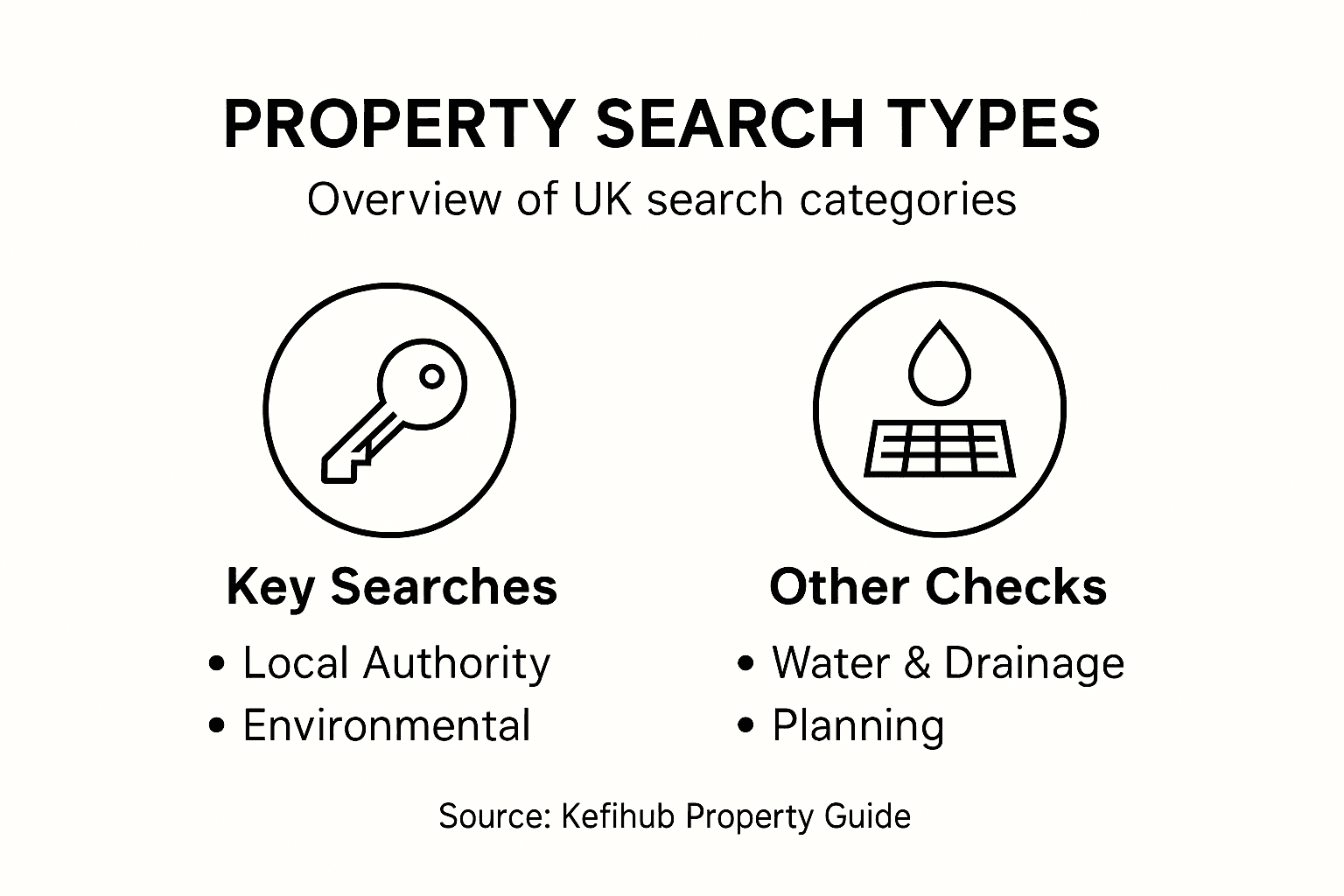
In the United Kingdom, property searches typically involve multiple types of investigations, each revealing different aspects of the property’s history and current status:
- Local Authority Searches: These reveal critical information about planning permissions, building regulations, and potential infrastructure changes
- Environmental Searches: Investigate potential land contamination, flood risks, and environmental hazards
- Land Registry Searches: Confirm official property ownership details and verify legal title
- Drainage and Water Searches: Check connections to public sewerage systems and identify any potential water-related issues
The primary purpose of these searches is to provide buyers with a comprehensive understanding of the property beyond what might be visible during a standard viewing. They help identify potential legal encumbrances, planning restrictions, and environmental considerations that could affect the property’s value or future usability.
Most property searches are conducted by conveyancing solicitors who specialise in gathering and interpreting this complex information. These legal professionals use standardised forms like LLC1 and CON29 to compile detailed reports that highlight any potential issues or restrictions affecting the property.
Property searches are not just a bureaucratic formality – they are a critical step in protecting your investment and avoiding potentially expensive future complications.
Pro tip: Always request a comprehensive search report and carefully review each section with your solicitor to understand any potential implications for your property purchase.
Types of Property Searches and Their Roles
Property searches are intricate investigative processes that provide potential buyers with critical insights into a property’s legal, environmental, and infrastructural landscape. Different types of property searches serve specific purposes, each uncovering unique aspects that could significantly impact a property purchase.
The primary types of property searches in the United Kingdom include:
- Local Authority Searches: Reveal comprehensive information about:
- Planning permissions
- Building regulations
- Potential infrastructure changes
- Conservation area restrictions
- Environmental Searches: Investigate critical environmental factors such as:
- Flood risks
- Land contamination potential
- Potential ecological constraints
- Water and Drainage Searches: Provide detailed insights into:
- Mains water connections
- Sewerage system details
- Potential drainage issues
- Mining Searches: Essential for properties in historical mining regions
- Chancel Repair Liability Searches: Identify potential church repair obligations
Each search type serves a distinct purpose in protecting the buyer’s interests. Local Authority Searches, for instance, can unveil planned road developments, enforcement notices, or conservation area restrictions that might affect property value or future modifications. Environmental Searches help identify potential risks like flood zones or contaminated land that could impact insurance costs or future development potential.
Property searches are not merely bureaucratic procedures, but strategic investigations that can save buyers from potentially expensive future complications.
Most property searches are conducted by conveyancing solicitors who meticulously compile and interpret these comprehensive reports. The depth and breadth of these searches can vary depending on the property’s location, age, and historical context.
To clarify the differences, here’s how the main property search types compare:
| Search Type | Main Focus | Typical Findings | Impact on Buyers |
|---|---|---|---|
| Local Authority | Legal & planning status | Planning permissions, restrictions | Affects renovation, extensions |
| Environmental | Land and flood risks | Contamination, flood zones | May raise insurance costs |
| Water & Drainage | Utilities & connections | Sewerage, water supply status | Can affect plumbing repairs |
| Mining | Subsurface stability | Past mining activity | Risk of subsidence, property value |
| Chancel Liability | Historic church repairs | Legal repair liabilities | Unexpected financial obligations |
Pro tip: Request a comprehensive search report and discuss each finding with your solicitor to fully understand potential implications for your property investment.
How Property Searches Are Carried Out
Property search processes involve a systematic approach to gathering comprehensive information about a property’s legal and physical characteristics. The process typically begins once a property purchase offer has been accepted, with the buyer’s solicitor taking the lead in initiating and coordinating multiple investigative searches.
The property search process generally follows these key stages:
- Initial Instruction: Buyer’s solicitor receives formal instructions to proceed
- Search Compilation: Formal requests are submitted to various authorities
- Information Gathering: Multiple organisations compile detailed reports
- Report Analysis: Solicitor reviews and interprets search findings
- Buyer Consultation: Detailed results are discussed with the potential purchaser
Most property searches involve direct communication with several critical authorities:
- Local Council Departments
- Water and Drainage Companies
- Environmental Protection Agencies
- Land Registry Offices
- Historic Property Record Centres
Each authority provides specific types of information crucial to understanding the property’s complete profile. Local councils, for instance, offer insights into planning permissions, potential infrastructure developments, and any enforcement notices that might affect the property’s future usability.
Property searches are a critical due diligence process that protects buyers from unexpected legal, environmental, and structural complications.
The complexity of these searches can vary significantly depending on the property’s location, age, and historical context. Urban properties might require more extensive environmental and planning searches compared to rural properties, reflecting the diverse challenges different property types present.

Pro tip: Request a comprehensive breakdown of all search results and allocate sufficient time to review each finding carefully with your solicitor.
Legal Requirements and Lender Expectations
Property searches are not just a procedural step, but a critical legal requirement that protects both buyers and mortgage lenders in the United Kingdom. These comprehensive investigations ensure that all parties have complete transparency about the property’s legal status, potential risks, and underlying complexities.
Legal requirements and lender expectations typically encompass several key areas:
- Property Ownership Verification:
- Confirming legal title
- Checking for any outstanding legal claims
- Verifying property boundaries
- Financial Risk Assessment:
- Identifying potential legal encumbrances
- Checking for outstanding charges or restrictions
- Assessing property marketability
- Compliance Checks:
- Planning permission history
- Building regulation compliance
- Environmental and structural constraints
Most mortgage lenders have stringent requirements before approving a property purchase. They typically mandate:
- Comprehensive property search reports
- Independent valuation assessment
- Proof of clear legal title
- Verification of property’s structural integrity
- Environmental risk evaluation
The legal framework surrounding property searches is designed to protect all parties involved in the transaction. Lenders want assurance that their financial investment is secure, while buyers need comprehensive information to make informed decisions.
Mortgage lenders view property searches as a non-negotiable risk management strategy, not merely a bureaucratic formality.
Failure to conduct thorough property searches can result in significant financial and legal consequences. Unidentified issues like restrictive covenants, planning violations, or hidden legal disputes could potentially derail a property purchase or lead to expensive future litigation.
Pro tip: Always engage a professional solicitor who understands the intricate legal requirements and can navigate the complex landscape of property searches effectively.
Key Risks, Costs and Common Pitfalls
Property searches often reveal critical risks that could dramatically impact a buyer’s investment and future property enjoyment. Understanding these potential complications is essential for making informed purchasing decisions and avoiding expensive surprises.
Common risks identified during property searches include:
- Legal Restrictions:
- Conservation area limitations
- Compulsory purchase orders
- Restrictive covenants
- Boundary disputes
- Environmental Hazards:
- Flood zone classifications
- Land contamination
- Soil stability issues
- Historical industrial site concerns
- Financial Implications:
- Potential insurance premium increases
- Reduced property marketability
- Expensive remediation costs
- Potential legal litigation expenses
The financial impact of these risks can be substantial. Buyers might face significant additional costs such as:
- Remediation expenses for environmental issues
- Legal fees for resolving property disputes
- Insurance premium loading
- Reduced property value
- Potential mandatory upgrade requirements
Most property searches uncover issues that range from minor inconveniences to major deal-breakers. Some discoveries might require extensive investigations or legal interventions, potentially delaying or preventing a property transaction.
Below is a summary of common issues from property searches and their typical cost implications:
| Issue Found | Potential Cost Impact | Buyer Action Required |
|---|---|---|
| Flood risk identified | Increased insurance premiums | Seek specialist insurance |
| Land contamination | Remediation cost, value loss | Environmental survey needed |
| Boundary dispute | Legal fees, time delays | Engage property solicitor |
| Restrictive covenant | Limits property use | Consider alternative properties |
| Unregistered title | Legal risk, transaction halt | Registration and searches needed |
Comprehensive property searches are not an expense, but a critical investment in protecting your financial future.
Unidentified risks can lead to long-term financial and legal complications. Issues like undisclosed planning restrictions, environmental contamination, or complex legal encumbrances could transform what seems like an attractive property investment into a potential financial nightmare.
Pro tip: Always budget for unexpected findings during property searches and maintain a contingency fund to address potential remediation or legal requirements.
Make Informed Property Decisions with Expert Guidance
Navigating the complexities of property searches in the UK can feel overwhelming due to legal restrictions, environmental risks, and hidden financial liabilities. If you want to avoid costly surprises and understand terms like Local Authority Searches or Drainage and Water Searches with confidence, expert insights are essential. At KefiHub, we offer practical advice that turns complicated property information into clear, actionable knowledge.

Explore our Property Archives – Kefihub for detailed articles that will help you identify potential issues before committing to a purchase. For deeper understanding of legal intricacies involved in property transactions, visit our Legal Archives – Kefihub. Start empowering your property journey today by visiting KefiHub and gain the confidence to protect your investment from unforeseen risks.
Frequently Asked Questions
What are property searches in the UK?
Property searches are investigations into a property’s legal and physical characteristics, designed to uncover important information that could influence a buyer’s investment decision.
Why are property searches necessary?
Property searches help identify potential risks, restrictions, and legal complications associated with a property, providing buyers with comprehensive information that goes beyond a standard viewing.
What types of searches are typically conducted?
Common types of property searches include Local Authority Searches, Environmental Searches, Water and Drainage Searches, Mining Searches, and Chancel Repair Liability Searches, each focusing on specific aspects of the property.
How are property searches carried out?
The property search process typically involves the buyer’s solicitor submitting requests to various authorities, gathering information, analysing reports, and consulting with the buyer to discuss findings.
Recommended
- Legal Jargon Explained – How It Shapes Your First Home – Kefihub
- How to Find Reliable Legal Advice for UK Homebuyers – Kefihub
- Property Investment Guide UK: Secure Your First Buy – Kefihub
- Property Investment Guide UK: Secure Your First Buy – Kefihub
- The Benefits of Having a UK Phone Number for Individuals Abroad Selling or Letting Properties