


{
“@type”: “Article”,
“image”: “https://csuxjmfbwmkxiegfpljm.supabase.co/storage/v1/object/public/blog-images/organization-8865/1764583570084_image_1764583569989.png”,
“author”: {
“url”: “https://kefihub.co.uk”,
“name”: “Kefihub”,
“@type”: “Organization”
},
“@context”: “https://schema.org”,
“headline”: “How to Avoid Common Business Mistakes for UK Professionals”,
“imageAlt”: “UK professionals reviewing business risks in meeting room”,
“publisher”: {
“url”: “https://kefihub.co.uk”,
“name”: “Kefihub”,
“@type”: “Organization”
},
“inLanguage”: “en”,
“articleBody”: “Follow this step-by-step guide on how to avoid common business mistakes, with clear actions to protect your business and achieve confident decision-making.”,
“description”: “Follow this step-by-step guide on how to avoid common business mistakes, with clear actions to protect your business and achieve confident decision-making.”,
“datePublished”: “2025-12-01T10:06:31.657Z”
}
Over one third of british small businesses face costly setbacks each year due to unexpected legal, financial, or operational errors. For anyone aiming to build a stable business in the UK, missing just one critical step can lead to severe penalties or lost profits. With risks lurking in compliance, process management, and documentation, smart british entrepreneurs are searching for straightforward strategies to avoid mistakes and secure long term success.
Table of Contents
- Step 1: Identify Potential Legal And Financial Pitfalls
- Step 2: Assess Your Business Processes For Common Errors
- Step 3: Implement Robust Checks And Documentation
- Step 4: Consult Professional Guidance When Needed
- Step 5: Monitor And Review Outcomes Regularly
Quick Summary
| Key Message | Explanation |
|---|---|
| 1. Identify legal and financial risks | Regularly review your business’s legal and financial aspects to avoid costly mistakes and ensure compliance with regulations. |
| 2. Assess and refine business processes | Conduct audits of workflows to identify inefficiencies, ensuring operational efficiency and reducing potential risks. |
| 3. Implement robust documentation controls | Create comprehensive documentation and internal controls to protect sensitive business information from errors and misuse. |
| 4. Seek professional guidance strategically | Establish relationships with industry experts to navigate complex challenges and avoid costly mistakes through informed decision-making. |
| 5. Monitor performance and adjust regularly | Regularly assess business performance and adapt strategies based on insights to improve operations and achieve objectives. |
Step 1: Identify potential legal and financial pitfalls
Understanding the legal and financial landscape is critical for protecting your business from costly mistakes. When launching or managing a UK enterprise, you must proactively recognise potential risks that could derail your success. Business insurance represents one fundamental protection mechanism against unexpected challenges.
The Open University Business School warns that neglecting legal requirements can result in severe consequences, including potential fines, lawsuits, or even complete business closure. Key areas to scrutinise include business registration, industry specific regulations, and robust intellectual property protection. Many entrepreneurs underestimate the complexity of regulatory compliance, which can expose them to significant financial and legal vulnerabilities.
To mitigate risks effectively, conduct a comprehensive review of your business structure, ensuring you understand all mandatory registrations and regulatory obligations. This means registering with Companies House, understanding tax responsibilities, and obtaining necessary licences for your specific industry. Professional legal consultation can provide tailored advice, helping you navigate the intricate landscape of UK business regulations and preventing potentially devastating financial penalties.
Remember: prevention is always more cost effective than dealing with legal challenges after they emerge. A proactive approach to identifying potential pitfalls will strengthen your business foundation and provide peace of mind as you grow.
Step 2: Assess your business processes for common errors
Understanding and refining your business processes is crucial for maintaining operational efficiency and avoiding potential pitfalls. Business process management requires a systematic approach to identifying and mitigating operational risks that could impact your company’s performance and bottom line.

Start by conducting a comprehensive audit of your current workflows, examining each critical business function for potential inefficiencies or compliance gaps. Pay close attention to areas such as financial reporting, customer service, inventory management, and regulatory documentation. The UK government’s Business Perceptions Survey highlights operational costs and regulatory compliance as significant challenges, making it essential to scrutinise every aspect of your business processes.
Implement a continuous improvement strategy that involves regular process reviews and feedback loops. This might include creating standardised checklists, establishing clear performance metrics, and developing robust quality control mechanisms. Consider engaging external consultants or using specialised process mapping tools to gain objective insights into your operational strengths and weaknesses. By proactively identifying and addressing potential errors, you can streamline your operations, reduce unnecessary costs, and create a more resilient business framework.
Remember that effective process assessment is an ongoing journey. Stay adaptable, remain open to change, and continuously seek opportunities to refine and optimise your business operations.
Step 3: Implement robust checks and documentation
Establishing comprehensive internal controls and documentation is critical for protecting your business from potential risks and ensuring operational integrity. Crime and fraud prevention requires a systematic approach to documenting, tracking, and securing your business processes.
Begin by developing a comprehensive documentation strategy that covers all critical business functions. This includes creating detailed records of financial transactions, client interactions, inventory management, and regulatory compliance. The UK government guidelines emphasise the importance of establishing clear access protocols and maintaining rigorous control over corporate documents. Implement secure digital filing systems with restricted access, ensuring that sensitive information is protected from potential misuse or unauthorised access.
Develop a structured approach to document management by creating standardised templates, establishing clear version control procedures, and implementing regular audit trails. Consider investing in secure document management software that provides encryption, backup, and access tracking features. Train your team on the importance of documentation accuracy, confidentiality, and proper information handling. By creating a culture of meticulous record keeping and implementing robust verification processes, you can significantly reduce the risk of errors, fraud, and potential legal complications.
Remember that effective documentation is an ongoing process. Regularly review and update your documentation protocols to ensure they remain current, comprehensive, and aligned with your business’s evolving needs.
Step 4: Consult professional guidance when needed
Recognising when to seek expert advice is a critical skill for protecting your business from potential financial and legal complications. Professional bookkeeping support can provide invaluable insights into managing complex financial challenges and optimising your business operations.
Develop a proactive approach to professional consultation by identifying key areas where external expertise can add significant value. This might include financial planning, tax strategy, legal compliance, or specialised industry regulations. Consider establishing relationships with trusted professionals such as chartered accountants, legal advisers, and industry consultants who understand the nuanced challenges specific to your business sector. Prioritise experts with demonstrable experience in your particular field, as their targeted knowledge can help you navigate complex regulatory landscapes and strategic decision making.
Create a structured framework for professional consultations by scheduling regular review sessions and maintaining clear communication channels. Be prepared to share comprehensive business documentation and be open to constructive feedback. While professional guidance comes with a financial investment, the potential savings from avoiding costly mistakes far outweigh the initial consultation fees. Treat these interactions as strategic partnerships that contribute to your business’s long term resilience and growth.
Remember that seeking professional advice is not a sign of weakness but a mark of strategic wisdom and commitment to your business’s success.
Step 5: Monitor and review outcomes regularly
Continuous evaluation of your business performance is fundamental to long term success and adaptability. Business regulation insights reveal that proactive monitoring helps organisations navigate regulatory challenges and identify potential improvements before they become significant obstacles.
Establish a structured review process that includes regular performance assessments across all key business functions. This means setting clear key performance indicators (KPIs), tracking metrics systematically, and creating comprehensive reporting mechanisms. Implement quarterly reviews that examine financial performance, operational efficiency, compliance status, and strategic alignment. Pay special attention to areas such as cash flow, customer satisfaction, process efficiency, and regulatory adherence. Use a combination of quantitative data and qualitative feedback to build a holistic understanding of your business performance.
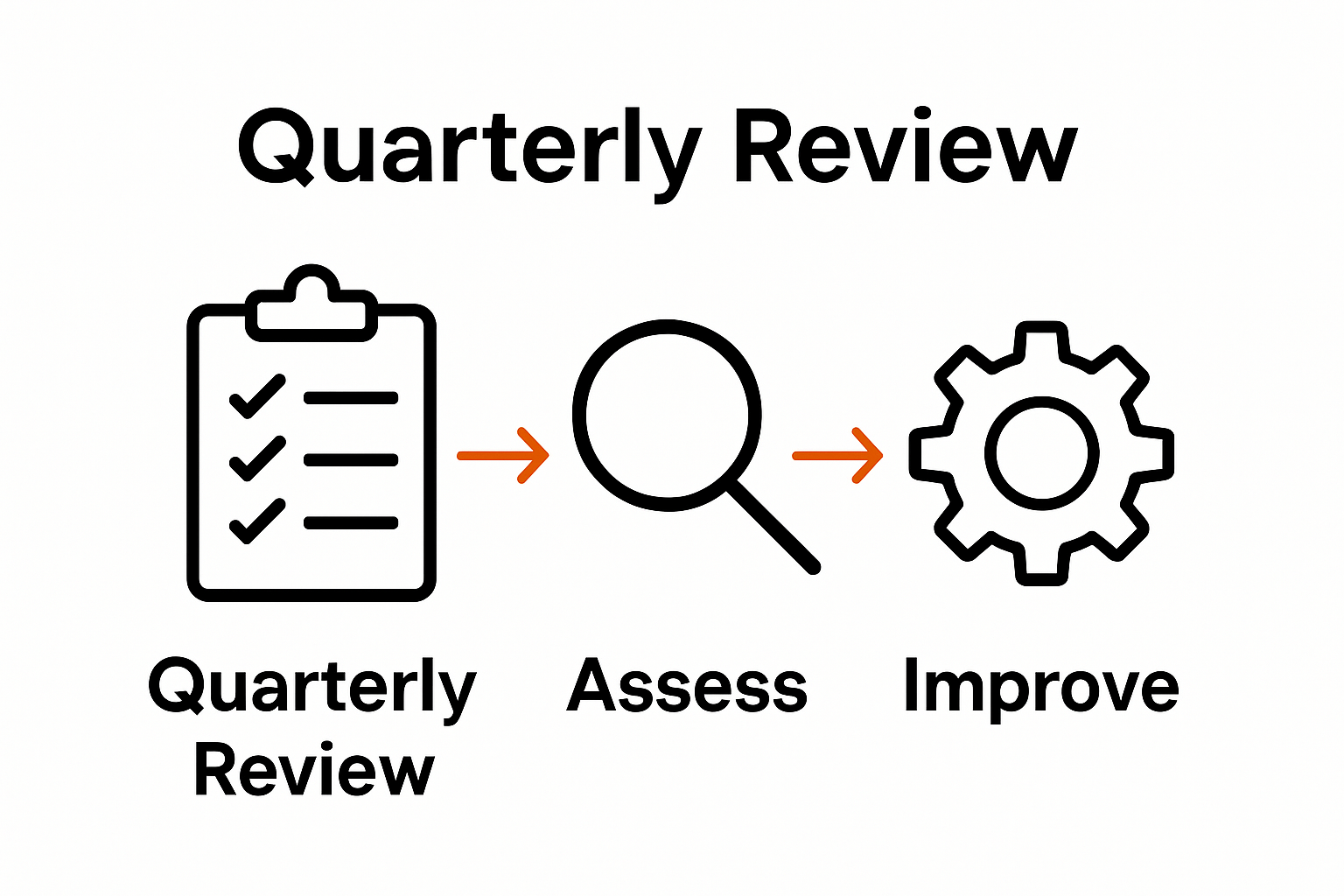
Develop a culture of continuous improvement by treating each review as an opportunity for strategic refinement. Create actionable insights from your monitoring efforts, identifying trends, addressing potential risks, and celebrating successful strategies. Be prepared to make swift adjustments based on your findings, recognising that flexibility and responsiveness are key competitive advantages. Utilise digital tools and reporting software to streamline your monitoring processes, ensuring you can quickly analyse complex data and make informed decisions.
Remember that effective monitoring is not about perfection but about consistent, incremental progress towards your business objectives.
Strengthen Your UK Business by Avoiding Common Mistakes Today
Facing legal and financial pitfalls or struggling with complex business processes can create stress and uncertainty for any UK professional. This article highlights the importance of proactive risk management, robust documentation, and seeking professional advice to secure your business’s future. Avoid costly errors by understanding your obligations and continuously improving operational efficiency.
Discover practical solutions and insightful guidance tailored specifically for your challenges in our Business Archives – Kefihub.

Take control of your business success with trusted expertise from KefiHub. Explore actionable advice in our Legal Archives – Kefihub to stay compliant and protected. Don’t wait for risks to become realities. Visit us now for clear, reliable knowledge that empowers you to build a resilient and thriving UK business.
Frequently Asked Questions
What are common legal pitfalls UK professionals should avoid?
Understanding and addressing legal obligations is crucial for UK professionals. Avoid facing fines or lawsuits by ensuring you register your business appropriately, comply with industry regulations, and protect your intellectual property. Review your legal requirements at least once a year to stay compliant.
How can I identify inefficiencies in my business processes?
Conduct a thorough audit of your current workflows to pinpoint inefficiencies. Focus on critical areas such as financial reporting and customer service, then develop a strategy to address any gaps you discover. Aim to implement changes within the next quarter to improve operational effectiveness.
What documentation should I maintain to prevent fraud?
Maintain detailed and accurate records of all financial transactions, customer interactions, and compliance-related activities. Establish robust filing systems with restricted access to sensitive information. Review and update your documentation protocols regularly to ensure comprehensive protection against fraud.
When should I seek professional guidance for my business?
Seek professional advice whenever you face complex financial or legal challenges. For example, if tax regulations become difficult to navigate, consult with a chartered accountant. Schedule regular check-ins with advisors to enhance your decision-making and long-term success.
How often should I review my business performance?
Regular performance reviews are vital for sustained success. Implement a structured process to assess your business quarterly, focusing on key performance indicators like cash flow and regulatory compliance. Make adjustments based on your findings to foster continuous improvement.
What steps can I take to improve my business’s operational efficiency?
Establish a culture of continuous improvement by routinely assessing your business processes. Create standardised checklists and performance metrics to streamline workflows. Aim to identify and address at least one operational inefficiency every month for ongoing enhancement.
Recommended
- 7 Essential Small Business Tax Tips Every UK Owner Needs – Kefihub
- What Is Business Insurance? Complete UK Overview – Kefihub
- 7 Key Types of Business Structures UK Professionals Must Know – Kefihub
- 7 UK Business Growth Strategy Mistakes (How to Fix Before 2026)