

{
“@type”: “Article”,
“image”: {
“url”: “https://csuxjmfbwmkxiegfpljm.supabase.co/storage/v1/object/public/blog-images/organization-8865/1770861727707_image.png”,
“@type”: “ImageObject”,
“caption”: “Founders reviewing checklist in London office”
},
“author”: {
“url”: “https://kefihub.co.uk”,
“name”: “Kefihub”,
“@type”: “Organization”
},
“@context”: “https://schema.org”,
“headline”: “Company Setup Checklist for UK Business Success”,
“publisher”: {
“url”: “https://kefihub.co.uk”,
“name”: “Kefihub”,
“@type”: “Organization”
},
“inLanguage”: “en-US”,
“articleBody”: “Follow this company setup checklist for a clear, step-by-step guide to launching your UK business correctly and avoiding costly legal pitfalls.”,
“description”: “Follow this company setup checklist for a clear, step-by-step guide to launching your UK business correctly and avoiding costly legal pitfalls.”,
“datePublished”: “2026-02-12T02:02:37.879Z”
}
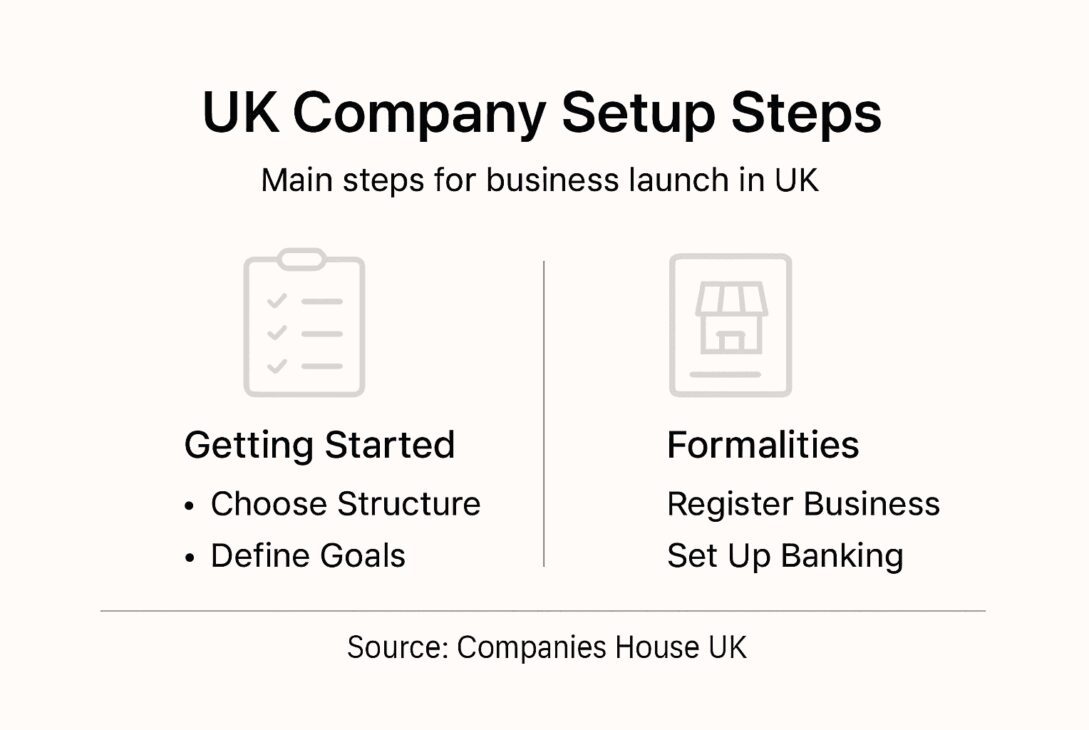
Setting up a company in the United Kingdom often means wading through unfamiliar paperwork while second-guessing each decision. Getting your legal structure right can be the difference between personal financial risk and protection for your family’s assets. This practical checklist simplifies each critical stage, highlighting how your business structure shapes everything from tax to liability, so you can launch your venture on solid legal ground and avoid costly errors.
Table of Contents
- Step 1: Define Your Company Structure And Objectives
- Step 2: Register Your Business With Companies House
- Step 3: Obtain Necessary Licences And Permissions
- Step 4: Set Up Business Banking And Financial Records
- Step 5: Verify Compliance And Complete Essential Filings
Quick Summary
| Key Point | Explanation |
|---|---|
| 1. Choose the right business structure | Select a structure that aligns with your goals to manage tax, liability, and efficiency. |
| 2. Complete Companies House registration | Registering your business legally is essential for operation and protects your assets. |
| 3. Research and obtain necessary licences | Ensure compliance with local regulations to avoid fines and ensure smooth operation. |
| 4. Set up a dedicated business bank account | A separate account keeps finances organised and complies with legal requirements. |
| 5. Maintain regulatory compliance | Regularly file required documents to avoid penalties and keep your business status active. |
Step 1: Define your company structure and objectives
Starting a business requires making strategic decisions about how you’ll legally organise and structure your enterprise. Your initial choices will impact everything from taxation to personal liability, so it’s crucial to select the right framework for your specific goals.
When determining your business structure, you’ll want to carefully consider several key factors. The UK government guidance on business structures highlights three primary options for entrepreneurs:
- Sole Trader: Perfect for individual operators wanting minimal paperwork
- Partnership: Ideal for businesses with multiple owners sharing responsibilities
- Limited Company: Best for those seeking stronger asset protection
Each structure carries distinct advantages and potential limitations. A sole trader setup provides maximum control but leaves you personally responsible for all business debts. In contrast, a limited company creates a separate legal entity, which means your personal assets remain protected if the business encounters financial challenges.
Here is a comparison of common UK business structures and their impact on ownership, liability, and scalability:
| Structure | Ownership Type | Liability | Scalability Potential |
|---|---|---|---|
| Sole Trader | Single individual | Unlimited personal | Limited, tied to individual |
| Partnership | Two or more owners | Shared personal | Moderate, team dependent |
| Limited Company | Shareholders | Limited to investment | High, suits growth & investment |
Matching your business structure to your long-term objectives is more important than choosing the cheapest or easiest option.
To make an informed decision, ask yourself these critical questions:
- How much personal financial risk am I willing to accept?
- Do I want flexibility or more robust legal protection?
- What are my projected revenue and growth expectations?
- Will I need external investment in the future?
Carefully mapping out your business objectives will help guide your structural decisions. Consider consulting with a professional accountant or business advisor who can provide tailored guidance for your specific circumstances.
Pro tip: Always maintain flexibility in your initial structure, as your business model might evolve significantly during the first few years of operation.
Step 2: Register your business with Companies House
Registering your business with Companies House is a critical step in establishing your legal business entity in the United Kingdom. By officially registering your company online, you’ll transform your business idea into a legitimate legal structure.
For limited companies, the registration process involves several key steps:
- Verify your personal identity: Prepare government-approved identification documents
- Choose a unique company name: Ensure it’s not already registered with Companies House
- Appoint directors and shareholders: Determine initial company leadership
- Prepare required documentation: Draft memorandum and articles of association
- Pay the registration fee: Complete the financial requirement for registration
A properly registered company provides legal protection and credibility for your business venture.
The registration process typically involves these detailed actions:
- Create a user account on the Companies House website
- Select your company structure (most likely a private limited company)
- Enter precise company details and director information
- Submit your registration documents electronically
- Pay the standard registration fee (currently around £12)
Most limited company registrations are processed within 24 hours, providing you with a certificate of incorporation that allows you to start trading, open a business bank account, and officially launch your enterprise.

Remember that different business structures have varying registration requirements. While limited companies must register with Companies House, sole traders instead need to register for Self Assessment with HMRC. Always consult professional advice to ensure you’re following the correct legal procedures for your specific business model.
Pro tip: Double-check all submitted information for accuracy, as errors can delay your registration process and potentially incur additional administrative costs.
Step 3: Obtain necessary licences and permissions
Navigating the complex world of business licences is crucial for establishing a legally compliant operation in the United Kingdom. UK business licence requirements vary significantly depending on your industry, location, and specific business activities.
Different business types require distinct sets of permissions and approvals:
- Hospitality businesses: Food hygiene and alcohol sale licences
- Professional services: Industry-specific regulatory approvals
- Retail establishments: Trading permits and local council permissions
- Construction companies: Health and safety certifications
- Food businesses: Food premises registration
Not all businesses require the same licences, but most need at least some form of official permission to operate legally.
To determine your specific licensing needs, follow these systematic steps:
- Identify your specific industry and business activities
- Contact your local council for location-specific requirements
- Research national regulatory bodies in your sector
- Compile all necessary documentation
- Submit applications with required fees
Some general rules apply across most business types. You’ll typically need to demonstrate:
- Compliance with health and safety regulations
- Proof of professional qualifications
- Valid insurance coverage
- Criminal record checks (for certain sectors)
Remember that licensing is not just a bureaucratic hurdle. These permissions protect consumers, ensure professional standards, and add credibility to your business.
Pro tip: Create a dedicated folder to organise all your licence applications and supporting documents, making future renewals and inspections much smoother.
Step 4: Set up business banking and financial records
Establishing a robust financial foundation is crucial for your business’s long-term success. Setting up a business bank account is not just a recommendation, but a legal requirement for limited companies in the United Kingdom.
When choosing your business banking solution, consider these essential factors:
- Account types: Business current accounts, savings accounts, merchant services
- Bank selection: Traditional high street banks versus digital banking platforms
- Transaction capabilities: Online banking, mobile app functionality
- Fee structures: Monthly charges, transaction fees, overdraft options
- Additional services: Business credit facilities, financial management tools
A well-chosen business bank account is your financial command centre, enabling smooth monetary operations and regulatory compliance.
To set up your business banking effectively, follow these systematic steps:
- Gather all necessary company documentation
- Compare business account offerings from multiple banks
- Schedule appointments with preferred banking institutions
- Complete detailed application processes
- Set up online banking and additional financial services
Key documents you’ll typically need include:
- Certificate of incorporation
- Proof of company address
- Director identification documents
- Detailed business plan
- Initial financial projections
Beyond just opening an account, focus on establishing solid financial record-keeping practices. This means maintaining accurate transaction records, separating personal and business expenses, and preparing for regular financial reporting and potential tax assessments.
Pro tip: Consider using accounting software that integrates directly with your business bank account to streamline financial tracking and reporting.
Step 5: Verify compliance and complete essential filings
Navigating the complex world of regulatory compliance is a critical responsibility for UK business owners. Companies House guidance outlines the essential filing requirements that every limited company must complete to remain legally operational.
Key compliance documents and annual submissions include:
- Annual accounts: Detailed financial statements
- Confirmation statements: Company status and structure updates
- Corporation tax returns: Comprehensive tax reporting
- Director information: Changes in leadership and contact details
- Registered office address: Any modifications to official company address
Timely and accurate filing is not optional – it’s a legal obligation with significant consequences for non-compliance.
To ensure comprehensive compliance, follow these systematic steps:
- Create a compliance calendar with all key deadlines
- Maintain meticulous financial and administrative records
- Prepare documents well in advance of submission dates
- Use official online filing platforms
- Double-check all information before submission
Important considerations for each filing include:
- Accuracy: Verify every detail before submission
- Timeliness: Meet all statutory deadlines
- Completeness: Include all required documentation
- Digital readiness: Ensure secure online filing capabilities
- Professional support: Consider accounting or legal consultation
Remember that even dormant companies must complete annual filings. Late or missed submissions can result in substantial financial penalties and potential company strike-off.
This table summarises key compliance filings for limited companies and their main consequences for non-compliance:
| Filing Type | Main Purpose | Consequence of Missing Deadline |
|---|---|---|
| Annual Accounts | Report financial position | Fines, company strike-off |
| Confirmation Statement | Update company details | Penalties, possible legal action |
| Corporation Tax Return | Fulfil tax obligations | Interest on tax owed, HMRC investigation |
Pro tip: Set up automated reminders at least two months before each filing deadline to ensure you never miss a critical submission.
Prepare Your UK Business for Success with Expert Guidance
Launching a company in the United Kingdom presents clear challenges such as choosing the right legal structure, meeting strict licensing obligations and ensuring ongoing compliance. This article’s detailed checklist highlights pain points including managing liability, navigating registration with Companies House and maintaining essential financial records. Finding reliable support focused on practical UK business realities can eliminate uncertainty and help you avoid costly mistakes.
Explore Business Archives – Kefihub for straightforward insights tailored to these challenges alongside trusted advice on UK legal requirements in our Legal Archives – Kefihub.

Start turning your business ambitions into a reality today by accessing clear, actionable guidance at KefiHub. Visit our platform now to stay ahead with expert commentary and real-world stories designed especially for ambitious UK professionals ready to take the next step.
Frequently Asked Questions
What are the key steps in the Company Setup Checklist for UK Business Success?
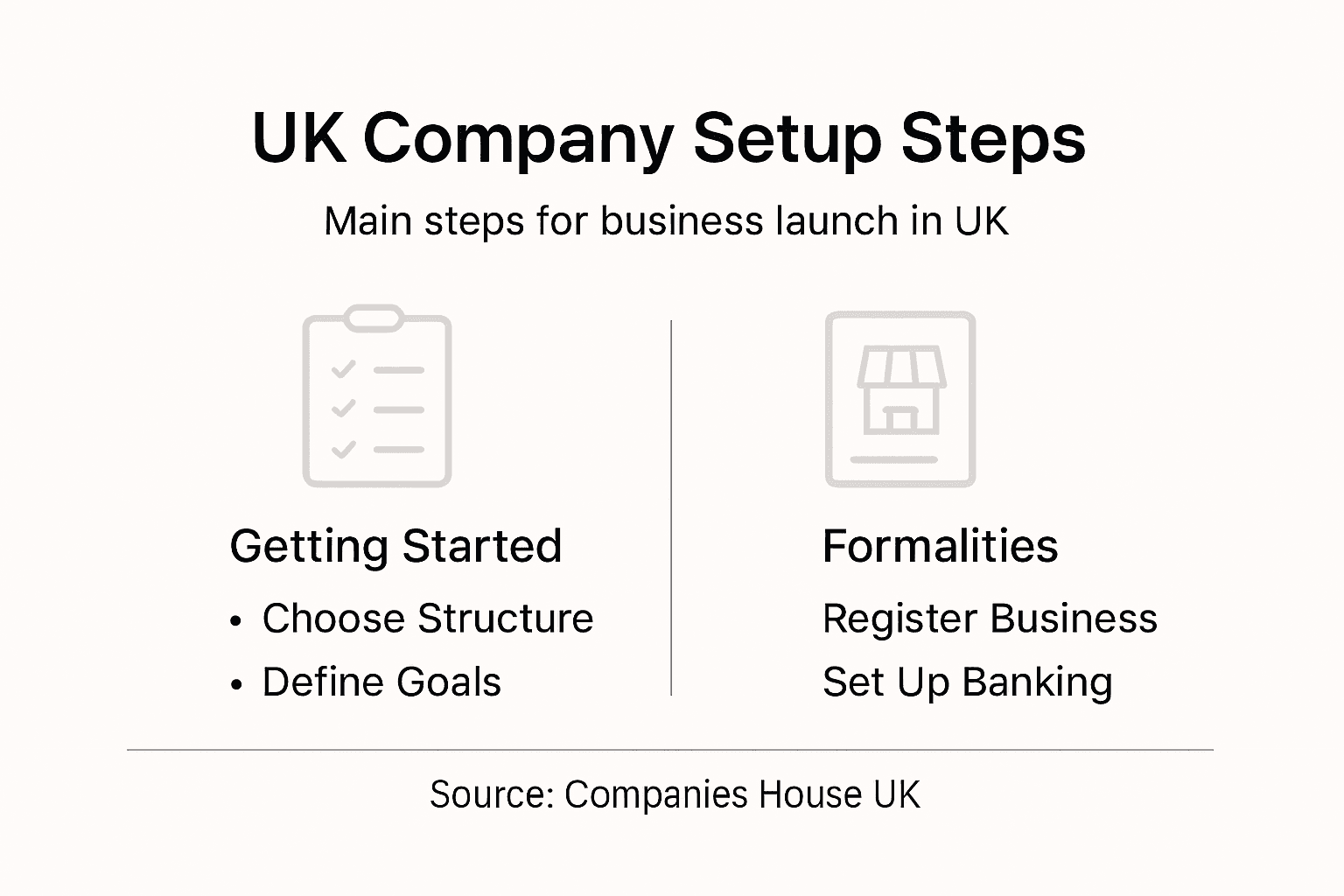
Establish your business structure, register with Companies House, obtain necessary licences, set up a business bank account, and ensure compliance with filing requirements. Start by defining your company structure based on your objectives and risk tolerance.
How do I choose the right business structure for my new company?
Consider the trade-offs between control, personal liability, and scalability when selecting your company structure. Assess options such as Sole Trader, Partnership, or Limited Company based on your specific goals and long-term plans.
What documentation do I need to register my business with Companies House?
Prepare your identification, choose a unique company name, appoint directors, draft necessary documentation, and prepare to pay the registration fee. Gather your memorandum and articles of association before you start the registration process online.
How can I identify the appropriate licences and permissions for my business?
Research your industry and consult with local authorities to understand the specific licensing requirements. Create a checklist of the necessary documents and approvals needed based on your business activities.
What records should I maintain for financial compliance?
Keep accurate financial records, including all transactions, invoices, and supporting documents for your business activities. Set up a system for regular financial reporting, which will aid during tax assessments and compliance filings.
How can I stay on top of filing requirements and deadlines for my business?
Create a compliance calendar that outlines all key deadlines for submissions such as annual accounts and tax returns. Schedule reminders well in advance to ensure you meet all legal obligations and avoid penalties.
Recommended
- Company Formation Explained: Key Steps for UK SMEs – Kefihub
- Company Formation Explained: Key Steps for UK SMEs – Kefihub
- Business Registration Step by Step for UK Owners – Kefihub
- 7 Key Types of Business Structures for UK Small Firms – Kefihub
- 7 Steps for an Effective Business Development Checklist