


Finding practical ways to keep your business efficient, agile, and competitive can feel challenging when every new technology promises big results. For UK small business owners, the shift towards digital transformation is about more than technical upgrades—it is a profound organisational change that lets you rethink how you operate and deliver value. This guide cuts through misconceptions and jargon to help you understand continuous adaptation and the true impact of digital transformation, providing actionable steps for lasting improvement.
Table of Contents
- What Digital Transformation Means Today
- Key Areas and Technology for SMEs
- Practical Benefits and Common Misconceptions
- Critical Legal Requirements for UK Businesses
- Typical Risks, Costs and Mistakes to Avoid
Key Takeaways
| Point | Details |
|---|---|
| Holistic Approach Required | Effective digital transformation goes beyond technology; it necessitates cultural, process, and strategic changes within the organisation. |
| Ongoing Process | Digital transformation is not a one-off project but a continuous journey that requires adaptability and innovation. |
| Legal Compliance is Critical | SMEs must ensure compliance with data protection, cybersecurity, and other legal requirements as part of their digital transformation strategy. |
| Incremental Implementation is Key | Starting with small, targeted initiatives allows SMEs to build capability and confidence without overwhelming resources. |
What Digital Transformation Means Today
Digital transformation represents far more than simply adopting new technologies—it’s a fundamental reimagining of how businesses operate and deliver value in an increasingly connected world. Strategic shifts are driving profound organisational changes, moving beyond superficial technological upgrades to deep, systemic transformations.
At its core, digital transformation encompasses multiple interconnected dimensions:
- Cultural change within organisations
- Reimagining customer and employee experiences
- Redesigning business processes and operational models
- Integrating advanced digital technologies strategically
Today’s digital transformation goes well beyond digitisation—it represents a holistic approach to leveraging technological innovations. Continuous adaptation is now critical for maintaining competitive advantage, requiring businesses to develop dynamic capabilities that enable rapid technological integration and organisational learning.
Modern digital transformation typically progresses through three key evolutionary stages:
- Digitisation: Converting analog information into digital formats
- Digitalization: Using digital technologies to improve existing processes
- Digital Transformation: Fundamentally reinventing business models and strategies
Successful digital transformation demands more than technological investment—it requires a comprehensive approach that aligns technological capabilities with strategic organisational objectives. Business leaders must cultivate a culture of continuous innovation, encourage digital literacy, and develop flexible technological infrastructures that can rapidly adapt to emerging technological trends.
The following table summarises how core aspects of digital transformation contribute to business success for UK SMEs:
| Transformation Aspect | Main Focus | Typical Business Impact | Example Outcome |
|---|---|---|---|
| Cultural Change | Shifting mindsets and practices | Higher employee adaptability | Faster adoption of innovations |
| Customer Experience | Enhancing interactions and value | Improved customer loyalty | Increased repeat sales |
| Process Redesign | Streamlining workflows | Greater efficiency and accuracy | Reduced process costs |
| Strategic Technology Integration | Aligning tech with goals | Sustained competitiveness | Quicker response to market changes |
Pro tip: Conduct a comprehensive digital readiness assessment before launching transformation initiatives to identify potential gaps and strategic opportunities.
Key Areas and Technology for SMEs
Digital transformation for UK small businesses demands a strategic approach to technological integration that goes far beyond simple tool adoption. SMEs require structured digital capability frameworks to effectively navigate technological challenges and unlock competitive advantages.
Critical technological areas for SME digital transformation include:
- Cloud computing solutions for scalable infrastructure
- Customer relationship management (CRM) platforms
- Advanced resource planning systems
- Artificial intelligence and machine learning tools
- Cybersecurity and data protection technologies
Digital maturity strategies are essential for sustainable business growth, enabling SMEs to develop robust technological capabilities that align with their specific business objectives. This approach involves incremental implementation, continuous learning, and adaptive technological investments.
Successful digital transformation requires SMEs to address several key capability dimensions:
- Digital literacy across organisational teams
- Strategic technology selection
- Continuous skills development
- Agile implementation methodologies
- Regular performance monitoring
By embracing a holistic approach to digital adoption, UK SMEs can transform technological challenges into opportunities for innovation, efficiency, and market differentiation. The goal is not just technological implementation, but creating a dynamic, digitally-enabled organisational culture that can rapidly adapt to emerging business landscapes.

Pro tip: Prioritise digital skills training alongside technological investments to ensure your team can effectively leverage new digital tools and platforms.
Practical Benefits and Common Misconceptions
Digital transformation offers significant productivity gains for small and medium enterprises, challenging traditional assumptions about technological investment. Contrary to popular belief, digital transformation is not a prohibitively expensive or disruptive process, but a strategic approach to enhancing business capabilities.
Key practical benefits for SMEs include:
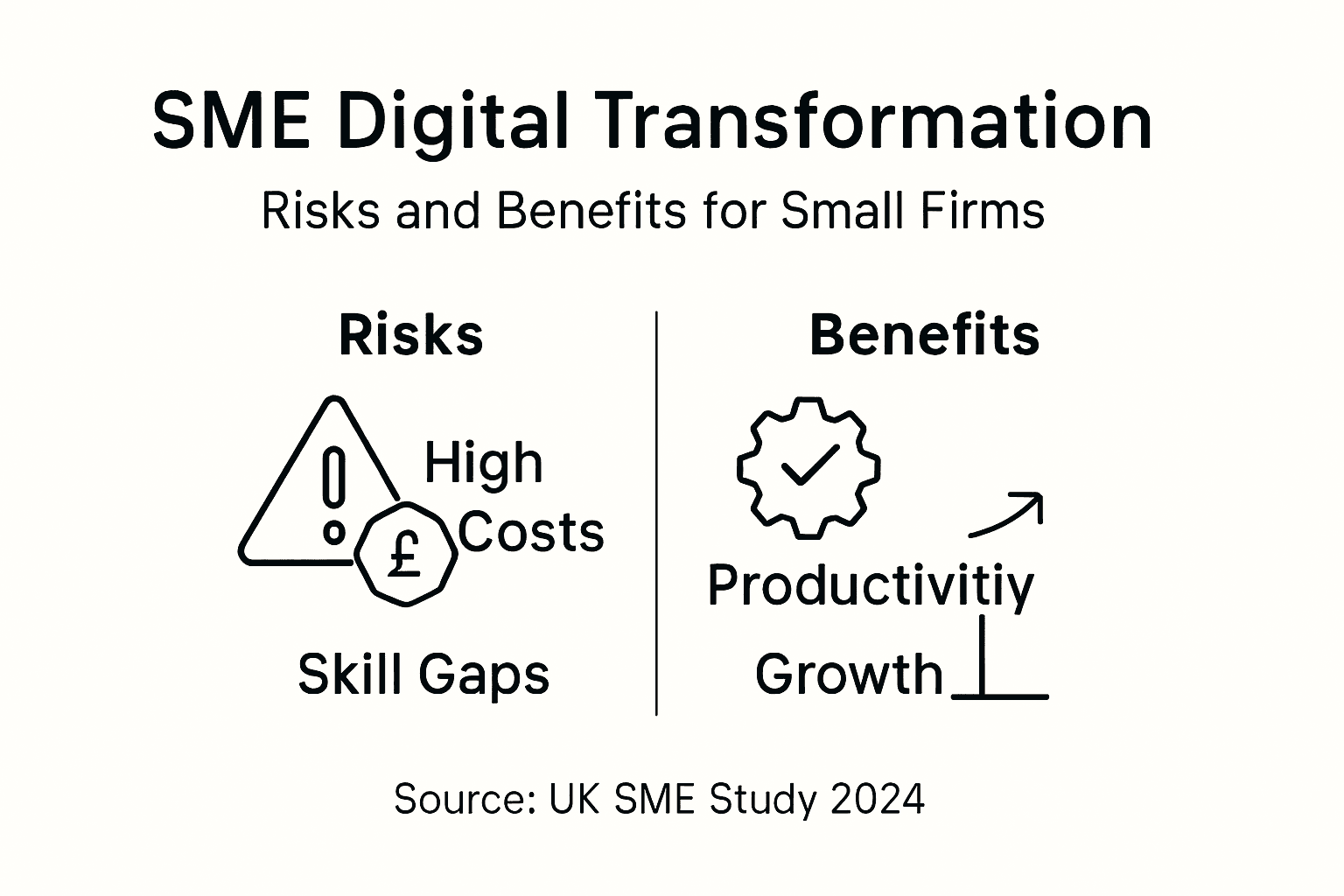
- Productivity increases of 7-18% per technology adopted
- Streamlined operational processes
- Enhanced customer engagement capabilities
- Improved data-driven decision making
- Reduced operational costs
- Increased competitive market positioning
Digital transformation involves more than technological upgrades, representing a fundamental reimagining of organisational processes and culture. Many SMEs mistakenly view digital transformation as a one-time project, when in reality, it’s an ongoing journey of continuous improvement and adaptation.
Common misconceptions about digital transformation can prevent businesses from realising their full potential:
- Myth: Digital transformation is only for large corporations
- Myth: It requires massive, expensive IT projects
- Myth: Technology alone can solve business challenges
- Myth: Digital transformation is purely a technical endeavour
Successful digital transformation requires a holistic approach that integrates technology, people, and processes. By understanding these nuanced realities, UK SMEs can develop more effective, sustainable digital strategies that drive genuine business value and organisational resilience.
This table distinguishes frequent misconceptions from the realistic requirements of SME digital transformation:
| Common Misconception | Actual Requirement | Impact if Unaddressed |
|---|---|---|
| Only large firms benefit | Suitable for all business sizes | Missed innovation opportunities |
| Needs massive investment | Incremental, tailored spending | Resource constraints worsen |
| Technology alone suffices | People and process integration | Poor adoption and utilisation |
| One-off project | Ongoing, iterative effort | Limited long-term benefits |
Pro tip: Start with small, incremental digital initiatives that address specific business challenges, rather than attempting comprehensive transformation all at once.
Critical Legal Requirements for UK Businesses
Digital transformation requires comprehensive legal compliance for UK small businesses navigating technological change. Understanding the complex legal landscape is crucial to mitigating risks and ensuring sustainable digital growth.
Key legal considerations for digital transformation include:
- Data protection regulations
- Cybersecurity compliance standards
- Intellectual property rights management
- E-commerce legal requirements
- Digital communication transparency
- Customer consent and privacy protocols
UK SMEs must implement robust legal frameworks that protect both business interests and customer data. This involves more than simple checklist compliance—it requires a strategic approach to understanding and integrating legal requirements into digital strategies.
Critical legal compliance areas demand specific attention:
- GDPR data handling protocols
- Secure information management
- Transparent digital communication
- Intellectual property protection
- Consent management systems
By proactively addressing these legal dimensions, UK SMEs can create a solid foundation for digital transformation that balances innovation with regulatory adherence. The goal is not just avoiding penalties, but building trust and demonstrating professional commitment to ethical digital practices.
Pro tip: Consult a specialised digital law professional to conduct a comprehensive legal audit of your digital transformation strategy.
Typical Risks, Costs and Mistakes to Avoid
Digital transformation failures stem from systematic challenges that extend far beyond simple technological implementation. Understanding these potential pitfalls is crucial for UK small businesses seeking sustainable digital growth.
Primary risks and potential costly mistakes include:
- Insufficient digital literacy across the organisation
- Poor strategic planning
- Inadequate resource allocation
- Resistance to organisational change
- Misalignment between digital initiatives and business strategy
- Underestimating cybersecurity vulnerabilities
The true cost of digital transformation encompasses more than financial investment. It involves significant investments in:
- Human capital development
- Cultural adaptation
- Continuous skills training
- Technological infrastructure
- Change management processes
Successful digital transformation requires a nuanced, phased approach that recognises the complex interplay between technological capability and organisational readiness. SMEs must develop robust mechanisms for continuous improvement, creating flexible strategies that can adapt to evolving technological landscapes.
Pro tip: Conduct a comprehensive digital readiness assessment before launching transformation initiatives to identify potential capability gaps and strategic opportunities.
Unlock Your SME’s Digital Potential with Expert Guidance
Embracing digital transformation can feel overwhelming with challenges like cultural change, legal compliance and technology integration. This article highlights how UK SMEs must develop digital literacy, streamline processes and align innovation with strategy to succeed. Don’t let common misconceptions or costly mistakes hold you back from boosting productivity and staying competitive.

Discover practical insights and clear advice tailored especially for UK small business owners at KefiHub. Explore how to conduct a digital readiness assessment and prioritise skills development by visiting our digital transformation guidance and take the first confident step towards future-proofing your business today.
Frequently Asked Questions
What is digital transformation?
Digital transformation is the comprehensive process of reimagining how businesses operate and deliver value by integrating advanced digital technologies and shifting organisational culture.
How can small businesses benefit from digital transformation?
Small businesses can achieve significant productivity gains, streamline operations, enhance customer engagement, improve data-driven decision making, and reduce costs by adopting digital transformation strategies.
What are the common misconceptions about digital transformation?
Common misconceptions include beliefs that digital transformation is only for large firms, requires massive IT investments, relies solely on technology, and is a one-time project rather than an ongoing process.
What legal compliance issues should be considered during digital transformation?
Key legal compliance issues include data protection regulations, cybersecurity standards, intellectual property rights, e-commerce requirements, and digital communication transparency.
Recommended
- Role of Analytics in Growth: UK SME Impact – Kefihub
- 7 Effective Marketing Strategies for SMEs to Drive Growth – Kefihub
- Growth Hacking Explained: Driving UK Business Success – Kefihub
- Growth Hacking Explained: Driving UK Business Success – Kefihub
- Pete Ketchum | Organizational Psychologist & Author