


Most british small business owners know that isolation can block growth just as much as cashflow challenges. In a recent survey, nearly 60 percent of UK entrepreneurs reported feeling unsupported or alone in their journey. Building a strong network of local and online connections is one of the smartest moves you can make. This article explains how finding the right networking opportunities and engaging effectively can bring new partnerships insight and a sense of community to every british entrepreneur.
Table of Contents
- Step 1: Identify Relevant Networking Opportunities
- Step 2: Prepare Your Value Proposition And Materials
- Step 3: Engage Effectively At Networking Events
- Step 4: Nurture Relationships After Initial Contact
- Step 5: Measure The Impact Of Your Networking Efforts
Quick Summary
| Key Point | Explanation |
|---|---|
| 1. Identify targeted networking channels | Focus on platforms aligned with your industry to connect with relevant professionals for meaningful relationships. |
| 2. Craft a strong value proposition | Create a concise statement explaining how your business uniquely addresses specific problems for your customers. |
| 3. Engage genuinely at events | Approach networking with curiosity and ask insightful questions to build rapport instead of pitching your services. |
| 4. Follow up strategically after meetings | Send personalised emails within 48 hours, adding value through insights or resources to maintain engagement. |
| 5. Measure your networking results systematically | Track metrics to assess the effectiveness of your networking efforts and refine your strategy for continuous improvement. |
Step 1: Identify relevant networking opportunities
Networking successfully starts with strategic opportunity discovery. Your goal is pinpointing events, platforms and connections most likely to generate meaningful business relationships and potential growth pathways.
Begin by mapping your specific industry landscape. Digital networking platforms offer incredible opportunities for small businesses to connect beyond traditional geographic limitations. Research industry associations, trade groups, local business chambers, and professional networking websites aligned with your sector. Focus on platforms where professionals similar to you congregate and share knowledge.
Dedicate time to understanding which networking channels provide the most relevant connections. Trade fairs, online webinars, regional business conferences and sector specific meetups can dramatically expand your professional network. Pay attention to the audience composition ensure you are investing time in environments matching your business objectives. Professional networks like LinkedIn, sector specific forums and regional business groups often provide structured networking opportunities tailored for small enterprise owners.
Expert Tip: Create a systematic tracking method for potential networking events and opportunities to ensure you never miss a valuable connection moment.
This table summarises common networking channels and their potential benefits for small business owners:
| Networking Channel | Typical Audience | Key Business Benefit |
|---|---|---|
| Industry Associations | Sector professionals | Access to insider expertise |
| Digital Networking Platforms | Global business contacts | Expand reach beyond local area |
| Trade Fairs | Industry vendors, buyers | Direct sales and visibility |
| Regional Business Groups | Local entrepreneurs | Forge local partnerships |
Step 2: Prepare your value proposition and materials
Successful networking requires a compelling narrative about your business that captures attention and communicates your unique strengths. Your value proposition is the critical bridge between your business capabilities and potential professional connections.

Developing a sustainable value proposition means crafting a clear and concise explanation of how your business solves specific problems for your target market. Start by defining your core customer segments and understanding their primary challenges. Write a succinct statement that articulates what makes your business distinctive articulating the specific benefits you deliver. Consider creating a one page summary document that highlights your key services business achievements and unique selling points.
Prepare practical networking materials that tell your business story efficiently. Design a professional business card that includes your key contact details and a brief value statement. Develop a crisp digital pitch deck or portfolio showcasing your most impressive projects and client outcomes. These materials should be adaptable enabling you to quickly share relevant information depending on the networking context and audience you are engaging with.
Expert Tip: Practice delivering your value proposition verbally in under 30 seconds to ensure you can communicate your business essence quickly and memorably.
Step 3: Engage effectively at networking events
Networking events transform potential business connections into real opportunities when approached strategically. Your goal is to move beyond simple small talk and create meaningful professional interactions that could lead to future collaborations.
Networking best practices emphasise the importance of genuine engagement and mutual benefit. When you arrive at an event, approach conversations with authentic curiosity about other professionals. Ask thoughtful questions about their business challenges, objectives and professional experiences. Listen actively and seek to understand their perspective rather than immediately pitching your own services. Your aim is to establish rapport and identify potential synergies that could benefit both parties.
Structure your interactions with intentionality. Prepare a few open ended questions that invite detailed responses. Be ready to share concise insights about your own business that demonstrate your expertise without dominating the conversation. Aim to balance talking and listening in roughly equal measure. After meaningful exchanges, request permission to connect on professional networks or schedule a follow up conversation. Always carry business cards and be prepared to exchange contact details professionally and courteously.
Expert Tip: Set a specific goal for each networking event like meeting three potential collaborators or learning about two emerging industry trends to maintain your focus and motivation.
Step 4: Nurture relationships after initial contact
Building meaningful professional connections requires deliberate and consistent effort beyond the initial networking encounter. Your objective is transforming brief interactions into sustainable professional relationships that could potentially generate business opportunities.
Business relationship techniques emphasise creating genuine value through strategic follow-ups. Within 48 hours of meeting a contact, send a personalised email referencing your conversation and expressing your interest in maintaining communication. Share relevant industry insights or resources that might benefit them. This demonstrates your commitment to mutual growth and establishes you as a thoughtful professional who offers value beyond immediate self interest.
Develop a systematic approach to relationship maintenance. Create a simple tracking system to log contact details professional interests and potential collaboration points. Schedule periodic check ins every two to three months. These interactions should feel natural and informative not forced or sales oriented. Consider sharing industry updates recommending helpful resources or offering introductions that might benefit your new professional acquaintance. Remember that relationship building is a long term investment requiring patience consistency and authentic engagement.
Expert Tip: Create a dedicated digital folder or spreadsheet to track networking contacts and document key details about each professional relationship to help you maintain meaningful connections.
Step 5: Measure the impact of your networking efforts
Tracking the success of your professional networking is crucial for understanding its true value and refining your approach. Your goal is to transform networking from a random activity into a strategic business growth tool by systematically evaluating its outcomes.
SME networking indicators recommend developing clear metrics to assess your networking effectiveness. Start by establishing specific measurable objectives before each networking activity. Track quantitative outcomes such as number of new contacts made quality of connections established follow up meetings arranged and potential business opportunities generated. Consider creating a simple scoring system where you rate each networking interaction based on its potential long term professional value.
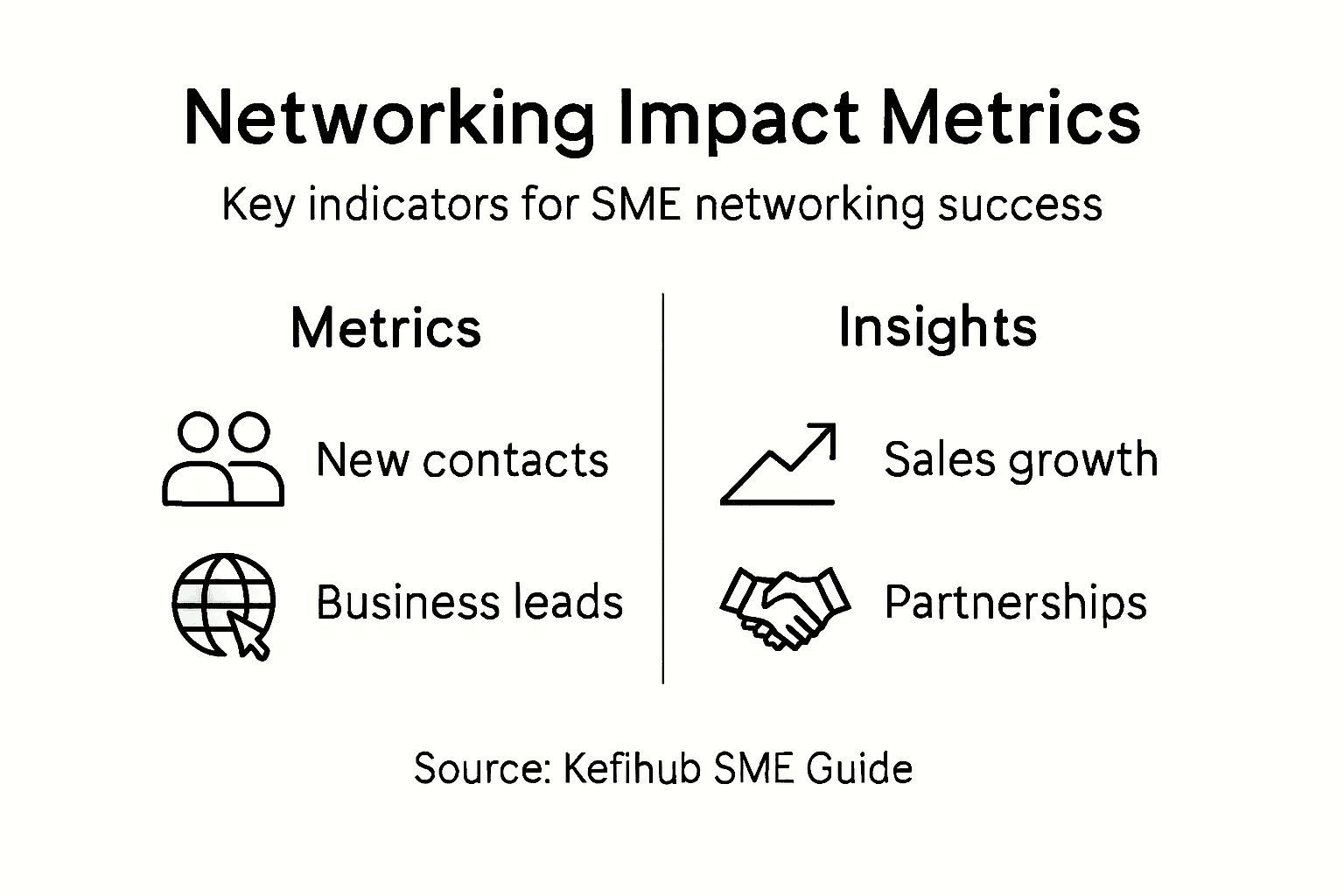
Design a structured approach to monitoring your networking impact. Maintain a detailed log documenting each professional encounter including names contact details conversation highlights and potential collaboration opportunities. Review this record quarterly to identify patterns understand which networking strategies yield the best results and adjust your approach accordingly. Look beyond immediate financial returns and consider broader impacts like knowledge gained professional insights acquired and potential future collaborations that might emerge from these connections.
Expert Tip: Develop a straightforward spreadsheet with columns for contact name date of interaction potential value and follow up status to streamline your networking impact tracking.
Below is a table outlining practical ways to measure networking impact for SMEs:
| Measurement Approach | What It Tracks | Business Insight Produced |
|---|---|---|
| Contacts Made Log | Number of new contacts | Growth of professional network |
| Quality Connection Scoring | Strength of relationships | Identify valuable leads |
| Follow-up Meetings Recorded | Number of successful follow-ups | Engagement and commitment |
| Quarterly Network Review | Patterns and outcomes | Refine future networking strategy |
Unlock Powerful Connections to Grow Your SME
Building meaningful professional relationships is vital for SME success but navigating networking opportunities and nurturing contacts can feel overwhelming. This guide highlights the importance of developing a clear value proposition and tracking your networking impact to convert initial meetings into lasting business growth. At KefiHub, we understand these challenges and provide practical insights tailored to UK professionals eager to expand their reach and create impactful collaborations.
Explore our Business Archives – Kefihub for expert advice on transforming networking challenges into strategic advantages. Stay updated on emerging trends through our Trending Archives – Kefihub and deepen your digital engagement with resources from our Digital Archives – Kefihub. Don’t wait for opportunities to come to you. Visit KefiHub today and start unlocking powerful connections that will accelerate your SME’s growth.
Frequently Asked Questions
How can I find relevant networking opportunities for my small business?
Identify networking opportunities by researching industry associations, trade groups, and digital networking platforms. Focus on events and forums where professionals in your sector gather to share knowledge, and dedicate time to track potential events on a calendar or spreadsheet.
What should be included in my value proposition when networking?
Your value proposition should clearly state how your business solves specific problems for your target market. Craft a concise statement that highlights your unique strengths and consider creating a one-page summary document showcasing your key services and achievements.
How do I effectively engage at networking events?
Engage effectively by approaching conversations with genuine curiosity about others’ businesses. Prepare open-ended questions to encourage detailed responses and balance the conversation by sharing your insights without dominating the dialogue.
What is the best way to follow up after networking events?
To nurture relationships, send a personalised email within 48 hours of meeting someone, referencing your conversation and sharing valuable insights. Schedule periodic check-ins every two to three months to maintain the connection and provide mutual value.
How can I measure the impact of my networking efforts?
Measure your networking impact by tracking specific metrics such as the number of new contacts made, quality of connections established, and follow-up meetings arranged. Maintain a detailed log and review it quarterly to identify which strategies yield the best results and refine your approach accordingly.
What are some practical tools to track networking contacts?
Use a simple spreadsheet or a digital folder to track your networking contacts, documenting key details like names, interests, and potential collaboration points. Updating this regularly will help you maintain and strengthen your professional relationships.
Recommended
- 7 Effective Marketing Strategies for SMEs to Drive Growth – Kefihub
- Why Build a Website: Boosting UK Small Businesses – Kefihub
- Business Networking: Complete Guide to Its Role and Value – Kefihub
- Business Networking: Complete Guide to Its Role and Value – Kefihub