


Most british small business owners discover early that one overlooked legal detail can lead to headaches down the line. Setting up a new enterprise in the United Kingdom means facing strict requirements for registration, licensing, policies, tax obligations, and records. Fines for noncompliance can exceed thousands of pounds. With so much at stake, understanding these steps from the beginning helps you protect your business and focus on growth instead of legal worries.
Table of Contents
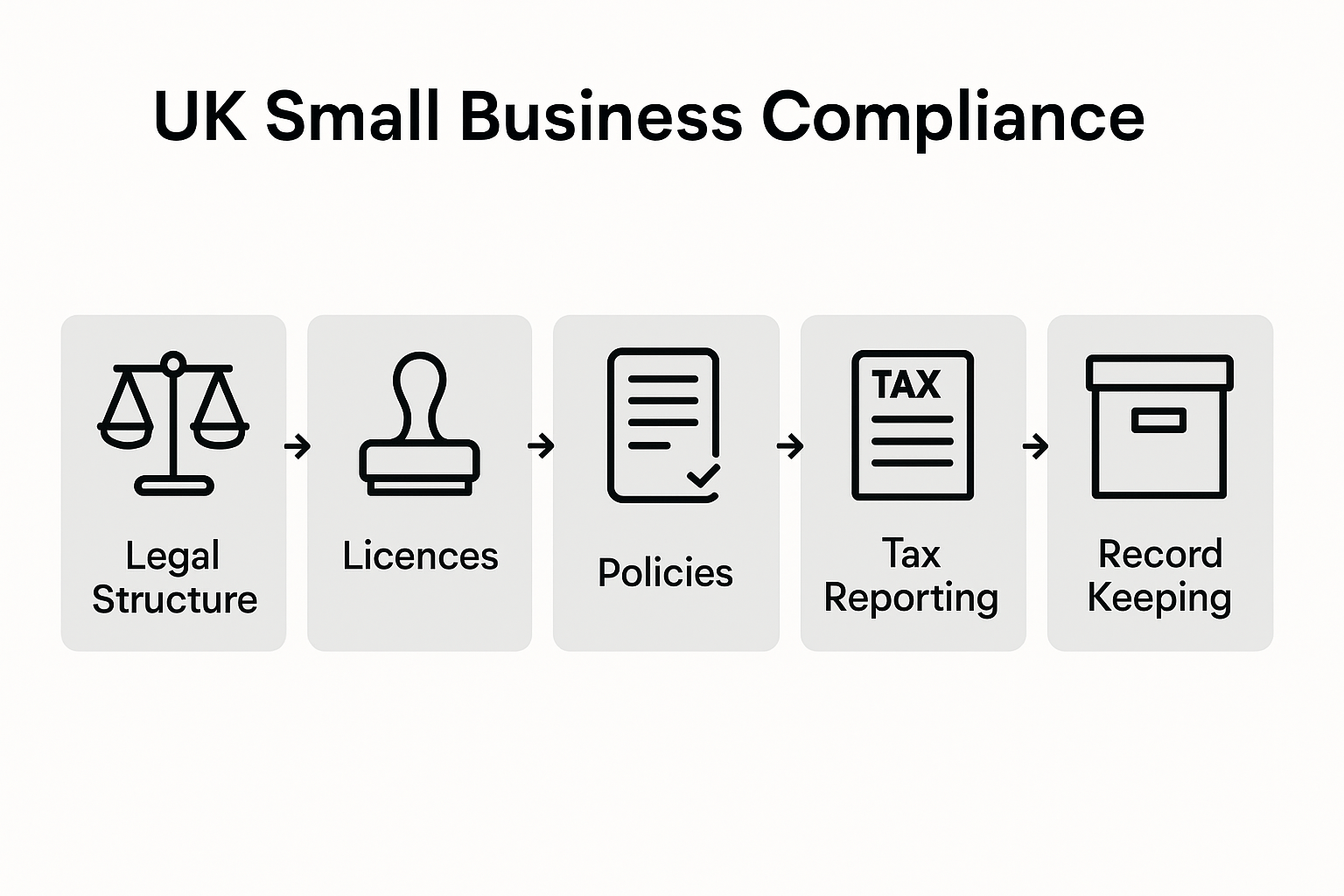
- Step 1: Assess Your Legal Structure And Registration
- Step 2: Identify Mandatory Licences And Permits
- Step 3: Implement Required Policies And Procedures
- Step 4: Meet Tax And Financial Reporting Duties
- Step 5: Verify Ongoing Compliance And Record Keeping
Quick Summary
| Important Insight | Detailed Explanation |
|---|---|
| 1. Choose the right legal structure | Evaluating whether to be a sole trader, partner, or limited company is crucial for your business operations and tax responsibilities. |
| 2. Secure necessary licences and permits | Identify and obtain all required licences specific to your industry to avoid legal penalties and ensure compliance before launching. |
| 3. Establish comprehensive policies | Develop clear documentation on essential policies like health and safety, data protection, and employee conduct to safeguard your business. |
| 4. Manage tax and financial reporting properly | Accurately maintain financial records and submit tax returns on time to avoid penalties; consider using accounting software for efficiency. |
| 5. Regularly verify compliance and records | Conduct periodic internal audits and maintain organised records for all financial documents to protect your business from legal issues. |
Step 1: Assess your legal structure and registration
Selecting the right legal structure represents a critical foundation for your UK small business. This step determines how you will operate, pay taxes, manage personal liability, and structure your enterprise.
Your primary options typically include sole trader status, partnership, or limited company registration. Many entrepreneurs start as sole traders due to simplicity explore different business structures before potentially transitioning. A sole trader setup means you personally own the business and are responsible for its financial obligations. This structure works well for low risk enterprises with minimal startup costs.
When considering registration, you will need to register with HM Revenue and Customs (HMRC). For sole traders, this involves completing a self assessment tax return annually. Limited companies require additional steps like registering with Companies House, appointing directors, and maintaining formal accounting records. Your chosen structure impacts everything from tax rates to personal financial exposure.
One critical warning: do not rush this decision. Each business structure carries unique legal and financial implications. Consider consulting an accountant or business advisor who can provide personalised guidance based on your specific circumstances and growth ambitions.
Step 2: Identify mandatory licences and permits
Every UK small business must navigate the complex landscape of legal permissions before launching operations. This step involves understanding and securing the specific licences and permits required for your particular business type and sector.
Navigating business compliance requires careful research into sector specific regulations. Different industries have unique requirements certain sectors like food service restaurants need food hygiene certificates, while construction businesses require specific trade licences. Professional services such as financial advisors need authorisation from the Financial Conduct Authority. Your local council may also mandate specific trading permits depending on your business location and activity type.

The process of obtaining licences involves several key steps. First, identify your specific business category and relevant regulatory bodies. Contact local councils, industry associations, and government departments to confirm exact requirements. Some licences can be obtained online through official government websites, while others might require formal applications with supporting documentation. Always budget time and potential fees for this process purchasing licences can range from £50 to several hundred pounds depending on complexity.
One critical warning: operating without proper licences can result in significant legal penalties. Fines can reach thousands of pounds and potentially include mandatory business closure. Invest time upfront in thorough research and compliance to protect your business from potential legal challenges.
Step 3: Implement required policies and procedures
Establishing robust policies and procedures forms the backbone of legal compliance for UK small businesses. This critical step involves creating a comprehensive framework that protects your business, employees, and customers while ensuring adherence to regulatory standards.
Key small business regulatory requirements mandate several essential policies. You will need to develop documentation covering areas such as health and safety, employee conduct, data protection, and equal opportunities. Employment contracts must clearly outline workplace expectations, while privacy policies should detail how your business handles customer and employee personal information. Consider creating documents that address workplace harassment, disciplinary procedures, and grievance mechanisms.
The implementation process requires systematic documentation and communication. Start by drafting clear written policies that reflect current UK employment laws and industry specific regulations. Ensure all employees receive copies and understand their contents. Store these documents securely and make them easily accessible. Regular reviews are crucial updates should reflect changes in legislation or your business operations. Professional legal consultation can help ensure your policies are comprehensive and legally sound.
One critical warning: incomplete or poorly constructed policies can leave your business vulnerable to legal challenges. Invest time in creating thorough documentation that provides clear guidance and protects both your enterprise and your workforce. Treat policy development as an ongoing process of refinement and adaptation to changing business landscapes.
Step 4: Meet tax and financial reporting duties
Managing your business tax obligations represents a critical responsibility that demands meticulous attention and strategic planning. Successfully navigating these financial requirements ensures your small business remains compliant and avoids potential penalties.
As a UK small business, you will need to register with HM Revenue and Customs (HMRC) and maintain accurate financial records. Sole traders must complete self assessment tax returns annually, while limited companies require more comprehensive reporting including corporation tax returns, payroll submissions, and annual accounts. You will need to track income, expenses, and potential tax deductions carefully. Consider using accounting software that simplifies record keeping and helps you maintain organised financial documentation.
The reporting process involves several key steps. First, keep comprehensive records of all business transactions including receipts, invoices, and bank statements. Set aside funds regularly for tax payments to avoid cash flow challenges. Most businesses must submit their tax returns by specific deadlines 31 January for online self assessment returns and 12 months after your accounting period for limited company corporation tax returns. Late submissions can result in automatic penalties starting from £100 and escalating significantly.
One critical warning: do not underestimate the complexity of tax reporting. Many small business owners struggle with understanding their exact obligations. Consider working with an accountant during your first few years to ensure full compliance and develop robust financial management practices. Professional guidance can help you navigate potential tax efficiencies and avoid costly mistakes.
Step 5: Verify ongoing compliance and record keeping
Maintaining robust compliance and accurate record keeping represents the final cornerstone of responsible business management for UK small enterprises. This critical step ensures your business remains legally protected and financially transparent.
Maintaining proper business records requires systematic documentation and regular review processes. You must retain financial documents such as invoices, receipts, bank statements, payroll records, and tax returns for a minimum of six years. Digital record keeping systems can simplify this process significantly. Consider using cloud based accounting software that automatically categorises expenses, generates financial reports, and provides secure backup of critical documentation.
The verification process involves conducting periodic internal audits of your business records. Schedule quarterly reviews to ensure all documentation is complete, accurate, and organised. Check that your financial records align with bank statements, tax submissions, and internal accounting records. Reconcile any discrepancies immediately and maintain a clear audit trail. Develop a consistent filing system both digital and physical that allows quick retrieval of documents if required by HMRC or for potential legal investigations.
One critical warning: inconsistent or incomplete record keeping can result in significant penalties. HMRC may impose fines for inadequate documentation or suspect financial reporting. Treat your compliance efforts as an ongoing commitment rather than a sporadic task. Consider consulting with a professional accountant annually to review your record keeping practices and ensure you are meeting all regulatory requirements.
Stay Ahead with Expert Guidance on Small Business Compliance
Navigating the complex world of UK small business compliance requires clear understanding and reliable support. Common challenges include choosing the right legal structure, securing mandatory licences, implementing essential policies, meeting tax obligations, and maintaining thorough record keeping. These key steps demand attention to detail to protect your enterprise and ensure ongoing success.
At KefiHub, we simplify these complexities by offering practical insights and tailored advice specifically for UK professionals. Whether you want to learn more about business structures or legal compliance, explore our Business Archives – Kefihub and Legal Archives – Kefihub for expert commentary and real-world stories.

Take control of your compliance journey today by visiting KefiHub to access trusted resources that empower you to build a legally sound and thriving small business. Act now to ensure you stay compliant without the stress and unlock sustainable growth with confidence.
Frequently Asked Questions
What is the best legal structure for my small business in the UK?
Selecting the right legal structure depends on your specific business needs and risk levels. Common options include sole trader, partnership, and limited company. Evaluate your long-term business goals and consult an advisor to choose the most suitable setup.
How do I identify the necessary licences and permits for my business?
Begin by researching the specific regulations for your industry. Identify your business category and contact local councils or industry associations to confirm the exact licences required. Ensure you apply for all necessary permissions before starting operations to avoid legal penalties.
What essential policies should I implement for compliance in my small business?
You should establish policies covering health and safety, employee conduct, data protection, and equal opportunities. Draft clear documentation that reflects current regulations, and distribute it to all employees. Regularly review these policies to ensure they remain up to date with any legislative changes.
How can I ensure I meet my tax and financial reporting duties?
To comply with tax obligations, register with HM Revenue and Customs and keep accurate financial records. Monitor your income and expenses closely, and set aside funds for tax payments. Implement a record-keeping system to meet submission deadlines and avoid penalties.
What steps should I take for ongoing compliance and record-keeping?
Maintain systematic documentation of all business transactions and retain financial records for at least six years. Schedule regular internal audits to verify that your records are complete and accurate. Establish a consistent filing system for easy retrieval of documents as needed.
How often should I review my business policies and practices?
Regularly review your business policies and practices, ideally at least annually. Schedule these reviews to coincide with changes in legislation or business operations. This ensures that your compliance measures remain effective and relevant over time.
Recommended
- How to Avoid Common Business Mistakes for UK Professionals – Kefihub
- Starting a Small Business UK: Step-by-Step Legal Guide – Kefihub
- Business Insurance Explained: Key Roles for UK Companies – Kefihub
- Why Sustainable Business: Complete Guide for UK Professionals – Kefihub