


Most british professionals rely on business networking to uncover career opportunities that never appear in standard job listings. Connections made through networking contribute to over 85 percent of job placements, making this skill a real asset in today’s competitive market. Whether you are building your career or seeking new clients, understanding how these connections work can help you develop stronger relationships and open fresh opportunities that typical job searches often miss.
Table of Contents
- What Is Business Networking? Core Concepts Explained
- Types of Business Networking and Key Differences
- How Business Networking Works in Practice
- Benefits and Limitations for UK Professionals
- Common Pitfalls and How to Avoid Them
Key Takeaways
| Point | Details |
|---|---|
| Importance of Authentic Relationships | Successful business networking relies on genuine interest and mutual respect, focusing on building long-term relationships rather than transactional connections. |
| Effective Networking Methods | Professionals should engage in both in-person and online networking, leveraging strengths of each to expand their professional networks. |
| Strategic Networking Practices | Implement clear goals, prepare introductions, and follow up promptly to nurture new connections and relationships. |
| Awareness of Networking Pitfalls | Avoid superficial interactions and self-centred networking by prioritising quality relationships and maintaining ethical boundaries. |
What Is Business Networking? Core Concepts Explained
Business networking is a strategic approach to building and maintaining professional relationships that create mutually beneficial opportunities. At its core, networking involves connecting with individuals and organisations across various professional domains to exchange knowledge, support, and potential collaborative prospects.
The fundamental purpose of business networking extends far beyond simple social interaction. Professional connections are developed through deliberate engagement methods, including industry events, digital platforms, conferences, and professional associations. These interactions enable professionals to share insights, discover potential career opportunities, generate business leads, and expand their professional understanding beyond their immediate work environment.
Effective business networking relies on several key principles. Professionals must approach networking with genuine interest, mutual respect, and a commitment to creating value for others. This means going beyond transactional interactions and focusing on building authentic relationships. Successful networking strategies involve establishing meaningful connections with peers, industry professionals, and potential collaborators.
Key characteristics of powerful business networking include:
- Active listening and genuine curiosity about others’ professional experiences
- Consistent and professional communication
- Willingness to provide support and insights without immediate expectation of return
- Strategic engagement across multiple professional platforms
- Maintaining and nurturing relationships over time
Whether you’re an entrepreneur, freelancer, or corporate professional, understanding and implementing effective networking techniques can significantly enhance your career trajectory and professional opportunities.
Types of Business Networking and Key Differences
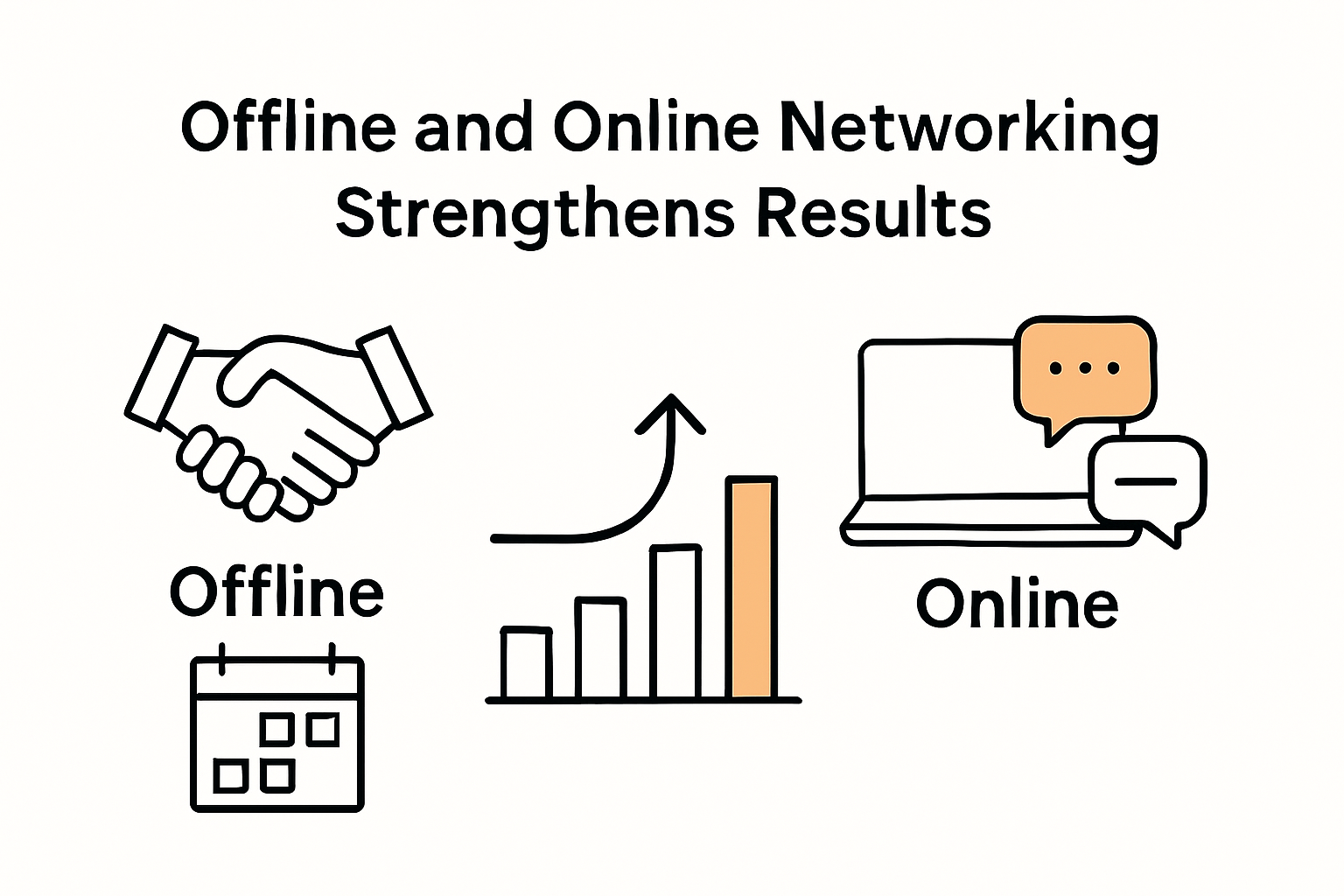
Business networking encompasses diverse interaction strategies, each offering unique opportunities for professional growth and connection. Business networking can be broadly categorised into two primary approaches: in-person and online platforms, each with distinctive characteristics and strategic advantages.
In-person networking remains a powerful method for building genuine professional relationships. These interactions typically occur through industry conferences, professional association meetings, workshops, seminars, and local business events. The direct personal engagement allows for nuanced communication, immediate rapport building, and the ability to read non-verbal cues that digital platforms cannot replicate. Professionals can participate in structured networking sessions, attend panel discussions, or engage in spontaneous conversations during breaks and social interactions.

Professional network services represent the digital evolution of networking, providing expansive platforms for connecting with industry peers, potential collaborators, and job opportunities. Online networking platforms like LinkedIn, industry-specific forums, and virtual conferences enable professionals to transcend geographical limitations. These digital spaces allow for continuous engagement, knowledge sharing, and relationship maintenance without the constraints of physical location or scheduling challenges.
Key differences between in-person and online networking include:
- Interaction Depth:
- In-person: High-context, immediate personal connection
- Online: Broader reach, asynchronous communication
- Networking Scope:
- In-person: Localised, industry-specific events
- Online: Global, cross-industry interactions
- Communication Nuances:
- In-person: Non-verbal cues, spontaneous dialogue
- Online: Structured, text-based exchanges
Successful professionals often blend both networking approaches, leveraging the strengths of each method to create a comprehensive and dynamic professional network.
How Business Networking Works in Practice
Business networking transforms professional interactions from random encounters into strategic relationship-building opportunities. Speed networking represents one dynamic approach that accelerates business connections through structured, time-efficient interactions, where professionals engage in rapid, focused exchanges designed to maximise connection potential.
The practical implementation of business networking involves multiple deliberate strategies. Professionals typically begin by identifying relevant networking platforms and events aligned with their career objectives. This might include industry conferences, online professional forums, local business association meetings, or specialised networking groups. The key is to approach these opportunities with clear goals, prepared introduction statements, and genuine interest in understanding others’ professional contexts and challenges.
Entrepreneurial networks serve as powerful social organisations that provide critical resources for professionals seeking to expand their business opportunities. These networks function as collaborative ecosystems where members share knowledge, provide mutual support, and create pathways for potential partnerships, mentorship, and business development. Successful networking requires a balanced approach of giving and receiving, where professionals contribute insights, offer assistance, and remain open to learning from diverse perspectives.
Key practical steps for effective business networking include:
- Develop a concise, compelling personal introduction
- Research events and participants beforehand
- Set specific networking objectives for each interaction
- Practice active listening and genuine curiosity
- Follow up with new contacts within 48 hours
- Maintain relationships through periodic meaningful communication
- Offer value before seeking personal benefits
The most successful networkers understand that building professional relationships is a long-term investment requiring patience, authenticity, and consistent engagement.
Benefits and Limitations for UK Professionals
Business networking provides remarkable opportunities for professionals seeking career advancement and strategic connections, enabling individuals to access insights and potential opportunities that might remain hidden through traditional job search methods. UK professionals can leverage these connections to gain competitive advantages in their respective industries.
The benefits of strategic networking are substantial and multifaceted. Professionals can discover unadvertised job opportunities, gain industry-specific insights, and develop meaningful relationships that transcend immediate career objectives. While networking offers significant advantages, it also presents potential ethical challenges, particularly regarding how personal relationships might influence professional decisions. These nuanced interactions require careful navigation to maintain professional integrity.
Networking’s impact varies across different professional contexts, with some sectors experiencing more pronounced benefits than others. Technology, creative industries, and consultancy fields typically demonstrate higher networking returns compared to more structured, hierarchical professional environments. By understanding these dynamics, professionals can approach networking with realistic expectations and targeted strategies.
Key benefits and potential limitations include:
- Benefits:
- Access to hidden job markets
- Enhanced professional knowledge
- Potential mentorship opportunities
- Increased industry visibility
- Limitations:
- Time-intensive engagement
- Potential for superficial connections
- Unequal networking opportunities
- Risk of confirmation bias
Professionals can mitigate potential networking challenges by adopting strategic approaches to building genuine, mutually beneficial relationships.
Common Pitfalls and How to Avoid Them
Business networking requires strategic navigation to maximise professional opportunities while maintaining ethical boundaries. Professionals must be acutely aware of potential challenges that can undermine their networking efforts, particularly regarding the complex dynamics of personal and professional relationships.
One significant pitfall involves the tendency to approach networking transactionally, treating interactions as mere opportunities for personal gain. Successful networkers understand that genuine relationships are built on mutual respect, authentic interest, and a willingness to provide value without immediate expectation of return. This means listening actively, demonstrating genuine curiosity about others’ professional journeys, and offering meaningful support or insights whenever possible.
Ethical considerations play a crucial role in effective networking. Professionals must be mindful of maintaining professional boundaries, avoiding conflicts of interest, and ensuring that personal connections do not compromise professional integrity. This requires a delicate balance between building warm, genuine relationships and maintaining appropriate professional distance.
Common networking pitfalls and their strategic solutions include:
-
Pitfall: Superficial Connections
- Solution: Focus on quality over quantity
- Invest time in meaningful interactions
- Follow up with personalised communication
-
Pitfall: Self-Centred Approach
- Solution: Practice reciprocal networking
- Ask thoughtful questions
- Offer assistance without expecting immediate returns
-
Pitfall: Inconsistent Follow-Up
- Solution: Develop a systematic approach
- Send personalised follow-up messages
- Schedule periodic check-ins
-
Pitfall: Neglecting Digital Etiquette
- Solution: Maintain professional online presence
- Respect communication boundaries
- Use appropriate platforms for professional interactions
Professionals can significantly improve their networking effectiveness by understanding and proactively addressing these potential challenges.
Unlock the True Potential of Your Business Networking Efforts
Are you struggling to turn networking into genuine, lasting professional relationships? The challenges of building meaningful connections while avoiding superficial interactions and maintaining ethical boundaries can feel overwhelming. This article highlights key concepts like “reciprocal networking,” “consistent follow-up,” and “authentic engagement” — all vital to mastering effective business networking in the UK.

Discover practical, clear guidance tailored for UK professionals at KefiHub. We understand the pain points of time-intensive networking and offer actionable advice to help you develop strategic approaches that create real value. Whether you want to avoid common pitfalls or learn how to maximise your presence both online and in-person, explore expert insights and tips to elevate your networking game today. Visit KefiHub now and start transforming your connections into opportunities that matter.
Frequently Asked Questions
What is the purpose of business networking?
The purpose of business networking is to build and maintain professional relationships that create mutually beneficial opportunities. It allows professionals to share knowledge, discover career opportunities, generate business leads, and expand their understanding of their industry.
How does business networking work in practice?
Business networking works by transforming professional interactions into strategic relationship-building opportunities. This involves identifying relevant networking platforms, setting specific goals, preparing introductions, and engaging in meaningful conversations with the aim of fostering genuine connections.
What are the key benefits of effective business networking?
The key benefits of effective business networking include access to hidden job markets, enhanced professional knowledge, potential mentorship opportunities, and increased industry visibility. These connections can provide insights and opportunities that may not be found through traditional job search methods.
What common pitfalls should I avoid in networking?
Common pitfalls in networking include approaching relationships transactionally, making superficial connections, not following up consistently, and neglecting digital etiquette. To avoid these, focus on quality interactions, practise reciprocal networking, maintain professional boundaries, and respect communication norms.
Recommended
- Why Sustainable Business: Complete Guide for UK Professionals – Kefihub
- Why Sustainable Business: Complete Guide for UK Professionals – Kefihub
- Every business problem feels smaller when you understand it. We’re here to make the complex simple, one guide at a time. – Kefihub
- Complete Guide to Why Incorporate a Business – Kefihub