


Most british companies face a maze of legal requirements that can impact everything from daily operations to major growth decisions. With over 40 percent of small businesses experiencing at least one significant legal issue each year, the need for expert legal guidance is clear. Understanding how business solicitors support, protect, and guide organisations helps owners and managers harness the right expertise to avoid costly mistakes and secure long-term success.
Table of Contents
- Understanding The Role Of Business Solicitors
- Core Services Provided To UK Businesses
- Legal Qualifications And Regulatory Framework
- Key Responsibilities And Client Obligations
- Typical Costs, Pitfalls And Alternatives
Key Takeaways
| Point | Details |
|---|---|
| Role of Business Solicitors | Business solicitors are essential for navigating legal complexities, offering comprehensive services that support growth and minimise risks. |
| Core Services Offered | Key services include contract management, regulatory compliance, dispute resolution, and intellectual property protection tailored to each client. |
| Regulatory Landscape | Solicitors must adhere to rigorous qualifications and ethical standards, ensuring professionalism and client protection in their legal practices. |
| Cost Considerations | Businesses should be aware of varying fee structures when engaging solicitors and explore alternative legal service models to manage expenses effectively. |
Understanding the Role of Business Solicitors
Business solicitors are professional legal advisors who play a critical strategic role in supporting companies through complex legal challenges and opportunities. According to Robin Waite, these legal professionals contribute significantly to business growth by providing comprehensive services that protect and advance organisational interests.
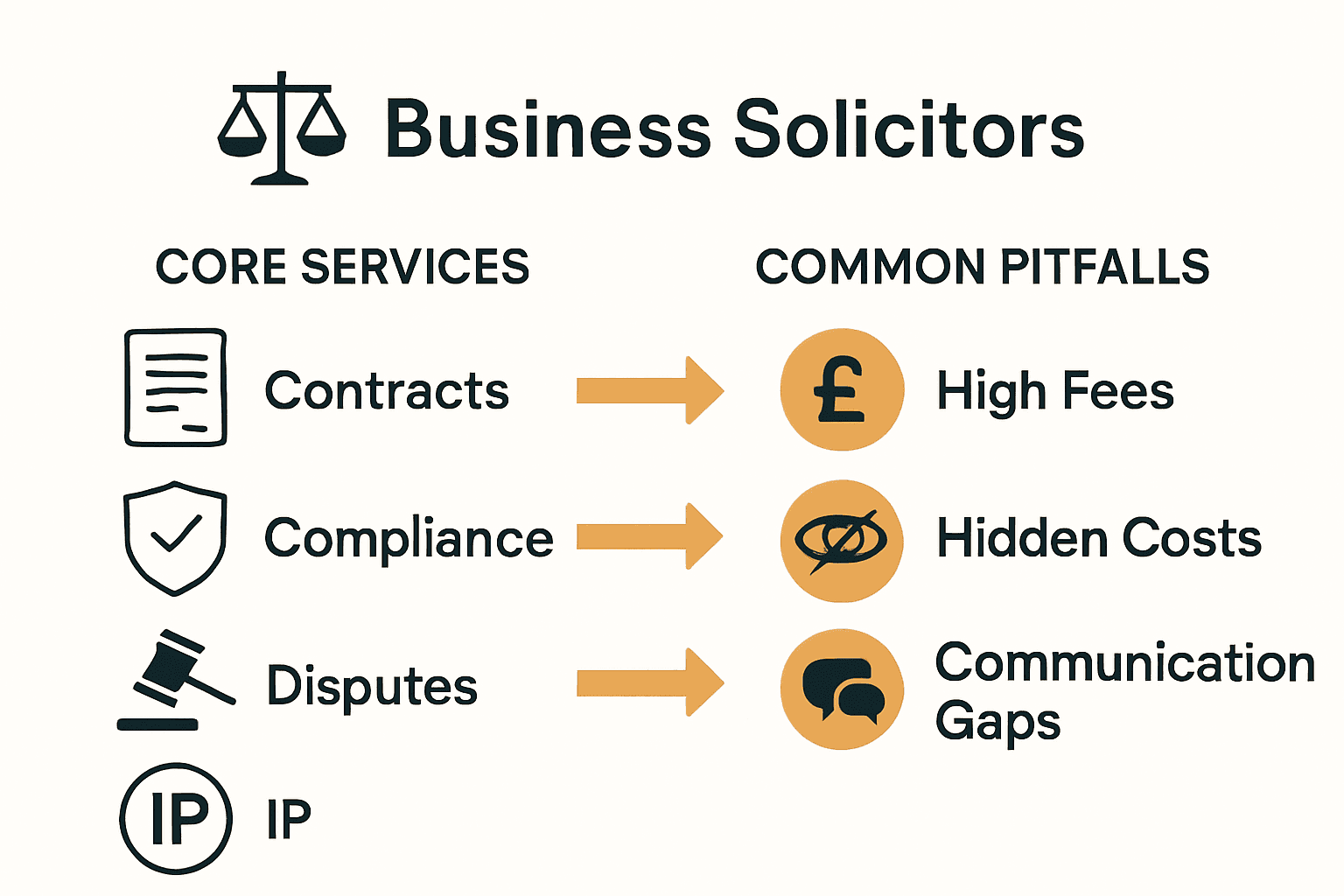
The primary responsibilities of business solicitors encompass several crucial areas of legal support. They specialise in managing contract negotiations, ensuring businesses draft, review, and execute legally robust agreements that protect their interests. They also provide essential guidance on regulatory compliance, helping organisations navigate intricate legal frameworks and minimise potential risks. Employment law support represents another key area, where solicitors assist in developing employment contracts, managing workplace disputes, and ensuring companies adhere to current labour regulations.
Intellectual property protection is another critical service business solicitors deliver. They help companies safeguard their innovations, trademarks, and creative assets through strategic legal mechanisms. Business insurance complements these legal protections, creating a comprehensive risk management strategy that allows businesses to operate with greater confidence and security. By offering tailored advice specific to each organisation’s unique challenges, business solicitors act as strategic partners rather than mere legal consultants.
Key services provided by business solicitors include:
- Contract drafting and review
- Regulatory compliance guidance
- Dispute resolution strategies
- Intellectual property protection
- Employment law support
- Corporate governance advice
For growing businesses, especially small and medium enterprises, engaging a skilled business solicitor can mean the difference between navigating legal complexities successfully or facing potentially costly challenges.
Core Services Provided to UK Businesses
Business solicitors offer a comprehensive suite of legal services specifically tailored to support UK organisations across various operational aspects. These professional legal advisors provide strategic support that goes far beyond traditional legal consultation, acting as critical partners in business development and risk management.

The core services typically encompass several key areas of legal expertise. Contract management stands as a fundamental service, where solicitors meticulously draft, review, and negotiate agreements that protect the business’s interests. This includes employment contracts, supplier agreements, partnership documents, and commercial leases. Regulatory compliance represents another crucial service, helping businesses navigate the complex landscape of UK legal requirements across industries such as finance, healthcare, technology, and manufacturing.
Dispute resolution and litigation support form another critical dimension of solicitors’ services. When conflicts arise with employees, suppliers, partners, or competitors, business solicitors provide strategic guidance to resolve issues efficiently and minimise potential financial and reputational damage. Civil disputes archives offer additional insights into the complexities of legal conflict management for businesses seeking comprehensive understanding.
Additional core services provided by business solicitors include:
- Intellectual property protection and registration
- Employment law advisory services
- Corporate governance consulting
- Mergers and acquisition legal support
- Risk management and legal strategy development
- Corporate restructuring guidance
For UK businesses navigating an increasingly complex legal environment, professional solicitors provide an essential strategic resource that enables organisations to operate with confidence, compliance, and legal clarity.
Legal Qualifications and Regulatory Framework
In the United Kingdom, business solicitors must navigate a rigorous and complex regulatory landscape that ensures professional competence, ethical conduct, and client protection. Professional qualification represents the foundational element of a solicitor’s legal practice, requiring extensive education, practical training, and ongoing compliance with stringent regulatory standards.
The primary regulatory body overseeing solicitors is the Solicitors Regulation Authority (SRA), which mandates comprehensive professional requirements. Aspiring solicitors must complete a law degree or equivalent professional qualification, followed by a mandatory two-year professional practice course. This includes the Solicitors Qualifying Examination (SQE), which replaced the previous Legal Practice Course in 2021, ensuring a standardised assessment of legal knowledge and practical skills. Financial oversight is also critical, with legal cashiers playing a crucial role in maintaining strict accounting standards and ensuring compliance with the Solicitors’ Accounts Rules.
Continuous professional development is a non-negotiable aspect of maintaining legal practice credentials. Solicitors must undertake regular training, complete mandatory ethics courses, and stay updated on evolving legal frameworks. The professional indemnity insurance requirement further protects clients by ensuring solicitors maintain appropriate financial coverage for potential professional negligence. Professional bodies like the Law Society provide additional support and guidance, helping solicitors maintain the highest standards of professional conduct.
Key regulatory requirements for business solicitors include:
- Completing mandatory professional qualifications
- Passing the Solicitors Qualifying Examination
- Maintaining annual practising certificates
- Undertaking continuous professional development
- Adhering to strict ethical codes of conduct
- Maintaining professional indemnity insurance
- Complying with Solicitors Regulation Authority guidelines
These comprehensive regulatory frameworks ensure that business solicitors in the UK operate with the utmost professionalism, expertise, and commitment to client interests.
Key Responsibilities and Client Obligations
Business solicitors bear substantial professional responsibilities that extend far beyond conventional legal representation. Fiduciary duty stands at the core of their professional obligations, requiring them to act with unwavering integrity, prioritise client interests, and maintain the highest standards of confidentiality and ethical conduct.
The fundamental responsibilities include comprehensive legal advisory services, where solicitors are obligated to provide accurate, timely, and strategic guidance tailored to each client’s unique business context. This encompasses thorough risk assessment, legal strategy development, and proactive identification of potential legal challenges. Solicitors must maintain meticulous documentation, ensure clear communication, and provide transparent advice that enables clients to make informed decisions. Legal services archives highlight the breadth and depth of professional obligations inherent in legal practice.
Client confidentiality represents a paramount obligation, with solicitors legally and ethically bound to protect sensitive business information. They must navigate complex conflicts of interest, maintain strict professional boundaries, and provide impartial advice even in challenging circumstances. This includes managing potential legal risks, interpreting complex regulatory requirements, and offering strategic guidance that balances legal compliance with business objectives.
Key client obligations for business solicitors include:
- Maintaining absolute client confidentiality
- Providing accurate and timely legal advice
- Avoiding conflicts of interest
- Communicating complex legal concepts clearly
- Protecting client interests
- Maintaining professional independence
- Adhering to ethical standards
Successful business solicitors understand that their role extends beyond legal technicalities, serving as trusted advisors who help organisations navigate complex legal landscapes with confidence and strategic insight.
Typical Costs, Pitfalls and Alternatives
Business solicitors’ fees represent a significant consideration for organisations seeking legal support, with costs varying dramatically based on complexity, expertise required, and the specific nature of legal services. Pricing structures can range from fixed-rate packages to hourly billing, creating potential financial challenges for small and medium enterprises navigating legal requirements.
Traditional solicitor engagement often involves substantial upfront costs and retainer fees, which can be prohibitive for smaller businesses. QualitySolicitors, a network of independent law firms, represents an emerging model focused on increasing accessibility and affordability in legal services. Alternative approaches have emerged to address these cost challenges, including fixed-price service packages, subscription-based legal support, and technology-enabled legal consultation platforms that reduce overhead expenses.
Common pitfalls in solicitor engagement include inadequate communication, unexpected additional charges, and misaligned expectations about service scope. Businesses must carefully evaluate potential legal partners, considering factors beyond cost such as specialisation, industry expertise, and proven track record. Some organisations mitigate risks by adopting hybrid approaches, combining traditional solicitor support with in-house legal resources and technology-driven solutions.
Key considerations when evaluating solicitor costs include:
- Transparent fee structures
- Fixed-rate versus hourly billing options
- Potential hidden costs and additional charges
- Specialisation and industry expertise
- Service flexibility and scalability
- Technology integration capabilities
- Alternative legal service models
Successful businesses approach legal support as a strategic investment, balancing cost-effectiveness with comprehensive, high-quality professional guidance that protects their long-term interests.
Secure Your Business Future with Expert Legal Guidance
Navigating the complex legal landscape can be a daunting challenge for any business owner UK-wide. This article highlights the critical role business solicitors play in tackling issues like contract negotiations, regulatory compliance and risk management. If you want to avoid costly pitfalls such as unexpected legal fees or unclear obligations, understanding solicitor services is key. With terms like fiduciary duty, professional indemnity insurance and continuous professional development now part of your vocabulary, getting clear, actionable insights has never been more vital.

Explore our Legal Archives – Kefihub for in-depth guidance, expert commentary and practical resources tailored to UK businesses. KefiHub is your trusted platform delivering reliable advice on law and business essentials to empower your decisions. Don’t wait until legal challenges threaten your growth. Visit https://kefihub.co.uk today and take the first step towards building a legally resilient business.
Frequently Asked Questions
What services do business solicitors provide?
Business solicitors offer a wide range of services, including contract drafting and review, regulatory compliance guidance, dispute resolution strategies, intellectual property protection, employment law support, and corporate governance advice.
How do I know if my business needs a solicitor?
If your business is facing complex legal challenges, such as contract negotiations, regulatory compliance issues, or potential disputes, engaging a solicitor can help you navigate these complexities and protect your interests.
What qualifications do business solicitors need?
In the UK, business solicitors must complete a law degree or equivalent qualification, pass the Solicitors Qualifying Examination (SQE), and comply with continuous professional development requirements. They must also adhere to regulations set by the Solicitors Regulation Authority (SRA).
How can hiring a solicitor benefit my small business?
Hiring a skilled business solicitor can provide your small business with strategic legal support that helps you manage risks, ensure compliance with regulations, and avoid costly legal pitfalls. They act as trusted advisors, guiding you in making informed decisions.
Recommended
- Judge Law | Local Law Firm Listings
- What Is Business Insurance? Complete UK Overview – Kefihub
- 7 Key Types of Business Structures UK Professionals Must Know – Kefihub
- Civil Litigation Archives – Kefihub