

Buying your first british home can feel like decoding a foreign language, especially when faced with confusing legal terms and countless forms. Over 70 percent of first-time homebuyers in the UK report feeling unprepared for the legal side of property purchases. This matters because making sense of contracts and legal obligations could affect your finances and future security. Here you will find clear, trustworthy guidance designed to help you move forward with confidence as you navigate british property law for the first time.
Table of Contents
- Step 1: Identify Your Specific Legal Needs For Buying Property
- Step 2: Research Reputable Solicitors And Conveyancers In Your Area
- Step 3: Review Credentials, Accreditations And Client Feedback
- Step 4: Consult Shortlisted Advisers And Ask Key Questions
- Step 5: Verify Advice Quality And Confirm Professional Standards
Quick Summary
| Essential Insight | Clarification |
|---|---|
| 1. Assess Legal Needs Before Purchase | Understand your specific legal requirements related to the property type to avoid complications during the transaction. |
| 2. Research Local Solicitors Thoroughly | Compile a list of potential solicitors, checking their credentials and client reviews to find a reliable professional. |
| 3. Verify Credentials and Accreditations | Ensure solicitors are registered with the SRA or CLC, confirming their compliance with professional standards and qualifications. |
| 4. Prepare Questions for Consultations | Develop strategic questions for initial meetings with solicitors to evaluate their experience and approach to your transaction. |
| 5. Maintain a Verification Checklist | Use a structured checklist to assess solicitors’ registration, insurance, and ongoing professional development for informed decision-making. |
Step 1: Identify your specific legal needs for buying property
Navigating the legal landscape of property purchases requires careful understanding of your unique circumstances and potential complexities. Before diving into the legal process, you need to assess your specific requirements and potential challenges that might arise during your property transaction.
Begin by thoroughly examining the type of property you intend to purchase and its specific legal considerations. Some properties demand specialist legal advice based on their unique characteristics. Understanding specific property ownership structures helps you determine whether you require additional legal support. For instance, leasehold properties have different legal requirements compared to freehold properties, and new build developments often involve more complex contractual arrangements.
Consider factors such as your financial situation, property type, and any potential legal complexities. Are you purchasing a flat with shared ownership? Buying a listed building? Acquiring a property with potential planning permission issues? Each scenario might require specialised legal expertise. Work with a solicitor who can provide targeted guidance specific to your property transaction, ensuring you understand all legal implications before proceeding.
Here is a comparison of common property types and their typical legal considerations:
| Property Type | Key Legal Concerns | Solicitor Specialism Needed |
|---|---|---|
| Freehold | Title ownership, boundary issues | General property law |
| Leasehold | Lease terms, ground rent, charges | Leasehold contracts |
| Shared Ownership | Shared equity agreements | Shared ownership expertise |
| Listed Building | Consent for alterations, restrictions | Heritage property experience |
| New Build | Developer contracts, NHBC warranty | New build conveyancing |
Expert Insight: Request a comprehensive initial consultation with a property solicitor to unpack all potential legal nuances specific to your property purchase.
Step 2: Research reputable solicitors and conveyancers in your area
Researching and selecting the right legal professional is crucial in ensuring a smooth property purchase. Your goal is to find a solicitor or conveyancer who combines expertise, reliability, and transparent communication throughout your property transaction.
Start by creating a comprehensive list of potential solicitors and conveyancers in your local area. Comparing professional services carefully helps identify the most reputable legal experts who can handle your specific property purchase requirements. Look for firms that are regulated by the Law Society or the Council for Licensed Conveyancers, as this ensures they meet professional standards. Check their credentials, read client reviews, and request detailed quotes from multiple providers to understand their service levels, communication approaches, and pricing structures.
Beyond basic credentials, evaluate each solicitor or conveyancer based on their specialisation and track record. Request information about their experience with properties similar to yours, whether you are purchasing a leasehold flat, a new build, or a period home. Pay attention to their responsiveness, transparency in fee structures, and ability to provide online case tracking. Consider asking for recommendations from local estate agents, mortgage advisers, or friends who have recently completed property transactions.

Expert Insight: Request a preliminary consultation with at least three solicitors to compare their approach, understanding of your specific property transaction, and communication style before making a final selection.
Step 3: Review credentials, accreditations and client feedback
Carefully examining the professional background and reputation of potential solicitors is a critical step in protecting your property purchase interests. Your goal is to gather comprehensive evidence about each legal professional’s competence, reliability, and track record.
Accessing verified client reviews and professional ratings provides invaluable insights into a solicitor’s performance and service quality. Focus on platforms that offer transparent, independently verified feedback from previous clients. Pay close attention to reviews that discuss communication skills, transaction speed, problem solving abilities, and overall client satisfaction. Look for consistent patterns in feedback rather than isolated comments, and check whether the solicitor has any disciplinary records or complaints lodged against them with professional regulatory bodies.
Beyond client testimonials, verify each solicitor’s official accreditations and memberships. Confirm their registration with the Law Society or Council for Licensed Conveyancers, and check their professional indemnity insurance status. Request copies of their professional certificates, years of experience in property law, and specialisation areas. A reputable solicitor should be willing to provide documented proof of their qualifications and professional standing, demonstrating transparency and confidence in their expertise.
Expert Insight: Create a detailed comparison spreadsheet documenting each solicitor’s credentials, client ratings, fee structures, and specialisation to facilitate an objective selection process.
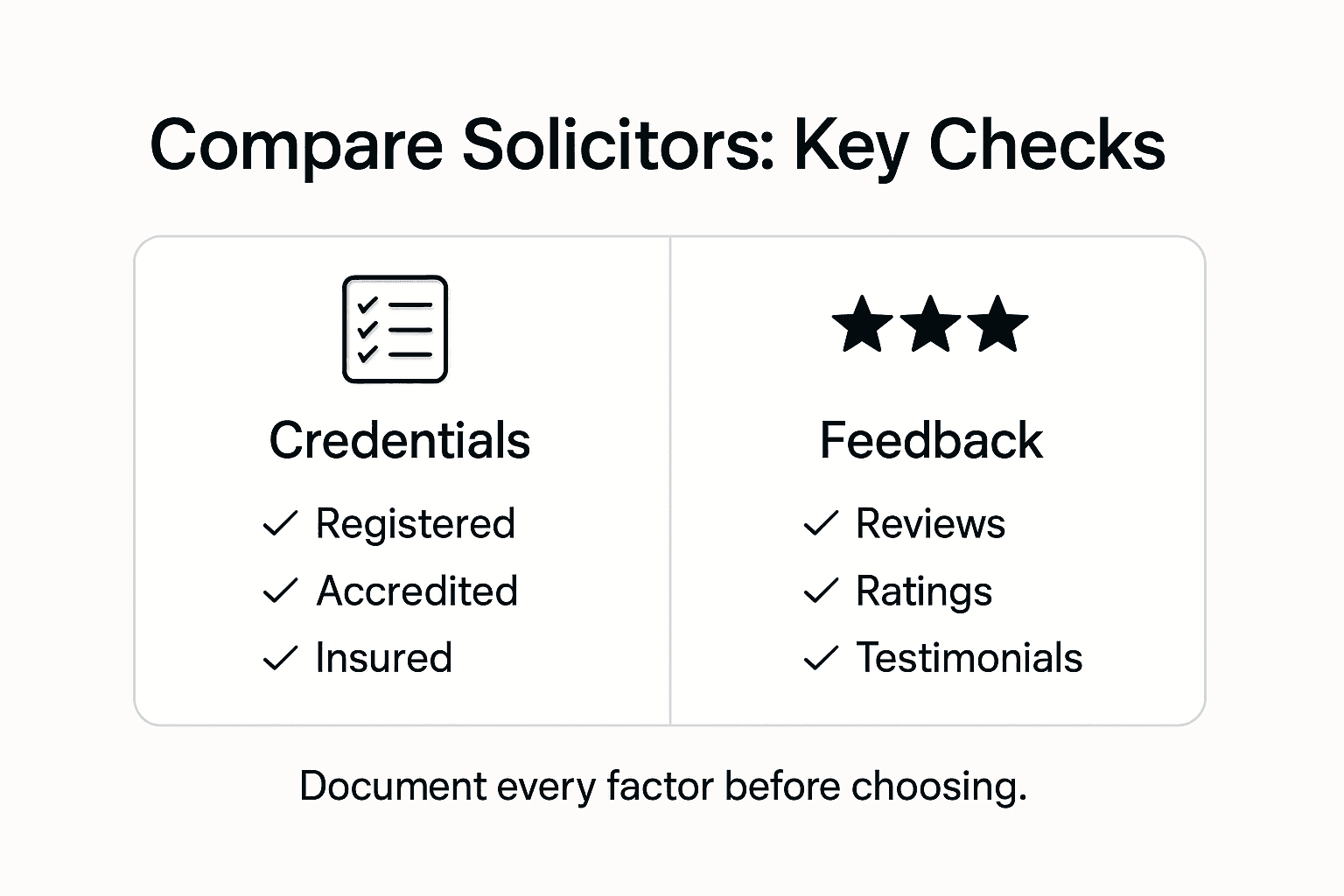
Use this quick guide to effectively compare solicitors during your selection process:
| Evaluation Factor | What to Check For | Why It Matters |
|---|---|---|
| Regulator Registration | SRA or CLC membership | Ensures compliance and accountability |
| Client Feedback | Verified recent client reviews | Indicates service quality |
| Fee Transparency | Detailed written quote | Prevents hidden costs |
| Specialisation | Experience in relevant property type | Ensures informed legal support |
Step 4: Consult shortlisted advisers and ask key questions
Scheduling initial consultations with your shortlisted solicitors provides a crucial opportunity to assess their suitability for your specific property transaction. These conversations will help you evaluate their expertise, communication style, and understanding of your unique requirements.
Prepare a comprehensive list of strategic questions designed to uncover critical information about their professional approach. Focus on topics such as their experience with similar property types, typical transaction timelines, fee structures, and communication protocols. Ask specific questions about potential complications they might anticipate with your particular purchase. Inquire about their typical workload, estimated completion times, and how they handle unexpected legal challenges. Request detailed explanations of their process, including how they conduct property searches, manage contract reviews, and coordinate with other parties involved in the transaction.
During these consultations, pay close attention to their responsiveness, clarity of explanation, and willingness to provide transparent information. Look beyond technical qualifications and assess their interpersonal skills and ability to explain complex legal concepts in straightforward language. A good solicitor should make you feel confident and comfortable, demonstrating patience in addressing your concerns and providing clear, comprehensive answers to your questions.
Expert Insight: Record or take detailed notes during each consultation, comparing the solicitors’ responses side by side to make an informed final selection.
Step 5: Verify advice quality and confirm professional standards
Validating the professional credentials of your potential solicitor is a critical safeguard in ensuring you receive high quality legal advice for your property transaction. This step involves a comprehensive check of their regulatory status and professional standing.
Understanding how to verify a solicitor’s regulatory compliance is essential for protecting your interests. Confirm that your chosen solicitor is registered with the Solicitors Regulation Authority (SRA) or the Council for Licensed Conveyancers (CLC). These professional bodies ensure that legal practitioners meet strict professional standards, maintain appropriate indemnity insurance, and adhere to ethical guidelines. Use their official online registries to validate registration status, checking for any disciplinary actions or professional conduct concerns.
Beyond basic registration, examine additional professional accreditations and memberships that demonstrate expertise in property law. Look for specialised qualifications, continuing professional development records, and evidence of recent training in conveyancing practices. Request documentation that proves their professional indemnity insurance coverage, which protects you in case of potential legal errors or professional negligence. A reputable solicitor will be transparent about their qualifications and will readily provide evidence of their professional standing.
Expert Insight: Create a verification checklist including regulatory body registration, professional indemnity insurance status, and recent professional development achievements to comprehensively assess your solicitor’s credentials.
Secure Expert Legal Guidance for Your UK Property Purchase
Finding reliable legal advice as a homebuyer in the UK can be challenging. This article highlights key pain points such as evaluating specific legal needs like leasehold complexities, verifying solicitor credentials and ensuring transparent fee structures. Navigating these concerns requires clarity and trustworthy insights to avoid costly mistakes and delays.
At KefiHub, we specialise in delivering straightforward, practical advice tailored to your property buying journey. Explore our comprehensive Legal Archives – Kefihub for expert commentary and real-world solutions addressing common legal challenges in property transactions.

Take control of your homebuying process today by visiting KefiHub and accessing trusted legal insights that empower you to make informed decisions. Start your search for reliable legal support now by reviewing our Introduction Archives – Kefihub and ensure you have the knowledge needed to select the right solicitor with confidence.
Frequently Asked Questions
What should I consider when identifying my legal needs for buying a property?
Before starting your property purchase, assess your specific legal requirements based on the type of property and any potential complexities. Consider factors like whether it’s a leasehold or freehold, and any unique circumstances, such as shared ownership or planning permission issues.
How can I find reputable solicitors and conveyancers near me?
Create a list of potential solicitors and conveyancers in your area, focusing on those regulated by the Law Society or the Council for Licensed Conveyancers. Compare their credentials, read client reviews, and request detailed quotes to identify trusted professionals who meet your specific needs.
What credentials should I verify for a potential solicitor?
Check that the solicitor is registered with a regulatory body like the Solicitors Regulation Authority or the Council for Licensed Conveyancers. Additionally, confirm their professional indemnity insurance status and look for any disciplinary records that could affect their reliability.
What questions should I ask during initial consultations with solicitors?
Prepare a set of strategic questions focusing on their experience with properties similar to yours, their fee structures, and communication protocols. This will help you gauge their expertise and understand how they manage potential issues during the transaction.
How can I ensure the quality of legal advice I receive?
Validate your solicitor’s credentials by confirming their regulatory compliance and professional standing. Look for specialised qualifications and recent training in property law to ensure you’re receiving high-quality legal advice in your transaction.
What common issues should I be aware of when buying property in the UK?
Common issues include understanding leasehold versus freehold complexities, potential planning permission difficulties, and specific obligations tied to shared ownership. Being aware of these challenges and discussing them with your solicitor can help you navigate the buying process more effectively.
Recommended
- 7 Essential Conveyancing Tips UK Professionals Must Know – Kefihub
- 7 Essential Conveyancing Tips UK Professionals Must Know – Kefihub
- Where Can I Find a Property Solicitor for Urgent Conveyancing in the UK? – Kefihub
- Legal Services Archives – Kefihub