

Most british companies now depend on social media for customer engagement, and nearly 85 percent say it has changed the way they do business. These digital platforms are not just networking tools, but vital spaces for promoting brands, reaching new audiences, and driving real business growth. With the evolving digital climate in the United Kingdom, understanding how to use social media strategically helps businesses navigate challenges and stand out in a crowded market.
Table of Contents
- Social Media For Business Explained
- Main Types Of Business Social Platforms
- Key Benefits And Measurable Impact
- Legal And Ethical Uk Requirements
- Common Pitfalls And How To Avoid Them
Key Takeaways
| Point | Details |
|---|---|
| Strategic Use of Social Media | Businesses should treat social media as a core component of their marketing strategy, aligning it with organisational goals for maximum impact. |
| Tailored Content Per Platform | Understanding the unique characteristics of each platform is crucial for effective engagement and targeted communication with audiences. |
| Measurable Outcomes | Advanced analytics can help businesses measure customer engagement, brand visibility, and return on investment through social media activities. |
| Legal and Ethical Compliance | Adhering to legal standards and ethical practices is essential for maintaining trust and credibility in digital communications. |
Social Media for Business Explained
Social media has fundamentally transformed how businesses communicate, market, and engage with their audiences. By leveraging digital platforms strategically, organisations can unlock unprecedented opportunities for growth, customer connection, and brand visibility. Understanding the nuanced role of social media requires exploring its multifaceted impact on contemporary business operations.
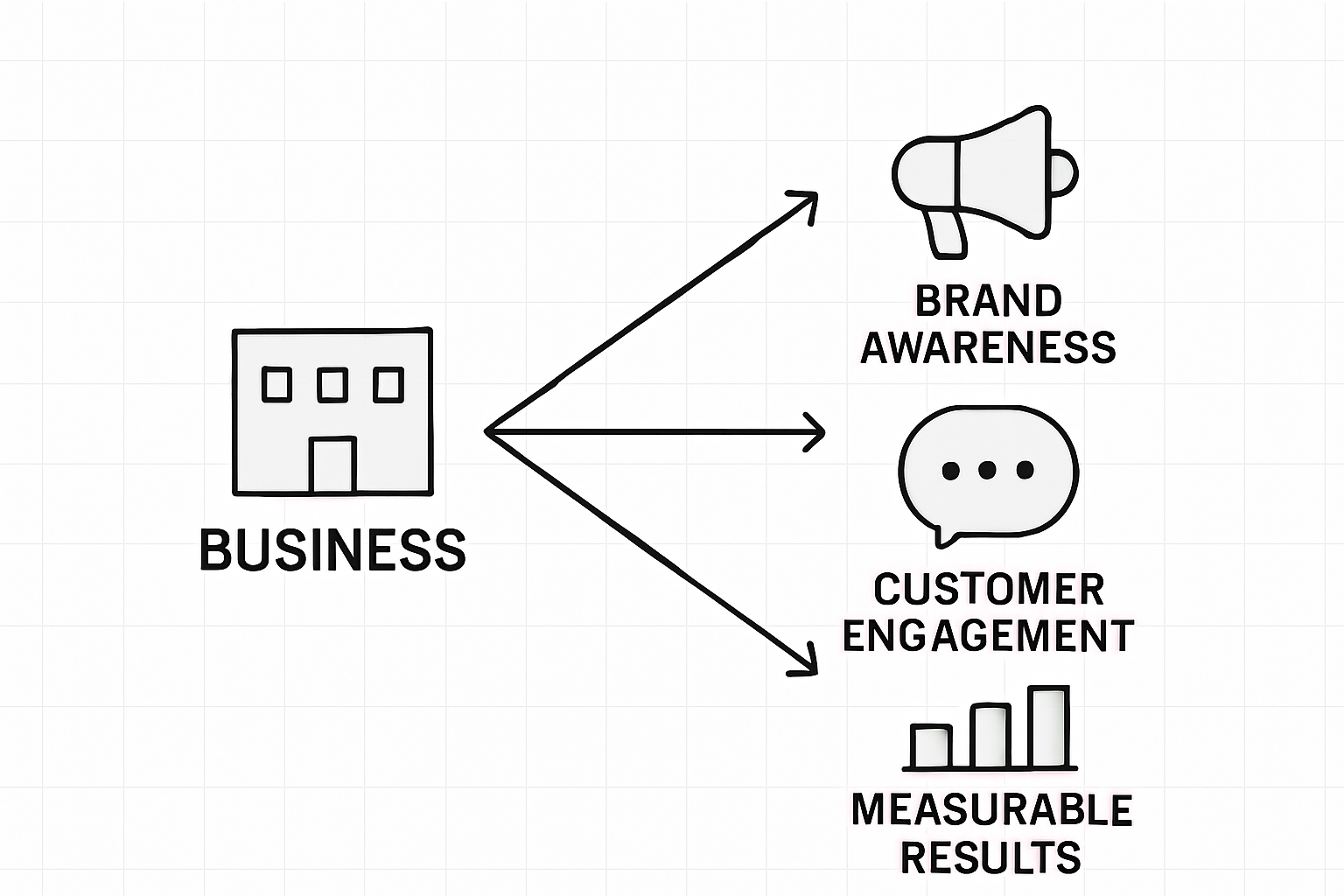
Businesses can harness social media as a powerful promotional tool, enhancing marketing strategies through consistent content updates that drive customer interaction and potential sales. These platforms are not merely communication channels but dynamic ecosystems where brands can build relationships, gather customer insights, and create targeted engagement strategies. By developing a robust social media presence, companies can achieve several critical objectives:
- Direct Customer Communication: Instantaneous feedback and interaction
- Brand Awareness: Expanding reach beyond traditional marketing methods
- Cost-Effective Marketing: Lower-expense promotional opportunities
- Market Research: Real-time understanding of customer preferences
Moreover, social media facilitates innovative communication and collaboration methods that connect businesses with diverse stakeholders. Small businesses and entrepreneurs particularly benefit from these platforms, which enable them to compete with larger organisations by creating personalised, authentic brand experiences. Strategic social media management involves understanding each platform’s unique characteristics, crafting compelling content, and maintaining consistent engagement that resonates with target audiences.
Successful social media integration requires more than sporadic posting. Businesses must develop comprehensive strategies that align digital communication with broader organisational goals, track performance metrics, and continuously adapt to evolving digital landscapes. By treating social media as a strategic business tool rather than a mere marketing afterthought, companies can transform these platforms into powerful engines of growth, customer loyalty, and competitive advantage.
Main Types of Business Social Platforms
The digital landscape offers businesses a diverse array of social media platforms, each with unique characteristics and potential for strategic engagement. Understanding these platforms is crucial for developing targeted communication and marketing strategies that align with specific business objectives and audience demographics.
Micro-entrepreneurs are increasingly leveraging platforms like Facebook, Instagram, and TikTok to initiate and expand their business ventures. Each platform offers distinct advantages for business communication and marketing:
- Professional Networking Platforms
- LinkedIn: Ideal for B2B networking, professional recruitment, and industry thought leadership
- Designed for professional connections and corporate communications
- Enables targeted professional advertising and industry-specific content sharing
- Visual Content Platforms
- Instagram: Perfect for visually-driven brands, product showcasing, and lifestyle marketing
- Pinterest: Excellent for businesses in design, fashion, home decor, and creative industries
- TikTok: Emerging platform for engaging younger demographics through short-form video content
- Conversational and Community Platforms
- Facebook: Comprehensive platform for community building, targeted advertising, and diverse content formats
- Twitter: Rapid communication, customer service, and real-time brand engagement
- WhatsApp Business: Direct messaging and customer support for small to medium enterprises
Successful social media strategy requires more than simply maintaining a presence on multiple platforms. Businesses must carefully select platforms that align with their target audience, industry characteristics, and communication goals. Business networking strategies play a crucial role in determining which platforms will most effectively support organisational objectives, ensuring that digital communication efforts translate into meaningful business outcomes.
Key Benefits and Measurable Impact
Social media has emerged as a transformative force for businesses, offering far more than traditional marketing channels. By providing direct, measurable pathways for customer engagement, brand building, and strategic communication, these platforms have become essential tools for organisational growth and resilience.

During the COVID-19 pandemic, social media proved critical in sustaining small and medium-sized enterprises, demonstrating its capacity to maintain business operations and customer connections during unprecedented challenges. The measurable impact of social media can be quantified through several key performance indicators:
Quantifiable Business Benefits
- Customer Acquisition: Reduced marketing costs compared to traditional advertising
- Brand Visibility: Exponential reach beyond geographical limitations
- Customer Insights: Real-time feedback and demographic understanding
- Engagement Metrics: Trackable interactions, clicks, shares, and conversions
Businesses can leverage advanced analytics to transform social media interactions into strategic intelligence. By understanding engagement patterns, sentiment analysis, and audience behaviour, organisations can develop highly targeted marketing strategies that deliver precise return on investment. The granular data available through these platforms allows for unprecedented levels of marketing personalisation and customer relationship management.
Moreover, social media facilitates a multilayered approach to business communication. Beyond direct sales, these platforms enable storytelling, brand personality development, customer support, and community building. The most successful businesses view social media not as a promotional tool, but as a dynamic ecosystem for genuine relationship building and continuous organisational learning.
Legal and Ethical UK Requirements
Navigating the complex landscape of social media requires businesses to understand and comply with a comprehensive framework of legal and ethical standards. The digital communication environment demands rigorous attention to data protection, user privacy, content regulations, and responsible online engagement.
The UK government has introduced pioneering regulations requiring companies to address illegal content and implement robust protections, particularly concerning child safety through the Online Safety Act. Key legal considerations for businesses include:
Fundamental Legal Compliance Areas
- Data Protection: Adherence to UK GDPR and Data Protection Act 2018
- Content Moderation: Preventing illegal, harmful, or discriminatory material
- User Consent: Transparent data collection and processing practices
- Age Verification: Implementing appropriate safeguards for younger users
Ethical considerations extend beyond mere legal compliance. Businesses must cultivate a responsible digital presence that respects user rights, promotes transparency, and maintains high standards of digital conduct. Comprehensive legal guidance for small businesses becomes crucial in understanding these nuanced requirements.
Moreover, social media platforms demand a proactive approach to digital ethics. This involves continuous monitoring of content, implementing clear community guidelines, protecting user data, and maintaining a commitment to inclusive, respectful online interactions. Successful businesses recognise that legal compliance and ethical practice are not mere obligations, but fundamental pillars of building trust and credibility in the digital marketplace.
Common Pitfalls and How to Avoid Them
Social media presents numerous potential risks for businesses, ranging from reputational damage to legal complications. Understanding these challenges is crucial for developing robust digital communication strategies that protect organisational interests while maintaining effective online engagement.
Workplace social media policies emphasise the critical importance of responsible usage and compliance, highlighting several key areas where businesses frequently encounter challenges:
Major Social Media Risk Categories
- Inconsistent Brand Messaging: Conflicting communication across platforms
- Compliance Violations: Breaching data protection and content regulations
- Reputation Management: Inappropriate or poorly considered content
- Security Vulnerabilities: Potential data breaches and information leaks
Preventing these pitfalls requires a proactive, strategic approach. Businesses must develop comprehensive social media guidelines that provide clear direction for employees, establish robust content approval processes, and implement ongoing training programmes. Comprehensive guidance for small business legal requirements becomes essential in navigating these complex digital landscapes.
Moreover, successful social media management demands continuous monitoring and adaptability. This involves regular content audits, staying informed about platform-specific regulations, and maintaining a culture of digital responsibility. By treating social media as a strategic communication channel rather than an informal platform, businesses can mitigate risks, protect their reputation, and leverage these powerful tools for meaningful organisational growth.
Elevate Your Business Success with Strategic Social Media Insights
Mastering the role of social media is essential for business growth in today’s digital world. If you find yourself facing challenges like inconsistent brand messaging, navigating UK legal requirements, or building genuine customer connections, you are not alone. The need for clear, practical guidance to develop effective social media strategies that deliver measurable results is greater than ever.
Explore how a targeted approach to platforms like LinkedIn, Instagram, and Facebook can unlock powerful communication and marketing benefits. At KefiHub, we specialise in providing UK professionals with expert commentary and real-world advice that addresses these critical pain points. Dive deeper into Business Archives – Kefihub and stay ahead of evolving trends through our Trending Archives – Kefihub.
Ready to transform your social media presence into a strategic advantage? Visit KefiHub today for reliable insights tailored to your business needs. Take the next step and unlock practical solutions designed to boost your brand reputation and customer engagement in the UK marketplace.
Frequently Asked Questions
How can social media benefit my business?
Social media can enhance your business by providing direct communication with customers, increasing brand awareness, reducing marketing costs, and facilitating market research through real-time customer insights.
What are the main types of social media platforms for businesses?
The main types include professional networking platforms like LinkedIn, visual content platforms like Instagram and TikTok, and conversational platforms like Facebook and Twitter, each serving different marketing and communication purposes.
How can I measure the impact of my social media strategies?
Measurable impacts can be assessed through key performance indicators such as customer acquisition rates, brand visibility, engagement metrics (likes, shares, comments), and real-time customer feedback.
What legal and ethical considerations should I be aware of when using social media for business?
Businesses must comply with data protection laws, content moderation requirements, and age verification standards while fostering a responsible digital presence that respects user rights and promotes transparency.
Recommended
- Business Networking: Complete Guide to Its Role and Value – Kefihub
- Business Networking: Complete Guide to Its Role and Value – Kefihub
- Role of Business Consultant: Impact on UK SMEs – Kefihub
- 7 Smart Business Growth Strategies for UK Professionals – Kefihub